Electronics Ribbed Winter Beanies Material Sample Guide
Need the right hand feel, stretch, and warmth? This electronics Ribbed Winter Beanies material sample guide shows what to test before you order in bulk.
An electronics Ribbed Winter Beanies Material Sample guide sounds narrow until a bad sample turns into three bigger problems: wasted freight, awkward gift kits, and a product that looks fine in a mockup but feels forgettable in hand. In this category, the sample is not a box-checking step. It is the only early proof of how the beanie behaves once it is stretched, folded, shipped, and worn next to other branded items.
That matters more in electronics than in many seasonal categories. The beanie often sits beside chargers, headphones, speakers, laptop accessories, or onboarding materials, which means it is judged as part of a larger package. If the knit sheds lint, the logo distorts, or the cuff feels limp, the whole set reads as less credible. A swatch can expose those issues before they multiply across production.
Buyers usually want three things at once: warmth, clean branding, and a finish that feels deliberate rather than generic. Those goals pull in different directions. A softer yarn can improve comfort but weaken structure. A tighter knit can improve logo clarity but feel less plush. The sample is where that tradeoff becomes visible.
There is also a logistics angle that gets ignored until late in the process. Samples that arrive crushed, stained, or poorly folded can make a good fabric look cheap. If the final program depends on presentation, the packaging around the swatch deserves the same attention as the textile itself. For shipping performance, recognized standards such as ISTA are useful when the product must survive repeat handling rather than a single careful handoff.
What a Material Sample Really Tells You
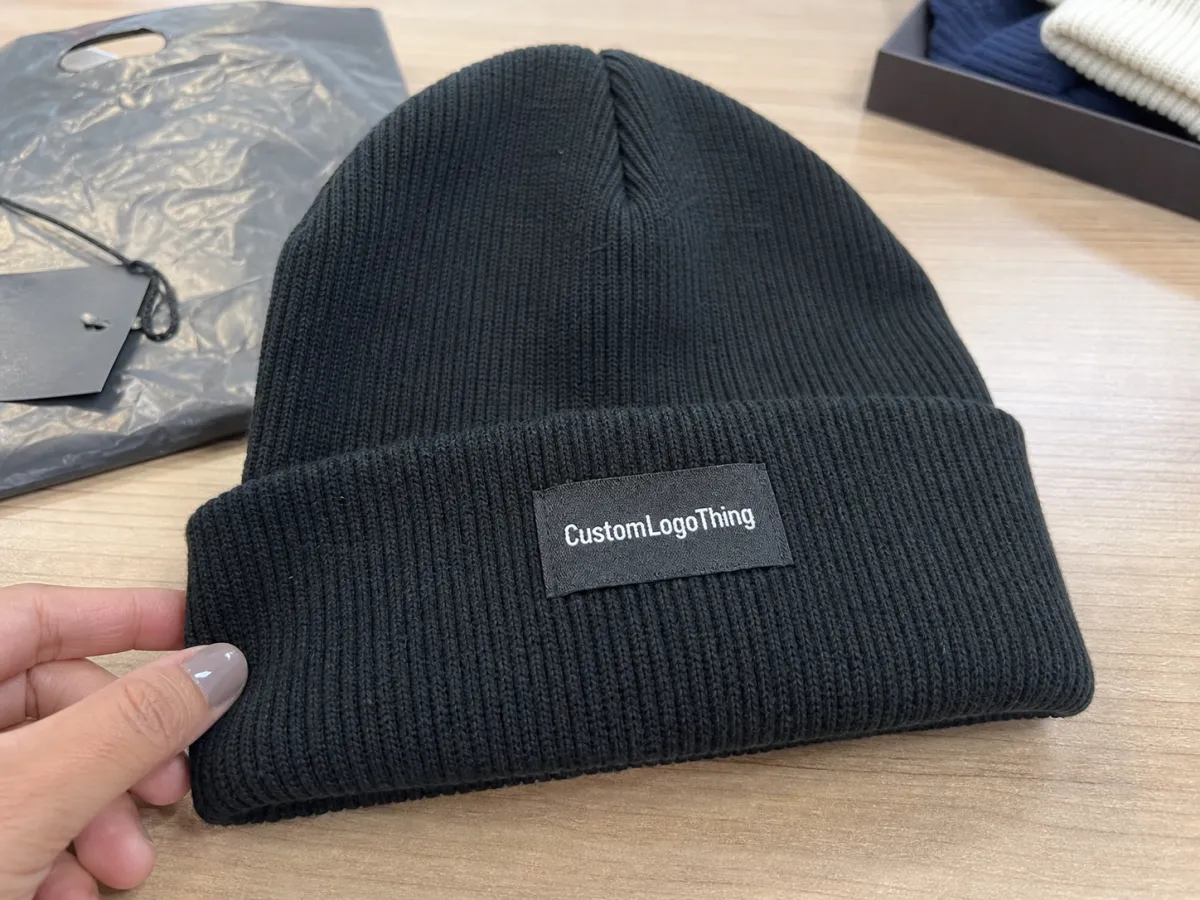
A good sample reveals failure modes early. That is its job. It should show whether the rib recovers after being stretched, whether the cuff keeps its shape after a day in a coat pocket, whether the yarn pills on contact, and whether a logo sits cleanly on a moving surface. Those are practical questions, not cosmetic ones.
For electronics promotions, that kind of reading matters because the item often carries a brand story larger than its own price. A beanie for an employee kit or trade show pack is supposed to feel useful, but also intentional. If the material feels flimsy, the value proposition collapses fast. If it feels too heavy or scratchy, people stop wearing it. Either way, the brand loses a small but repeated touchpoint.
“A sample should not only confirm what works. It should make the weakest point obvious before the order is scaled.”
That perspective changes how buyers review swatches. The question is not whether the fabric looks good on a table. It is whether the knit still looks composed after folding, shipping, and wearing. The best samples survive a short stress test: stretch the rib, compress it for a day, inspect the seam, then compare the returned shape with the original. A beanie that rebounds cleanly after repeated handling is telling you more than one that simply photographs well.
Presentation is part of the product. If the sample will be shown in a sales kit or holiday mailer, check it against the actual insert, hang tag, and outer pack. Kraft paper, corrugated cardboard, recycled board, and similar materials can support a strong sustainability narrative, but only if the textile quality is in the same range. A rough knit inside a premium box creates friction. A polished beanie in a sloppy package does the same thing in reverse.
That is why sample review should include context, not just the swatch itself. Electronics buyers are often comparing not only fabric performance but also how well the beanie fits into a broader kit. One weak element can make the whole package feel downgraded.
How Rib Knit, Yarn Blend, and Gauge Change Wearability
Rib knit construction creates the stretch people expect from winter beanies. Alternating knit and purl columns allow the fabric to open and return, which is why ribbed styles fit a range of head sizes without needing much shaping. But rib alone does not determine whether a beanie is good. Yarn blend, stitch density, and finishing all affect how that stretch feels in use.
Acrylic remains common because it balances cost, softness, and availability. Polyester is often used when a buyer wants better shape retention or faster drying. Wool adds warmth and a more natural hand, though it usually raises the price and can introduce care concerns. Blends sit in the middle and are often the practical answer when the brief calls for both comfort and budget discipline.
Gauge changes the result more than many non-textile buyers expect. A tighter gauge usually produces a cleaner face, more consistent logo placement, and better silhouette retention. A looser gauge may feel softer at first touch, but it can lose structure faster and make embroidered decoration less crisp. Two swatches with the same fiber content can behave like different products if the gauge changes.
Finishing matters too. Brushing can make the knit feel warmer and more plush, but it can also increase lint and alter the surface texture. Heat-setting or washing can improve recovery and hand feel. Even cuff style changes the way the beanie wears. A double-layer cuff typically gives a steadier front panel for decoration. A single fold looks lighter and more casual, but it can feel less substantial in a premium kit.
- Acrylic: lower cost, soft hand, easy to source, moderate warmth.
- Polyester: better shape stability, quicker drying, often a more technical feel.
- Wool or wool blend: warmer, more premium hand, higher cost, more care sensitivity.
- Mixed yarns: useful when softness, recovery, and price all matter at once.
One useful rule: do not compare fiber labels alone. Compare the actual behavior of the knit. A 100% acrylic beanie with a tight gauge can outperform a blended knit that looks richer but collapses after storage. A wool blend that feels excellent in the hand may still be the wrong choice if it sheds onto dark electronics packaging. The best spec depends on the final use, not on a generic definition of premium.
Spec Factors That Separate a Good Beanie from a Generic One
Buyers should review the same checklist every time. Start with fiber content, yarn weight, stitch density, cuff depth, seam quality, and stretch recovery. Then move to the performance questions that show up after real wear: how warm it feels relative to bulk, how quickly it dries, whether it pills, and how it looks after a day compressed in a backpack or kit bag.
Decoration compatibility deserves its own decision. Rib knit flexes, which is helpful for comfort, but that same movement can distort embroidery if the stabilizer is wrong or the stitch density is too high. Patches can reduce distortion, though they add weight and can make the front panel sag. Woven labels are cleaner on some styles. Silicone patches give a more technical look. None of these options is universally better. Each one behaves differently on a moving knit.
Color consistency is another issue that only looks small until it is not. Charcoal can read navy under warm indoor light. White can look clean in daylight and slightly gray under office LEDs. If a brand has strict color standards, review the sample under the same lighting where the finished product will be seen. A fabric that looks perfect in one room can miss the mark in another.
Packaging details deserve the same discipline. If the beanie is meant for a premium electronics kit, the fold, label placement, and insert all affect perceived value. If the outer pack uses FSC certified paper components or recycled board, those choices should be matched with a textile finish that looks equally considered. A premium-looking box with a low-grade knit inside creates a mismatch that buyers notice immediately.
The practical checklist below keeps the review grounded:
- Confirm fiber blend and yarn count.
- Check rib gauge and stitch density.
- Test recovery after stretching and pocket storage.
- Review logo behavior under the exact decoration method.
- Inspect color in daylight and indoor light.
- Check whether the packaging spec supports FSC certified paper content, recycled board, or other documented claims.
If sustainability claims are part of the pitch, avoid vague language. “Eco-friendly” does not tell a buyer much. FSC certified board means something specific. Post-consumer waste content means something measurable. Biodegradable packaging also needs context: what component, what conditions, and on what timeline? If the supplier cannot answer those questions clearly, the claim is too loose to rely on.
Cost, MOQ, and Quote Drivers for Material Samples
Sample pricing usually comes down to five drivers: yarn sourcing, knit setup, color matching, decoration testing, and finishing. If the factory already has the right yarn in stock, the sample stays relatively affordable. If it needs a custom shade, a specialty fiber blend, or a wash finish, the price climbs quickly. Add embroidery or patch tests and the sample begins to behave like a small production run.
MOQ influences the numbers in a straightforward way. Setup work is spread across fewer pieces when the quantity is low, so the unit cost rises. Larger orders lower the per-piece cost because labor and machine setup are amortized more efficiently. That is why a sample quote can look expensive next to a bulk estimate. The sample is a process step, and process steps carry overhead.
Typical sample pricing is not fixed, but rough ranges help buyers avoid shock:
| Sample Type | Typical Setup | Rough Unit Cost | Best For |
|---|---|---|---|
| Blank stock swatch | Existing yarn, standard rib | $15-$35 | Hand feel and basic stretch review |
| Custom color swatch | Color match, standard knit | $35-$70 | Brand color approval |
| Decorated prototype | Logo embroidery or patch test | $60-$140 | Logo placement and distortion check |
| Presentation sample | Sample plus packaging mockup | $80-$160 | Client review and sales kits |
Those numbers are only a working range. Freight, duties, rush fees, and revision rounds can move the landed cost quickly. A $28 swatch can become a $58 landed sample once shipping and packaging are added. Ask for line-item pricing rather than a single blended figure. Separate the sample, decoration, freight, and revision charges so the quote is comparable across suppliers.
Sample credits can help, but only if the terms are clear. If a supplier credits sample fees against the bulk order, confirm whether the credit applies to one SKU, one artwork version, or the entire program. That detail matters more than buyers expect.
Packaging can also distort price comparisons. A beanie shipped in corrugated cardboard with a simple kraft wrap is cheaper to send than one packed in layered presentation materials. That does not automatically make the cheaper option better. If the final order will live inside a premium electronics kit, the sample should reflect the real presentation level, not an artificially stripped-down version.
Sample Process and Lead Time: From Brief to Approved Swatch
Good samples start with a tight brief. Send the target audience, intended use, color direction, decoration method, and packaging needs before anyone starts knitting. If the beanie is going into a bundle with a charger, speaker, or other tech accessory, say so. That context changes how the supplier thinks about lint, static, softness, and visual balance.
Ask for two or three material options at the start. One should be the baseline spec. One should push softness or warmth a little further. One should test a cost-saving adjustment if budget is part of the decision. That makes the review comparative instead of abstract. A single swatch can answer, “Is this acceptable?” A small set of swatches answers, “Which tradeoff fits the program?”
Review the samples under the same lighting and handling conditions. Stretch them. Fold them. Leave one compressed for a day and check the rebound. If care instructions matter, wash one sample once and inspect the cuff twist, pilling, and color shift. A fabric that looks strong before washing can behave differently after one cycle, especially when the knit is loose or the finishing is aggressive.
Lead time depends on what is changing. Existing yarns and standard rib structures can move quickly. Custom colors, specialty blends, and decoration revisions add time. A straightforward swatch may take about 7-12 business days from brief approval. A custom color or decorated prototype often lands closer to 12-18 business days. If packaging is part of the approval, add another cycle for the insert, fold, and outer pack.
That timing is not a warning sign. It is how the process works when quality controls are real. A textile sample, a decoration proof, and a packaging mockup should not all be rushed through at once. The more claims the product needs to support, the more important the proof sequence becomes.
For teams that need documented paper sourcing, the FSC system is useful when the outer mailer, insert card, or hang tag needs to support a verified claim rather than a loose sustainability message.
Common Mistakes That Skew Beanie Sample Decisions
The biggest mistake is approving a sample because it feels soft, then skipping recovery, shrinkage, and wear testing. Softness matters, but it is only one part of the evaluation. A beanie can feel excellent on day one and still lose shape, pill early, or look tired after a short period of use. That is how avoidable returns happen.
Another common error is comparing different construction levels as if they were identical. A loose rib sample is not a fair comparison against a tighter gauge sample. A decorated prototype is not the same as a blank swatch. If those differences are mixed together, the review stops measuring quality and starts measuring setup variation.
Lighting causes more confusion than many buyers expect. Neutral gray can read blue under warm lamps and nearly black in daylight. White can look clean on a desk and slightly dull in a warehouse or office. If the brand has strict color expectations, review the sample in more than one environment and place it beside the final packaging materials. The overall presentation matters more than any one component.
Small details can create large headaches later. Care labels, lint behavior, neck tags, and folding marks should all be checked before approval. A fabric that sheds onto electronics accessories will trigger complaints even if the beanie itself looks good. A tag that scratches the neck will be cut out or ignored. A package that opens awkwardly can undermine the whole unboxing experience.
“Most sample failures are not textile failures. They are comparison failures, or context failures.”
That is the real reason a structured review works. The sample is supposed to answer a specific question. If it is answering three questions at once, the answer gets muddy fast.
Moving from Swatch to Pilot Order
Turn the review into a scorecard. Rate fit, warmth, recovery, color, brand feel, and decoration performance on a 1-to-5 scale. Keep the same reviewer, or at least the same review criteria, across all samples. That sounds formal, but it keeps personal taste from taking over the decision.
Compare one benchmark sample and one alternate blend side by side. The tradeoff usually becomes obvious. A wool blend may justify a higher price for a premium client gift. An acrylic-polyester mix may be the better choice if shape retention and cost control matter more. The best option is rarely the most expensive one. It is the one that matches the use case without introducing unnecessary risk.
Run a short wear test and a wash test before final approval. Then confirm that the selected spec still works with labeling and merchandising. If the beanie will be inserted into a rigid tray, make sure the cuff recovers after folding. If the packaging uses kraft paper, corrugated cardboard, or recycled materials, check whether the color and texture still feel premium beside those surfaces. If the program calls for FSC certified paper or post-consumer waste content, lock those claims to the actual components so the story stays credible.
That is the point of this electronics Ribbed Winter Beanies Material sample guide: to help buyers separate swatches that merely look acceptable from products that will survive real use, real shipping, and real brand scrutiny. Once the sample process is handled with a clear scorecard, a realistic budget, and a packaging spec that supports the final presentation, the pilot order becomes much easier to approve.
What should I ask for in an electronics ribbed winter beanies material sample?
Ask for fiber blend, yarn weight, rib gauge, and care instructions so you can judge warmth, stretch, and maintenance together. If logo placement matters, request at least one decorated version so you can see how embroidery density or a patch affects the fabric. If presentation matters, ask to see the sample with the intended label and packaging format.
How many electronics winter beanie material samples should I compare?
Two to three options is usually enough: one baseline spec and one or two alternatives that change softness, warmth, or price. Too many samples can blur the decision, so keep the comparison tight and use the same scorecard for each option. If the order is strategic, compare a premium option and a budget option side by side.
Does rib knit actually change warmth and stretch in winter beanies?
Yes. Rib knit adds natural stretch and helps the beanie conform to the head while still recovering shape after wear. A tighter rib structure usually holds warmth and shape better, while a looser knit may feel softer but less structured. The yarn blend still matters because fiber choice can amplify or offset the rib behavior.
What affects the cost of a custom beanie material sample the most?
Custom yarns, color matching, embroidery or patch testing, and special finishing are the biggest cost drivers. Rush timelines and small quantities usually push the unit cost up because setup work is spread across fewer pieces. Shipping and revision fees can change the total quickly, so ask for a line-by-line quote before approval.
How long does the sample approval process usually take for ribbed winter beanies?
Simple samples using existing materials can move quickly, while custom yarns and special colors usually add extra days or weeks. Build time for revisions matters as much as the first sample, so leave room for one review cycle and a wear test. If lead time is tight, ask whether the supplier can start from an existing knit structure to shorten the process.


