Two Ribbed Winter Beanies can look nearly identical on a screen and still behave very differently once they are stretched, worn, and folded. That is the value of the pet treat Ribbed Winter Beanies Material Sample guide: it moves the decision out of the spec sheet and into the hand, where knit structure, fiber choice, and finishing quality are easier to judge.
A buyer is not only checking color. A sample is a compact test of yarn behavior, rib recovery, cuff comfort, seam finish, and how the beanie keeps its shape after being handled a few times. Those small checks reveal whether the production run will feel premium, average, or rushed.
For winter beanies, the sample also acts as a reality check on budget and timing. A yarn that seems straightforward in writing may knit differently, ship differently, and cost more than expected once decoration or packaging is added. That is why a good sample review includes both tactile judgment and a practical look at what the supplier can repeat at scale.
Why Sample Beanies Reveal More Than Spec Sheets
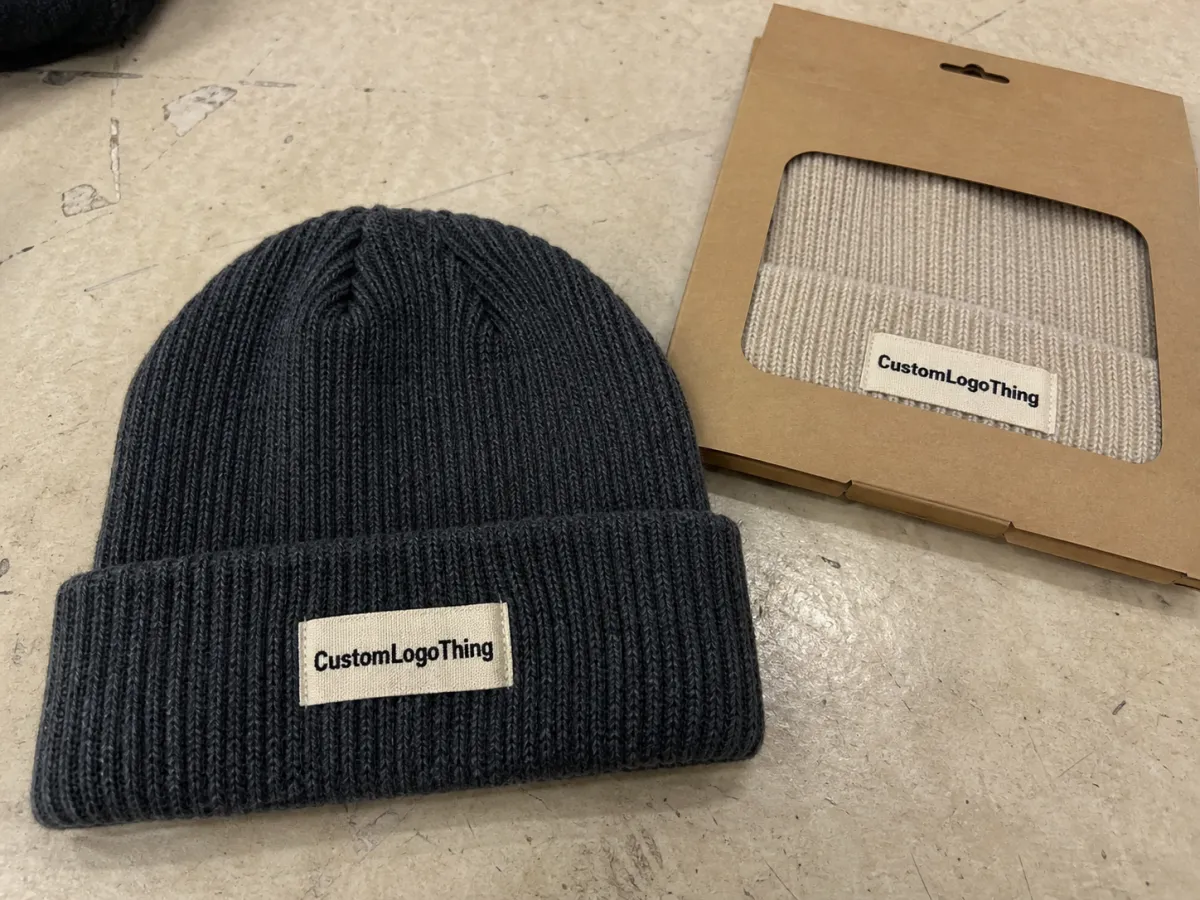
A spec sheet can list fiber content, gauge, color code, and trim instructions. It cannot tell you how the knit feels against bare skin, whether the cuff relaxes after repeated stretching, or if the crown twists slightly after a few minutes on a headform. That gap is exactly where physical samples matter.
Ribbed beanies are sensitive to small changes. A 1x1 rib and a 2x2 rib may use the same yarn, yet the fabric can behave very differently because the knit structure changes how the material pulls inward and recovers. Yarn twist matters too. A tighter twist usually gives sharper stitch definition and a cleaner surface, while a softer twist can feel plusher but may blur the rib pattern after wear.
Practical buyers also catch defects early that would be expensive to find after bulk production. Scratchy yarn shows up fast on the first touch. Weak recovery shows up when the cuff is stretched three or four times. Uneven dye depth becomes obvious when one sample looks richer in daylight and flatter under office lighting. A beanie that loses shape after being stuffed into a tote is another warning sign, because winter hats are not displayed only on shelves; they are worn, folded, and handled repeatedly.
That is why a real sample kit should include more than a single finished hat. If possible, ask for the full beanie, a yarn or fabric swatch, the trim card, and a simple material declaration. If there is a care label mock-up or wash note, even better. Small additions like those help separate a marketing sample from a production-ready one.
“A sample should prove the full material story, not just the color story.”
That mindset matters whether the end buyer is a retailer, a corporate program, a gift buyer, or a private-label customer. The fabric has to feel considered the moment it touches the head. If it feels dry, loose, or uneven in the hand, the rest of the presentation has to work much harder.
How Rib Knit Construction Changes Fit, Stretch, and Finish
Rib construction is what gives winter beanies that flexible, close fit without turning them into a tight compression piece. The alternating knit and purl structure lets the fabric expand, then pull back toward its original size. Recovery is the difference between a beanie that sits neatly and one that slouches into a tired shape by midday.
Stitch count and yarn gauge work together. A denser knit usually feels more substantial and can hold its edge better, especially around the cuff. A lighter knit may feel softer out of the bag, but if the gauge is too open the beanie can stretch out quickly or show uneven rib lines. In sample review, I like to stretch the cuff to head size, release it, and watch how cleanly the fabric returns. If it stays widened after several pulls, that is not a small flaw. It is a useful warning about bulk performance.
Fiber choice changes the result even more than many buyers expect. Acrylic is often selected for predictable softness, stable dye matching, and lower cost. Wool blends usually add warmth and loft, but they can also change handfeel, shrink behavior, and care expectations. Mixed fibers, including recycled content, can balance durability and budget, although the exact feel depends on how the blend is spun and finished. Two samples with the same fiber percentage can still feel different if the yarn construction is different.
Trim details matter. A deeper cuff usually looks more premium and can improve warmth around the ears. A shallower cuff feels lighter and more casual. Crown shaping, seam finish, and edge stability all affect how the beanie sits on a display table or on a person’s head. A flat photo often hides those differences. A headform in the 58-60 cm range helps, but an actual wearer is better for judging comfort at the forehead and around the ears.
Sample presentation matters as well. A clean kit packed in corrugated cardboard with kraft paper void fill looks more intentional than a loose polybag. If the supplier can offer FSC certified board or recycled content, that may support a sustainability claim without changing the hat itself. Packaging does not fix a weak beanie, but poor packaging can distort the review before the sample is even opened.
One practical detail buyers often miss is seam tension. A neat seam can disappear inside the beanie; a tight or uneven one can create a pressure point at the crown or along the cuff fold. If the sample is intended for long wear, seam comfort deserves the same attention as outer appearance.
What Drives Cost, Pricing, and MOQ in Sample Kits
Sample pricing is usually a mix of material choice, knitting complexity, decoration, finishing labor, and the number of versions requested in one round. A simple acrylic rib sample might be inexpensive, while a custom-dyed wool blend with embroidery, woven label, and branded packaging can cost several times more. That spread is normal. It reflects real production work, not just markup.
For a practical reference, buyers often see the following rough ranges. These are not fixed rules, but they are useful for early planning:
| Sample option | Typical sample price | Best for | What raises the cost |
|---|---|---|---|
| Basic acrylic rib sample | $18-$30 | Fast fit and feel checks | Custom color matching, extra labeling, premium packing |
| Wool blend sample | $28-$45 | Warmth, loft, and retail handfeel testing | Fiber sourcing, shrink control, finishing time |
| Recycled fiber blend sample | $30-$50 | Sustainability-led programs | Blend availability, dye consistency, approval revisions |
| Decorated private-label sample | $45-$95 | Launch-ready presentations | Embroidery, woven labels, badges, branded packaging |
MOQ is another part of the equation buyers should understand early. For a straightforward ribbed beanie, production MOQ often starts around 300-500 pieces per color or style, though some suppliers will go lower if the knit is simple and the yarn is standard. Custom yarns, specialty blends, or fully knitted logos can push MOQ toward 1,000 pieces because setup time, waste, and dye minimums are harder to spread out.
Ask for pricing that separates the sample fee, setup charge, and final unit cost. Some suppliers will credit the sample fee back against the first production order, but that should always be written down. If the sample kit is shipping to multiple offices, the outer pack matters too. A sturdy mailer in corrugated cardboard with kraft paper inserts may add $1-$3 to the kit, but it reduces the chance of crushed corners, bent labels, or wet cartons interfering with the review.
There is also a timing cost that is easy to ignore. If a buyer requests three colorways, two decoration methods, and a revised cuff height at the same time, the supplier may need to re-knit and refinish the sample several times. That is not a sign of poor service; it is the cost of changing multiple variables at once. The cleaner the request, the easier it is to price accurately.
For sustainability-minded programs, ask whether the shipping pack can be FSC certified or made with recycled materials. If the supplier has a simple FSC option, that is often enough to keep the message honest without inflating the budget. If the kit will move through multiple handoffs, packaging to ISTA-style transit expectations can help reduce damage before the sample is ever evaluated.
Step-by-Step Sampling Process and Lead Time
A useful sampling process begins before any knitting starts. First define the target feel: soft and plush, dense and structured, or somewhere between the two. Then choose the yarn family, confirm the rib pattern, and decide whether the beanie is meant for retail, premium gifting, staff use, or a lower-cost promotional run. Those choices affect everything that follows.
- Write the brief - include size target, rib style, cuff height, target handfeel, logo placement, and any care or sustainability expectations.
- Pick two or three material directions - this keeps the discussion focused and prevents endless back-and-forth over vague preferences.
- Request photos before physical shipment - small problems are cheaper to fix when they are spotted early.
- Review the sample in person - check stretch, recovery, seam feel, color depth, and overall shape.
- Approve one final version - then lock the spec so production does not drift.
Lead time depends on yarn availability, knitting setup, trimming, washing, drying, and final inspection. A straightforward sample can sometimes be ready in 7-12 business days once the spec is clear. If the buyer asks for multiple colorways, a revised cuff, or a different decoration method, 12-18 business days is more realistic. That pace is normal. Quality is usually slower than a rushed approval, and the delay often pays for itself by preventing rework later.
Clear specs shorten the timeline more than almost anything else. If the supplier has to guess at rib tension, cuff depth, or finish quality, the first sample may land close but not right. A clean brief with one decision owner and one feedback round usually saves the most time. That is where the pet treat Ribbed Winter Beanies Material Sample guide earns its keep in practice: it turns a loose idea into a testable request.
A good supplier will also tell you when a request is unrealistic. For example, a very soft yarn may not hold a crisp rib edge, and a heavily structured rib may not feel as plush as the buyer wants. Those trade-offs are not failures. They are the limits of the materials. The best sampling rounds make those limits visible before bulk production locks them in.
How to Compare Yarn, Rib Depth, and Trim Details
Comparing samples side by side under the same light is the fairest method. One sample may look warmer because it is under yellow office lighting, while another appears cleaner under daylight. Put them on the same table, use the same lamp if possible, and check both in daylight and indoors before making a decision.
Rib depth changes the personality of the beanie. Deeper ribs usually feel more structured and can improve stretch recovery, which helps if the hat needs to keep a tidy shape after repeated wear. Shallower ribs often read smoother and more casual. Neither is better by default. The right choice depends on whether the brand wants a technical winter feel or a softer lifestyle look.
Trim details deserve the same attention as the knit itself. Folded cuff height changes how the logo sits on the front. Edge finishing affects comfort around the forehead. Inside seam quality matters more than many teams expect, especially for all-day wear. A rough seam can make a good yarn feel inferior. That is one reason sample approval should never happen from photos alone.
A practical comparison method keeps the team objective:
- Stretch each sample three to five times and check how fully it returns.
- Inspect color saturation at the crown, cuff, and seam line.
- Rub the surface lightly to judge pilling risk and fiber shedding.
- Test the cuff against bare skin, not just over a cap.
- Record notes on fit, softness, and perceived value before discussing preference.
That last step matters because memory gets fuzzy once several people have handled the same samples. Written notes create a defendable decision and keep the team from circling back to “the darker one felt better” three days later. A sample review should act like a product decision, not a mood board.
For more technical programs, a simple wash test adds useful context. Even one gentle cycle can show whether the beanie loosens, shrinks, pills, or twists. A wool-rich sample may tighten slightly. An acrylic sample may relax. A low-grade seam may show distortion after one wash. None of those outcomes automatically disqualify the item, but they do tell you how the beanie will age.
“If the cuff snaps back cleanly after several stretches, you are closer to a reliable bulk run than any flat spec sheet can tell you.”
Common Sampling Mistakes That Skew the Decision
The biggest mistake is approving a beanie sample because it looks polished in photos. A photo does not reveal scratchy yarn, weak recovery, or a crown that twists after handling. A sample has to survive touch, stretch, and wear, not just a camera angle.
Another common error is testing one sample in isolation. Without a benchmark, the team ends up reacting to whatever is in front of them. That is risky. A sample should be compared to a target standard, an earlier approved yarn, or a clear buyer reference. If there is no reference point, the conversation can drift into personal taste rather than product fit.
Skipping wash or wear testing is another problem. Some beanies change after the first wash, even if the shift is modest. A wool blend may tighten slightly. An acrylic blend may relax. A low-quality seam may twist after one cycle. If the final user will wear the beanie hard through cold weather, the sample deserves at least a basic wear test.
Vague feedback creates its own problems. “Make it softer” is too broad. “The cuff feels coarse at the fold edge” is useful. “The rib recovers too slowly after stretching” gives the sample team something they can actually correct. The more precise the note, the fewer revision rounds you usually need.
Do not choose the cheapest sample just because it is easy to approve. If the end goal is a retail-ready winter beanie with a premium handfeel, a low-cost sample that does not match that goal will distort the approval process. It can make the final order look better or worse than it really is, and that is not a clean way to buy. The sample should represent the intended grade, even if that means paying a little more up front.
Finally, watch for overpolished samples that hide production risk. Some samples are hand-finished more carefully than the bulk run will be. That is not inherently misleading, but it can create false confidence if the buyer does not ask what will be repeated exactly and what will not. Any detail that depends on manual finishing should be confirmed in writing.
Next Steps for Approving the Right Sample
Start with a simple action list: define the target feel, request two or three material options, and compare them against one consistent test routine. That routine should include stretch recovery, cuff comfort, visual inspection, and a short wear test. Keep the team focused on the same criteria every time.
Then document the winner carefully. Write down the yarn blend, rib behavior, cuff height, seam finish, and any decoration requirements. If the final order needs a woven label, embroidery, or a branded hangtag, capture that now. The clearer the final note, the easier it is for the production team to repeat the sample accurately.
Before approval, confirm pricing, MOQ, and timeline together. A sample that looks perfect but misses budget or launch timing is still a problem. Likewise, a fast sample that cannot be scaled into the right production quantity is only half a solution. The strongest approvals connect material feel, cost, and schedule in one decision.
Send one consolidated feedback round instead of scattered comments by email, text, and phone. That single habit prevents confusion, cuts revision loops, and helps the supplier understand whether they are being asked to adjust the yarn, the rib tension, the finishing, or the packaging.
Handled this way, the pet treat Ribbed Winter Beanies Material sample guide gives buyers a cleaner path to approval. It keeps the final choice tied to what actually matters: handfeel, fit, pricing, presentation, and long-term wear performance, not guesswork.
What should I check first in a ribbed winter beanie material sample?
Start with handfeel, stretch recovery, and whether the rib knit returns cleanly after being pulled. Then inspect cuff comfort, yarn softness, seam feel, and any visible irregularities in the stitch pattern.
Which fiber blend usually works best for ribbed winter beanie samples?
Acrylic blends are often used when buyers want consistent softness, stable color, and easier pricing. Wool or wool-mix options can add warmth and loft, but they may change the feel, cost, and care requirements.
How long does a ribbed winter beanie sample usually take?
Lead time depends on yarn availability, knitting complexity, and whether multiple revisions are requested. A clear spec sheet and fast feedback usually shorten the turnaround more than anything else.
Why does sample pricing vary so much for ribbed winter beanies?
Price changes with fiber type, stitch density, decoration, finishing labor, and setup work for custom details. Ask for a quote that separates sample labor from material cost so you can compare options accurately.
What is the biggest mistake buyers make with beanie material samples?
The most common mistake is approving a sample without stretch testing, wear testing, or comparing it to the final use case. A sample should prove fit, feel, and durability, not just look good in photos.


