Custom Logo Things
Electronics Ribbon Handle Paper Bags Unit Cost Review
Compare electronics ribbon Handle Paper Bags unit cost, MOQ, Specs, and Lead Times so you can budget accurately from first quote to final delivery.
Electronics Ribbon Handle Paper Bags: The Cost Trap Buyers Miss
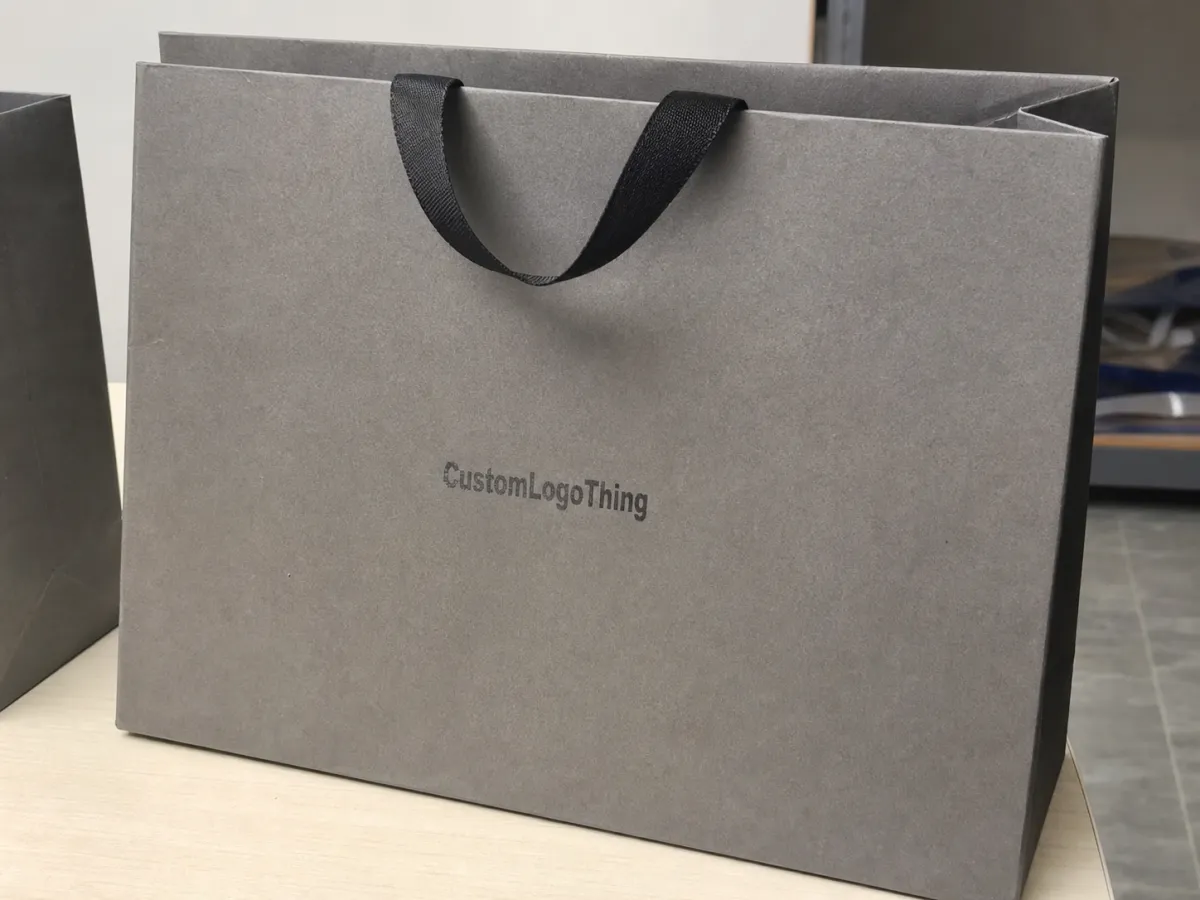
An electronics ribbon handle paper bags Unit Cost Review only becomes useful once you compare structure, not just the mockup. Two bags can look similar on a quote and still land in very different price brackets because the handle reinforcement, paper weight, print coverage, and finish all move the bill. The quote that looks a little higher often includes the details that keep the bag from feeling cheap the second a customer picks it up.
Electronics retail is not a generic paper-bag use case. A bag for phones, headphones, chargers, smartwatches, or boxed accessories has to feel premium, protect the product, and survive repeated carrying without collapsing at the mouth or tearing at the handle. If it fails at the counter, the store pays twice: once in reprints and again in customer perception.
From a packaging buyer's point of view, the job is simple: keep the bag attractive, keep it strong enough for the load, and keep the unit cost inside a real budget. That means watching the actual spec sheet instead of chasing the lowest headline number. For this category, unit pricing only starts to mean much after the setup work has been covered, so the first quote is never the whole story.
- Presentation matters because the bag is part of the handoff experience.
- Strength matters because electronics boxes are heavier and more awkward than apparel items.
- Repeatability matters because a bad reorder is worse than a slightly expensive first run.
That is the frame for the rest of this review: structure, specs, pricing breakpoints, and the order process that keeps surprises out of the invoice.
Bag Structure That Makes Shelf Displays Feel Premium
Ribbon handles change the perceived value of a paper bag fast. A satin or grosgrain ribbon immediately reads as more refined than a twisted paper handle, especially for phones and accessories where presentation matters as much as carrying strength. The customer may not know the construction terms, but they know when a bag feels like it belongs with a premium product.
Size and proportion matter more than many buyers expect. A bag that is too wide for the product looks lazy. One that is too tall and narrow looks weak. For electronics retail, common sizes often land around 200 x 80 x 260 mm for small accessories, 260 x 100 x 320 mm for compact boxed items, and 280 x 120 x 350 mm for larger gift-with-purchase sets. The handle drop usually sits around 90-120 mm for hand-carry bags, with a little more room if the store expects heavier items or thicker product boxes.
Construction details are where the premium feel is either protected or ruined. A reinforced mouth keeps the top edge from deforming. A base board helps the bag stand upright, which matters if the bag is stacked on counters or displayed under the register. Side gussets need enough depth to hold the box without forcing the bag into a bulge. These are the difference between a bag that looks deliberate and one that looks rushed.
For electronics stores, Ribbon Handle Paper Bags tend to do best in three situations:
- Gift-with-purchase handoffs where the bag itself signals value.
- Warranty or service handoffs where the customer leaves with documents, adapters, or repaired units.
- Premium accessory packaging where the brand wants a cleaner checkout presentation.
One useful rule: if the product inside costs enough to make the customer care, the bag should not look like an afterthought.
Paper Stock, Handle Build, and Finish Specs That Matter
The paper stock usually decides more of the feel than the shape does. For electronics retail, coated art paper is common when the printed color needs to look crisp and saturated. Kraft paper makes sense when the brand wants a cleaner, more natural look. Specialty stocks are useful for higher-end lines, but they also push the unit cost up quickly because the bag becomes a finishing exercise, not just a carry bag.
For most custom logo work, these ranges are a sensible starting point:
- 157-210 gsm coated art paper for a polished printed finish.
- 180-250 gsm kraft paper for stronger, more natural-looking retail bags.
- Grosgrain ribbon or satin ribbon in 10-15 mm widths for the handle.
- Handle reinforcement at the mouth with paperboard or reinforced inserts.
Handle build is not just a style choice. Ribbon color matching, attachment style, and reinforcement method all affect both the look and the cost per piece. Stock black, white, or navy ribbon is usually cheaper and easier to repeat. A custom Pantone-matched ribbon may add a lead-time hit and a price bump.
Finishes are where the quote starts to separate. Matte lamination gives a controlled premium look and often adds around $0.03-$0.08 per unit on mid-volume orders, depending on size and print coverage. Gloss lamination can be a touch cheaper, though it suits some tech brands less well. Hot stamping, spot UV, embossing, and inside printing all make the bag more memorable, but they also add setup charges and slow the schedule.
Ask for the spec sheet up front and get these items in writing:
- Dimensions in millimeters.
- Paper GSM or basis weight.
- Handle drop and ribbon width.
- Print sides: front only, front and back, or full wrap.
- Finish: matte, gloss, soft-touch, stamping, or spot UV.
- Carton pack count and outer carton size.
A clean spec sheet also makes quality checks simpler. If the supplier changes the paper grade, swaps ribbon width, or shifts the handle drop by a few millimeters, you will see it immediately. Small changes on paper can turn into weak handles, crooked folds, or bags that no longer sit upright on a shelf.
Pricing, MOQ, and Unit Cost Breakpoints Buyers Should Expect
Pricing is usually driven more by setup and finishing than by raw paper alone. That means low quantities carry a much higher per-unit cost, even when the bag itself looks simple. If you want honest electronics ribbon Handle Paper Bags unit cost review numbers, separate the structural cost from the quote noise.
Here is a practical pricing guide for custom ribbon handle paper bags used in electronics retail. These are planning ranges, not fixed rates, because paper stock, print coverage, size, and finish can move the number either way.
| Order Tier | Typical MOQ | Unit Cost Range | Best Fit | Notes |
|---|---|---|---|---|
| Small run | 500-1,000 pcs | $0.90-$1.60 | Store tests, launches, limited events | Tooling fees and setup charges weigh heavily here. |
| Mid-volume | 1,000-3,000 pcs | $0.55-$1.05 | Regular retail use, seasonal promos | Usually the best balance of cost per piece and flexibility. |
| Bulk pricing tier | 3,000-10,000 pcs | $0.32-$0.72 | Multi-store programs, repeat branding | More room for lower unit cost, but storage matters. |
| High-volume | 10,000+ pcs | $0.22-$0.48 | Established retail chains | Best pricing, least flexible if artwork changes late. |
MOQ depends on more than bag size. Custom ribbon color, special finishes, and complex print coverage can push the minimum order upward. A plain printed bag may be workable at 500 or 1,000 pieces. Add soft-touch lamination, foil stamping, and custom ribbon, and the factory may want 2,000 or 3,000 pieces before the line is efficient.
Watch for the hidden items in the quote. Tooling fees may apply if the size is new, the reinforcement needs a custom insert, or the supplier has to prepare a fresh cutting form. Setup charges may cover plate making, proofing, and color adjustment. Sample charges are often separate. Freight is almost always separate.
Compare quotes on the same basis:
- Bag cost only.
- Setup and tooling fees.
- Sample cost.
- Freight or delivery.
A cheap headline number with heavy freight and vague proofing is not cheap. Storage, carton size, and shipping method can erase the savings from a slightly lower unit price, especially if the bag ships in oversized cartons or uses bulky inserts.
Production Steps, Lead Time, and Approval Windows
A clean production run follows a predictable path: spec confirmation, artwork check, digital proof, sample approval, production, inspection, packing, and dispatch. If the supplier is good, you will feel that rhythm in the quote process. If the supplier is sloppy, you will feel it in the corrections.
Lead time varies by finish, quantity, and how fast the buyer responds. A plain structural sample can often be ready in 3-5 business days. A printed sample or finished sample usually takes 5-8 business days. Production for a straightforward order often lands around 12-18 business days after proof approval. Add special finishes, custom ribbon sourcing, or a larger quantity, and 18-25 business days is more realistic. Shipping time is another layer.
The biggest delays are usually self-inflicted. Missing dielines, low-resolution logo files, unclear Pantone references, and late color changes after proof approval are the usual suspects. Buyers sometimes send artwork in a file format that should be retired with old fax machines, then act surprised when the bag does not print cleanly.
Before production starts, lock these approval windows:
- Sample sign-off for structure and fit.
- Color approval for logo and ribbon matching.
- Carton labeling for shipping and store allocation.
- Freight method for air, sea, or courier timing.
If the bags are part of a retail kit or shipped with fragile electronics packaging, the outer cartons should be checked with transit expectations in mind. For that side of the process, the test logic used by ISTA is worth respecting. For paper sourcing, ask for FSC documentation if your brand needs certified paper.
Approval windows are also about accountability. Once you approve a printed proof, the supplier will use that approval as the production reference. If the logo color is slightly off on the final run, the question becomes whether the proof matched the signed-off file. Buyers should treat approval steps like contract language, not casual email replies.
What a Factory-Direct Supplier Should Prove Before You Buy
A factory-direct supplier should answer spec questions faster and more clearly than a middleman. That matters because every handoff in the chain is a place where mistakes creep in. Fewer handoffs usually mean fewer mix-ups on ribbon color, paper GSM, carton count, or print placement.
Ask for material samples, previous production photos, measured tolerances, and a written QC checklist before you place the order. Do not settle for “yes, no problem” and a price that looks friendly in the inbox.
Good packaging suppliers do not just quote the bag. They show you where the price comes from, what can change it, and which details matter most in production.
For electronics packaging, the useful checks are practical:
- Handle pull strength against the expected carrying load.
- Base reinforcement for boxed devices or heavier accessory kits.
- Color consistency across repeat orders and reprints.
- Dimension tolerance so the bag still fits the product after finishing.
If you need repeat orders, ask how the supplier stores print references and whether they retain approved samples. A cheaper quote from a supplier that cannot repeat your blue correctly is not a saving. It is a future problem with a discount sticker on it.
Quality control should not stop at the finished bag. Ask how they check ribbon attachment, whether they inspect the base board placement, and how they handle corner crush during packing. A bag that looks perfect in a photo can still fail if the handle is glued too shallow or the folds were pressed unevenly.
There is also a practical difference between a supplier that makes samples in-house and one that outsources them. In-house sampling usually shortens the feedback loop and gives a better shot at matching the final run. Outsourced samples can still be fine, but you need clearer sign-off records and more patience.
How to Request a Clean Quote and Move to Order
If you want a fast, useful quote, send the basics in one message: size, quantity, logo file, print areas, handle color, finish, and target delivery date. Include whether you need a structural sample first or a printed sample. That saves back-and-forth and gives you a cleaner comparison between suppliers.
Ask for the quote to be broken into unit cost, setup charges, sample charges, and freight. If you only receive one lump sum, the number is hard to compare and easy to massage. A proper quote should also note the MOQ, expected lead time, carton pack count, and any special handling instructions.
I also recommend asking for two sample routes when the order matters:
- A plain structural sample to check size, handle drop, and load feel.
- A printed proof to confirm color, logo placement, and finish.
That small extra step prevents expensive corrections later. It is cheaper to approve a sample than to explain to a store manager why the bag looks off next to the product display.
Once the sample is approved, choose the quantity tier that gives you the best balance of cost per piece, storage, and reorder flexibility. Then confirm the spec sheet, sign off the artwork, and lock the production slot. The final number is shaped by paper stock, handle build, finish, MOQ, tooling fees, and setup charges.
Premium-looking bags cost more because they are doing more work. If the bag only needs to hold a lightweight accessory for a short walk to the car, you can keep the spec modest. If the bag is part of the brand presentation for high-value electronics, cutting too far on paper weight or handle reinforcement usually shows up fast.
What affects electronics ribbon handle paper bags unit cost the most?
Paper weight, handle style, print coverage, and finish choices usually move the price more than the bag shape itself. Low quantities carry a higher setup burden, so unit cost drops as the order moves into cleaner quantity tiers. Special colors, lamination, and hot stamping can add cost quickly.
What MOQ should I expect for custom ribbon handle paper bags for electronics?
MOQ depends on size, paper stock, and how complex the print and finish are. Simple builds can support lower quantities, while premium finishes and custom ribbon colors usually raise the minimum. Ask for tiered pricing so you can see the point where the unit cost starts improving.
Are ribbon handles worth it for electronics retail bags?
Yes, when the goal is a more premium handoff and stronger brand presentation at checkout. Ribbon handles usually cost more than basic twisted handles, but they also signal a higher-value product. If the bag is for lightweight accessories or gifting, the visual payoff often justifies the upgrade.
How long do samples and production usually take?
Plain structure samples are usually faster than printed or finished samples. Production time depends on quantity, print complexity, and finishing steps, so confirm the timeline before approval. The safest approach is to lock artwork early and avoid late changes after the proof stage.
What should I send to get an accurate quote fast?
Send dimensions, quantity, logo artwork, print sides, handle color, finish, and delivery location. Include whether you need a sample first, because that changes both timing and cost. If you want a clean comparison, ask the supplier to separate bag cost, setup, and shipping in the quote.

