Buyer Fit Snapshot
| Best fit | Embossed Logo Stickers for Packaging projects where brand print, material claims, artwork control, MOQ, and repeat-order consistency need to be specified before quoting. |
|---|---|
| Quote inputs | Share finished size, material target, print colors, finish, packing count, annual reorder estimate, ship-to region, and any compliance wording. |
| Proofing check | Approve dieline scale, logo placement, barcode or warning zones, color tolerance, closure strength, and carton packing before bulk production. |
| Main risk | Vague material claims, crowded artwork, missing packing details, or unclear freight terms can make a low unit price expensive after revisions. |
Fast answer: Embossed Logo Stickers for Packaging: Material, Adhesive, Artwork, and MOQ should be specified like a repeatable production item. The safest quote records material, print method, finish, artwork proof, packing count, and reorder notes in one written spec.
Production checks before approval
Compare the actual filled-product size with the drawing, then confirm tolerance on folds, seals, hang holes, label areas, and retail display edges. Reserve space for logos, QR codes, warning copy, and material claims before decorative graphics fill the panel.
Quote comparison points
Review material grade, print process, finish, sampling route, tooling charges, carton quantity, and freight assumptions side by side. A quote is only useful when the supplier can repeat the same color, closure quality, and packing count on the next order.
Embossed logo Stickers for Packaging do one thing especially well: they change how a package feels before a customer has fully registered what they are holding. A raised mark catches light differently, catches fingertips even faster, and gives a carton, mailer, or seal a sense of intention that flat print cannot quite match. That is why embossed Logo Stickers for Packaging keep showing up in Premium Product Packaging, branded packaging, and even simple shipper boxes that need a more polished first impression.
In plain terms, an embossed label is a sticker or seal with a raised logo, icon, or pattern. The surface has depth, texture, and a stronger sense of craft, yet it does not force a brand into a full custom printed boxes program from day one. For a lot of companies, that is the useful middle ground: enough tactile detail to support package branding, without turning the job into a long chain of structural changes and approvals.
They work especially well on cartons, rigid mailers, tissue seals, product bags, insert cards, and limited-edition retail packaging. They are not a cure-all, and they should not pretend to be. They will not rescue weak packaging design, a poor logo, or stock that caves in under handling. Still, when the base materials are sound, embossed logo Stickers for Packaging can add shelf presence, stronger tactile memory, and a premium cue that feels calm rather than loud.
Embossed Logo Stickers for Packaging: What They Really Do
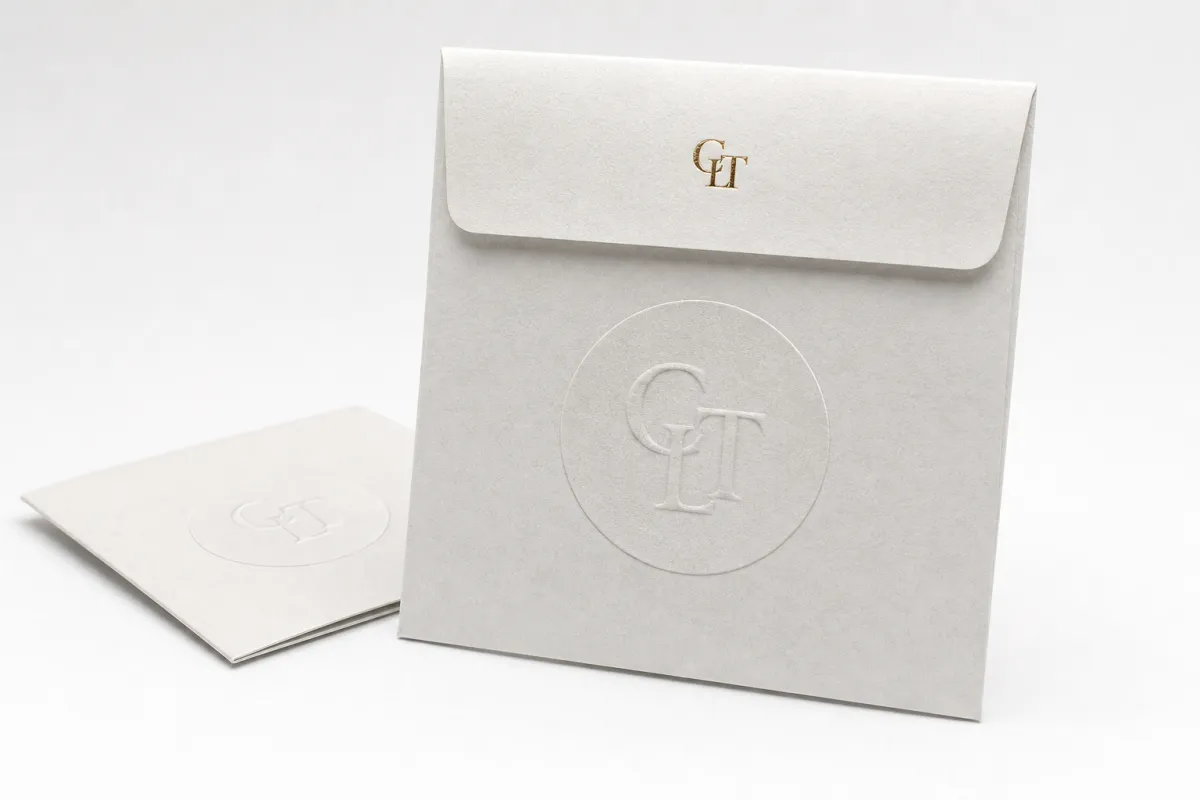
Many buyers first see embossed logo stickers for packaging as a visual upgrade, which makes sense at a glance. The real effect lives in the hand. People notice a raised surface almost before they register the artwork, then they slow down and look again. That small pause matters. In packaging terms, a raised logo can make a kraft mailer feel custom, turn a plain insert card into part of the experience, or move a simple product bag closer to a finished brand statement.
The strongest versions do not shout for attention. They suggest quality through shape, pressure, and material. That distinction matters. A loud graphic can make a package feel overworked, while embossed logo stickers for packaging often create a quieter premium result that fits minimalist brands, skincare, specialty foods, apparel, and gift packaging. If the goal is a more complete branded packaging experience without replacing every box in the line, this is one of the cleaner paths.
There is a practical business case here, and it is less mysterious than people sometimes make it sound. Better tactile detail can improve perceived value, help a product stay memorable, and support repeat recognition during unboxing or on shelf. For small brands, embossed logo stickers for packaging are often a smarter first step than jumping straight into expensive custom printed boxes. The result adds presence without forcing a full packaging overhaul.
If the package only looks good in a mockup, it is not ready. Embossing depends on material choice, logo shape, and the surface it actually touches.
That point matters because the packaging surface does a lot of the work. A rigid mailer with a clean top panel gives the design room to breathe. A rough, heavily textured carton is less cooperative. Embossed logo stickers for packaging can still work there, though the effect may soften and the adhesive may need extra testing. I have seen labels look perfect on coated sample sheets and then lose some crispness on rough kraft mailers. The process did not fail; the setup was optimistic.
Where do these labels perform best? Think tissue seals for apparel, tamper-style seals for cosmetics, carton badges for subscription kits, and product packaging that needs one premium detail rather than a full redesign. They also fit seasonal drops and limited runs, since you can add a special finish without rebuilding the whole packaging stack. If your current packaging design is solid but reads a little flat, embossed logo stickers for packaging are one of the fastest ways to add dimension.
One more practical point: embossing works best when the design hierarchy is clear. If the logo is meant to lead, let it lead. A small seal crowded with a slogan, legal copy, a second icon, and a decorative border usually looks busy and underpowered. Embossed logo stickers for packaging reward restraint, because the raised surface needs space to breathe and room to be noticed.
How Embossed Logo Stickers for Packaging Are Made
The production process is straightforward, even if the terminology likes to sound fancier than it is. Artwork gets reviewed, then converted into a die or plate that carries the raised image. Pressure pushes that shape into the face stock, and the adhesive backing turns the finished piece into a usable label, seal, or sticker. That is the heart of embossed logo Stickers for Packaging: controlled pressure, the right substrate, and a logo that can survive being lifted into three dimensions.
Embossing, debossing, foil stamping, and regular print are easy to confuse if you have not worked through a few runs. They are different tools. Embossing raises the design above the surface. Debossing presses it down into the material. Foil stamping adds metallic or pigmented shine through heat and pressure. Standard print lays ink onto the face stock. Some jobs combine these effects, but the difference between texture, shine, and depth matters a great deal when you are placing an order.
With embossed logo stickers for packaging, the face stock matters nearly as much as the artwork. Paper stocks are the most common choice, especially uncoated or lightly coated paper when you want the raised detail to feel clean and natural. Coated stocks can work, though they often soften tactile contrast. Metallic films bring a sharper premium look. Clear films let the package color show through, though they tend to feel more modern than tactile. Specialty laminations can protect the surface, but an overly soft or glossy finish can mute the emboss.
Logo complexity is the other major variable. Bold marks, thicker outlines, and simple iconography usually emboss cleanly. Tiny type, thin serifs, hairline borders, and crowded monograms often collapse. If the artwork depends on fine detail, embossed logo stickers for packaging can still work, but the file may need simplification before production. What looks elegant on a screen can turn muddy on press, which is a familiar lesson for anyone who has approved a design too quickly.
In practice, the strongest designs treat touch as the lead feature. Screen visibility still matters, yet a raised logo on a carton flap or product seal is usually judged at arm’s length and then at fingertip distance. The shape needs to read quickly and feel deliberate. If you are building a premium line, think about how embossed logo stickers for packaging will sit next to the rest of the product packaging, not just how they appear on a white background.
For brands comparing options, it helps to separate the effect from the substrate. A simple flat label can be cheaper and easier to source, while embossed logo stickers for packaging add depth and a stronger cue of quality. If you want a broader view of structural and print options, browse Custom Packaging Products and compare them with your existing packaging design before you settle on a finish.
Key Factors That Change the Look and Feel
Four things usually decide whether embossed logo stickers for packaging look premium or merely busy: logo complexity, stock choice, emboss depth, and placement. Everything else sits behind those. Color and finish matter too, but if those four are off, the sticker can read flat, weak, or awkward even when the render looked excellent.
Logo complexity is the first filter. Larger marks with solid shapes emboss better than thin script or ornate crests. That does not mean branding has to become dull. It means the design needs enough open space for the raised surface to show. For embossed logo stickers for packaging, the cleanest results usually come from logos with confident outlines and fewer tiny interior details. That is less dramatic than a packed identity system, but it prints better, and that is the part that counts.
Stock and adhesive come next. A face stock that is too soft can flatten the raised effect. A weak adhesive can lift at the corners, especially on curved or textured cartons. Rough kraft, heavy matte coatings, and recycled surfaces with less predictable behavior may need testing before a full run gets approved. It is better to spend a little more on the right adhesive than to spend twice fixing peel issues after launch. That is not a theoretical warning. It happens often.
Emboss depth requires balance. Too shallow, and the mark looks accidental. Too deep, and the graphic can distort or crack the face stock. The right pressure depends on the material, the logo, and the size of the label. Small seals often look more refined with a subtle raise. Larger front-panel badges may need a stronger lift so the effect survives normal handling. Embossed logo stickers for packaging are not one-size-fits-all, and the press is not interested in the mood board.
Placement can change the entire read. A small seal on a mailer flap feels different from a large badge centered on a box. A side-panel label behaves like a supporting detail. A front-panel label behaves like a brand statement. Before placing embossed logo stickers for packaging, decide what role the package plays. Is it a shipper, a retail display piece, a gift box, or a subscription reveal? That answer tells you where the tactile detail should live.
Quantity and consistency matter more than many buyers expect. On small orders, a slight variation may never be noticed. On larger runs, press control and die quality become much more important. If you are ordering for a growing product line, ask how repeatable the emboss depth is across the run and whether the supplier checks alignment during production. Embossed logo stickers for packaging need to look intentional on the first piece and the five-thousandth piece.
Compatibility with the rest of the branded packaging also matters. If the box is ultra-luxury but the seal feels flimsy, the whole package feels off. If the carton is plain but the raised logo is sharp, the package can seem far more expensive than it is. That is part of the reason embossing is such a useful tool in packaging design: it creates a premium cue without demanding a total rebuild of the product packaging system.
For sourcing and materials, FSC-certified paper is worth asking about if sustainability matters in your category. You can check standards and sourcing guidance through FSC. If your package has to survive parcel handling rather than a gentle showroom life, distribution testing matters too. The ISTA site is a practical reference for transit-test thinking before a production run gets approved.
Production Steps, Proofing, and Turnaround
The production path for embossed logo stickers for packaging is usually simple on paper and a little annoying in practice, which is normal. First comes artwork review. Then material selection. Then die or plate setup. Then proofing. Then production. Then finishing and inspection. If any step gets rushed, the bill appears later in rework, delays, or labels that do not behave on the actual package.
During proofing, ask for more than a polished screenshot. You want size checks, emboss depth confirmation, adhesion expectations, and, ideally, a sample on the same surface you plan to use. If the labels will go on a rough mailer, a coated rigid box, or a flexible product bag, tell the supplier early. Embossed logo stickers for packaging can behave very differently across those surfaces, and a proof on smooth paper does not tell the whole story. That is how people approve the wrong thing with complete confidence.
A realistic turnaround depends on the build. Simple orders with standard paper stock and a clean logo may move faster than custom printed boxes, but once you add specialty material, new tooling, or multiple proof rounds, the schedule stretches. A straightforward embossed label project might take roughly 7 to 12 business days after proof approval. More complex jobs often land in the 12 to 18 business day range, especially if foil, special die work, or layered finishing is involved. If a supplier promises speed without asking about substrate or artwork, that is a clue, not a gift.
Lead-time risk usually comes from revisions, not machine time. A logo tweak, a changed stock choice, a foil add-on, or a last-minute size adjustment can add several days each. Embossed logo stickers for packaging are especially sensitive to small art changes because the raised detail needs a stable file. If a team keeps changing the logo after quoting, the schedule will wobble. Packaging is not a guess-and-check exercise, and the calendar tends to punish optimism.
For launches, build a buffer of at least one extra week beyond the quoted lead time when the labels must arrive with a product drop. Two weeks is safer if the run is tied to holiday retail packaging, a new retailer, or a campaign with locked ship dates. A production job that finishes early can always sit in the warehouse. A job that misses the launch window creates a much harder problem.
For buyers managing multiple packaging components, it helps to compare the label work with the rest of the program. If you are also sourcing cartons, sleeves, or inserts, line up the timing with Custom Labels & Tags so the print, packing, and receiving steps stay in order. Embossed logo stickers for packaging should support the launch plan, not become the part that disrupts it.
Cost, Pricing, MOQ, and Quote Drivers
Pricing for embossed logo stickers for packaging depends on the same forces that shape most custom print jobs: material, size, emboss complexity, finish, adhesive, and quantity. None of that is unusual. What changes the bill is how many variables pile up at once. The faster you simplify the spec, the easier it becomes to control cost.
The MOQ question is straightforward. Small runs cost more per piece because setup gets spread across fewer units. That is not a trick. It is math. If you need 500 pieces, the unit cost will be much higher than at 5,000 or 10,000 pieces because the die, proofing, and press setup do not disappear. Embossed logo stickers for packaging usually make more financial sense once the run is large enough to absorb the setup cleanly.
For context, a basic premium tactile label run might land in these rough ranges before shipping, depending on coverage and complexity: 500 pieces at about $0.45-$1.10 each; 2,500 pieces at about $0.16-$0.38 each; 5,000 pieces at about $0.08-$0.22 each. Add foil, multiple passes, or specialty stocks, and the number climbs. Those are directional ranges, not promises. Anyone who quotes a single universal price without asking about the surface or the logo is guessing.
Here is a simple comparison that buyers can use without turning it into a spreadsheet project.
| Option | Typical Unit Cost | Best For | Main Tradeoff |
|---|---|---|---|
| Flat branded sticker | $0.03-$0.12 | Basic branding, high-volume use, simple seals | Less tactile impact |
| Embossed paper label | $0.08-$0.22 | Premium product packaging, mailers, cartons | Needs cleaner artwork and better proofing |
| Embossed label with foil | $0.15-$0.40 | Gift boxes, cosmetics, limited-edition retail packaging | Higher cost and longer lead time |
| Specialty film or lamination build | $0.18-$0.55 | Durability-focused branded packaging | Can soften the tactile effect if overfinished |
What should you ask for in a quote? Start with quantity, size, artwork complexity, stock, adhesive, and whether the die or plate is separate. Then ask whether proof rounds are included, whether shipping is extra, and how revisions are billed. Embossed logo stickers for packaging get expensive when the quote hides setup charges in the fine print and then bills for every tiny adjustment.
Savings usually come from simplification. Fewer special effects. Standard sizes. Simpler logo art. Larger order quantities. A clean single-color embossed mark often beats a busy multi-effect label if the goal is a premium feel at a sane price. That is one reason embossed logo stickers for packaging are so useful for growing brands: they can deliver a premium cue without spending as if the job were for a luxury department store display.
If you are comparing packaging design options, think in terms of total program cost, not just sticker cost. A sticker that improves the whole box can be cheaper than rebuilding structure, ink coverage, and finish across the packaging line. In some cases, embossed logo stickers for packaging are the most cost-effective way to move from plain product packaging to something that feels deliberately branded.
Common Mistakes With Embossed Logo Stickers for Packaging
The biggest mistake is plain enough: people design a logo that is too detailed to emboss cleanly, then act surprised when the result looks soft. Thin type, tiny ornaments, and crowded marks can be lovely on a screen and frustrating on paper. If you want embossed logo stickers for packaging to look sharp, design for the process, not just the brand deck.
The second mistake is choosing the wrong finish. A glossy face stock can fight the tactile effect. A weak adhesive can let the corners lift. A flimsy paper can wrinkle during application. None of those issues means embossing is a bad idea. They mean the construction was wrong. Embossed logo stickers for packaging need the right face stock and adhesive combination if you want the raised detail to survive handling.
Another common problem is a mismatch between the sticker and the package itself. A luxe embossed seal on a very cheap box can look like the wrong accessory on the right outfit. It does not automatically ruin the packaging, but it does raise expectations that the rest of the box may fail to meet. A plain kraft carton with a crisp embossed logo can look stronger than many people expect because the finish feels intentional rather than overdecorated.
Scale creates its own traps. A design that looks elegant at 3 inches may fall apart at 1 inch. A mark that feels subtle on a box panel may overpower a small tissue seal. Embossed logo stickers for packaging should be tested at the exact size they will be used, not at the size someone preferred in a mockup meeting after lunch. That kind of size mismatch is one of those issues that sounds small right up until the full run arrives.
The worst mistake is skipping physical samples. Screen approvals are useful for rough direction. They are not a final quality check. Texture, pressure, surface energy, and adhesive behavior do not appear on a laptop. If your supplier can send a sample or a production-style proof, use it. A little patience there costs far less than reprinting an entire run because the first batch only looked good under studio lighting.
There is also a sustainability blind spot worth mentioning. If your brand cares about paper sourcing or end-of-life recyclability, do not assume every embossed label is equally compatible. Ask what the face stock and adhesive are made of, and whether the material fits the recycling stream you are targeting. The goal is not perfection. The goal is to avoid making claims your packaging cannot support.
Expert Tips and Next Steps for Embossed Logo Stickers for Packaging
My strongest advice is boring and reliable: keep the logo bold, the copy short, and the effect clear. Embossed logo stickers for packaging do not need to carry the entire brand story. They need to deliver a clean tactile cue that fits the package. If the design tries to do too much, the emboss gets diluted and the premium feeling drops quickly.
A smart sampling plan saves money. Order one simple version, one slightly more premium version, and one size variation if the budget allows it. Then test them on the actual carton, mailer, or bag. Compare how they hold up after application, after 24 hours, and after handling. Embossed logo stickers for packaging can look great on day one and still fail if the adhesive relaxes on a curved surface. A sample test catches that before the full run does.
For launch planning, line up the artwork, the package surface, and the order size before you ask for final pricing. That is the cleanest path to a useful quote. If you are still choosing between label styles, compare them against your current branded packaging and the rest of your product packaging mix. If the embossed option improves the experience enough to justify the difference, use it. If not, spend the money where customers will notice it more.
Here is the order of operations I would use:
- Pick the package surface and confirm whether it is flat, lightly textured, or curved.
- Lock the logo size and simplify any detail that will not survive embossing.
- Request pricing at two or three quantities so the MOQ math is visible.
- Ask for a sample proof on the real substrate, not just a mockup.
- Confirm lead time, revision policy, and whether tooling is separate from print cost.
If you need a broader packaging refresh, it helps to treat the sticker as one piece of the whole system rather than a decorative afterthought. A good raised seal can support package branding, make retail packaging feel more polished, and give custom printed boxes a higher perceived value without changing the structural format. That is a practical win, not an abstract one.
One more thing: do not overcomplicate the finish because plain feels too simple. Plain does not mean cheap. It means clear. Embossed logo stickers for packaging work best when they have room to breathe. The premium feeling comes from restraint, accuracy, and a material that does its job without showing off.
FAQ
Are embossed logo stickers for packaging more durable than flat labels?
Durability depends more on the face stock, adhesive, and package surface than on the emboss itself. A well-made label can hold up well, but rough or curved surfaces may need extra testing. If the package gets handled a lot, sample embossed logo stickers for packaging on the exact substrate before you approve a full run.
What packaging surfaces work best for embossed logo stickers?
Flat or lightly textured surfaces usually perform best, including cartons, rigid mailers, tissue seals, and product bags. Very rough kraft, heavy coatings, and sharply curved surfaces can reduce adhesion or soften the raised effect. For embossed logo stickers for packaging, the best choice is the actual package surface, not a perfect test board.
How much do embossed logo stickers for packaging usually cost?
Pricing changes with quantity, material, size, emboss complexity, and whether you add foil or other finishes. Small orders usually carry a higher unit cost because setup gets spread across fewer pieces. Ask for quotes at two or three quantities so you can see where embossed logo stickers for packaging start to make sense financially.
How long does the production process usually take?
Simple orders can move faster, but custom artwork, new dies, and specialty materials add time. Proof approval is often the bottleneck, not the press run. If the labels are tied to a launch date, build extra buffer and confirm lead time before you finalize embossed logo stickers for packaging.
Can embossed logo stickers for packaging include foil or color?
Yes, many designs combine embossing with foil, print, or specialty finishes for a richer effect. Every added layer usually increases cost and can lengthen turnaround. Keep the artwork simple so the texture and finish work together instead of fighting for attention on embossed logo stickers for packaging.
If you want the shortest practical takeaway, it is this: embossed logo stickers for packaging work best when the logo is clean, the substrate is right, and the proof gets tested on the actual box or mailer. Do those three things well and the finish earns its keep. Skip them, and you will pay for a fancy label that underperforms. The safest next step is to sample one design on the real packaging surface before you lock the run.

