Embroidered Beanies Print Method Comparison for bakery buyers starts with a practical problem, not a branding one. Bakery teams work around flour dust, steam, grease, heat, and tight changeovers. That combination is rough on any decoration method, especially on a knit beanie that stretches, folds, and gets handled more than a retail hat ever would.
The first failure is usually legibility. A logo that looked crisp on a mockup can blur after a few shifts if the stitch count is too dense, the artwork is too small, or the decoration method ignores how knit fabric moves. For bakery buyers, the real question is not which method looks best on paper. It is which one still reads cleanly after washing, pulling on, folding, and daily wear.
The cheapest decoration is not always the lowest-cost order. A logo that cracks, lifts, or loses definition turns into a second purchase you did not plan for.
Embroidered beanies print method comparison for bakery buyers: what fails first on bakery floors
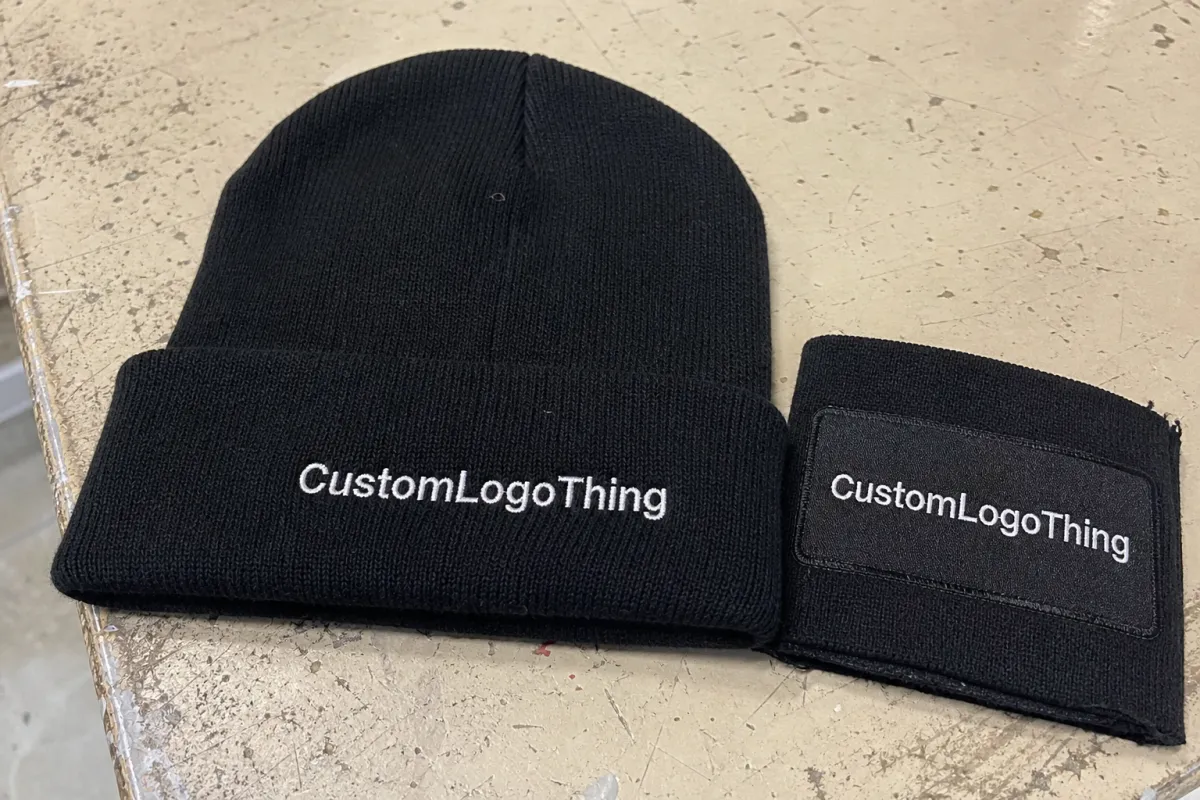
On a bakery floor, the decoration usually fails before the beanie body does. Acrylic knit can hold up for a long time, but a weak logo shows wear early. Direct embroidery may flatten slightly after repeated laundering, yet it stays readable when the stitch density is balanced. Thin transfers, low-grade prints, and other film-based finishes are the first to show trouble because steam, heat, and abrasion attack their edges first.
Knit beanies do not behave like flat cotton caps. They stretch when pulled on, relax when removed, and shift again when the cuff is folded or unfolded. That motion makes small text and hairline details risky. The embroidered beanies Print Method Comparison for bakery buyers is really a comparison of how each decoration handles movement, moisture, and handling without losing shape.
That distinction matters more than many buyers expect. A bakery crew is not wearing headwear for fashion photos. The hat needs to survive a work cycle: on, off, wash, dry, repeat. In that setting, a bold thread logo, a woven patch, or a well-finished leather patch usually outlasts a glossy film solution, especially if the hat sees steam or higher wash frequency.
If the artwork includes a bakery mark, a wordmark, and a small tagline, those elements do not all need the same treatment. One logo may be better in thread, another on a patch, and another simplified entirely. The job is not to force every detail into one method. The job is to choose the method that matches the fabric and the use case.
Which decoration method fits different bakery logo sizes
For bakery beanies, the realistic decoration choices are direct embroidery, woven patches, leather patches, and limited-use print or transfer options. Direct embroidery is the most familiar. It gives depth, visible texture, and good resistance to daily wear. It works best for bold icons, block lettering, and artwork with enough open space between shapes.
Woven patches solve a different problem. Fine lines, small text, and compact logos hold better on a patch than directly on stretch knit. The patch creates a flatter surface and lets the artwork read more clearly. That makes it useful for bakery brands with detailed emblems, anniversary marks, or multi-line logos that would look muddy in thread.
Leather patches sit in a different lane. They give a warmer, more rustic look and can suit retail merch, gift bundles, or premium uniforms. But leather is not a magic fix for detail. Simple marks work best, especially when the finish is debossed, stitched, or laser-etched with a clean border. If the artwork is too busy, the patch starts working against the design.
Transfers and print-style options can still have a place. They are useful for short runs, temporary promotions, or budget-sensitive tests where the buyer wants to validate a design before committing to a larger order. The tradeoff is durability. On knit headwear, these methods are more likely to crack, peel, or dull than thread or a sewn patch.
Color note: if the artwork must show many colors, a woven patch often handles the design better than embroidery because it can preserve thin lines without stacking too much thread. CMYK printing can reproduce full-color art, but it is not the first choice for a beanie that will be washed and stretched regularly. For most bakery programs, the winning choice is still a simple one: thread for bold marks, patch for detail.
| Method | Detail level | Wash durability | Typical MOQ | Common added cost | Best fit |
|---|---|---|---|---|---|
| Direct embroidery | Good for bold text, icons, and thick outlines | High | Often 50-100 pcs | Digitizing, stitch setup, thread changes | Staff uniforms, delivery teams, core bakery branding |
| Woven patch | Better for small text and fine lines | High to medium, depending on attachment | Often 25-50 pcs | Patch production, sew-on or heat-apply finish | Multi-color logos, sharper detail, retail headwear |
| Leather patch | Best for simple marks and premium styling | Medium to high | Often 25-50 pcs | Embossing, backing, edge finish | Retail displays, gift sets, higher-end bakery merch |
| Transfer or print-style option | Good for short-run graphics, weaker on tiny knit details | Medium to low | Often 25-100 pcs | Artwork cleanup, application setup | Promo runs, temporary campaigns, budget-sensitive tests |
The table makes one thing plain: there is no universal winner. A bakery with delivery routes and frequent laundering should favor durability. A retail bakery with seasonal merch may care more about display appeal and small-detail clarity. If the art is simple, embroidery usually wins. If the art is intricate, a patch often prevents a bad compromise.
Specs that affect fit, warmth, and logo clarity
Most buyers focus on the logo first and the beanie spec second. That order creates avoidable mistakes. Yarn blend, knit gauge, cuff height, and crown shape all affect how the decoration lands and how the hat wears. A tighter gauge gives embroidery a flatter surface and helps lettering stay readable. A looser knit lets stitches sink into the texture, which can make even a good logo look soft at the edges.
Material choice matters too. Acrylic is common because it is warm, affordable, and easy to decorate. Acrylic-wool blends feel a little richer and can improve hand feel, but they often raise the unit cost. Polyester blends help with shape retention, which matters when the same logo needs to land in the same position across repeated orders. If the beanie has a fleece lining, the wearer may appreciate the warmth, but the added bulk can change the cuff fold and shift the decoration position.
Logo size is the next constraint. A small bakery wordmark usually needs at least 1.5-2 mm line weight to read cleanly in embroidery. Below that, the thread starts to merge and the message gets fuzzy. Tiny letters can work on a woven patch, but direct stitching on a stretchy cuff usually blurs them. Large centered graphics are simpler. Side placement can look sharp, but only if cuff height stays consistent.
Comfort is not a bonus feature. It affects whether staff actually wear the hat. If the beanie feels itchy, tight, or too bulky, people leave it in a locker or pocket. For bakery buyers, that means buying headwear in two categories, not one: front-of-house pieces that need to look polished and work-area pieces that need to survive heat and movement. The same decoration method does not always suit both.
Color matching deserves more attention than it usually gets. Thread and patch materials reflect light differently from fabric, so a logo that matches in daylight may shift under warm LED fixtures or mixed interior lighting. Bakery environments are rarely uniform. That is why artwork should be simplified before production if the brand demands strict color control. Trying to force gradients, hairlines, or tiny fades into a knit beanie usually creates a mess.
Sample checks that prevent rework before production
A clean sample process saves more money than most buyers expect. The sample is not only a visual check. It should also show how the decoration behaves when the cuff is folded, when the beanie stretches over different head sizes, and when the logo moves from a flat table to actual wear. That is where weak setups reveal themselves.
Before bulk production, confirm stitch direction, logo distortion, color match under indoor lighting, and hand feel after folding the cuff. For patch programs, inspect border quality and attachment method. A sew-on patch and a heat-applied patch can look similar at first glance, but their wash performance can diverge sharply. For print-style decoration, edge cracking and film lift should be checked after a wash cycle test.
There are a few sample checks that are worth treating as non-negotiable:
- Fold the cuff the way staff will actually wear it.
- Stretch the beanie gently and check whether lettering shifts.
- Compare thread or patch color against brand standards under store lighting.
- Rub the decoration lightly to test surface stability.
- Wash one sample before approving a full run if the order is for daily use.
For multi-location bakery programs, order consistency is just as important as appearance. A sample that fits one head size or one store team is not enough if the program has different roles, shifts, or wear habits. One approved sample can still fail in the field if the fit is too snug, the cuff rolls differently, or the logo lands too low when worn by another team.
Packaging should be checked at the same time. If the order includes individual polybags, size stickers, retail sleeves, or store-by-store labeling, those details affect the pack-out and the delivery schedule. A good decoration can still create a headache if cartons arrive mislabeled or mixed by location. That is not a design issue. It is a process issue, and it is usually preventable.
Cost, pricing, MOQ, and unit-cost breakpoints
Price depends on decoration method, stitch count, color count, artwork cleanup, packaging, and whether the job needs digitizing or patch prep. Buyers often ask for the price of a beanie as if the answer were fixed. It never is. A simple one-color embroidered logo on a 300-piece order may land around $2.10-$4.25 per unit before shipping. Woven patch versions can sit around $2.40-$5.00 depending on patch size and attachment method. Leather patches often live in a similar range, though embossing and edge finishing can move the number.
MOQs usually follow setup cost. Direct embroidery often needs a higher break-even point because digitizing and stitch programming must be spread across the run. Patches allow more flexibility on smaller orders, especially when the logo has too much detail for thread. If the artwork is simple and the quantity is high, embroidery tends to drop in unit cost faster. That is the break point most bakery buyers care about.
Hidden costs matter. Small logos can require extra cleanup. Rush production can add 10-25 percent. Split shipping to multiple stores adds handling. Samples are often quoted separately and then forgotten in the budget until someone notices the extra line item. Individual packaging, size stickers, and carton labels also move the number. If those details matter, they should be on the quote from the start.
To compare quotes fairly, use landed cost per wearable piece, not just the headline unit price. Add production, setup, sample costs, packaging, and freight together. A slightly higher unit price with fewer surprises can be the cheaper order. The embroidered beanies Print Method Comparison for bakery buyers only works if the numbers are built on the same assumptions.
Process, timeline, and turnaround from artwork to delivery
A normal order follows a predictable path: art review, method recommendation, digitizing or patch prep, proof approval, sample if needed, bulk production, and final shipment. That sequence should be visible before the buyer commits. If it is not, the quote probably hides friction that will appear later.
Timing depends on method and quantity. Clean art can often be reviewed the same day or the next business day. Digitizing or patch prep usually takes 1-2 business days. Proof approval moves quickly when the buyer knows the logo and placement already. If a sample is required, allow another 5-10 business days before bulk starts. Standard bakery beanie production often sits around 10-15 business days after approval, with shipping adding 2-5 business days domestically. Rush orders are possible, but they get expensive fast.
Most delays are caused by avoidable issues: missing vector files, unclear brand colors, no decision on cuff placement, or a decoration method that does not suit the knit structure. Repeat orders move faster because the artwork, stitch file, and packaging spec are already locked. That is one reason clean first orders matter so much. They set the template for every reorder after that.
If the order includes retail packaging, store-specific labeling, or custom inserts, that work should be built into the timeline from the start. Print finishing for labels and sleeves can add several days. Carton labeling adds less time, but it still needs to be scheduled. Production does not stop being production just because the product is small.
What repeat bakery orders need to stay consistent
Repeat buyers care about consistency more than hype. They want the same color, the same placement, the same stitch density, and the same result when a second or third location needs the same look. That is where a disciplined workflow matters. Instead of forcing every logo into one decoration method, the order should be matched to the artwork, fabric, and use case.
Good repeat programs also catch small problems early. If a logo is too detailed for embroidery, that should be flagged before approval, not after arrival. If the beanie fit varies by size or batch, that should be corrected before the next run. If thread tension or patch placement drifts, quality control should catch it before cartons close. These are not dramatic issues. They are the routine issues that decide whether a reorder feels easy or painful.
QC for headwear should include stitch density, edge finish, backing security, and carton labels before shipment. The beanie count should match the packing list. The decoration should sit in the same place from piece to piece. Patch borders should be even. Thread should not look loose or overpacked. None of that is glamorous, but it is what keeps a bakery program from becoming a series of small complaints.
For bakeries building retail merch as well as staff headwear, the same logic applies across the line. The decoration should be readable, the color should stay stable, and the pack-out should make reorders simple. That is the practical side of the embroidered beanies Print Method Comparison for bakery buyers: fewer surprises, cleaner reorders, and less back-and-forth.
Next steps to place a clean first order and reorder faster
For the fastest useful quote, send a vector logo, beanie color, target quantity, delivery date, and the actual use case: staff uniforms, retail sales, or giveaways. Those details change the right decoration method. A 75-piece staff order does not need the same setup as a 1,000-piece holiday merch program.
Choose the decoration by logo size and wash frequency first, then use price to decide between embroidery, patch, or print-style options. If the art has small text or fine lines, ask for a mockup or sample check before you commit. If brand color control is strict, say so early. The quote gets better as soon as the buyer gets specific.
For bakery buyers, the smartest rule is still the simplest one: match durability, budget, and reorder speed to the real job, not the prettiest mockup. A beanie worn five days a week in a warm kitchen has different needs from one sold at the register during the holidays. Treat those as different products, because functionally, they are.
Is embroidery or print better for bakery beanies with small logos?
Embroidery is better for bold marks with enough space for thread detail. Print or transfer-style methods are only worth it when the logo is small, flat, and short-term. If the logo has tiny text, a patch is usually safer than forcing embroidery onto stretch knit.
What is the best beanie decoration method for grease and frequent washing?
Direct embroidery usually handles wash cycles better than flat print finishes. Patches can work well if the edge sealing and attachment method are built for laundering. A sample wash test tells you more than the method name on the quote.
What MOQ should bakery buyers expect for custom embroidered beanies?
MOQs vary by decoration method, but smaller runs are easier with simpler artwork and fewer color changes. Patch-based programs often allow more flexibility than fully custom knit or high-stitch embroidery runs. The real question is the price break where unit cost drops enough to justify a larger order.
How long does custom bakery beanie production usually take?
Artwork approval and digitizing are usually the first checkpoints. Production time depends on method, quantity, and whether a sample is required before the bulk run. Rush timelines are possible, but missing art files or late approvals are what usually slow orders down.
What should I send to get the fastest quote for embroidered beanies?
Send the logo file, quantity, beanie color, target delivery date, and where the beanies will be used. Include whether the order is for staff uniforms, retail sales, or promotions, since that changes the best method. If you already know the budget range, include that too so the quote is actually useful.
If the goal is a first order that reorders cleanly, keep the artwork simple, choose the decoration method based on fabric behavior, and approve the sample with the same standards you expect on the floor. That is the real embroidered beanies print method comparison for bakery buyers: durability, budget, and reorder speed in one decision.


