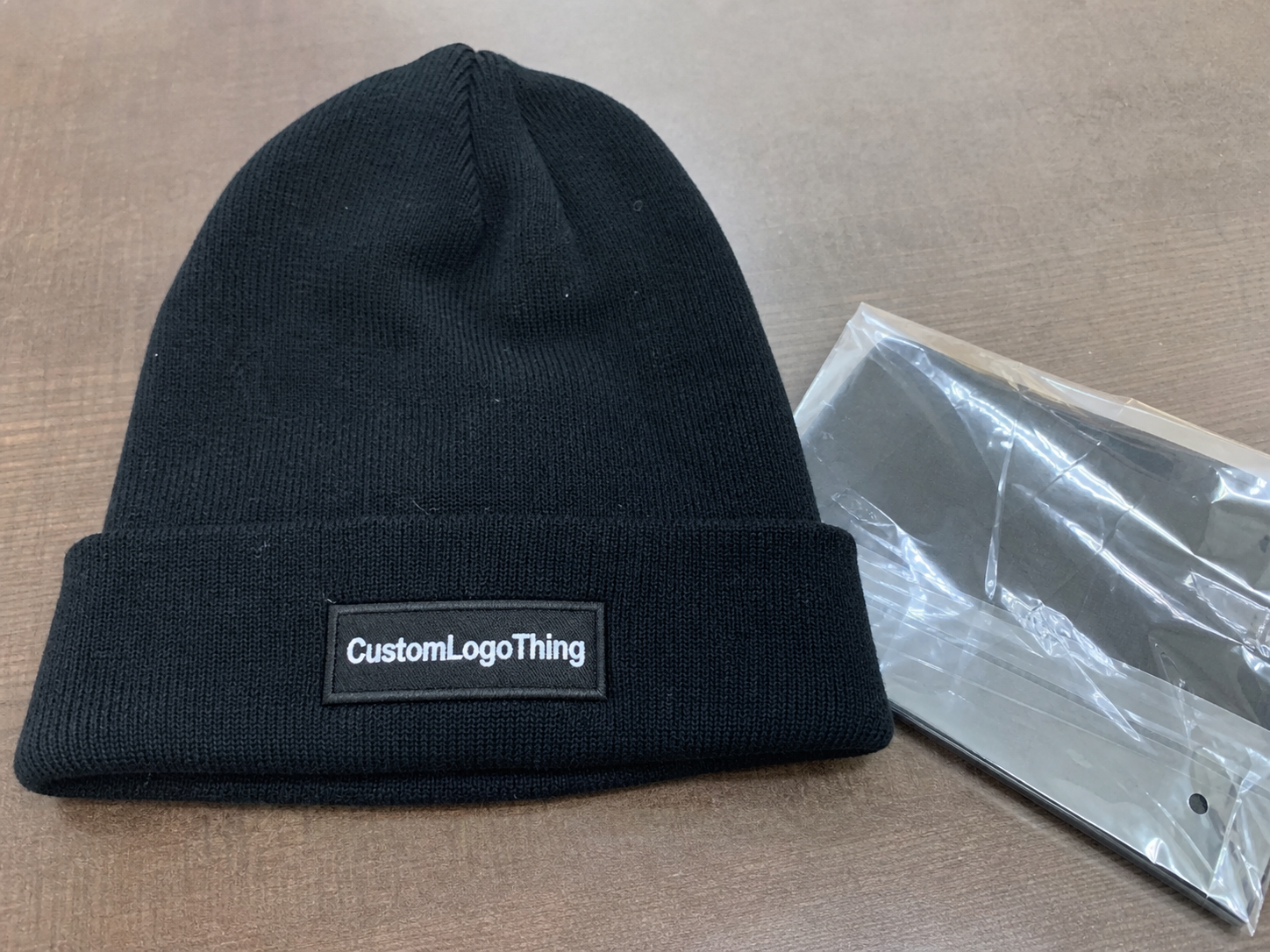
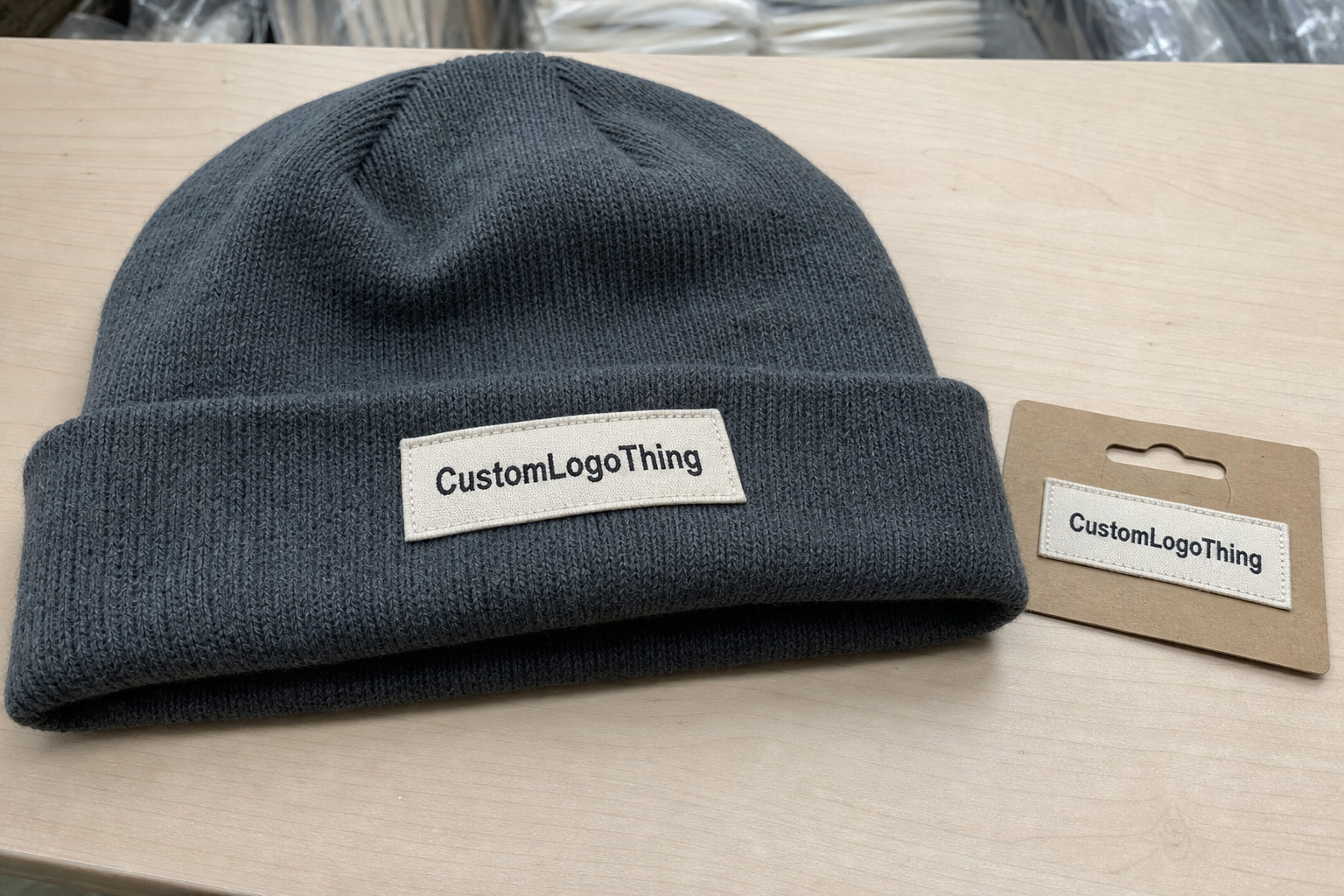
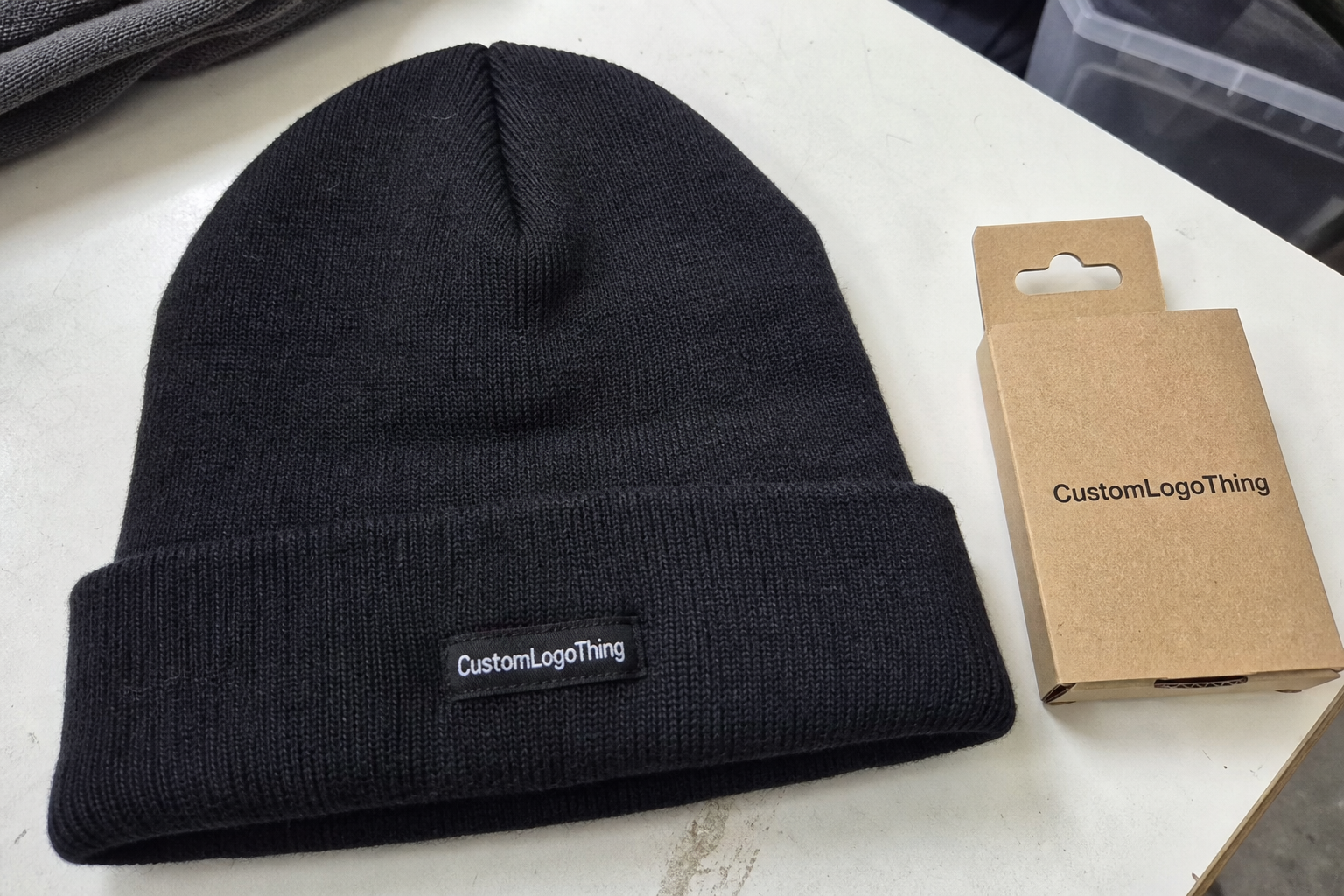
The embroidered beanies Sample Approval Checklist is the simplest way to keep a small decoration decision from turning into a costly production mistake. Beanies look straightforward in artwork files, but knit stretch, cuff depth, embroidery density, and yarn behavior change how a logo actually sits on the garment. A proof can look clean and still miss the details that matter once thread meets fabric.
For retail launches, team uniforms, promotional drops, and seasonal merchandise, the sample is the point where the design stops being theoretical. A centerline that is off by a few millimeters, a thread color that reads darker under indoor light, or a logo that sinks too far into a rib knit cuff can make a finished order feel off in a way buyers notice immediately. That is why the approval step should be treated as a control point, not paperwork.
Done well, the checklist also protects timing. A sample caught early can be corrected before the whole run is committed. A sample approved too quickly often forces the buyer to choose between accepting a flaw or paying for a remake. That is a bad place to be when the goods are already tied to a launch date.
Why a beanie sample can save the whole order
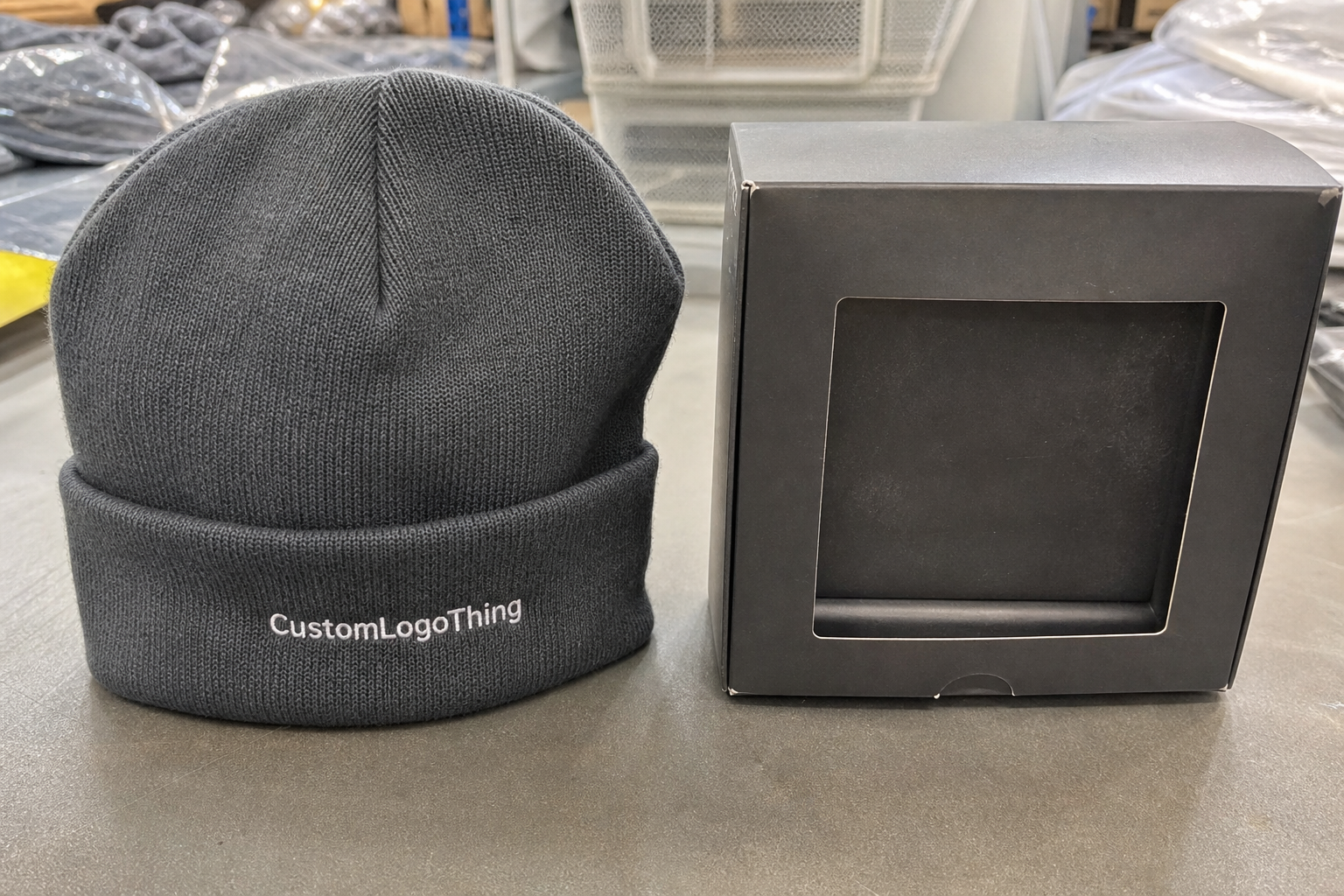
Knitted headwear is less forgiving than it looks. The fabric is elastic, the cuff folds, and the embroidery sits on a surface that rarely stays perfectly flat. On a computer screen, a logo can seem centered and balanced. On a real beanie, the same design can look low, crooked, or compressed once the knit relaxes and the garment is worn.
A buyer inspecting the physical sample gets a much clearer read on placement, texture, fit, and finish than any digital mockup can provide. Screen proofs cannot show stitch sink, thread shine, puckering around dense fills, or how the embroidery behaves when the cuff is folded down. They also cannot show how a beanie will look after it is packed, unpacked, and worn for a few minutes.
The sample matters even more for detailed logos. Thin lettering, small icon work, or designs with tight internal spaces can lose clarity fast on soft knitwear. If the style uses a thick yarn or a heavy gauge knit, fine line art may need to be simplified before bulk production starts. That kind of adjustment is far cheaper on one sample than on 1,000 finished pieces.
If the sample is wrong, the bulk order just repeats the same mistake at scale.
There is also a fit issue that gets overlooked. A low-profile beanie, a classic cuffed beanie, and a slouch style all place embroidery differently on the head. A logo that looks fine on one silhouette can sit awkwardly on another. The approval process should confirm not just the artwork, but whether the beanie style itself supports the artwork cleanly.
How the sample approval process works from proof to sign-off
The typical process starts with artwork, garment selection, and decoration details. The buyer shares the logo, confirms the beanie body, chooses yarn colors, and specifies the embroidery method. The supplier then prepares a proof showing scale, placement, and thread references. After that, a physical sample or pre-production sample is made for review before bulk production begins.
The proof and the sample answer different questions. The proof helps confirm intent: where the logo should sit, how large it should be, and which colors should be used. The sample confirms reality: whether the stitches are clean, whether the cuff changes the visual placement, and whether the beanie still feels comfortable once embroidery is added.
A practical approval flow usually looks like this:
- Proof review: confirm artwork size, placement, spelling, and thread references.
- Sample review: confirm stitch quality, fit, texture, and visual balance on the actual beanie.
- Sign-off: document the approved version so production follows the same spec without guesswork.
Written approval matters because production teams work from the final confirmed version, not the buyer’s memory of an earlier email thread. Once the sample is signed off, changes should be handled as revisions, not casual edits. That protects both sides. It also keeps the order from drifting when the project passes between sales, production, and packing teams.
If labels, hangtags, polybags, or retail cartons are part of the order, they should be reviewed at the same time. A well-stitched beanie with the wrong packaging is still not the right product. Small details like barcode placement, fold direction, and insert cards can cause more delay than expected if they are left to the end.
For buyers managing packaging claims or transit requirements, outside references are useful. For transit testing, see ISTA. For responsible paper sourcing, see FSC.
Cost, pricing, and MOQ factors that shape the approval decision
Sample pricing usually surprises first-time buyers because it is not priced like a bulk unit. A one-off sample may carry a setup charge, a small production fee, and extra handling because someone has to prepare the machine, stitch the item, trim the threads, and inspect the result before the order is repeated at scale. For a simple embroidered beanie sample, a realistic range is often around $25-$120, with higher numbers for complicated logos, patches, woven labels, 3D puff work, or custom finishing.
The minimum order quantity changes the economics too. A run of 100 pieces spreads setup cost across far fewer units than a run of 1,000, so the per-unit price tends to move accordingly. More volume does not automatically mean a lower price if the decoration is dense or the packaging is custom, but larger runs usually allow the fixed setup work to be absorbed more efficiently. Complex artwork often pushes price up faster than simple volume does.
Three cost drivers show up again and again in beanie projects:
- Thread count: more colors and denser fills mean more setup and more time at the machine.
- Decoration style: embroidery, patch applique, woven labels, and puff details all add risk and labor.
- Presentation requirements: folded packing, insert cards, barcodes, and retail cartons all add handling steps.
One useful way to compare sample options is by what they reveal, not by price alone.
| Sample option | Typical cost range | What you learn | Best for |
|---|---|---|---|
| Digital proof only | $0-$20 | Placement, size, spelling, thread callouts | Simple artwork and lower-risk orders |
| Physical pre-production sample | $30-$120 | Stitch quality, fit, cuff behavior, and color shift | Retail orders, team kits, detailed logos |
| Couriered approval sample with custom finish | $60-$180 | Garment, decoration, labels, and packing details | Launches with strict presentation or timing |
The right answer is not always the cheapest sample. If the design is simple and the order is low risk, a proof plus a straightforward physical sample may be enough. If the artwork is detailed, the deadline is fixed, or the brand is sensitive to presentation, the higher sample cost is usually justified. The money spent on a good check is usually far less than the cost of reworking a poor run.
What to inspect on the sample before you approve it
This is the part that prevents mistakes. Inspect the sample in good light, on a real head or a head form, and beside the spec sheet. A beanie checked flat on a desk does not tell the full story. The cuff changes the logo position, the knit stretches over the forehead, and the embroidery can look different once the garment is worn and flexed.
Start with placement. Measure the logo against the cuff edge and the centerline, not just by eye. A few millimeters can matter, especially on a small front panel. If the brand mark is supposed to appear centered from a normal viewing distance, confirm that it still reads correctly once the cuff is folded and the beanie is worn.
Next, inspect stitch quality closely. Look for clean edges, even fill, no loose threads, no puckering, and no crushed lettering. Dense embroidery can pull on knit fabric, especially when the design includes small text or sharp corners. If the logo appears stiff or raised in a way that makes the fabric buckle, the stitch density may need to come down.
Color deserves its own review. Thread and yarn can shift under different lighting, so check the sample in daylight and under indoor lighting. A color that looks matched at a desk may read cooler or darker once the beanie is seen in a warehouse, a store, or under event lighting. If the order is color-sensitive, review the sample against the approved swatch, not just the screen.
Comfort matters too. A beanie can look right and still feel wrong if the embroidery is too scratchy or the backing is too stiff. A short wear test is worth doing because the end user will not separate appearance from comfort. If the sample bothers the wearer in five minutes, it will not improve after a full day.
- Check whether the logo sits too low, too high, or too close to the fold.
- Feel the inside of the embroidery for rough backing, stiffness, or scratch points.
- Open and refold the cuff to make sure the shape comes back cleanly.
- Look for distortion near seams, especially if the artwork sits close to the side of the hat.
If the order is intended for retail, have someone wear the sample for a few minutes and look at it from a normal distance. That small step often exposes problems that look harmless in hand but read badly on a person. The embroidered beanies Sample Approval Checklist works best when it includes both technical checks and a quick real-world wear test.
Turnaround, lead time, and production steps after approval
Once the sample is approved, the supplier can lock the embroidery file, reserve yarn and thread, and move the order into bulk production. From there, the work usually runs through knitting or body formation, embroidery setup, trimming, steam finishing, inspection, and packing. If the beanies use custom labels, hangtags, or cartons, those parts should be released at the same time so the order does not wait on a missing component later.
Lead time depends on how clean the approval was and how many moving parts the order has. For a straightforward order with no revisions, production after sign-off may fall in the 12-20 business day range, depending on quantity and factory load. Complicated artwork, special packaging, or extra size breakdowns can push that longer. A revision to logo position or thread color can restart part of the process, even if the change seems minor on paper.
That is why schedule planning matters so much for seasonal or event-driven purchases. If a sample needs one correction, a few days disappear quickly. If it needs two corrections, the timeline can slip enough to force expensive shipping choices or rushed packing. Buyers who treat sample approval as a real milestone usually avoid that pressure.
The sequence after sign-off is usually simple:
- Final artwork lock and order confirmation
- Reserve yarn, thread, labels, and packaging materials
- Form the beanie body and prepare the embroidery run
- Stitch the decoration and remove loose threads
- Steam, shape, inspect, and count the finished pieces
- Pack and label the goods for shipment
For orders that will move through distribution centers or retail systems, packaging should be treated as part of the product spec, not a side note. Carton strength, folding method, and insert placement all affect how the goods arrive and how much rework is needed on the receiving end. A shipping test standard like ISTA is useful because it reminds buyers that the box has to survive the trip, not just look neat on a packing table.
Common sample mistakes that blow the budget
The biggest mistake is approving from a photo. Images are useful for quick review, but they hide texture, scale, and stitch issues that become obvious in hand. A slightly crooked logo can look acceptable in a straight-on picture because the camera angle is doing some of the work. If the order matters, a physical sample should be the final check.
Skipping the fit check is another common error. Different beanie shapes sit differently on the head, and that changes where the embroidery visually lands. A deep cuff, a shallow crown, and a slouch fit all create different impressions even if the logo position on the pattern is technically the same. If the sample is never worn, the buyer is guessing.
Scope creep also causes trouble. A buyer approves the sample and then asks for a bigger logo, a new label, and a different pack-out method. That is not a tiny revision. It is a changed order with the same purchase order number attached to it. The result is usually more cost, more time, and more confusion between approvals.
Vague feedback slows everything down. “Make it better” helps nobody. Better notes are measurable: move the logo up 6 mm, reduce stitch density so the cuff does not pucker, or match the darker green thread from the approved swatch card. The more exact the correction, the less back-and-forth is needed.
There is also a quality-control mistake that shows up in rush orders: approving one sample and assuming the bulk run will look identical without confirming the production file. In actual production, machines, operators, and material lots can vary enough to shift the result if the standard is not locked. A written record is better than a verbal promise every time.
Keep the embroidered Beanies Sample Approval Checklist as a documented reference, not a memory exercise. Once the order starts moving, the small details are the ones that get lost first.
Next steps to approve faster and avoid a redo
The cleanest approval process is usually the least dramatic one. Keep the approved art, beanie color, thread colors, placement dimensions, label details, and packaging notes in one place. If the project lives across a long email chain with half a dozen “final” versions, nobody has a reliable source of truth.
A quick sign-off routine helps a lot. Review the sample in good light, compare it to the spec sheet, document any changes with photos, and approve only after every note is resolved. If one item does not match, pause the order and fix it before production starts. A short delay at the sample stage is far cheaper than a full-scale redo.
Keep one approved sample as the master for future reorders. That helps with consistency when staff changes, seasonal restocks, or different buyers are involved later. Without a physical reference, even small details like logo position or thread tone can drift from run to run. That drift tends to show up only after the goods are already packed.
For buyers who care about sustainability claims or presentation, a few extra checks are worth doing early. Ask whether the carton or insert paper is FSC-certified, and confirm whether any excess packing can be removed without hurting protection or presentation. For shipments that move through multiple handling points, ask whether the packaging needs a stronger spec than the default. Those details do not usually raise cost much, but they can reduce damage and rework.
Use the embroidered beanies Sample Approval Checklist before any bulk order, and do not release production until the sample matches the agreed placement, stitch quality, color, fit, and packing. That habit saves money, protects timing, and keeps the finished goods aligned with the original plan.
How do I use an embroidered beanies sample approval checklist for a first order?
Start by comparing the sample against the artwork, placement drawing, size spec, and thread references line by line. Then check fit, stitch quality, cuff behavior, and the overall feel on an actual head or head form, not just on a table. Only approve after you document any changes and confirm that the factory has updated the production file. The sample should confirm the real item, not just the intention behind it.
What should I compare between the mockup and the physical beanie sample?
Compare logo size, logo position, thread color, and how the design sits on the knit surface. Look for puckering, distortion, loose threads, or embroidery that disappears into the cuff fold. If the physical sample differs from the digital proof, treat the sample as the standard unless the supplier can clearly explain why the proof better reflects the final product.
Does sample approval affect beanie pricing later?
Yes. Any change after approval can trigger extra setup work, remake costs, or a revised unit price. More thread colors, denser embroidery, changed labels, and custom packaging can all alter the final figure. Locking the sample early usually protects both budget and schedule.
How long should sample turnaround take for embroidered beanies?
Turnaround depends on artwork readiness, material availability, and whether the sample is being stitched from scratch. Simple samples usually move faster. Specialty yarns, patch details, or multiple revisions take longer. For a launch date or event deadline, it is smart to leave room for at least one correction cycle so the calendar does not become the decision-maker.
Can I approve embroidered beanies by photo instead of waiting for the sample?
You can review a proof by photo first, but that is not the same as approving the real item. Photos often hide stitch issues, texture problems, and scale errors. If the order is important or the logo is detailed, insist on a physical sample before sign-off. That is exactly what the approval checklist is meant to prevent: a nice-looking image masking a bad finished product.