Why embroidered patches can make or break a gift set
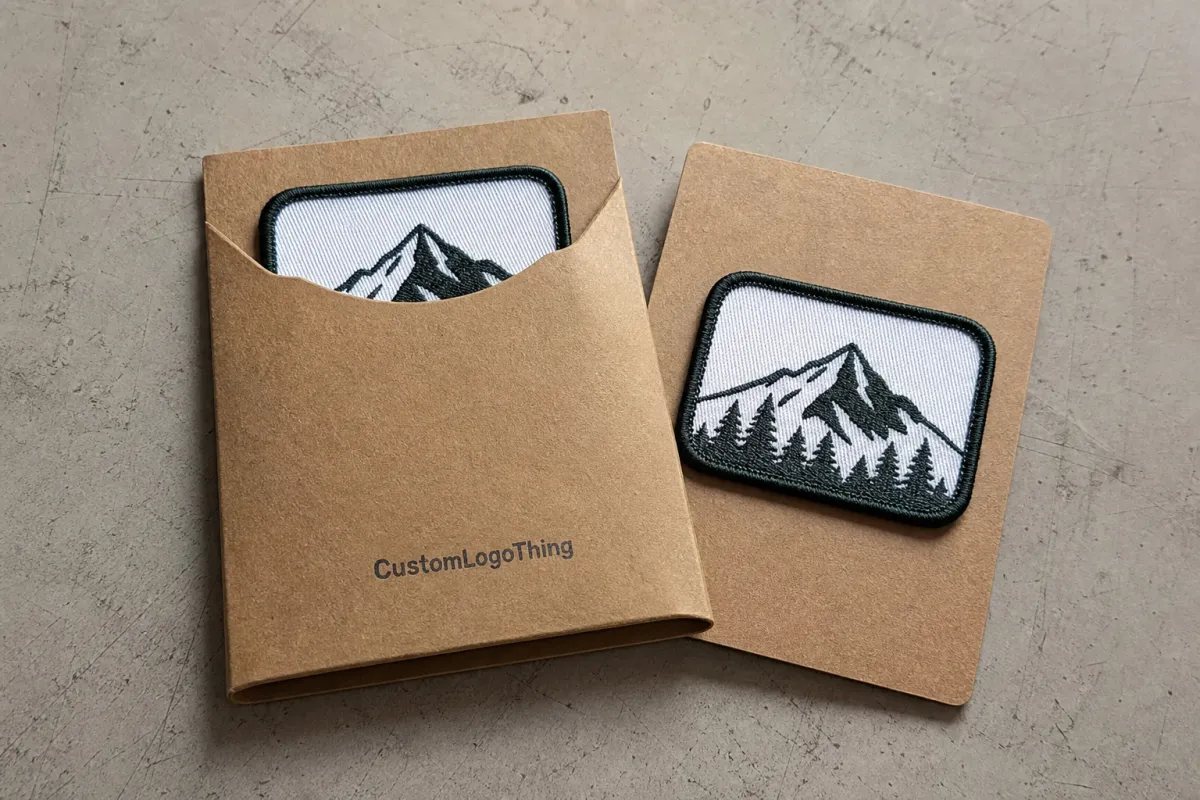
An embroidered patch is small, which is exactly why buyers underestimate it. Then it sits in a gift box, gets handled first, and starts carrying the burden of the entire set. That is the practical reality behind the embroidered patches material guide for gift set brands: the material choice is not decoration trivia. It affects hand-feel, attachment strength, durability, and whether the set reads as premium or rushed.
Gift Set Brands care because the patch is often the first tactile proof point. If the thread is stitched onto a flimsy base fabric, or the backing fails when someone tries to apply it, the perceived value drops fast. A premium box can be undone by one piece that feels thin, sticky, or badly cut.
At its simplest, an embroidered patch is stitched thread artwork built on a base fabric, usually paired with a backing so it can be attached to apparel, pouches, hats, inserts, or packaging. The embroidery is only part of the result. The base and backing decide whether the patch behaves like a keepsake or a disposable add-on.
This guide is for brands that need practical answers: which base fabric holds detail best, which backing suits a gift set, where costs jump, and what delays production. The goal is not to choose from a sample card because it looks nice. The goal is to Buy the Right construction for the actual use case.
How embroidered patch materials work from base fabric to backing
Every embroidered patch has a stack of choices hidden under the thread. Start with the base fabric. Most suppliers build on twill, felt, or canvas, then finish with a border and backing. That combination changes how sharp the patch looks, how soft it feels, and how it behaves in use.
Twill is the workhorse. It has a smooth enough surface for clean stitch definition, which matters when the logo includes small letters or thin lines. Felt feels softer and slightly more nostalgic, which can suit lifestyle or heritage branding. Canvas has a tougher, more rugged read, so it supports utility kits, outdoor bundles, and brands that want texture to tell part of the story.
The border matters too. A merrowed border gives a classic stitched edge, while a clean-cut border feels more modern and controlled. Thread choice also changes the result. Standard embroidery thread has the familiar sheen most buyers expect; matte thread reads more restrained and can look more premium in certain gift sets.
Backing decides how the patch is installed. Sew-on backing is the safest if the patch needs to stay put. Iron-on backing is convenient, but only if the application surface and heat tolerance are suitable. Velcro works for removable branding, and adhesive backing helps with short-term packaging applications or temporary placement on inserts.
The part buyers skip too often is that materials do not work in isolation. A dense logo on a tiny patch needs a tighter weave and more careful stitch planning. A design that looks crisp at 75 mm may turn muddy at 45 mm. That is why a proper embroidered patches material guide for gift set brands has to connect material choice to artwork size and intended application.
| Base material | Look and feel | Detail level | Typical use in gift sets | Relative cost |
|---|---|---|---|---|
| Twill | Clean, balanced, classic | Good to very good | Most branded gift sets | Low to medium |
| Felt | Soft, nostalgic, handcrafted | Fair to good | Lifestyle, seasonal, artisan kits | Medium |
| Canvas | Heavy, textured, rugged | Good, depending on stitch count | Outdoor, utility, premium rustic sets | Medium to high |
| Specialty woven base | Distinctive, elevated | Varies by construction | Limited editions, collector sets | High |
Key factors that decide the right patch material
Brand positioning comes first. A luxury gift set should not use the same patch construction as an event giveaway. If the set is meant to feel premium, the patch needs cleaner edges, a more refined backing, and a material that does not fight the design. If the brand is outdoorsy or utility-driven, texture and toughness may matter more than a polished sheen.
Durability is the next filter. Will the patch be handled once and tucked into packaging, or will it be worn, washed, flexed, and reattached? If the answer includes repeated use, base fabric stability and backing strength matter far more than surface appearance. A patch on a pouch that gets tossed into a bag every day needs different treatment from a patch sitting on a box insert.
Artwork complexity can make a beautiful material look bad very quickly. Tiny type, thin linework, and small icon details need a tighter weave and a cleaner stitch plan. Felt can be attractive, but if the logo depends on crisp micro-details, it may blur the edges. That is not a material defect. It is a mismatch.
Color and texture also change how thread reads. A matte base fabric makes colors feel calmer. A brushed or fuzzy surface can soften contrast. A smoother twill can make thread pop more sharply. In practice, the same PMS-inspired color can look different across two bases. Buyers get surprised by this constantly, which is odd because texture is doing exactly what texture does.
Compliance matters too. If the gift set is child-facing, skin-contact heavy, or includes heat-applied backing, ask for testing and warnings before approval. For shipping performance, think about how the patch will travel with the rest of the set. If the box uses corrugated cardboard, kraft paper inserts, or FSC certified packaging, the patch should fit that material story instead of sitting outside it. Brands using recycled materials, post-consumer waste paper, or biodegradable packaging usually want the patch to feel intentional, not like a random accessory thrown in to fill space.
For shipping and packaging coordination, many brands also reference general transit standards like ISTA to understand how products hold up through distribution. Not every patch needs formal transit testing, but the mindset helps. If the set moves through warehousing, kitting, and retail distribution, the patch finish should be chosen with those stages in mind.
Embroidered patches material guide for gift set brands: choosing by use case
This is the practical part of the embroidered patches material guide for gift set brands. Pick the patch material based on the job it has to do, not the sample photo or the catalog image.
For premium retail gift sets, twill is usually the safest default. It balances detail, consistency, and cost, so the logo stays readable and the finish feels controlled. If the set is high-end, a tighter stitch count, cleaner border, and better backing can lift the presentation without pushing the item into a wasteful spend category.
For event kits and employee welcome packs, the patch often needs to look polished while staying cost-effective. Twill with sew-on or iron-on backing usually works. If the patch goes onto a hoodie or tote, sew-on is better when longevity matters. If it is going onto a gift box insert or a garment that will not be washed often, iron-on can be acceptable.
For subscription boxes, the patch often acts like a collectible insert. Felt can work well if the brand wants a softer, friendlier tone. It has a handcrafted feel that suits seasonal drops, community merch, and limited-edition campaigns. Keep the artwork simple, though. Felt is not the right place to cram in four lines of tiny text and expect clean results.
For seasonal bundles or holiday gifts, texture can do a lot of storytelling. Felt, brushed twill, or a specialty woven base can give the item a warmer feel. If the patch is only there to make the box feel fuller, keep the construction efficient. Decorative does not have to mean expensive.
For outdoor, travel, and utility sets, canvas or heavier woven bases are a strong fit. They support a more rugged position and handle frequent touch better. If the brand sells reusable bottles, pouches, or gear bags, a tougher base fabric keeps the story consistent.
Backing choice should follow the end use:
- Sew-on for permanent attachment and repeated wear.
- Iron-on for convenience on compatible fabrics and controlled use cases.
- Velcro for swap-out merch, modular kits, or tactical-style branding.
- Adhesive for temporary packaging applications, sample packs, or inserts.
One more practical point: if the patch will be used directly on packaging, test it on the actual substrate. A patch that behaves nicely on paper may not sit the same way on coated board, textured kraft, or folded corrugated cardboard. Surface texture changes the bond, and weight changes the way the piece moves in the box. That is why sample testing matters.
Cost, pricing, and MOQ: what actually changes the quote
The quote is driven by specifics, not vibes. The main cost factors are patch size, stitch count, material grade, border style, backing type, and whether packaging extras are needed, such as individual bags or custom cards. A 60 mm patch with clean twill construction will usually price lower than a 90 mm patch with dense embroidery, specialty backing, and a custom border treatment.
For rough planning, simple twill patches in moderate quantities can sit in a lower cost band, while specialty materials and mixed backing options push the price up fast. In practical terms, buyers often see something like $0.40-$0.90 per unit for straightforward runs at higher quantities, while more complex builds can move into the $1.00-$2.50+ range depending on size and finish. Low MOQ runs usually cost more per piece because setup is spread across fewer units. That is just arithmetic, wearing a disappointing face.
| Option | Typical use | Cost tendency | MOQ impact |
|---|---|---|---|
| Standard twill + sew-on | Most gift set applications | Lower | Best for scaling |
| Felt + iron-on | Soft, branded inserts | Medium | Moderate minimums |
| Canvas + Velcro | Reusable, utility-focused kits | Medium to high | Depends on hardware |
| Specialty base + custom packaging | Collector or limited edition sets | High | Often higher minimums |
MOQ matters because smaller gift set runs often pay a premium for setup. If you need only a few hundred units, the unit price usually climbs. Once you move into larger orders, the quote typically improves and you may gain access to more material and backing options. Buyers should ask early about minimums if the run is truly limited, because some suppliers can accommodate special builds while others cannot.
Sample and setup fees can also surprise people. If the artwork is complex, if the border style needs a custom shape, or if you are comparing twill versus felt and asking for multiple mockups, expect extra charges. That is normal. What is not normal is discovering those fees after the purchase order is already moving.
A practical rule: if the patch is a hero item inside the gift set, spend more on the material and finish. If it is a supporting insert, keep the construction efficient and put the money into the box, print, or another tactile element such as kraft paper sleeves or FSC certified carton structures. That tradeoff usually produces a better overall package.
Process and turnaround: from artwork approval to delivery
The production path is straightforward if the brief is clear. First comes the design brief and artwork check. Then the supplier recommends a base fabric, backing, and border. After that, you approve a sample or proof, the factory runs bulk production, then finishing, then shipping. The sequence sounds simple. It rarely is, because decisions get made late.
The biggest delays usually come from unclear artwork, changes to patch shape, late backing decisions, and back-and-forth on thread colors. If you keep changing from sew-on to iron-on, or from twill to felt after sampling starts, the schedule will move. Quickly. Not because anyone is lazy. Because physical production has to happen.
Typical timelines vary by complexity. A straightforward patch run can often move through production in roughly 10-15 business days after proof approval. If you need custom sampling, specialty materials, or more revision rounds, plan on 2-4 additional weeks. For brands building a launch around kitting and warehouse receiving, that extra buffer matters more than most teams want to admit.
Gift set production also has to sync with the rest of the packaging. Patches should arrive before or alongside cartons, inserts, and assembly dates. If the patch shows up late, the whole set sits half-finished in a warehouse while everyone acts surprised that logistics is, in fact, a real thing.
For brands that care about packaging stewardship, it is reasonable to ask how the patch ships and whether outer packaging can be optimized around it. The broader packaging ecosystem has standards and materials guidance available from groups like the Packaging School and packaging industry resources, especially when comparing inserts, mailing cartons, and storage protection. A patch may be small, but the container around it still matters.
Common material mistakes gift set brands keep repeating
The first mistake is choosing a material because it looks premium in a rendering, then discovering it blurs small text. That happens constantly. Felt, for example, can look rich and soft, but if the logo has tiny lettering, the result can feel fuzzy rather than elevated.
The second mistake is using iron-on backing because it sounds convenient, even though the patch needs permanence or repeated wear resistance. Iron-on is fine in some cases. It is not a universal answer. If the patch is going on a garment that will be washed or flexed a lot, sew-on is usually the safer choice.
The third mistake is ignoring the feel test. A patch can photograph well and still feel thin, plasticky, or cheap in hand. Gift sets sell on touch as much as visual impact. If the surface texture feels off, the whole set loses points fast.
The fourth mistake is over-ordering a fancy material before testing it on the actual product. A patch that works on a structured hoodie may not sit the same on a soft pouch, a coated box, or a paperboard insert. Even the packaging board matters. Recycled materials, post-consumer waste liners, and biodegradable packaging surfaces all react differently to heat, adhesive, and pressure.
The fifth mistake is skipping pre-production approval and then acting shocked when color shifts under different lighting. Printing and embroidery are not magic. Thread sheen, base fabric texture, and room lighting all change perception. Ask for a physical sample or at least a strong proof set before the bulk run.
“The patch was only one piece of the box, but it was the one everybody touched first. If that part felt cheap, the whole gift set felt cheap.”
Expert tips and next steps for buying the right patch material
Start with the surface the patch will touch. A thick hoodie, a delicate canvas pouch, a paperboard insert, and a gift box lid do not need the same build. If the attachment surface is smooth and stable, you have more options. If it is textured, flexible, or heat-sensitive, narrow the field early.
Ask for swatches or a photo set before you commit to a full run, especially if the gift set is positioned as premium. Swatches are boring. Losing margin because a material looked better in a PDF is more boring. The buyer who asks for samples usually spends less later.
If you are torn between twill and felt, request both. If you are split between sew-on and iron-on, ask for side-by-side application examples. A small comparison can save a production batch from becoming an expensive lesson.
Use this checklist before approving production:
- Artwork size and detail level
- Gift set use case
- Backing type
- Target feel and positioning
- Estimated quantity
- Budget ceiling
- Launch deadline
If your set needs sustainability alignment, ask whether the surrounding packaging uses FSC certified paper, recycled materials, or post-consumer waste content. That helps the patch feel like part of the same brand story instead of an afterthought. The same logic applies to outer mailers, inserts, and anything made from kraft paper or corrugated cardboard. Consistency sells because it reduces visual friction.
The cleanest buying sequence is simple: choose the use case, narrow to two material options, request Pricing and Lead Times, then approve one sample before bulk production. That is the most reliable way to move from concept to finished set without guessing. If you need a practical embroidered patches material guide for gift set brands, that is it: match the material to the job, not the fantasy.
FAQs
What is the best embroidered patch material for gift set brands?
Twill is usually the safest default because it balances detail, durability, and cost. Felt works better for soft, nostalgic, or handcrafted branding, but it is less precise on small text. The best choice depends on the gift set’s positioning and the surface the patch will be applied to.
How does backing choice affect embroidered patch durability?
Sew-on backing is the most durable for long-term wear or repeated handling. Iron-on is convenient but can fail on textured fabrics or under repeated high-heat washing conditions. Velcro is best for removable or swap-out applications, not permanent branding.
What should gift set brands expect for embroidered patch MOQ and pricing?
Smaller quantities usually have higher unit costs because setup is spread across fewer pieces. Simple twill patches with standard backing are typically more affordable than specialty materials. MOQ can vary widely by supplier, so ask early if you need a limited run.
How long does embroidered patch production usually take?
Simple jobs can move quickly, but sampling, approvals, and complex materials add time. Artwork revisions and backing changes are common delay points. Plan patch production to finish before kitting and warehouse assembly dates.
Can embroidered patches be used directly on gift packaging?
Yes, but adhesive or temporary backing is usually better for packaging than permanent sew-on construction. Test the patch on the actual box, pouch, or insert material before full production. Make sure the patch weight, texture, and attachment method match the packaging surface.