Event merch Custom Promotional Hats bulk order pricing
Event merch Custom Promotional Hats bulk order pricing looks simple until the first proof arrives. Then the real questions show up: Will people wear the hat outside the event? Will the logo survive production without turning stiff or muddy? Will the per-unit price still make sense after decoration, freight, and packing are added in?
Those questions matter because hats do not behave like most giveaways. A keychain disappears into a pocket. A tote bag gets folded and forgotten. A cap can live on a head for months, maybe years, which means one order can keep generating impressions long after the booth is dismantled. That is the economic case for hats, and it is stronger than many buyers expect.
The best orders are not the loudest. They are the ones that balance three things: a style the audience will actually wear, decoration that reads cleanly at distance, and a production plan that leaves room for proof changes and shipping reality. Everything else is decoration on top of the process.
Why hats outlast most giveaway items
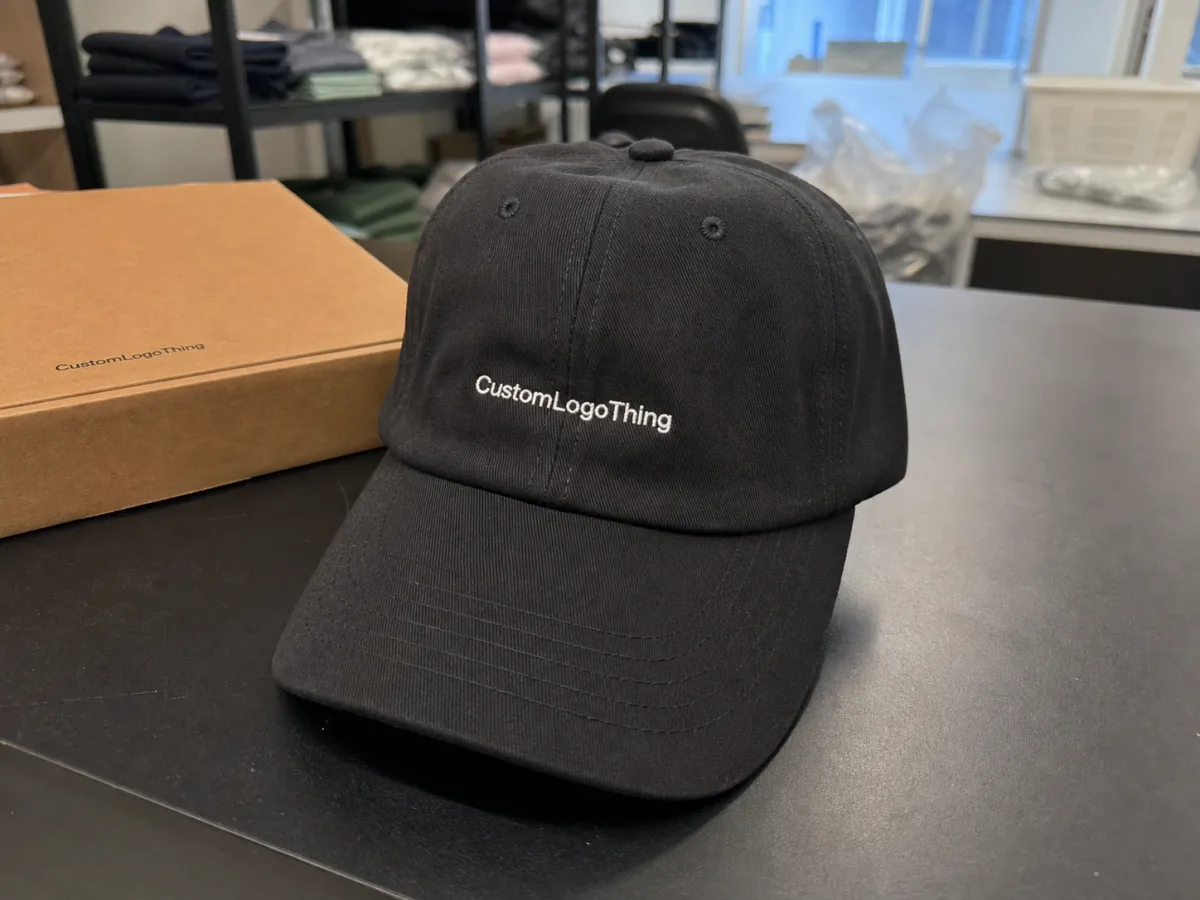
Most promotional items have a short life cycle. Hats do not. They solve a practical problem first: sun, glare, heat, travel, or simply having something wearable when a brand wants a visible touchpoint. That utility gives hats an advantage over novelty merch, where the first reaction is often better than the last.
Outdoor festivals use them because they are wearable. Trade shows use them because they are compact and easy to hand out. Sponsor programs use them because the logo is visible in photos without requiring the person to hold anything up. Even internal teams reach for hats because one adjustable style can cover a wide range of head sizes, which reduces the awkward pile of leftovers that happens with apparel sizing.
There is also a quality-of-wear issue that buyers often underestimate. If a hat is too shallow, it rides high and feels cheap. If the sweatband is rough, it gets abandoned. If the closure scratches the neck, the customer may keep the hat only long enough to be polite. A cap that fits comfortably performs better than one that merely exists.
A hat only becomes expensive when nobody wears it.
That is why a lower unit price is not always the best outcome. A $3.50 cap that stays in a swag bag costs more in practice than a $5.75 cap that keeps showing up at weekend events. For event merch custom promotional Hats Bulk Order planning, the useful metric is not how many units left the warehouse. It is how many impressions those units keep producing.
Hats are also easy to fold into broader event kits. They do not need batteries, assembly, or fragile packaging. They stack neatly, pack well, and survive transit better than a lot of higher-touch merch. If the campaign includes inserts, sleeves, or branded boxes, the hat should be specified early so the packaging dimensions and decoration placement do not fight each other later.
Hat styles and decoration methods that fit the job
Style choice is where many buyers save or lose money. The shape changes the audience fit, the decoration options, and the final mood of the piece. Dad caps are the broadest all-around choice. They read casual without looking sloppy, and they fit a wide age range. Trucker hats breathe better, which makes them useful for outdoor activations and warm-weather events. Five-panel caps give a flatter front and a slightly more streetwear feel, so they work well for brands that want a cleaner silhouette. Beanies are the cold-weather answer. Bucket hats are louder, intentionally so, and tend to work best for festivals or sponsor drops where visibility matters more than restraint.
Decoration method matters just as much. Embroidery is still the default for a reason: it looks durable and feels finished. It is the safest choice for simple logos, initials, and marks with solid shapes. Patches add depth and can hide some of the limitations of embroidery on very dense artwork. Printed fronts are useful when the design depends on color blends, photographic detail, or a graphic that would become expensive to stitch. Woven labels are quieter, but they are sharp and tidy for subtle branding.
Each method has a tradeoff. Embroidery can make a small logo feel premium, but detailed art may need simplification. Patches introduce another production stage, which adds time and can add cost. Printing protects artwork complexity, but it may not feel as substantial on a gift item that is supposed to signal quality. The right answer depends on what the hat is supposed to do. Staff uniform, VIP handout, sponsor gift, and retail-style merch are not the same job.
As a rule, keep the decoration readable from a short distance first. A booth logo that is visible across the aisle is more valuable than a clever design that only works when someone stands still and studies it. Tiny text, thin outlines, and crowded compositions tend to suffer on curved surfaces. Flat artwork becomes less flat once it wraps around a cap.
Materials, fit, and construction specs to check
Fabric choice shapes more than look. Cotton twill gives a classic cap feel and a stable surface for embroidery. Brushed cotton is softer and more casual, though some buyers read it as less structured. Polyester handles heat well, dries faster, and keeps color consistent across larger runs. Mesh back panels improve airflow and are one reason truckers remain a practical outdoor staple. Performance blends add moisture management, which matters if the hat will be worn for long shifts or hot events.
Fit begins with crown height and panel shape. A shallow cap can look fashionable on a screen and awkward on a real head. A deeper crown often wears better for bulk programs because it covers more sizes and sits more comfortably. Six-panel caps are common because they balance shape and flexibility. Five-panel caps give a broader front for logos and flatter art. Structured caps hold their shape better in photos and on display, while unstructured hats feel softer and more broken-in from day one.
Closure style is another detail that affects outcomes. Snapbacks are usually the safest bulk option because they accommodate a wide range of wearers. Hook-and-loop closures are fast and cheap, though they may feel less premium. Fabric straps with metal buckles look more refined but can raise cost and limit certain styles. Fitted hats can look strong in retail settings, but they are a poor fit for broad event distribution unless the size range is tightly controlled.
Buyers also need to watch the decoration surface itself. Fine text often loses clarity in embroidery. Small interior details can disappear inside a patch. Very light thread colors may not reproduce the same way across every fabric base. If the artwork depends on a tight gradient or a thin line weight, production may need simplification. That is not a flaw in the process; it is a normal constraint of turning a digital image into stitched or printed goods.
For orders that include packaging, the same logic applies to inserts, sleeves, or custom printed cartons. Hat size, carton count, and decoration placement should be reviewed alongside packaging dimensions. If the cap is meant to sit inside a mailer or event box, the box should be specified before production starts, not after the hats are already on a truck.
Pricing, MOQ, and unit cost for event merch custom promotional hats bulk order
Pricing is driven by quantity, decoration complexity, material choice, and any extra handling requested by the buyer. That sounds straightforward, but it is easy to underestimate how quickly small details add up. A stock cap with simple embroidery will usually cost less than a specialty fabric hat with patches, woven labels, custom inner tape, and individual packaging. Rush timing and freight can move the total again. The setup is where the money hides.
Bulk pricing improves as the run gets larger because setup costs are spread over more units. A 100-piece order often looks expensive on paper, even when the per-hat price is fair for the work involved. By the time the order reaches 1,000 units, the unit cost can drop sharply because art preparation, machine setup, and proofing are amortized across a bigger batch.
Typical adders include stitch count, extra thread colors, patch shape, custom labels, upgraded closures, and specialty packaging. A simple 3,000-5,000 stitch logo is usually more cost-efficient than a dense 8,000-stitch mark with tiny text and multiple fill areas. The same principle applies to patches. A one-color patch with clean borders is easier to run than a multi-layer cut shape with several components and edge treatments.
| Hat style | Common MOQ | Typical unit price at 100-250 pcs | Typical unit price at 1,000+ pcs | Best use |
|---|---|---|---|---|
| Dad cap, embroidery | 50-100 | $5.50-$9.00 | $3.20-$5.25 | General giveaways, staff wear, everyday brand exposure |
| Trucker hat, patch | 50-100 | $5.75-$9.50 | $3.40-$5.75 | Outdoor events, heat-friendly promotions, sponsor drops |
| Five-panel, printed front | 100 | $4.80-$8.25 | $2.95-$5.00 | Color-heavy graphics, younger audiences, merch-style campaigns |
| Beanie, embroidery | 50-100 | $6.25-$11.00 | $4.10-$6.75 | Cold-weather events, winter uniforms, travel kits |
| Bucket hat, patch or print | 100 | $6.00-$10.25 | $4.00-$7.00 | Festivals, sponsor activations, fashion-forward branding |
These ranges assume stock blanks and standard decoration. Once a buyer requests specialty fabric, custom labels, molded patches, or individual retail packaging, the quote changes. Freight changes it too. A unit price without shipping is only half a comparison, and sometimes less than half if the order has to move across multiple cartons or ship on a deadline.
Useful quote checks are simple:
- Confirm the hat body is identical, not just visually similar.
- Verify decoration method, stitch count, and thread colors.
- Ask whether proofing or sampling is included.
- Check freight, carton count, and any split-shipment fees.
- Clarify whether the MOQ changes between embroidery, patch, and print.
Buyers sometimes focus on the lowest number and ignore the cost of fixing mistakes. A hat that is late, packed poorly, or mismatched in color is not a bargain. It is a problem with a discount attached.
If the hats are part of a larger kit, packaging should be costed in the same round of quoting. The more the order depends on insert cards, sleeves, or custom cartons, the more important it is that the hat spec and packaging spec are aligned from the start. That is where Custom Packaging Products can keep the order consistent, and where Wholesale Programs make sense for repeat runs instead of one-off buying.
Process and turnaround: proof to delivery
The production flow is familiar, but it only works well when each step is clear. Artwork comes first. Vector files are best for embroidery and patches because they preserve clean edges and accurate sizing. A proof follows, showing placement, approximate dimensions, and color treatment. If the order is complex or expensive enough to justify it, a sample or pre-production piece should be approved before full production starts. Then comes the run itself, quality inspection, packing, and shipping.
Timing depends on stock and decoration. Simple embroidery on in-stock hats often lands in the 10-15 business day range after proof approval. Patch orders commonly stretch to 12-18 business days because the patch itself has to be produced before application. More complex or fully custom builds can run 15-25 business days or longer. Rush service exists in some cases, but only if the blanks are available and the artwork is already clean. A rushed file revision defeats the rush.
The most common delays are surprisingly ordinary. A logo revision lands after approval. A buyer wants a color match but never provided a clear PMS reference. A shipping address changes. The event date was communicated, but the delivery window was not. Production usually moves faster than the approval chain around it.
It helps to plan backward from the actual event date, then add a real cushion for proofing and transit. If the hats are going through multiple warehouses or need to survive parcel handling, carton durability becomes part of the spec rather than an afterthought. Industry test references such as ISTA are useful when shipping quality matters. If inserts or outer cartons use paper-based materials, FSC-certified stock is often the cleaner sourcing request.
That kind of planning may sound cautious, but the alternative is expensive. A delivery that arrives complete but after the event date does not help the campaign.
What buyers get from a manufacturer, not a reseller
Direct manufacturing usually means fewer handoffs. Fewer handoffs reduce the chances that the artwork, color reference, or packing instructions drift between the first quote and the final shipment. That matters most when the order is not a generic blank cap but a branded product with specific expectations around finish, quantity, and schedule.
Resellers can handle simple projects well enough, especially when the buyer needs a standard product quickly. Once the order becomes more specific, the value of a direct line to production grows. Questions about stitch count, patch shape, thread selection, closure type, and carton packing get answered by people closer to the work. That tends to produce cleaner outcomes.
Manufacturers are also better positioned to flag risks early. If the logo is too detailed for embroidery, they should say so. If the artwork would look better as a patch, that should be raised before production begins. If the closure choice conflicts with the target audience or the budget, that should come up before the quote is locked. Early correction is cheaper than late correction.
Sampling is another practical advantage. For detailed logos, color-sensitive brands, or large runs, one sample or pre-production proof is worth the time. A single approved piece costs much less than reworking a thousand finished units. Yet buyers still skip that step and then wonder why the final result feels different from the mockup.
For orders that extend into packaging, a manufacturer can often coordinate the hat, carton, and insert more cleanly than a chain of separate vendors. That matters for package branding and for teams that need event merch to arrive sorted, labeled, or pre-kitted. The line between merch and packaging is thinner than it looks from the outside.
One honest caveat: direct manufacturing is not automatically the cheapest quote on the first page. But once revisions, markup layers, and shipping corrections enter the picture, a lower headline price from a middleman can stop looking low very quickly. Precision has a cost. So does uncertainty.
Order checklist: what to lock before production starts
Before approval, the buyer should lock the details that most often create delays or price changes. These are the items that save time later.
- Hat style: dad cap, trucker, five-panel, beanie, or bucket hat.
- Decoration method: embroidery, patch, print, or woven label.
- Quantity: final count plus a small overage if spares are needed.
- Color: hat color and logo color, with PMS guidance if the match matters.
- Artwork: vector file preferred, with notes on small text and minimum line weight.
- Shipping: full address, receiving hours, and whether split shipment is required.
- Deadline: event date, not the date the proof is expected.
Compare the mockup against the actual use case. A design that looks balanced on a screen can sit too low, too wide, or too crowded on a cap. If the hats are for staff, legibility matters more than trend. If they are for sponsors, cleaner branding usually outperforms a busy front panel. If they are meant for resale, finish quality rises to the top of the list. The purpose decides the spec.
Ask for proofing or sampling when artwork is detailed, the color match is sensitive, or the order is large enough that a mistake would hurt. That is basic risk control. If the hats are part of a broader event package, align the packaging schedule with the production schedule so the boxes are not waiting on hats, or the hats waiting on boxes.
For event merch custom promotional hats Bulk Order Planning, sending art, quantity, color, and timing together is the fastest way to get a quote that reflects the real job. It cuts down on revisions and avoids the false precision that comes from quoting a product before the specifications exist.
What is a normal MOQ for event merch custom promotional hats bulk order?
MOQ depends on both the style and the decoration. Stock dad caps and truckers often start around 50-100 pieces, while more specialized builds may require more. Ask about the exact hat body and decoration method you want, because embroidery, patches, and custom fabrics can all change the minimum.
Which hat style works best for outdoor event merch?
Trucker hats and breathable performance caps usually perform well in heat because they move air better. Structured caps often photograph more cleanly for sponsor visibility. For casual wear and broader comfort, a softer dad cap or an unstructured five-panel can be the better fit.
How long does a bulk promotional hat order usually take?
Simple stock hats with embroidery often take about 10-15 business days after proof approval. Patch work and more detailed builds usually need more time. Rush orders can work, but only if the blanks are available and the artwork is ready. Shipping time is separate from production time.
What artwork do you need for custom promotional hats?
Vector files are the best starting point, especially for embroidery and patch work. They keep edges clean and make sizing more predictable. If only a raster image is available, send the highest-resolution version you have and expect a proof review before production begins.
Can I mix colors or sizes in one event hat order?
Sometimes yes, but mixed colors, mixed panels, or mixed decoration methods can change pricing and MOQ. Confirm the mix before quoting so the unit cost reflects the actual setup instead of an optimistic estimate. Mixed runs are possible. They just are not neutral.

