A hat can look perfectly acceptable on a screen and still fail the first time a front-desk associate, concierge, or housekeeper wears it under real pressure. The hotel custom promotional Hats Sample Checklist exists for that gap between image and reality. It keeps buyers from approving a cap that looks branded but feels wrong, reads too casual, or falls apart in the kind of everyday use that hotel staff never get to stage for a camera.
Hotels buy differently from retail merch programs. A cap in a guest-facing environment has to do three jobs at once: support the uniform, represent the property, and stay comfortable for a full shift. If any one of those fails, the sample should go back for revision. The cost of catching a problem at the sample stage is minor compared with the cost of correcting 1,000 finished hats that miss the mark.
There is also a practical reason sample review matters so much in hospitality. A hotel team usually makes decisions fast, often across multiple departments, and each department cares about a different failure point. Operations wants durability. Brand teams want visual consistency. Procurement wants price stability. The sample has to survive all three filters.
Why hotel hat samples get approved or rejected fast
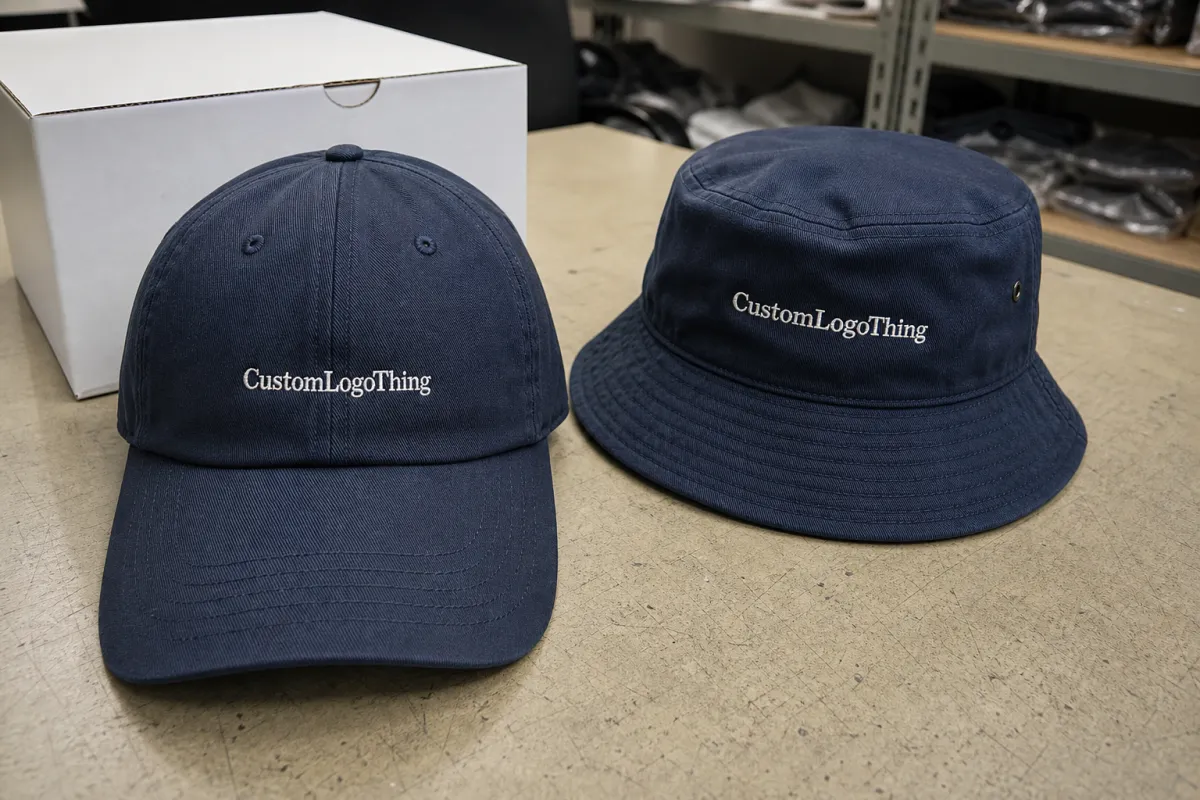
Most hotel samples are approved or rejected in minutes because the first impression is obvious. Either the cap sits cleanly on the head, or it does not. Either the logo feels proportioned to the crown, or it looks crowded. Either the fabric seems appropriate for guest contact, or it reads like a giveaway cap from a trade show.
That speed is not superficial. In hospitality, hats are visual shorthand. A housekeeping cap that looks too stiff can feel formal in the wrong way. A front-desk cap that sits too high can look promotional instead of professional. A concierge cap can handle a little more personality, but not enough to drift into theme-park territory. The silhouette has to match the job.
Lighting changes the verdict more than many buyers expect. Thread that appears deep navy in a rendering may look lighter under lobby LEDs. Dark fabric can pick up sheen under sunlight. Black-on-black embroidery can disappear in one setting and look sharp in another. If the sample is not checked in the environment where staff will actually wear it, the decision is incomplete.
The physical setting matters for another reason: hotel uniforms are rarely worn alone. They sit beside jackets, aprons, shirts, lapel pins, name badges, and sometimes branded packaging for welcome kits or amenities. One cap that clashes with the rest of the system can make the whole presentation feel less deliberate. That is a packaging lesson as much as a uniform one. Materials communicate hierarchy, and guests notice the hierarchy before they notice the specs.
Approve the cap on a head, not on a PDF. The PDF is useful. The head is where the problem appears.
The fastest rejections usually come from a short list: a crown that sits wrong, a brim that curves awkwardly, embroidery that feels dense or uneven, a closure that snags hair, or a color match that misses the uniform by a small but visible margin. None of those issues sound dramatic by themselves. Put them together on an actual staff member, though, and the cap stops looking like a polished brand item and starts looking improvised.
What the checklist should verify before a bulk order
A useful checklist begins with the technical basics. Verify the hat style, panel count, crown height, brim shape, closure type, size range, and decoration method before anyone signs off. If the specification is vague, the sample is already carrying too much guesswork. A good supplier can fill in gaps. A good buyer should not ask them to.
Then look at how the logo behaves on the actual cap surface. Curved panels change the way artwork reads. Embroidery can look tight and refined on one cap and overbuilt on another if stitch density is too high. A patch can lift at the edges if the attachment method is weak. Printed logos need clean edges and enough contrast to survive distance, motion, and low lobby lighting. Hats are less forgiving than flat goods because the artwork bends with the fabric.
Comfort deserves the same attention as appearance. Hotel staff may wear the same cap for eight hours or more, and that changes the evaluation. A sweatband that feels fine for five minutes can turn scratchy by mid-shift. A closure that seems secure can tug at hair or press against the back of the head. Breathability matters in outdoor service, pool service, valet, and high-traffic summer properties. A cap that looks elegant but wears badly will disappear into a locker after the first shift.
There are also details that sound minor until they fail. Button color, seam finish, underside brim color, and hardware choice all affect how polished the cap feels. A glossy buckle on a restrained uniform cap can look oddly loud. A raw seam inside the sweatband can irritate the wearer even if it never shows in photography. That is why experienced buyers keep a real checklist and do not rely on memory.
A simple pass/fail matrix works well because it forces specificity. If a sample fails, the buyer should be able to say exactly why. “Looks off” is useless. “Logo is too low by 7 mm,” “closure catches hair,” and “fabric is too stiff for housekeeping staff” are comments a production team can act on. Without that clarity, the next sample usually repeats the same problem with a different stitch count.
- Fit: crown height, closure range, pressure points, and movement after 15 to 30 minutes of wear
- Decoration: logo size, placement, stitch density, patch edge quality, and color accuracy
- Materials: hand feel, breathability, structure, sweat control, and underside finish
- Branding: alignment with uniforms, trim color, hardware, and packaging presentation
For properties building broader branded programs, the hat should be reviewed the same way other guest-facing pieces are reviewed. If the property already evaluates custom printed boxes, amenity trays, or welcome-kit components, the hat needs to fit that same standard of finish. A cap is a small object, but it still carries the brand weight of whatever room it appears in.
Sample process, timeline, and lead times
The cleanest approval flow is uncomplicated: finalize the artwork, review the virtual proof, request the physical sample, gather revisions if needed, then release production. Skipping the physical sample is usually a false economy. A PDF can confirm dimensions and placement. It cannot tell you how the cap sits on a real head or how the fabric behaves once it is sewn, pressed, and packed.
Lead times vary by decoration method and stock availability. A blank fit sample may arrive in a few days if the base style is already in inventory. A decorated sample takes longer because embroidery, patch application, or printing requires setup and proofing. For many programs, 5 to 12 business days for the sample itself is a realistic range. Add another few days if the team needs to review it internally, and longer if international shipping is involved. Freight is not a rounding error; it is part of the schedule.
Production usually takes longer than sampling. A common working range for bulk cap orders is 12 to 20 business days after approval, with more time needed for special fabrics, dense embroidery, multiple logos, or peak-season factory queues. If a hotel needs hats for a property launch, a conference, or a summer staffing surge, the timeline should include buffer. A schedule with no margin is a deadline with better marketing.
Delay patterns are remarkably consistent. Missing artwork files cause one round of waiting. Unclear Pantone targets cause another. Too many reviewers add another loop. Then someone decides the logo should be larger, or the trim should change, or the closure should be different after the sample is already in hand. Every change can be valid. The trouble starts when the change arrives late.
Internal review time should be treated as part of lead time, not as an informal extra. Procurement may need 48 hours. Brand may need a day more. Operations might only be available after a shift change or a weekly meeting. The checklist should assign each reviewer a deadline so the sample does not sit in limbo while everyone waits for someone else to go first.
If the hats are shipping in cartons, inserts, or individual retail-style sleeves, the packaging needs a review too. Shipping stress can crush a good cap if cartons are too loose or inserts are too thin. Industry packaging testing standards such as ISTA packaging testing standards are useful when the order includes cartons, boxed sets, or mixed materials. If paperboard or hangtags are part of the plan, FSC-certified materials can help buyers document material sourcing without overcomplicating the spec.
The most overlooked timeline issue is handoff discipline. A hotel custom promotional Hats Sample Checklist is only as strong as the people using it. If one reviewer marks the sample approved and another quietly expects revisions, the production order inherits confusion. That confusion usually shows up later as rush fees or a reprint charge.
Cost, MOQ, and quote factors that change unit price
Hat pricing moves with surprisingly small spec changes. Decoration is usually the biggest variable. A simple one-color embroidery logo costs less than a multi-color build with dense stitch coverage. Add a woven patch, edge stitching, or a second placement and the quote moves quickly. Fabric also matters. Cotton twill, washed cotton, brushed polyester, and performance mesh each sit at a different cost point, and the hand feel changes with them.
MOQ affects price because setup costs have to be spread somewhere. Lower minimums almost always carry a higher unit cost. Larger quantities lower the per-piece price, but only after the order clears the setup threshold. A boutique property ordering 100 caps is not going to see the same line-item economics as a portfolio ordering 2,500 across multiple locations. That is not a supplier tactic. That is simply how production math works.
| Sample or run type | Typical use | Common price range | What it tells you |
|---|---|---|---|
| Blank fit sample | Comfort, sizing, structure | $10-$25 plus freight | Fit and silhouette only |
| Decorated sample | Logo quality and brand feel | $25-$75 plus freight | Embroidery, patch, or print accuracy |
| Pre-production sample | Final approval before bulk run | $40-$100 plus freight | Closest match to the actual order |
Those ranges are only a starting point. Sample fees may be credited against a production order if the minimum is met, but freight, rush charges, and revision fees can still affect the final spend. Buyers sometimes treat shipping as an afterthought until a sample lands on the desk with a courier bill attached. It is better to assume freight will matter and budget for it honestly.
Comparing the blank sample, decorated sample, and pre-production sample is the most useful way to understand quote differences. A cheaper blank sample may help with fit, but it tells you nothing about thread tension or logo clarity. A pre-production sample costs more, yet it usually reduces the risk of approving the wrong finish. The right choice depends on how much the hotel cares about precision versus speed. Most properties care about both, which is why the sample stage deserves attention.
Packaging can also shift the quote. Individual polybags, printed inserts, branded boxes, and tissue all add material and labor. For hotel groups that already manage branded packaging for amenities or gifts, this usually makes sense, but it should be visible in the budget. Hidden packaging costs are one of the easiest ways for a quote to look cheaper than it really is.
Step-by-step checklist for ordering hotel caps
Start with the job the cap has to perform. Who wears it, and in what setting? Front desk, concierge, housekeeping, room service, maintenance, valet, pool staff, or event teams all place different demands on the product. A cap for outdoor bell staff needs different breathability and structure than a cap for indoor guest services. If that use case is unclear, the spec will be unclear too.
Choose the silhouette after the use case is defined. Structured baseball caps create a cleaner, more formal look. Unstructured caps feel softer and more relaxed, but they can read too casual for a luxury property. Performance caps breathe well and suit hotter environments. Rope caps create a stronger visual statement, though they are not right for every brand. The style should support the uniform, not compete with it.
Lock the artwork before asking for final sampling. Decide the logo size, exact placement, thread colors, patch construction, and whether there will be side or back marks. Vague directions like “make it medium” do not help production. Neither do “a little bigger” or “make it pop,” which are excellent ways to invite disappointment. If brand guidelines already exist, use them. If they do not, define a narrow range and keep it written down.
Inspect the sample against the checklist and separate the issues by severity. Some problems are cosmetic and can be tolerated if the cap is otherwise strong. Others are hard stops. A closure that fails, a logo that is off-position, or a color mismatch that clashes with the uniform should not be waved through. The sample should answer a basic question: is this good enough for staff to wear in front of guests without creating distraction?
Have the people who will actually wear the cap review it too. Buyers are good at reading spec sheets. Wearers are good at detecting comfort problems, pressure points, and awkward closure hardware. One or two staff testers usually reveal more than an hour of discussion in a conference room. Their feedback does not need to be poetic. It just needs to be honest.
- Define the role: guest-facing, back-of-house, outdoor, or mixed use
- Select the silhouette: structured, unstructured, performance, rope, or low-profile
- Confirm the artwork: size, placement, thread colors, and any secondary marks
- Review the sample: fit, decoration quality, comfort, color match, and packaging
- Approve with ownership: buyer, operations, and brand sign-off on the same sheet
That process becomes easier if the hat is being coordinated with other branded materials. If the property uses matching inserts, gift boxes, or amenity packaging, the visual language should stay consistent across the whole guest experience. Not identical, just clearly related. That kind of consistency reads as control, which is valuable in hospitality.
Common mistakes that waste time and money
The biggest mistake is approving from a mockup alone. Flat artwork can show logo placement, but it cannot show how the cap sits on a head, where the brim lands, or whether the fabric feels stiff after a full shift. Digital approvals are useful. They are not substitutes for a real sample.
Color is another recurring problem. Screen color, thread color, and fabric color are not the same thing, and they do not behave the same way under different lights. A cap that looks balanced on a monitor can read too cool under warm lobby lighting or too glossy under daylight. For that reason, sample review should happen next to the actual uniform shirt, jacket, apron, or dress shirt the staff will wear.
Wear testing is often skipped because it feels slow. It is not slow. It is efficient. A cap may look fine on a table and still slide, pinch, or heat up after a few hours of real use. Even a short shift test can reveal whether the back closure catches hair, whether the crown blocks movement, or whether the brim needs a slight change. Those are cheap problems to fix before production.
Late changes cost more than people expect. Swapping closures, revising the logo position, changing materials, or adding a second placement after the sample is approved often means new setup charges and extra time. If a hotel custom promotional Hats Sample Checklist does its job, the spec should be frozen before bulk production begins. That is the only way to keep the quote stable.
Packaging and storage are easy to dismiss because caps seem durable. They are not indestructible. A good cap can arrive flattened, bent, or marked if the carton is wrong or if the pack method is careless. If the hats are going into a guest welcome kit, corporate gift package, or retail-style presentation, ask about packing method early. The item may be small, but the presentation is part of the product.
- Do not approve from a flat mockup alone
- Do not trust screen color for final brand matching
- Do not skip a wear test on real staff
- Do not change the spec after the sample is approved
- Do not ignore packaging or carton protection
If the checklist catches even one of those mistakes, it has already done useful work. If it catches two, it likely saved the hotel from paying for avoidable rework and a very awkward internal explanation.
Expert tips and next steps before you place the order
A simple scorecard is usually enough. Give the sample a pass or fail on fit, decoration quality, comfort, color match, and brand feel. If the team wants more detail, add notes underneath, but keep the decision points visible. Too many review categories can hide the real problem under a pile of polite comments.
Request sample photos on a real head if the supplier can provide them. Close-up shots help with proportion and placement, especially on curved crowns where a logo can seem centered in a flat lay and off-balance once worn. A picture on a person will not replace the physical sample, but it can catch issues that are easy to miss when the cap is sitting on a table under controlled light.
Use the exact approved spec sheet in the production quote. Not a similar style. Not the sample “as discussed.” Exact. That reduces room for misunderstanding, especially when multiple people touch the order. If the hotel is choosing between a premium style and a lower-cost backup, compare them on the same criteria: comfort, lead time, decoration quality, and actual landed cost. That gives procurement a real basis for comparison instead of a vague preference test.
A practical way to think about the order is to treat the hat as part of the broader brand system. Uniforms, guest materials, packaging, and accessories should all feel as if they came from the same design language. That does not mean everything has to match. It means the pieces should look like they were approved by the same disciplined team.
Most hotels do not need a long sampling cycle. They need one accurate sample, one organized review, and enough discipline to stop revising the spec once it is right. The hotel custom promotional hats sample checklist is the tool that keeps the process grounded in fit, finish, and function instead of optimism. That is how buyers avoid paying twice for the same cap.
What should a hotel custom promotional hats sample checklist include?
It should cover fit, crown shape, brim style, closure, material, embroidery or patch quality, color match, and packaging. It should also record who approves the sample, what counts as a pass, and what changes require a revised sample.
How many samples do hotels usually need before approving custom hats?
Many hotels can approve after one strong sample if the artwork is final and the spec is clear. A second sample usually makes sense only when the first one misses fit, decoration quality, or color accuracy in a way that affects the bulk order.
How long does the hotel promotional hats sampling process usually take?
A physical sample often takes several business days to a few weeks, depending on decoration method, stock availability, and factory workload. Add time for internal review, revisions, and the production run after approval.
What affects the price of custom hotel promo hats the most?
The main drivers are decoration method, stitch count, material choice, packaging, and order quantity. MOQ, sample fees, freight, and rush requests also change the final cost more than most buyers expect.
What is the biggest mistake in a hotel hat sample review?
Approving from a mockup instead of a real sample is the most common miss. The next biggest mistake is skipping a wear test with the actual staff who will use the cap every day.

