If you are sourcing winter headwear for a team, club, retail drop, or promotional program, fitness ribbed winter Beanies Lead Time is usually the first number that decides whether the project is realistic. The real calendar is wider than production alone. It includes approved artwork, yarn availability, sampling, finishing, packing, inspection, and freight booking. Skip one of those pieces and the schedule stops being a schedule and starts being a guess.
That is why two orders that look almost identical can move at very different speeds. A stock ribbed beanie with a single woven label can travel quickly if the yarn and trim are already on hand. A custom run with dyed yarn, embroidery, branded packaging, and carton markings has more moving parts, and each part can become a checkpoint.
“The quickest order is rarely the most complex one. The cleanest order is the one that gets approved before the line is booked.”
What Fitness Ribbed Winter Beanies Lead Time Really Means
Lead time is not the same as machine time. A knitting machine may produce a beanie in minutes, but that is only one piece of the process. In practice, lead time starts with spec confirmation and ends when the goods leave the supplier’s dock, or, if the quote is written properly, when production and freight are both accounted for separately.
That distinction matters because buyers often hear a short production estimate and assume the whole order will arrive just as quickly. It will not, unless transit is included and the brief is already locked. A beanie can be technically ready while a logo proof is still waiting on approval, which is why the paperwork side can control the delivery date more than the knitting side.
For fitness Ribbed Winter Beanies lead time, the fastest orders tend to share three traits: materials are stocked, the logo method is simple, and the buyer knows the final spec before the quote goes out. The slowest orders often fail for a much smaller reason, such as a missing packaging decision or an unresolved color reference. One unresolved detail is enough to stall the queue.
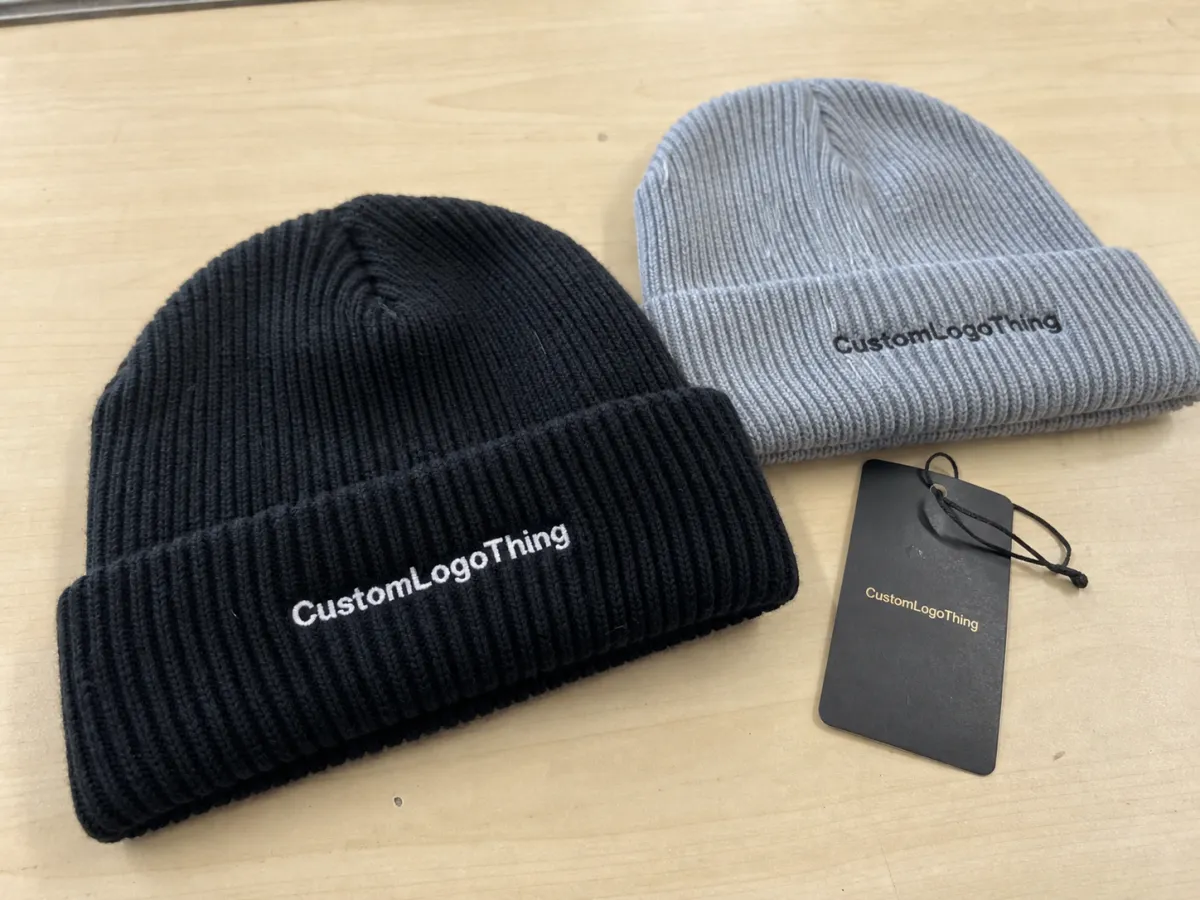
A blank stock beanie is easy. A real custom run is a different product class. Once the order includes a specific rib structure, a branded cuff, woven labeling, a hangtag, carton codes, and retailer-ready packing, every item has to be sequenced. That sequence is what turns a calendar into a manufacturing plan.
There is also a practical buyer lesson here: smaller orders are not always faster. A 300-piece run can take longer than a larger repeat order if the smaller run needs fresh embroidery digitizing, a new shade approval, and packaging proofing from scratch. The bottleneck is often found before knitting begins.
Fitness Ribbed Winter Beanies Lead Time: Process and Timeline
A useful timeline breaks the order into trackable steps. That makes it easier to see where time is actually being spent and which decision controls the ship date. It also gives the buyer a clearer way to compare suppliers, since not every quote labels the same stage in the same way.
| Stage | Typical Time | What Can Slow It Down |
|---|---|---|
| Quote and spec review | 1-3 business days | Missing artwork, unclear MOQ, no delivery target |
| Material confirmation | 2-7 business days | Custom dye requests, low stock yarn, trim sourcing |
| Sample or proof | 3-10 business days | Color corrections, stitch changes, logo revisions |
| Knitting and finishing | 7-20 business days | Peak season capacity, multi-color runs, dense construction |
| Packing and inspection | 2-5 business days | Recounting, label errors, carton instruction changes |
| Freight booking | 3-30+ days | Air vs. ocean transit, customs, route congestion |
A simple order may move through that chain in two to four weeks before transit. A more custom program can stretch longer, especially if the yarn is not stocked or the packaging spec changes after proofing. The quoted calendar should separate manufacturing time from shipping time; otherwise, the buyer cannot tell whether the plan is practical.
Approval gates sit between nearly every stage. A swatch can arrive quickly, but if the buyer asks for a slightly warmer heather tone, the color step restarts. A logo proof can be approved the same day, but if the stitch count needs to be adjusted for clarity on ribbed fabric, the digitized file may need another pass. Each small revision adds friction, and friction becomes delay.
Seasonality is another pressure point. Winter headwear capacity tightens as temperatures drop and as clubs, outdoor brands, and retailers start booking for the same delivery window. Stock colors such as black, gray, navy, and olive usually move more easily than custom shades. Once the busy season is under way, even a simple order can sit behind earlier commitments.
Rush orders are possible, but only if the brief is already stable. Stock yarn, clean artwork, no last-minute packaging changes, and a firm quantity can sometimes fit into an open production slot. If the order is still changing, a rush request does not create speed. It usually just compresses the time available for correction.
What Changes the Turnaround for Ribbed Winter Beanies
The biggest driver of turnaround is usually yarn availability. Stocked neutrals are faster than custom-dyed shades. Standard acrylic and acrylic-poly blends usually move faster than specialty fibers that need separate sourcing or blending. If the brand needs an exact color, the quote should state whether a close match is acceptable or whether a custom dye lot is mandatory. Those are not the same request, and they do not carry the same lead time.
Construction also changes the clock. A tighter rib, heavier gauge, or double-layer cuff can improve warmth and shape retention, but it also changes machine time and finishing effort. A 1x1 rib often feels lighter and more flexible. A 2x2 rib tends to feel denser and more structured. Neither is inherently better; the choice affects production rhythm, touch, and sometimes cost.
Decoration has its own schedule. Embroidery requires digitizing and stitch approval. Woven labels need a weave file and production setup. Patches may need a die, a mold, or heat-press preparation. Branded packaging can be simple if the order uses plain polybags, but custom hangtags, folded inserts, or paper sleeves each add a separate proof and handling step. If sustainability claims are part of the packaging brief, the paper and sourcing claims should be verified before anything is printed. The FSC guidance is a sensible reference point for paper-based claims.
Quantity and color count matter more than many buyers expect. One style in one color is clean. Add three colors, and the order may require three yarn pulls, three approval paths, and three packing counts. That does not mean multi-SKU orders are a problem; it means they are not free. Each variation adds a little more time and a little more room for error.
Packaging and distribution needs can also affect turnaround. If the beanies are shipping into retail, ecommerce, or club distribution, carton size, count per carton, and outer labeling need to be decided early. If the boxes are expected to survive parcel handling, ask whether transit testing is part of the brief. The ISTA framework is useful for packaging that needs to hold up under actual shipping conditions.
One more variable is revision discipline. Buyers who treat each proof as a fresh design round usually extend the schedule. Buyers who review one set of clear specs, then approve quickly, keep the order moving. The difference can be several days or several weeks, depending on how many people are involved in signoff.
Pricing, MOQ, and Unit Cost for Ribbed Winter Beanies
MOQ shapes unit cost because fixed work has to be spread across the run. There is setup time for knitting programs, embroidery digitizing, proofing, label preparation, packing, and carton handling. As quantity rises, those fixed steps are diluted. As quantity falls, they land more heavily on each unit.
Material choice can move pricing more than buyers expect. Heavier yarn, tighter ribbing, recycled content, and wool blends all push cost upward. A simple acrylic beanie is usually the least expensive path. A premium blend with better hand feel and stronger insulation moves the product into a different band, especially if the order also needs precise branding and retail packaging.
Decoration options add layers of cost. Small embroidery is often cheaper than a complex patch build. Woven labels are efficient but still require setup. Hangtags, size stickers, custom polybags, and carton labels each add materials and labor. Individually they look small. Together, they can be the difference between a workable quote and one that blows the budget.
| Option | Typical MOQ | Approx. Unit Cost at 500 pcs | Lead-Time Impact |
|---|---|---|---|
| Stock ribbed beanie with woven label | 100-200 pcs | $1.20-$2.00 | Shortest |
| Custom knit beanie with one-color embroidery | 200-500 pcs | $1.80-$3.20 | Moderate |
| Custom-dyed yarn, patch, and branded packaging | 300-1000 pcs | $2.80-$5.00 | Longest |
Those ranges are working estimates, not promises. Yarn swings, stitch density, decoration coverage, and destination all matter. Freight can also shift the landed cost dramatically, especially for smaller orders where air shipping dominates. A good quote should separate sample charges, production price, freight, and any rush or color-match fees so the buyer can compare suppliers on the same basis.
One practical lesson: a lower MOQ can reduce commitment, but it does not always shorten delivery time. Small orders still need setup, approval, and finishing. They can even take longer per piece if the factory has to stop and start around other work. The cheapest order and the fastest order are rarely the same order.
Quality Control and Specs That Prevent Delays
A reliable schedule starts with a clean spec sheet. The supplier should not have to infer the fiber blend, rib type, sizing target, logo method, packaging, or delivery date. Missing details almost always create back-and-forth, and back-and-forth is where lead time disappears.
For Ribbed Winter Beanies, the core quality checks are simple but useful. Measure width, height, and cuff depth against the approved sample. Check whether the rib recovers after stretching. Inspect embroidery for thread tension, registration, and placement across the seam or cuff. Review color against the approved reference under daylight-like conditions, not just on a screen.
Packaging deserves the same attention. Count pieces per carton. Confirm folding method. Verify labels, country-of-origin marks, and carton markings before production starts. If the order is going to retail or distribution, a missed label or incorrect carton code can hold a shipment even if the hats themselves are perfect.
There is also a subtle production issue in knitwear: gauge and density can shift the feel of the final product even when measurements are nominally correct. A ribbed beanie that looks fine on paper may fit looser than expected or feel heavier in hand. That is why a physical swatch or sample is more useful than a mockup alone.
If the order needs a warm, durable winter profile, buyers should ask for the exact fiber blend and the weight range. Acrylic can be cost-effective and color-stable. Acrylic-poly blends often improve hand feel and reduce scratchiness. Wool blends add warmth and texture but require closer scrutiny on shrink behavior and care claims. There is no universal winner; there is only the right match for the use case.
Step-by-Step: Locking in a Reliable Turnaround
The cleanest way to control fitness Ribbed Winter Beanies lead time is to give the supplier one complete brief. The spec should list material blend, rib structure, size, color target, decoration method, quantity, packaging, destination, and the date the goods need to land. The less guesswork in the first email, the less risk later in the schedule.
Ask for a swatch, virtual proof, or sample early. That is where color, hand feel, and logo placement are usually settled before the run is released. If the order is for a club store or a launch tied to a specific event, the buyer should also state whether the final product has to match an approved reference exactly or whether a close tolerance is acceptable.
Then get the calendar in writing. A useful quote should show the approval deadline, estimated start date, finishing window, and ship date. If production time is separated from freight time, it becomes much easier to tell whether the order can actually reach the market on time.
- Approve the yarn or color reference before the order is released.
- Confirm the logo method, stitch count, and exact placement.
- Lock packaging details, including polybag, insert, and carton marks.
- Reserve a buffer for inspection, packing, and freight booking.
That buffer is not wasted time. It absorbs the small problems that show up in real production: a carton count that needs a recheck, a label roll that lands late, a freight booking that shifts by a day, or a correction in the packing instruction. None of those issues is rare. Buyers who plan for them usually receive a calmer order and fewer emergency calls.
If the goods are going into retail distribution, ask whether carton drop performance or vibration handling needs to be considered. Not every beanie order needs formal transit testing, but if the outer pack has to protect the product through a long journey, the spec should reflect that. Good packaging is part of the order, not an afterthought attached at the end.
Common Mistakes That Stretch Production Steps
One common mistake is treating in-stock blanks as finished custom goods. A blank ribbed beanie may be available quickly, but branding and packaging still add time. Even a simple woven label needs application, inspection, and packing. Those steps can be short, but they are real.
Another mistake is approving color from a screen and expecting the knit to behave the same way in daylight. That rarely happens. Heather tones, in particular, shift with fiber mix and lighting. A shade that looks balanced on a monitor can feel too cool, too dark, or too flat once it is knitted into a ribbed structure.
Late artwork changes are another schedule killer. A small logo revision after the run has been planned can require a new proof or a new embroidery file. Even moving a mark by a few millimeters can change how the design sits on the cuff. The change may look minor in a mockup and still cost real time in production.
Freight and manufacturing are also often confused. A buyer may hear “two weeks” and assume that is the total calendar. It may only cover production. Air freight, ocean freight, customs clearance, and domestic delivery can each add time. If the event date is fixed, the quote needs to reflect the full route, not just the factory side.
“The best order leaves no unanswered question before the knitting slot is booked.”
Another avoidable issue is overbuilding the first run. Too many colorways, too many logo treatments, and too much custom packaging can create a launch that looks polished on paper but behaves like three separate projects in production. A tighter first order often delivers faster and gives the buyer a better read on quality before scaling up.
Expert Tips and Next Steps for a Faster Quote
Send one complete brief instead of several partial messages. A single file with the spec, artwork, quantity, delivery address, and packaging notes usually gets a faster response than a thread full of missing pieces. It also reduces pricing errors, which matter more than most buyers expect once a quote starts getting revised.
Ask the supplier for the critical path. In plain language, that means asking which decision is controlling the schedule right now. If yarn approval is the bottleneck, fix that first. If embroidery artwork is waiting on correction, send the corrected file immediately instead of waiting for a generic update.
Keep the first order simple if timing is tight. One colorway and one decoration method are easier to schedule than a launch with multiple shades, different logo styles, and custom packaging. Once the first run is approved, reorders tend to move faster because the specs are already on file and the team is not starting from zero.
For many buyers, the practical path is a balanced one: use stocked materials where possible, approve a physical reference early, and keep the packaging spec practical for the first shipment. That protects margin and keeps the timeline realistic without forcing the order into a rush that the materials cannot support.
If you are planning a bulk order for a club, outdoor brand, or retail program, the next steps are straightforward: collect the measurements, choose the yarn and rib structure, Request a Quote that separates sampling from production and freight, and confirm exactly how each choice affects fitness ribbed winter beanies lead time. That is the most reliable way to protect both the calendar and the final product.
What affects fitness ribbed winter beanies lead time the most?
Yarn availability, color matching, and decoration method usually have the biggest impact on the schedule. Quantity and number of colorways matter too because every changeover adds time. Late approvals are one of the most common reasons an order slips past the first ship date.
How long does a custom ribbed winter beanie order usually take?
A simple run can move quickly when materials are stocked and artwork is already approved. Custom yarn, special trims, or multiple logos usually extend the calendar. The most accurate answer comes from a quote that separates sampling, production, and freight time.
Can a lower MOQ improve fitness ribbed winter beanies turnaround?
A lower MOQ can reduce total commitment, but it does not always shorten the schedule. Small runs may still require the same setup, approval, and finishing steps as larger orders. Unit cost often rises when MOQ drops because fixed labor is spread across fewer pieces.
What should I approve before production starts?
Approve the yarn or color reference, logo placement, size, and final quantity before the run is released. Confirm packaging details and any special labeling so there are no last-minute changes. Keep a written record of the agreed ship date and who is responsible for each approval step.
How can I lower cost without slowing down the order?
Use stocked colors, a single decoration method, and a cleaner packaging spec when speed matters. Reduce the number of SKUs in the first order so the schedule has fewer changeovers. Ask for pricing with and without premium packaging so you can choose the best tradeoff for the launch.