The event merch Void Fill Paper Material guide matters because most carton damage starts with movement, not with a box collapsing in some dramatic way. Products slide, corners rub, inserts shift, and the result shows up as crushed packaging or chipped merch that looked fine when it left the dock. I have watched perfectly good kits get blamed on the shipper when the real problem was simply too much open space inside the carton. The event merch void fill paper material guide is really about motion control, presentation, labor, and cost per packed box, all of which show up fast in event fulfillment.
Event kits make those tradeoffs sharper. One carton may hold apparel, a bottle, sponsor items, printed cards, and a few fragile extras, and each piece changes how the box behaves in transit. The wrong fill can make a premium drop feel kinda rushed. The right fill keeps the contents stable and still leaves the unboxing looking thoughtful. That is why this event merch Void Fill Paper Material guide starts with the practical stuff: what the paper does, what it costs, and how it performs in real corrugated boxes.
What the Event Merch Void Fill Paper Material Guide Really Means
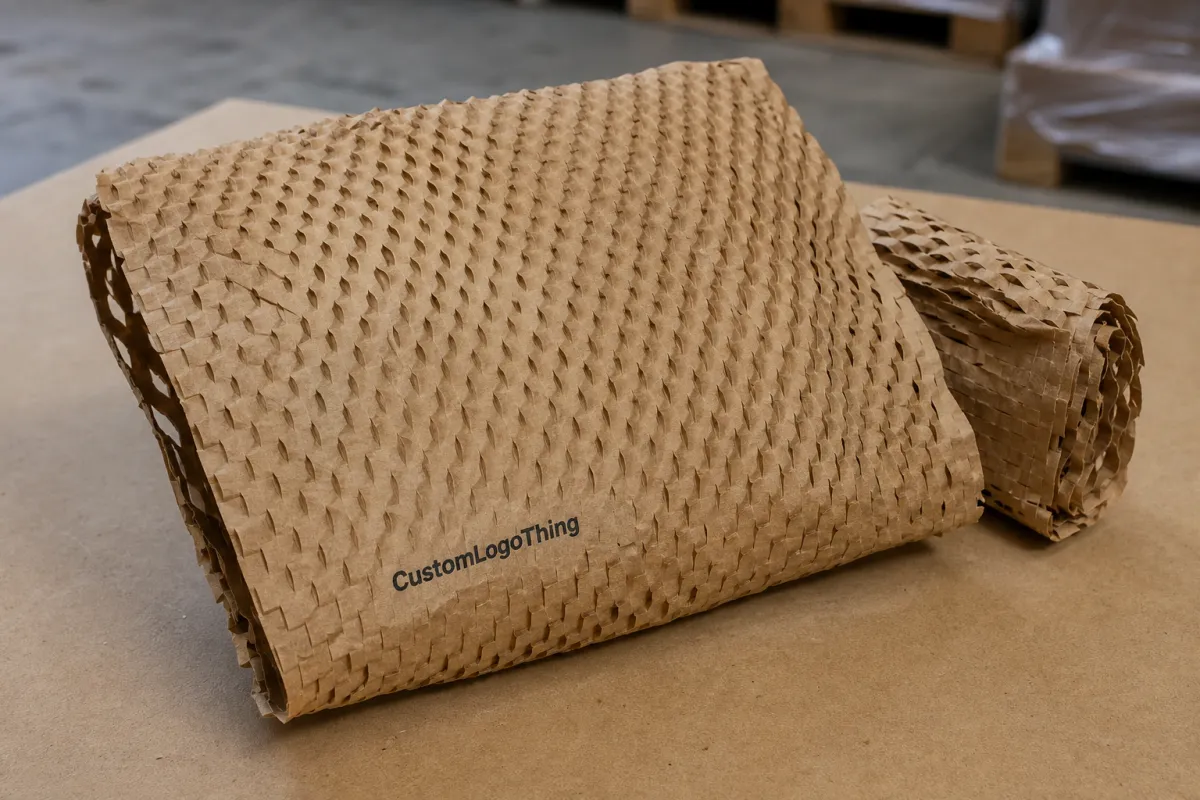
Most event merch damage begins with free movement inside the carton. A mug chips against a divider, a shirt corner creases, a bottle taps a hard insert, and the outer box still passes visual inspection. The carton looks fine while the contents get beaten up. That is why the event merch Void Fill Paper material guide has to start with product movement rather than with the shipping box itself.
Void Fill Paper is simple in concept. It is paper placed in empty space inside a carton so the contents cannot slide around during transit. In practice, the material might be plain kraft paper, recycled kraft with a brown finish, white paper for a cleaner presentation, or converted rolls and sheets that feed better at the packing bench. The event merch void fill paper material guide also needs to separate void fill paper from tissue, crinkle paper, air pillows, and loose kraft, because those materials solve different problems and behave differently in the box.
Tissue has a nicer look but very little holding power around heavier items. Crinkle paper adds volume and visual lift, which helps presentation but does less for structural support. Air pillows are light and fast to deploy, yet they do not stabilize edges very well. Loose kraft can be inexpensive and flexible, then quickly turn into a sloppy pile once the line gets busy. A serious event merch void fill paper material guide puts those options side by side so buyers can compare actual performance instead of guessing from the name alone.
Event merch also carries a different set of pressures than ordinary shipping. The box may need to protect mixed SKUs, branded inserts, drinkware, apparel, and giveaway items while still looking polished enough for photos and social posts. Deadlines are usually tight, and the first cartons often get opened by marketing before the warehouse finishes the run. That makes the event merch void fill paper material guide as much about appearance as it is about protection.
The first questions are usually the useful ones. What sheet size is needed? What basis weight gives enough body? How much recycled content is required? Does the paper need to protect, present, or do both? Is FSC certified stock a must, or is post-consumer waste the main requirement? A good event merch void fill paper material guide keeps those questions visible instead of burying them under vague product labels.
That balance shows up everywhere in the spec. More protection usually means more paper, more labor, or both. More presentation usually means tighter folding and more consistent packout. More sustainability language usually means stricter sourcing and clearer paperwork. The event merch void fill paper material guide works like a tradeoff map, and pretending there is only one right answer usually creates a mess later.
How the Event Merch Void Fill Paper Material Guide Works in Real Boxes
The mechanics are not mysterious. Paper blocks motion, cushions corners, reduces crush points, and keeps products from colliding with one another. If a bottle sits too close to a hard divider or a metal accessory, the paper should stop that contact before the carton takes a rough ride. That is the real job of the event merch void fill paper material guide: matching paper behavior to the shape, weight, and fragility of the contents.
Fill density matters more than many teams expect. Too little paper settles during transit and leaves the merch loose by delivery. Too much paper slows the pack line, increases material use, and can make the carton look overstuffed. A clean event merch void fill paper material guide treats density as a working target, not an afterthought. For most event kits, the goal is enough paper to stop shifting without making the pack station feel like a workout.
Different product mixes want different support. Apparel kits usually need lighter fill because soft goods do not require as much edge isolation. Glassware, tins, and rigid sponsor items need more paper body so hard surfaces do not meet each other in transit. Mixed premium giveaway sets often need the heaviest spec because one rigid item changes the behavior of the whole carton. That is why the event merch void fill paper material guide should always be written around actual contents, not carton size alone.
Packing method changes the equation too. Manual stuffing gives flexibility and keeps startup cost low, though it becomes inconsistent when the team is new or the order volume spikes. Semi-automatic dispensing speeds up repeat jobs and helps reduce labor variation. Machine-fed paper fits best on steady, high-volume lines where the same box format repeats all day. The event merch void fill paper material guide should match the fill format to the workflow, or the warehouse pays for the mismatch in labor. If you want a reality check on handling performance, compare your lane against ISTA test standards before the spec is locked.
Presentation is the part some buyers underprice. A clean fold of kraft paper can look premium even in a plain mailer when the fill is consistent and the cuts are sized well. Sloppy overfill looks cheap fast. It makes a brand kit feel rushed, even when the contents are expensive and the rest of the packaging is well chosen. A useful event merch void fill paper material guide never forgets that the carton is part of the brand experience, not just a shipping shell.
Cost and Pricing: What Void Fill Paper Really Changes
Buyers often start with the paper quote and end up regretting that narrow view. The raw material price is only one part of the total. Paper weight, recycled content, custom cutting, sheet size, print requirements, and order volume all affect the final number. The event merch void fill paper material guide is helpful because it forces a comparison of true landed cost rather than a single unit price that looks tidy on a spreadsheet.
Labor is the hidden cost that gets missed most often. A paper that looks cheaper on paper can slow packout by 15 to 25 seconds per box, and that becomes painful on a 3,000-box event run. If the pack station already runs tight, that extra handling time can cost more than the paper savings. A practical event merch void fill paper material guide should always ask how quickly the paper packs and how many touches each box needs.
For rough planning, lightweight event kits often land around $0.05-$0.12 per packed box in material use, while mixed premium kits can run $0.12-$0.30 per box depending on fill depth and paper format. Custom cutting, print, and special conversion can push that higher. That range is not universal, but it is a lot more useful than a single headline price per ream. The event merch void fill paper material guide should help buyers think in terms of cost per protected box.
Here is a practical comparison of common options:
| Option | Typical Material Cost per Packed Box | Labor Impact | Best Use | Tradeoff |
|---|---|---|---|---|
| Stock kraft sheet | $0.05-$0.12 | Low to moderate | Apparel kits, light swag | Less polished presentation unless packed neatly |
| Custom-cut void fill paper | $0.08-$0.18 | Moderate | Repeat event kits, mixed merch | Longer lead time, conversion charges |
| Printed or branded fill | $0.15-$0.35 | Moderate to high | Premium launches, sponsor kits | Higher cost and more approval steps |
| Loose recycled kraft | $0.04-$0.10 | High variance | Low-budget, flexible packing | Messy handling and inconsistent density |
The cheapest paper can become the most expensive choice once damage claims, repacking, and rush freight get added in. That is not theory; that is warehouse math. If the wrong fill causes even one box in fifty to need attention, the labor and replacement cost can erase the savings quickly. A sharp event merch void fill paper material guide keeps buyers focused on usable savings instead of fake savings.
Ask for the quote details that actually matter: MOQ, freight terms, conversion charges, lead time, pallet count, and sample cost. If the supplier cannot give those cleanly, the price is not ready for a decision. The event merch void fill paper material guide should make those requests standard, because a low quote with unclear freight is just a future problem wearing a polite number.
Process and Timeline: From Quote to Packed Cartons
A sane buying process starts with the spec, not the invoice. First comes the quote request. Then the sample. Then the approval. Then production. Then a packout test before the full run ships. That order sounds basic, yet teams skip it often and then act surprised when the cartons arrive wrong. The event merch void fill paper material guide should follow that sequence, because one missing step is enough to create a costly headache.
Timelines usually slip in the same places. Unclear specs, especially sheet size and fill target, are the first source of delay. Skipped sample approval is next, because it lets a bad assumption sit too long. Material shortages and conversion bottlenecks come after that. Freight changes can hit after production is already complete. A useful event merch void fill paper material guide should call out those problems plainly, since packaging delays usually come from ordinary causes, not mysterious ones.
Stock paper can move quickly, often with a short production window and a simple freight schedule. Custom-cut or printed paper usually needs more runway because someone has to confirm dimensions, tooling, proofs, and finishing. A common planning model for event merch jobs looks like this:
- Sample review: 2-4 business days if the spec is clear.
- Production: 5-12 business days for stock or simple conversion.
- Transit: 1-5 business days depending on lane and freight mode.
- Buffer: 3-5 business days for one ugly surprise, because there is always one.
That buffer matters more than the optimistic date on the quote. Event merch often has a hard ship date that cannot move, and the warehouse does not get points for optimism. A buyer is usually better off ordering a little earlier and sleeping better than treating a last-minute expedite as a plan. A solid event merch void fill paper material guide should keep the calendar in the foreground, because production time is only one slice of the timeline.
Packout testing needs to happen before production, not after cartons are already stacked on a dock. A 10-box test reveals whether the paper bridges corners, holds product position, and feeds at a sane speed. If the test fails, the fix is still cheap. If the full order fails, the fix is mostly expensive and annoying. The event merch void fill paper material guide proves its value when it prevents that kind of avoidable waste.
Key Factors to Compare Before You Order
The core spec trio is basis weight, sheet size, and fill format. Basis weight controls body and resistance to collapse. Sheet size controls how quickly the packer can build volume in the box. Fill format controls labor and consistency. If one of those is off, the whole carton behaves differently. The event merch void fill paper material guide works best when those three items are written down together rather than scattered across emails and call notes.
Product shape changes the choice more than many buyers expect. Flat apparel can usually ride in lighter fill because it does not need aggressive suspension. Hard-edged items like metal drinkware or boxed accessories need more support at the corners. Fragile items need both support and separation, which means the paper may be doing more than simple void filling. That is exactly why the event merch void fill paper material guide should include the actual merch mix, not just the carton dimensions.
Sustainability claims should be specific, factual, and easy to document. Buyers usually care about recycled materials, post-consumer waste content, FSC certified sourcing, and whether the paper is accepted in local recycling streams. Plain uncoated kraft paper is often easier to position as biodegradable packaging, though inks, coatings, and local disposal rules still matter. If sustainability is part of the purchase, the event merch void fill paper material guide should request the paperwork early instead of after the order ships.
Operational details matter just as much. Paper that sheds dust can create cleanup work on the line. Paper with odd static behavior can stick or misfeed. Paper that absorbs humidity can arrive bulky and perform differently than the sample. If the storage area is damp or the warehouse pallets cartons tightly, the spec should account for that. A realistic event merch void fill paper material guide is never only a product sheet; it is a handling plan.
Storage and handling are easy to underestimate because they do not show up on the quote. A large bale may look efficient until a small pack station has nowhere to put it. A compact sheet format may appear expensive until the team packs twice as fast. The event merch void fill paper material guide should balance those tradeoffs against actual warehouse conditions, not ideal conditions that live only on a clean spreadsheet.
A simple field rule helps: choose the lightest paper that still stops motion in a real packout, then confirm that it survives transit testing. The event merch void fill paper material guide exists to stop people from overbuying, but it also needs to stop people from under-specing and paying for it later.
Common Mistakes That Waste Paper and Money
The classic mistake is shopping by price per ream or bale instead of cost per packed box. Procurement likes a neat number, yet that number says very little about how the material behaves in an event kit. If a cheaper paper takes longer to pack or needs more sheets to stabilize the merch, the savings disappear. The event merch void fill paper material guide should keep buyers focused on the box, not the pallet in the corner of the warehouse.
Ignoring carton geometry is another common error. A paper spec can look perfect and still fail if the box is too deep, too wide, or too narrow for the merch mix. Then the team overfills one side, underfills another, and the box looks like it was packed through a power outage. A practical event merch void fill paper material guide checks the internal dimensions before it checks the paper price.
Overstuffing can hurt as much as underfilling. Too much pressure can deform cartons, create edge crush problems, or press rigid items into soft ones. Underfilling leaves products rattling around and makes the shipment feel careless. That is why the event merch void fill paper material guide should talk about target density instead of telling people to "add more paper" as if that solves everything.
Skipping a real-world packout test is where teams get burned most often. Samples on a table do not behave the same way as samples inside a moving stack of cartons. The only honest test is packing the actual merch into the actual box with the actual paper format. If that sounds inconvenient, it is. It is also cheaper than redoing a full run. The event merch void fill paper material guide earns credibility when it forces that reality check.
A good packout test costs an hour. A bad spec costs a week.
Another blind spot is assuming every event order should be packed the same way. One day the kit includes a soft hoodie and a leaflet. The next day it includes a ceramic mug, a metal bottle, and two inserts that must stay flat. Box sizes shift, labor shifts, and the line speed shifts with them. A decent event merch void fill paper material guide accounts for that variation, because event merch rarely behaves like a stable catalog order.
Do not let sustainability language cover up a weak packing spec. Recycled materials are good. FSC certified supply is good. Biodegradable packaging claims may help the brand story. None of those replaces proper void fill performance. The event merch void fill paper material guide has to protect the product first and support the brand message second.
Expert Tips and Next Steps for a Clean Spec
Turn the event merch void fill paper material guide into a working spec sheet rather than a vague purchasing note. The sheet should list the merch type, box dimensions, target fill density, approved paper SKU, recycled content requirement, and whether presentation matters as much as protection. Once those details are written down, buying becomes a lot less chaotic.
Run a 10-box trial with the people who actually pack orders. Not the marketing team. Not the person who wrote the brief. The warehouse crew will spot problems in minutes that a polished spec deck can miss in pages. That is why the event merch void fill paper material guide should always include a real packout trial before the full order is released.
Ask for quote, sample, and lead time in the same conversation. It sounds basic because it is basic. Still, it saves days of back-and-forth and stops the familiar "we can send pricing now, but we need the exact size later" shuffle. A clean event merch void fill paper material guide makes that a standard request so procurement, operations, and the supplier are looking at the same facts.
Keep one backup paper size or format ready for rush event merch jobs. If the primary spec is late, a sensible fallback can keep the shipment moving without ruining the unboxing moment. That matters for launch kits, sponsor drop boxes, and conference merch where the freight window is tight. The event merch void fill paper material guide should not only tell you what to buy; it should also tell you what to keep on hand.
Use a short checklist before production gets approved:
- Confirm the merch list and box geometry.
- Lock the paper weight, sheet size, and format.
- Request sample and packout confirmation.
- Check MOQ, freight, and conversion fees.
- Verify recycling and sourcing claims if the client needs them.
- Set a buffer for transit and one last-minute problem.
A final filter helps. Does the paper protect the contents, support the brand look, and fit the labor model? If all three answers are yes, the spec is probably ready. If one answer feels fuzzy, the event merch void fill paper material guide still has work to do. That is not failure. That is packaging behaving like packaging.
How do I choose the right event merch void fill paper material guide spec for apparel kits?
Start with the amount of empty space in the box, not just the box dimensions. Soft goods usually need lighter fill, but if the kit includes hard items like bottles or tins, the event merch void fill paper material guide should shift toward a denser paper or a larger sheet size. A sample packout with real merch is the quickest way to see whether the spec works in practice.
What basis weight works best for event merch void fill paper?
Light kits often work with lower weights, while mixed or fragile kits usually need a heavier sheet or roll. If the paper has to bridge corners or keep sharp edges away from impact, go heavier instead of hoping thin paper will hold up. The right answer always depends on the product mix, so the event merch void fill paper material guide should be tested with real items and real box sizes.
How much does event merch void fill paper cost per box?
The real cost depends on how much void space needs to be filled, how fast the paper packs, and whether the supplier charges for conversion. A cheaper paper can still cost more if it slows labor or causes damage claims later. Ask for a quote that includes freight, MOQ, and any custom cutting or printing charges, then compare it against the event merch void fill paper material guide requirements instead of the sticker price alone.
Can recycled void fill paper still look premium in event merch boxes?
Yes, if the sheet size, color, and packing method are consistent. A clean kraft or white recycled stock can look sharp when the fill is folded or layered neatly. The finish matters less than the consistency; messy packing always looks cheap, even when the paper itself is fine. That is one of the simplest lessons in the event merch void fill paper material guide.
What lead time should I plan for a custom event merch void fill paper order?
Stock paper can move quickly, but custom sizes, cuts, or printed material usually need extra runway. Build time for sample approval and transit into the schedule, not just production time. Keep a reorder buffer before the event so a freight delay does not turn into a packaging problem. If you are treating the event merch void fill paper material guide seriously, the calendar gets as much attention as the spec.
The cleanest decision rule is simple: choose the lightest paper that still stops movement in a real packout, then verify it with transit testing and a small buffer for production. That approach protects the merch, keeps labor predictable, and avoids the expensive do-over that usually comes from guessing. Once the event merch void fill paper material guide is built around real contents instead of guesswork, the rest of the process gets a lot calmer.


