Hotel retail is a small-margin business with very visible winners and losers. A guest may walk past a dozen items, then buy the one cap that feels easy to wear, easy to understand, and priced for an impulse purchase. That is why a hotel Foam Trucker Hats bulk order keeps showing up in resort shops, lobby displays, welcome kits, and event merchandising plans. The product is simple, but the buying logic behind it is not.
Foam Trucker Hats sit in a useful middle ground. They ship efficiently, give logos a broad front panel, and feel casual enough for hotel environments that do not want hard-sell retail. The difference between a strong run and a weak one usually comes down to structure, decoration, and how disciplined the order process is.
Buyers in hospitality usually ask three practical questions: will this look good under lobby lighting, will the logo hold up, and will the landed cost leave room for margin. Those questions matter more than style opinions because they point straight to appearance, repeatability, and delivered price.
Why foam trucker hats earn shelf space at hotels
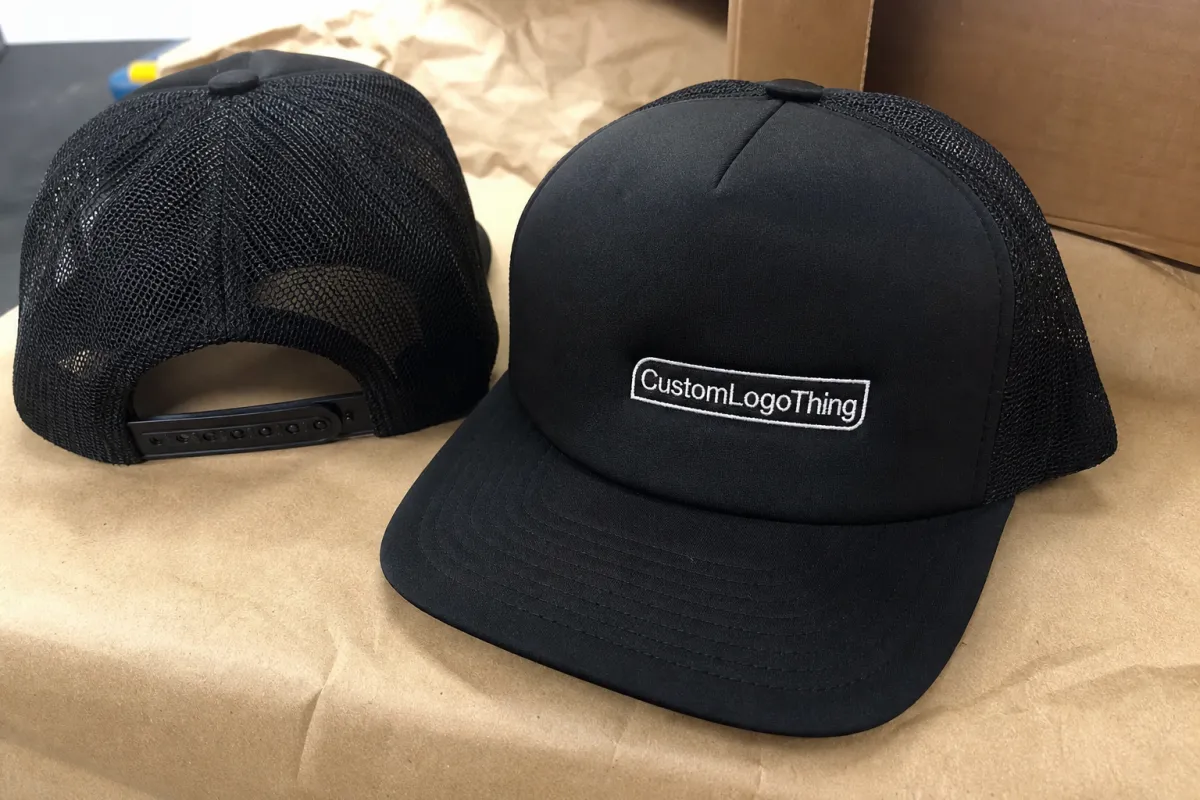
Foam Trucker Hats earn shelf space because guests can read them instantly. There is no sizing guesswork, no fabric education, and no need to explain fit. The front panel acts like a billboard, while the mesh back signals a relaxed, vacation-friendly item before anyone touches it. That speed matters in hotel retail, where buyers often decide within seconds whether something feels like a souvenir or a real purchase.
The shape also merchandises well. It stacks, hangs, and packs without much friction, so it is easier to manage than many garment-based items. For properties with limited display space, that convenience can matter almost as much as the logo placement.
Cost is the other reason this style keeps getting attention. A hat that looks too cheap can hurt conversion because guests assume it will wear poorly. A hat that looks too premium can miss the price point for impulse buying. The sweet spot is usually a cap that feels sturdy but not precious, with decoration that reads clearly from a short distance.
The cap is small, but the buying decision is not.
That matters even more for hotels with multiple outlets. A golf shop may want a quieter navy or white cap. A beach property may need brighter colors and a more playful feel. A conference hotel may lean toward neutral tones that do not compete with uniforms or signage. The same silhouette can work across those settings, but the color and decoration should fit the space.
Foam front, mesh back, and decoration options that change the result
The construction determines the look before decoration starts. Foam front panels create the structured surface that makes this style recognizable. Mesh backs add ventilation and keep the silhouette casual. The bill can be flat or curved, and that choice changes the tone more than many buyers expect. Flat bills usually feel younger and more retail-oriented. Curved bills often read softer and work better for resort buyers.
Decoration method changes both the appearance and the economics. Screen printing is the most efficient route for bold, single-color logos with strong edges. Embroidery gives a more textured, durable look, but it is not always a good match for thin foam or very small lettering. Heat transfer helps when the art has multiple colors or detail that printing would lose. Patch applications can work too, though they add cost and setup complexity.
The right choice depends on the art and the purpose. A poolside giveaway can use a simpler mark if it keeps the price attractive. A retail display near the front desk may need a stronger finish because it is competing with higher-end items. If the logo contains tiny text, narrow strokes, or detailed icons, the art may need simplification before production.
Material details matter too. Mesh density affects the feel, crown depth affects fit, and stitching affects how polished the hat looks under retail lighting. Even a small shift in foam firmness can change how the front panel sits once the logo is applied.
Color selection should follow the retail environment, not just brand preference. Black, navy, charcoal, and white usually sell well because they are easy to wear and less sensitive to decor. Bright colors can perform better in beach markets, outdoor venues, or family resorts where the hat is meant to feel playful. A saturated cap can also help a logo stand out, but only if the contrast stays legible from a few feet away.
Artwork specs, sizing, and approval details to lock before production
Artwork should be settled before pricing gets too far along. A foam trucker hat gives more front-panel space than a patch or sleeve print, but the usable area is still limited. If the art is too wide, too tall, or too detailed, it will lose clarity. Logos that rely on thin type, nested outlines, or small secondary text are usually the first to suffer.
Vector files are the best starting point. AI, EPS, or SVG files keep edges clean and help avoid fuzzy art at proof stage. If the hotel uses a formal brand palette, Pantone references should be provided rather than relying on screen colors. Monitors vary; printed and sewn materials do not.
Sizing is less about a single number and more about how the hat will be used. Most foam truckers use an adjustable snapback or similar closure, which makes them forgiving for guest wear and staff use. Still, buyers should confirm crown height, panel structure, and closure type if the order is meant for visible retail display. A hat that feels shallow or collapses easily can look fine in a box and awkward on a rack.
Proofing should include more than logo placement. Check how the art sits against seam lines, confirm whether it is centered or shifted to avoid distortion, and review stitch color if embroidery is involved. Ask how fine details will be simplified. That kind of review is tedious only until a bad production run makes it expensive.
Buyers should also ask for a production-safe version of the logo when the original art is dense. That is especially useful for hotel foam trucker Hats Bulk Order jobs tied to conferences, seasonal promotions, or properties with long names and secondary marks. A cleaner proof is often the stronger one, even if it removes decorative detail.
Pricing, MOQ, and quote factors for bulk hotel runs
Price depends on quantity, decoration method, art complexity, and shipping distance. A hotel foam trucker hats bulk order can look inexpensive at first glance and still become costly once setup, freight, and decoration are added. The safest way to compare quotes is to treat them as landed-cost exercises, not unit-price exercises.
MOQ, or minimum order quantity, is one of the first filters to understand. Some suppliers can support small test runs, but the economics usually improve once the order reaches 250 pieces or more. For a property testing demand, 100 to 150 pieces may be enough. For a seasonal retail item or multi-property program, 500 to 1,000 pieces often gives a better cost curve.
Here is a practical comparison of common decoration paths:
| Option | Best fit | Typical price impact at 500-1,000 units | Tradeoff |
|---|---|---|---|
| Blank stock hat | Quick giveaways or staff use where branding is secondary | $1.05-$1.75 per unit | Lowest cost, but no logo visibility |
| Single-color screen print | Bold, simple logos with clear edges | +$0.35-$0.60 per unit | Good value, less ideal for tiny text |
| Multi-color heat transfer | Detailed graphics or artwork with several colors | +$0.75-$1.25 per unit | More detail, slightly more sensitive to setup quality |
| Embroidery | Retail-facing programs or a more finished look | +$0.80-$1.50 per unit | Durable appearance, but not ideal for very fine art |
Those numbers only help if they are compared on the same basis. Separate the base hat cost, decoration charge, digitizing or setup fees, sample costs, freight, and taxes. A quote that looks lower by $0.20 can be more expensive once shipping and setup are included.
Delivered price matters because hotel retail has a narrow tolerance for waste. A hat that lands at $2.50 and sells for $14 leaves a workable margin. If landed cost creeps to $3.25, the program may still work, but markdown flexibility and replenishment math change quickly.
Special requests can also move price. Custom labels, specialty packaging, alternate closures, or unusual color matching often add more cost than expected. Those options are fine when they support the property’s selling environment, but they should be justified. If the hat will sit in a lobby basket, a simpler build may outperform a more elaborate one.
Process, turnaround, and delivery timeline for bulk ordering
A clean ordering process usually starts with five inputs: quantity, cap color, logo file, decoration method, and ship-to ZIP code. If those are clear, the quote is usually more accurate. If any of them are vague, pricing becomes a placeholder and the schedule becomes less dependable.
The typical sequence is straightforward: Request a Quote, review the proof, approve the art, enter production, then ship. Delays are just as predictable. Missing artwork slows proofing. Slow approval stalls the production slot. Last-minute logo changes create rework. Most missed deadlines come from decisions that were not made early enough.
Lead times vary with decoration method and volume. A simpler custom order may finish in roughly 10 to 15 business days after proof approval. Orders with multiple decoration colors, specialty packaging, or custom labeling can stretch to 15 to 20 business days or more before freight time is added. Shipping method matters too: ground delivery may be enough for replenishment, while air freight may be needed for a deadline-driven hotel event.
Rush production can help, but it has limits. It can compress a schedule, not fix a slow approval chain. If the property team is still debating logo placement the week before a trade show, the order is already under pressure. Tight dates are manageable when the art is final and the address is confirmed.
Packaging deserves more attention than it usually gets. Foam trucker hats are light, but they can still be crushed if cartons are weak or overpacked. If the shipment will move through distribution or regional transfer points, ask about carton strength, packout method, and any packaging testing standard. Vendors that reference ISTA testing or similar discipline tend to be more careful about transit damage than vague care claims.
How hospitality buyers evaluate supplier reliability and reorder consistency
Hospitality buyers rarely choose on price alone. A lower quote is useful only if samples, proofs, and reorders stay consistent. In a branded hotel environment, variation can become a bigger problem than cost. A cap that looks right on the first order and noticeably different on the second creates avoidable friction with operations and brand control.
Reorder consistency matters because these programs often move in waves. Summer traffic, golf weekends, holiday stays, local events, and conference periods all create spikes. If a hat sold well once, it should be possible to repeat it without changing the foam color, mesh tone, front-panel depth, or logo placement by a few millimeters. Those changes may look minor in a factory file, but they show up on a shelf.
Ask direct questions about substitutions and backorders. Ask whether the same decoration method can be repeated later if the first batch sells through. Ask how the supplier handles a proof correction when the art is not production-ready. The answers reveal more than a polished pitch ever will.
Sample accuracy matters too. A useful sample should show the actual crown shape, mesh feel, and logo scale, not just a rough approximation. If the sample feels off, the production run will probably feel off in the same way. Buyers who approve a sample too quickly often discover the problem later, when the cartons are already on the way.
What to send for a fast bulk quote and next steps
A fast quote starts with complete information. Send the quantity, cap color, logo file, decoration location, and needed delivery date. Those details usually determine whether a supplier can price the job accurately on the first pass. Everything else can follow once the base structure is set.
It helps to ask for two quantity tiers. A quote at 250 pieces and another at 500 or 1,000 pieces often shows whether the next price break is worth the larger commitment. For seasonal hotel merchandising, that comparison can change the order size more than almost any other factor.
Request the proof before production starts and compare it against brand standards. Review spacing, logo scale, color references, and any changes caused by the hat structure itself. If the order includes multiple properties or outlet names, confirm that every version is correct before approval. For a hotel foam trucker hats bulk order, the cleanest path is usually the least dramatic one: clear art, realistic quantity, acceptable lead time, and a hat construction that fits the environment it will live in.
What is the minimum order for hotel foam trucker hats bulk order projects?
MOQ depends on the decoration method and the hat style, but pricing usually improves once the run reaches 250 pieces or more. Smaller test runs are possible, though the per-unit cost is often higher until the order gets past the setup threshold.
Can I add my property logo to hotel foam trucker hats in bulk?
Yes. Most bulk programs support logo placement on the foam front panel. Vector artwork and Pantone references help the decoration stay clean, especially when the mark needs to remain readable from several feet away.
How long does a hotel foam trucker hats bulk order usually take?
Timing depends on proof approval, decoration method, order size, and freight distance. Simple orders may finish in about 10 to 15 business days after approval, while more detailed orders can require 15 to 20 business days or more before shipping.
What decoration method is best for hotel foam trucker hats bulk orders?
Screen printing works well for bold, simple logos. Embroidery is better when the goal is a more finished look. Heat transfer can handle more complex graphics. The right choice depends on the art, budget, and whether the hats are for retail, staff use, or giveaways.
Do you offer samples before placing a hotel foam trucker hats bulk order?
Samples are useful when crown shape, mesh quality, or logo placement needs to be checked before committing to production. They are especially helpful for retail programs, branded events, and repeat hotel orders where consistency matters.


