The fitness heavyweight winter Hats Sample Checklist is the difference between approving a hat that sells and approving a hat that just looks good in a photo. A heavyweight beanie can seem premium on screen, then arrive stiff, shallow, or oddly stretched once someone actually wears it. That is a boring way to learn an expensive lesson. A tight sample review catches fit drift, logo distortion, and warmth problems before they get locked into bulk production.
Why this fitness heavyweight winter hats sample checklist pays off
Winter hats fail in quiet ways. They do not usually explode. They disappoint. The knit may feel dense but not warm enough, the cuff may roll awkwardly, or the embroidery may pull the fabric into a little puckered mess that nobody noticed during approval because everyone was looking at the mockup on a laptop.
That is why a sample needs a real checklist. Use the same standards across every supplier: circumference, cuff depth, stretch recovery, knit density, color match, and decoration quality. If one supplier says “heavyweight” and another says “thick,” ignore the adjectives and measure the hat. The words are free. The production mistakes are not.
A good sample also tells you how the hat behaves in the hand. Does it spring back after stretching? Does it hold a clean fold on the cuff? Does the logo stay centered when the beanie is worn low over the ears? In practice, those are the details customers notice first, even if they cannot name them.
If the sample only looks good on a table, it is not approved yet.
From a buyer’s point of view, the sample is not a souvenir. It is the cheapest place to catch a mistake. One bad approval can turn into a full run of hats that are too tight, too loose, too hot, too itchy, or decorated in a way that makes the logo look cheap. That is a lot of money spent on a product that misses the point.
How the sample process moves from tech pack to first build
Start with a tech pack that gives the factory no room to improvise. Specify the yarn blend, knit gauge, finished dimensions, cuff style, label type, decoration method, and exact placement of the logo. If you want a 2x2 rib knit in a 70/30 acrylic-wool blend, say that. If you want a woven label on the left seam, say that too. Vague briefs create vague samples. That part never gets old, sadly.
The cleanest process usually looks like this: request, factory review, sample build, photo check, shipping, and a revision loop if something is off. Some suppliers will send photos before the sample ships. That helps, but do not mistake a phone photo for approval. A picture cannot show hand feel, stretch recovery, or whether the fold sits crooked on a real head form.
Spell out who approves what. Fit, artwork, color, trim, and packaging should each have a named owner. Otherwise the sample gets trapped in email limbo where one person likes the shade, another dislikes the placement, and a third wants to “see a few more options.” That is how simple sampling drifts into a month of polite chaos.
If you need a revision, set a deadline before the first sample even ships. I would rather see one targeted revision with a clear due date than three fuzzy rounds with no finish line. Fast feedback matters because each extra round usually means another production slot, another courier fee, and another delay that pushes launch back for no good reason.
For retail packaging inserts, swing tags, or mailer boxes, ask for paper specs that match your brand story. If you need certified material, FSC-certified paper is a straightforward way to keep the paper side honest without turning the project into a sustainability sermon.
And if the sample is traveling in outer cartons or poly mailers, a simple transit-test mindset helps. The ISTA test framework is useful even for small apparel shipments because it keeps you thinking about crush, vibration, and corner damage instead of assuming the courier will be gentle. They will not.
Cost, pricing, and MOQ tradeoffs
Sample pricing is never one neat number. Some suppliers waive it if you place the bulk order. Some charge a full sample fee and apply partial credit later. Some never credit it back at all, because the sample was a real production task, not a favor. Ask for that policy in writing before anyone cuts yarn.
Costs rise quickly once you add custom knit patterns, embroidery, woven labels, private packaging, or multiple revisions. A basic stock-yarn sample may run $25-$60. A decorated pre-production sample usually lands around $60-$150. A fully custom knit sample with custom packaging can reach $90-$220, especially if you are asking for a second or third round. Shipping is usually extra, and international courier fees can swing from $25-$90 depending on speed and destination.
MOQ changes the math more than most buyers expect. A low minimum order quantity often pushes the per-unit price up because setup and labor are spread across fewer hats. That is normal. A supplier quoting 300 pieces and one quoting 3,000 pieces are not playing the same game. Compare the total landed cost, not just the unit price printed in a clean little spreadsheet cell.
Here is a simple way to compare sample paths without getting tricked by the headline fee:
| Sample type | Typical fee | Typical timing | Best for | Main risk |
|---|---|---|---|---|
| Stock-yarn blank sample | $25-$60 | 5-8 business days | Fit, hand feel, basic shape | Color and logo may still change |
| Decorated pre-production sample | $60-$150 | 10-20 business days | Logo placement, finish quality, approval | Extra rounds if artwork is off |
| Fully custom knit sample | $90-$220 | 12-25 business days | Pattern, trim, packaging, final spec check | Slowest route if details keep changing |
Ask each supplier to separate sample fee, shipping, revision charges, and rush costs. That sounds basic because it is. Basic things tend to be the ones buyers forget when they are comparing three quotes and one of them seems suspiciously cheap.
Material and warmth specs to verify
Do not accept the word heavyweight as a spec. It is a sales adjective until someone gives you actual construction details. Ask for yarn blend, knit gauge, finished weight, lining, and rib structure. Those are the parts that control warmth, softness, pilling, and whether the hat keeps its shape after a few wears.
For heavyweight winter beanies, common yarn blends might include 100% acrylic, 70/30 acrylic-wool, or a recycled fiber blend with a similar hand. None of those is automatically better. Acrylic can be softer and more affordable. Wool adds warmth and better recovery. A recycled blend can work well, but only if the yarn and knitting are consistent. Otherwise you get “eco” with a side of weird fit.
Useful measurements include crown height, cuff depth, opening circumference relaxed and stretched, and the sample weight in grams. For a lot of adult beanies, a relaxed opening around 8.5-9.5 inches and a cuff depth around 2.5-3.5 inches are common starting points, but your audience matters. A fitness brand may want a deeper cuff and a snugger crown than a fashion label would.
You should also ask about pilling and colorfastness if the hat will get hard wear. ASTM and AATCC test methods are useful references if you want to go beyond the factory’s own “looks fine” standard. That matters more for darker colors, heather yarns, and blends that will sit under gym bags, commuter straps, and winter sweat.
A warmer hat is not automatically a better hat. If the knit gets stiff, the lining gets scratchy, or the crown compresses after an hour, people stop wearing it. That is the whole problem in one sentence. Warmth only matters if the hat stays comfortable enough to live on someone’s head.
One practical move: request a plain unbranded sample first if the construction is new, then a decorated version once the structure is approved. That keeps you from blaming the embroidery for a problem caused by the knit itself.
Fit, sizing, and decoration details that make approval real
Measure the opening both relaxed and stretched, and do it on the same head form or measurement jig every time. Beanies can vary more than buyers expect because the same yarn blend behaves differently across knit density and finishing. A hat that seems fine in a hand stretch can still ride up once worn for ten minutes.
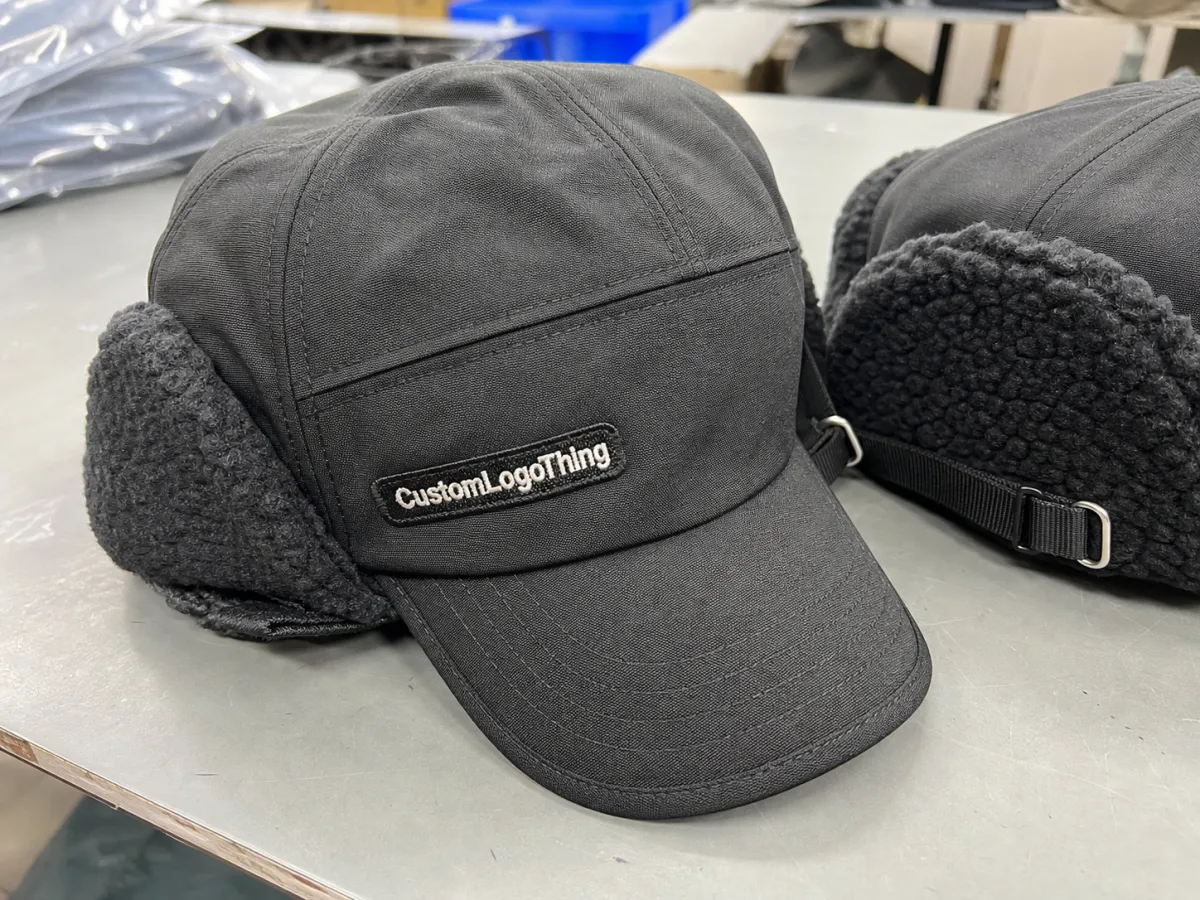
The logo needs just as much attention as the body of the hat. Confirm where it sits relative to the cuff fold and how it looks on a real head shape. A small placement shift can make embroidery appear centered on one size and awkward on another. If the artwork has fine lines, ask for a stitch count that keeps the edges readable instead of turning the logo into a fuzzy patch.
Check seam bulk, label placement, hangtag attachment, and color match under daylight. Fluorescent light can flatter almost anything. Daylight is less kind, which is exactly why it is useful. If the color was matched from a screen, verify it against a physical standard or at least a printed swatch approved under the same lighting.
Decoration should also be tested in motion. Pull the cuff down. Stretch the crown. Fold the brim back. If the artwork warps, the placement is wrong or the decoration method is too aggressive for the knit. That usually means a simpler stitch count, a slightly larger logo field, or a different placement altogether.
Here is the blunt version: a heavy winter hat is a wearable item, not a display object. If the sample looks neat but feels awkward after five minutes, the design is not done. I would rather approve a slightly simpler logo that wears well than a clever layout that gets abandoned the first cold morning.
A clean sample is one that survives real wear, not just a table check.
Common mistakes that waste rounds
The first mistake is approving from photos only. Screens hide stretch issues, hand feel, and size drift. That is how weak samples slip through and become full production mistakes with nicer lighting.
The second mistake is vague feedback. “Make it nicer” is not feedback. Neither is “the logo feels off” unless you can say why. Give measurable notes: reduce width by 0.5 inch, increase cuff depth by 0.25 inch, move logo up 0.3 inch, soften the yarn blend, or lower the stitch density. Factories work better with numbers than with vibes.
The third mistake is skipping a wear test. A sample can feel great for ten seconds and terrible after a short walk. Have someone wear it for a commute, a workout warm-up, or a cold outdoor session. Watch for itch, sliding, seam pressure, and ear coverage. That is where ugly surprises show up.
The fourth mistake is forgetting to document the changes. If revision notes live in three email threads and a WhatsApp message, the next sample often repeats the same problem with a fresh shipping charge. Keep one approval file with dated notes, photos, and the exact changes requested. Boring paperwork. Very useful paperwork.
For teams comparing multiple suppliers, use the same scoring method on every sample. Rate fit, warmth, decoration, finish, and packaging on a 1-5 scale. If one sample gets a 2 for warmth and another gets a 4 for decoration, the decision is obvious only if the scoring is consistent. Otherwise everyone argues from memory, which is a terrible system.
One more trap: changing too many things at once. If fit, yarn, logo size, and packaging all change in the same revision, you will not know what fixed the problem. Change one or two variables at a time unless the sample is a total miss.
What to do after the sample lands
Score the sample line by line against your checklist. Mark each item pass, revise, or fail. That sounds slightly obsessive because it is. It also keeps the approval conversation honest. Nobody has to guess whether the problem is minor or structural.
If the issue is small, request a targeted revision. If the fit, knit, or decoration is wrong in a fundamental way, ask for a new sample before moving to bulk production. Do not let a supplier talk you into “we can fix it in bulk” if the sample is already out of spec. Bulk production is where bad assumptions become expensive.
Once the sample is accepted, lock the final spec sheet, the approved color references, and the date of approval. That record becomes your production anchor. Attach it to the purchase order and keep one physical sample on hand so the production team has a real target, not a vague memory of what everyone meant.
If your launch includes hang tags, labels, or carton art, finalize those details now too. Paper specs, print placement, and carton dimensions should all match the approved sample. A beautiful hat shipped in the wrong presentation still feels unfinished. If you need paper components, use certified stock where it makes sense and keep the rest simple.
The strongest buying habit is also the least dramatic: verify the sample, then freeze the spec. That is how the fitness Heavyweight Winter Hats sample checklist saves money, time, and a lot of backtracking. Use it once, and the order feels controlled. Skip it, and you get a very expensive guessing game.
What should a winter hat sample checklist include?
Start with finished size, stretch range, cuff depth, yarn blend, and knit density. Then add decoration details like embroidery size, placement, label type, and color match. Finish with clear approval rules for fit, warmth, hand feel, and packaging Before You Order bulk.
How do I compare heavyweight beanie samples fairly?
Use the same head form, the same measurement method, and the same lighting for every sample. Check relaxed and stretched dimensions, then test recovery after wear. Compare hand feel, seam bulk, and logo placement instead of judging by photos alone.
Does the sample fee usually get credited to the bulk order?
Sometimes yes, but never assume it. Ask for the policy in writing before you sample. Confirm whether shipping, revision fees, and rush charges are excluded from any credit, and compare total landed sample cost instead of the headline fee.
How long does a custom winter beanie sample usually take?
Simple stock-yarn samples can move fast, while fully custom knit or decorated samples take longer. Add extra time for revisions, shipping, and artwork back-and-forth. Ask for a real calendar date so you can plan the launch instead of hoping for the best.
What if the sample feels warm but fits too stiff?
Ask for a softer yarn blend, a lighter gauge, or a different finishing method. Test whether the stiffness comes from the knit structure, the lining, or the decoration stitch count. Do not approve warmth alone if the hat will not wear comfortably for a full day.
If you use this fitness Heavyweight Winter Hats sample checklist before bulk approval, you give yourself a real shot at getting the fit, warmth, decoration, and pricing right on the first serious run. That is the whole point: fewer surprises, fewer revisions, and a winter hat people actually want to keep on their heads.