Source a Subscription Heavyweight Winter Hats Supplier and the decision looks simple on paper: choose a knit, add a logo, ship the box. In practice, the hat does more work than most buyers expect. A heavyweight winter style is one of the few items in a subscription pack that the customer can judge instantly, by touch alone. If it feels dense, warm, and well finished, the rest of the box starts from a better place.
That first impression matters because winter headwear carries visual and practical weight at the same time. A thin beanie says giveaway. A heavier knit says product. It photographs better, it survives packing better, and it gives the subscriber something they can use, not just unwrap. The catch is that heavy knits are less forgiving than basic promo hats. Gauge, yarn mix, stretch recovery, and cuff stability all need to hold steady from sample to reorder.
For recurring fulfillment, consistency becomes the real buying test. The first shipment can be impressive and still fail the program if the second and third runs shift in fit or finish. That is where a disciplined subscription Heavyweight Winter Hats supplier earns its keep: not by promising magic, but by keeping the same spec intact when the calendar gets tight and the order count rises.
Why a subscription heavyweight winter hats supplier changes box economics
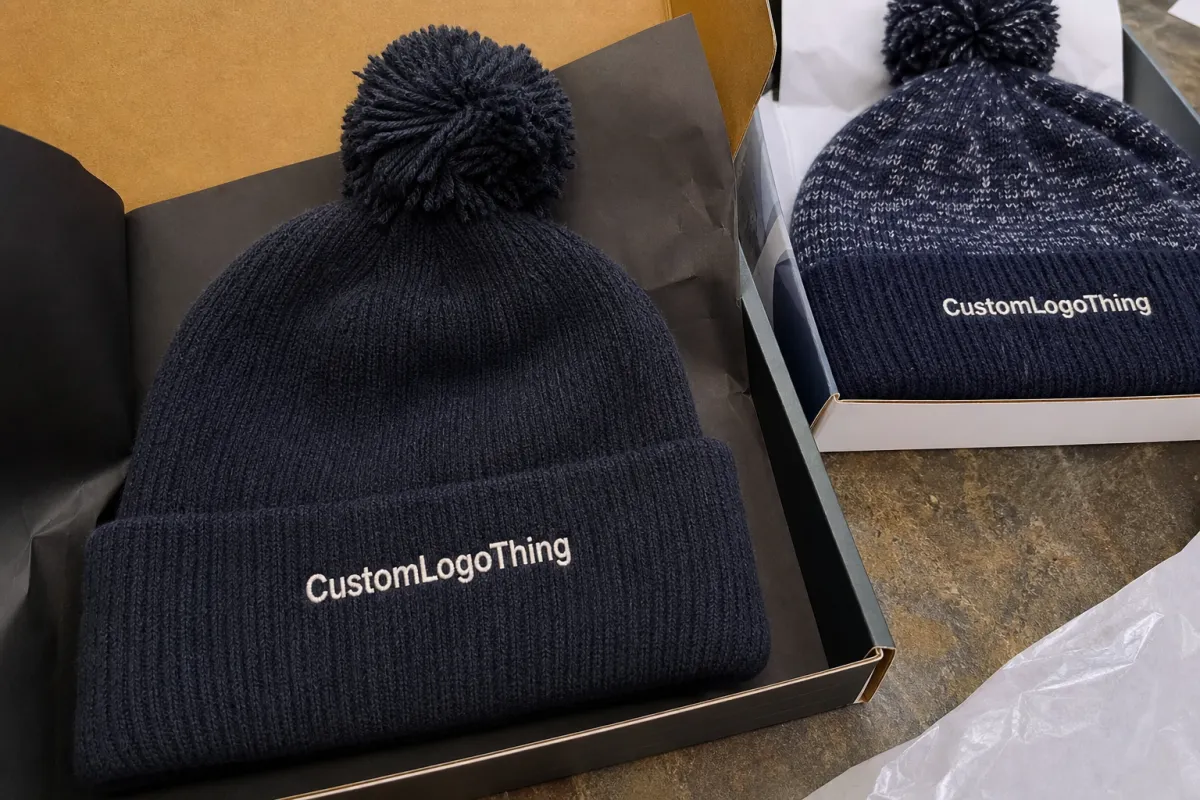
A subscription box is a value equation disguised as a product mix. Swap in a light accessory and the box may still function, but it starts to feel thinner. Add a heavyweight winter hat and the perceived value usually jumps, even if the actual cost increase is modest. Buyers see it in retention, customer feedback, and social posts that focus on the hat as the “real” item in the box.
There is a reason dense knits read as premium. A thicker structure suggests more material, better warmth, and better durability. The customer may not know the gauge or the fiber blend, but they notice whether the cuff springs back, whether the embroidery lies flat, and whether the hat feels like something they will keep after winter ends.
That perception has budget consequences. A 180- to 220-gram knit can carry a seasonal theme more effectively than two lighter accessories combined. It can also reduce the need for extra packaging tricks. If the product itself feels substantial, the box does not need as much visual padding to justify its price.
If the hat feels flimsy, the whole box feels smaller. That is not branding theory; it is how subscribers handle the package before they read a single insert.
The strongest suppliers also help with repeatability. They keep yarn lots, embroidery files, measurement tolerances, and carton counts tied to a master spec. That sounds basic until a reorder lands during peak season and the factory has to choose between speed and precision. Heavyweight knits are especially sensitive to small drift. A few millimeters in cuff depth or a slight change in crown height can make the second batch feel off, even when the measurements look close on paper.
Process: How orders move from brief to packed cartons
The cleanest orders begin with a brief that reads like a production note, not a mood board. A supplier needs the target audience, expected climate, logo method, packing format, and ship window. If the plan is a winter subscriber drop in a cold market, say so. If the hat must fit inside a specific carton size, say that too. Missing context creates back-and-forth that can eat a week before sampling even begins.
Where delays usually start
Sampling is the first gate. Good samples should be evaluated on a head, not flat on a table. That is where crowding at the crown, shallow depth, loose cuffs, and seam irritation show up. A hat can look perfect laid out and still fail once it is worn for an hour outside. Buyers often skip that wear test, then discover the problem after launch, when the defect is expensive.
After the fit check comes yarn confirmation, knit gauge, cuff size, label type, and decoration placement. Embroidery files should be final before bulk knitting starts. If artwork changes late, the supplier may need to rebuild digitizing, adjust stitch count, or re-run approval samples. Even a small logo revision can push a schedule back several days.
For subscription fulfillment, the dangerous point is the approval window. A missed sign-off does not just delay one product; it can trigger warehouse rescheduling, missed load appointments, and rush freight charges that were never part of the margin model. The best suppliers understand that timing is part of the product.
A disciplined subscription heavyweight winter hats supplier should be able to map the sequence clearly: pre-production sample, bulk knitting, decoration, in-line checks, final inspection, and carton packing. Each step needs a name and an owner. Once production starts, carton count, barcode placement, and pallet rules should already be locked. If those details are still open while boxes are being sealed, the shipment is already at risk.
For extra protection, ask whether outer cartons are specified for parcel handling rather than just warehouse storage. Shipping networks are hard on corners and seams. A winter hat is not fragile in the usual sense, but crushed cartons, torn polybags, and weak master packs still cause receiving delays and customer complaints. For transit test references, many teams look to ISTA methods as a baseline.
Pricing, MOQ, and unit cost drivers to compare
Pricing for Heavyweight Winter Hats can look straightforward until the quote arrives. Then the line items split apart: yarn content, knit density, decoration style, sample rounds, packaging, and whether freight is by air or ocean. A quote that looks low at first glance can jump once labeling, carton marking, or domestic delivery are added.
For ballpark planning, buyers often see basic heavyweight acrylic knits around $2.10 to $3.40 per unit at 500 pieces, with lower pricing at larger volumes. Wool blends usually sit higher, often $3.80 to $6.20 per unit depending on fiber quality and decoration complexity. Recycled yarn blends tend to fall in the middle for many programs, commonly $2.40 to $4.10 per unit. These are directional figures, not promises. Stitch count, labor rates, and packaging choices move them quickly.
| Option | Typical MOQ | Unit cost signal | Best fit |
|---|---|---|---|
| Heavyweight acrylic knit | 300-500 pcs | Lower base cost, steady repeatability | Subscriber gifts, promo bundles, broad audience drops |
| Wool blend | 200-300 pcs | Higher warmth and premium feel | Retail-focused or higher-margin boxes |
| Recycled yarn blend | 300-500 pcs | Middle pricing, stronger sustainability story | Brands with materials claims or packaging goals |
| Custom jacquard or heavy embroidery | 500+ pcs | Setup and stitch count raise cost | Logo-led programs with strong visual identity |
MOQ should be read as a production tool, not a simple hurdle. Smaller runs help with color testing and demand validation, but higher volumes usually improve consistency and lower the per-unit cost. If the subscription program repeats every winter, a slightly higher MOQ can be the cheaper route across the year, especially if the supplier can hold the spec for a reorder without new setup charges.
Compare quotes in four parts: product cost, setup or digitizing, sample cost, and landed cost. Then add freight, warehousing, and any labeling fees if the hats are being packed for a subscription center. A supplier that only quotes ex-factory pricing may appear cheaper than one that includes more detail, but the advantage often disappears once the rest of the bill is visible.
Materials, weight, fit, and warmth factors that matter
Material choice changes how the hat behaves in use. Acrylic is usually the budget workhorse. It is color-stable, easy to knit, and less likely to shrink than many natural fibers. Wool blends feel warmer and more elevated, but they can also be harder on the budget and may require clearer care guidance. Recycled yarns are attractive when the brand needs a sustainability angle without sacrificing structure.
For heavyweight hats, weight alone does not tell the full story. Knit gauge, yarn twist, and stitch density matter just as much. A 5-gauge chunky knit can feel very different from a looser 7- or 9-gauge build, even if the scale weight is close. That is why a sample should be worn and handled, not only measured.
Fit details deserve real attention. Check crown depth so the hat does not sit too high. Check cuff stability so it stays folded after several wears. Check stretch recovery after repeated pulls. Check seam comfort at the forehead line, where irritation shows up first. These are practical issues, not polish. A hat that feels fine for 30 seconds can become annoying during a cold commute.
Useful quality checks include pilling resistance, colorfastness, label durability, and embroidery flatness. Subscription items tend to be handled more than one-off giveaways, so the logo, woven label, and care tag need to survive repeated use. If the packaging includes paperboard inserts or hang tags, FSC-certified stock through FSC can keep the paper side aligned with the product story.
A practical benchmark: heavyweight knits in the 160 to 230 gram range usually feel meaningful without becoming awkward to pack. Below that, the item can start to read like a standard promo beanie. Above that, shipping weight, carton fill, and space efficiency deserve closer attention. Heavy items are not automatically better; sometimes they just cost more to move.
Step-by-step buyer checklist for sourcing the right supplier
A subscription program needs a buyer who thinks in production stages, not just in unit price. The right Subscription Heavyweight Winter Hats supplier should fit the audience, the climate, the fulfillment model, and the reorder cadence. That is a lot to ask from one product line, which is why a checklist helps.
- Define the use case. Is the hat a utility item, a loyalty perk, a retail add-on, or a seasonal centerpiece?
- Set the climate target. A fall shipment for mild weather needs a different warmth profile than a winter drop headed into freezing conditions.
- Request samples. Ask for at least two versions if the supplier offers more than one yarn or gauge.
- Measure the fit. Compare crown depth, cuff height, stretch recovery, and how the hat sits after several hours of wear.
- Review decoration options. Embroidery, woven labels, and patch applications each affect appearance, cost, and lead time.
- Confirm fulfillment details. Carton count, polybag rules, barcode placement, and pallet needs should be known before production begins.
A comparison sheet makes supplier selection much easier. Score each vendor on sample quality, response speed, production capacity, reorder support, packaging options, and post-sale communication. Add a separate risk column. A factory that produces an excellent sample but struggles with repeat orders may not be the right partner for a subscription model, where consistency matters more than novelty.
Ask for a master spec sheet before approving the first run. If the supplier cannot hold the same yarn, gauge, dimensions, and logo placement across reorders, the lowest first-run price stops mattering very quickly.
It also helps to ask how the supplier handles change control. Can they keep the fit stable if the colorway changes? Do they re-run embroidery digitizing every time, or do they preserve the file? Can they show a pre-production photo against the approved sample? These are small questions with costly consequences if ignored.
For quality discipline, ask whether the factory uses an AQL inspection plan or a similar defect-control process. Even a basic major/minor split can catch twisted labels, uneven cuffs, and mismatched sizes before the cartons leave the floor. In recurring programs, that control is more valuable than a tiny discount.
Common mistakes that inflate cost or delay shipping
The most common mistake is approving a sample without wearing it. Flat samples hide issues that show up immediately on the head: shallow crowns, loose cuffs, and seams that rub. A buyer who skips the wear test often finds out after launch, when the mistake is no longer cheap to fix.
The second mistake is leaving artwork approval too late. Embroidery is not just decoration. It can change stitch count, thread usage, sample timing, and setup cost. If a subscription ship date is fixed, even one revision can push the order into rush freight territory.
The third mistake is treating subscription fulfillment like a simple apparel order. It is not. Carton counts, warehouse labels, polybag requirements, pallet stacking, and barcode placement all matter. A receiving team can reject a shipment for a missing case label even if the hats themselves are perfect. That kind of error burns time and good will for no useful reason.
Another frequent problem is failing to lock the spec for reorders. A first run might be approved from a sample, then the second order quietly shifts because a different yarn lot was used or the cuff height was adjusted without a formal note. The change may be small, but customers notice inconsistency faster than buyers do. Once the product drifts, the brand starts spending time explaining a difference that should never have appeared.
There is also a hidden cost in vague instructions. “Make it thicker” is not a production spec. Neither is “premium feel.” The supplier needs measurements, fiber composition, decorative method, and packing requirements in writing. The clearer the brief, the fewer the revisions, and the fewer the revisions, the lower the chance of delay.
Expert tips for scaling reorders without quality drift
Scaling reorders is easier when the first run is documented like a standard, not treated as a one-off. The best teams freeze a master spec sheet with yarn content, gauge, measurements, logo placement, packing format, and inspection criteria. They also keep approved photos and a physical reference sample, not just a description in an email thread.
A subscription-heavy knit program should forecast in layers. One forecast covers core demand. Another accounts for cold snaps, subscriber growth, or promotional spikes. Heavy winter accessories can move fast when weather turns. If replenishment lags even a little, the program can fall behind before the warehouse notices the gap.
Ask for pre-production photos on each major reorder. Ask for in-line checks if the run is large enough to justify them. If the supplier can send a finished carton next to the approved sample, more mistakes can be caught before freight leaves the facility. Ten minutes of review can prevent a week of dispute.
Define acceptable variation before production starts. If cuff height can vary by 0.5 cm, state it. If embroidery placement has a tolerance, write that down. If yarn color needs to sit within a practical range because of fiber dye behavior, say so. Clear tolerances reduce subjective arguments and keep quality checks focused on real defects instead of opinions.
One habit that helps more than people expect: keep an archive sample from every approved lot. It is not glamorous, but it makes later reorders easier to judge. When the third shipment arrives and something feels off, a direct comparison sample can cut the diagnosis from days to hours. That matters when winter inventory is moving quickly.
Next steps: sample, quote, and lock the reorder plan
Start with two or three samples, not one. Wear them, stretch them, and check how the shape recovers after a long wear test. If the care instructions allow washing, test that too. A sample that looks sharp in a tray may not behave the same way after real use, and the real use is what matters.
Then ask for a landed-cost quote rather than a factory-only price. Include freight, labeling, warehousing, split shipment fees, and any carton rework charges. That is the only way to compare a domestic supplier with an offshore subscription heavyweight winter hats supplier on something close to equal terms. Price alone can hide the true cost of getting the item into the box.
Finally, lock the reorder calendar before the first batch ships. Set the approval date, production slot, freight window, and reorder trigger in writing. If a subscription program is supposed to feel predictable, the supply chain has to behave predictably too. The strongest supplier relationships are the ones that keep the spec stable and the surprises small.
For Custom Logo Things, the useful mindset is simple: treat the first order as the reference point for every repeat order that follows. Once the hat is in a subscription program, it stops being a single purchase and becomes part of a recurring standard. That standard is what customers remember.
What should I ask a subscription heavyweight winter hats supplier before ordering?
Confirm fiber content, knit gauge, cuff height, fit measurements, and decoration method before discussing packaging. Then ask how samples are handled, what the MOQ is, and whether reorders can follow the same spec without resetting the production process.
How long does a custom heavyweight winter hat order usually take?
Build the schedule around sample approval, production, inspection, and freight rather than assuming a single turnaround number. Clean orders can move quickly, but embroidery changes, label revisions, and carton edits can add time that buyers often forget to budget for.
What drives unit cost most in heavyweight winter hat sourcing?
Yarn choice, knit density, and decoration method usually move price more than buyers expect. Packaging, freight, labeling, and storage can also change landed cost enough to affect margin, especially if the order is split across more than one drop.
How do I check quality from a sample before placing a bigger order?
Test stretch recovery, seam comfort, colorfastness, and whether the cuff keeps its shape after wear. Then compare the sample against a written spec sheet so subjective impressions do not override measurable requirements.
Can these hats be packed for recurring subscription drops?
Yes, if carton counts, labeling, and reorder triggers are set before production begins. A supplier with stable specs and clear warehouse instructions can support repeated drops without changing the customer experience.