Fitness Heavyweight Winter Hats unit cost is usually decided long before the first stitch is sewn. The yarn matters, but so do MOQ, decoration method, cuff structure, packaging, and how much cleanup the artwork needs. A beanie can look inexpensive on a quote and still arrive expensive once setup, shipping, and rework are added. For fitness brands, gyms, coach programs, and outdoor training teams, the better question is not just what the hat costs. It is what kind of hat still looks intentional after a season of use.
Heavyweight winter beanies sit in a useful middle ground. They are warmer and more substantial than the thin promo hats that show up at events, but they do not have to become premium retail accessories to feel worth keeping. That balance matters. A member gift that stretches out after a few wears is wasted budget. A sturdy rib-knit hat with a clean logo, by contrast, keeps working long after the launch photos are forgotten.
The buying process gets easier once the spec is clear. Decide on knit weight, cuff depth, logo location, and decoration style before asking for pricing. Otherwise the quotes will not compare cleanly. One supplier may be pricing a basic acrylic cuffed beanie while another is quoting a denser rib knit with a woven patch and custom label. Those are not close substitutes, even if the line item says “custom winter hat.”
Practical rule: if the hat feels flimsy before decoration, it usually reads cheap after decoration. The knit construction is doing more work than most buyers realize.
Why Heavyweight Winter Beanies Win When Thin Giveaways Fail
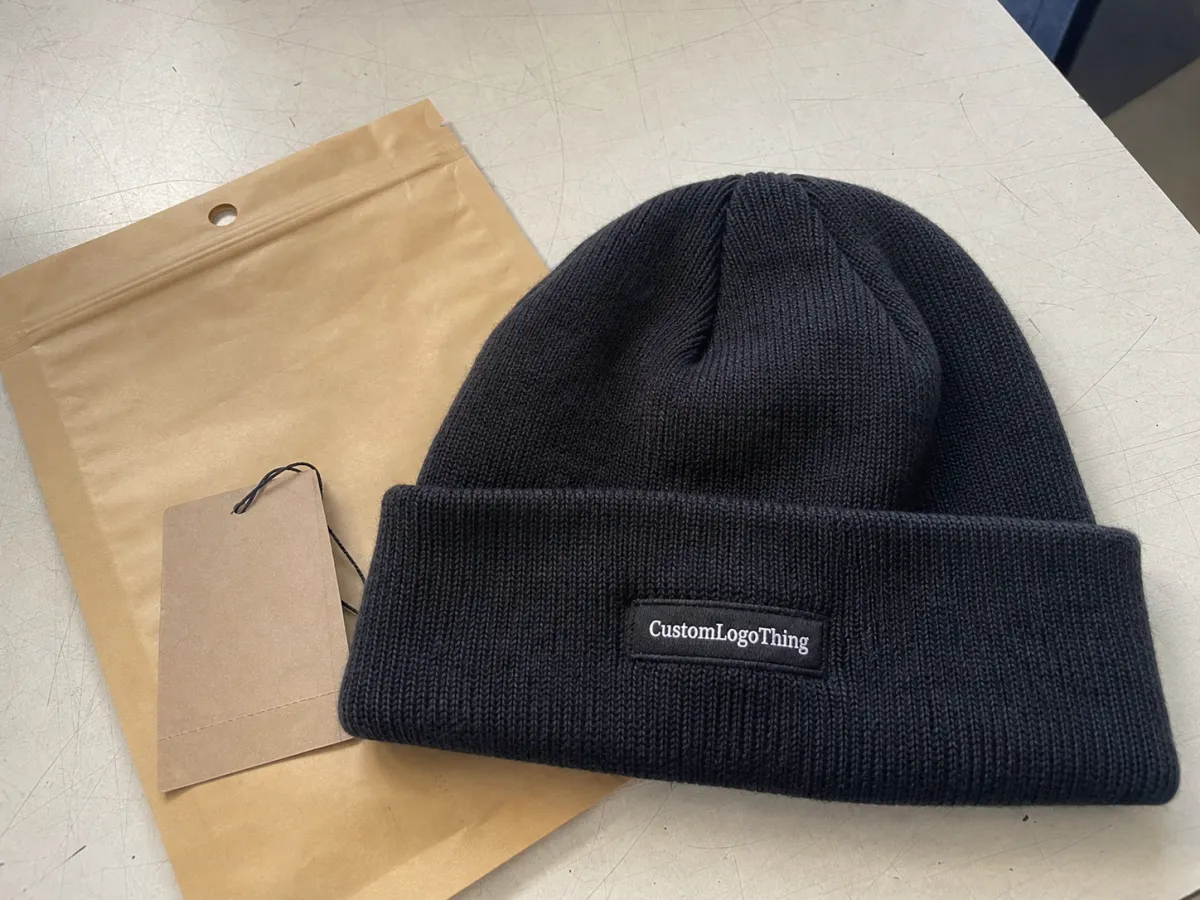
A thin beanie can look fine in a mockup and disappointing in the hand. It lacks the body that helps a logo sit cleanly, it tends to collapse after stuffing into a gym bag, and it often loses shape faster than buyers expect. Heavyweight Winter Hats solve those problems because the knit has more density and better recovery. That gives the cuff structure, the crown more presence, and the decoration a better surface to sit on.
Fitness buyers notice this quickly. Staff members wear hats for long shifts at outdoor events. Coaches pull them on early in the morning when the temperature is still low. Members wear them to and from class, then toss them back in a locker or backpack. A low-cost hat can survive one of those routines. A decent heavyweight version is built for repeated abuse without looking worn out after the first wash cycle.
The other reason these hats perform well is perception. In apparel, weight reads as value. That does not mean every thick knit is better, but a dense rib-knit beanie usually feels more substantial in the hand and looks more deliberate on the head. For brands selling performance, discipline, or resilience, that tactile impression matters. It is hard to market consistency while handing out headwear that feels like a throwaway.
There is also a practical merchandising angle. Heavyweight beanies can work as staff gear, event giveaways, retail items, and bundled add-ons. That flexibility helps justify a slightly higher unit price because the same style can move through several channels. A hat that only works as a freebie has a narrow life. A well-made winter beanie can carry a logo, sell at the front desk, and still look right on the sidewalk.
Heavy Knit Construction, Fit, and Wear Traits Buyers Notice
Construction is where the real differences show up. A dense 2x2 rib or similar heavy rib knit usually offers better stretch recovery than a loose, airy weave. That recovery matters because a beanie that grows baggy after a few wears starts looking sloppy, even if the logo is good. The cuff also matters more than people think. A folded cuff around 2.5 to 3.5 inches creates a cleaner logo zone and helps the hat hold a more structured profile.
Material choice affects warmth, softness, and cost. Acrylic remains the most common base because it is affordable, easy to color-match, and stable in production. It is also forgiving when orders need repeatability. Acrylic-wool blends feel warmer and often look more premium, but they generally increase unit price by about 10% to 25%, sometimes more if the yarn supply is tight. Recycled polyester can support a lower-impact sourcing story, although the handfeel may be less soft and color options can be narrower. No material solves every problem. The right one depends on target price, decoration method, and whether the customer values feel, warmth, or sustainability claims most.
Fit details that reduce complaints
Most complaints about winter hats come down to fit, not style. If the beanie sits too shallow, wearers keep tugging it down. Too deep, and it slumps. Too tight, and it feels like an afterthought. For a one-size style, the stretch range and crown depth need to be set with real heads in mind, not just a flat pattern. A good heavyweight hat should sit close without squeezing and recover after being stretched. That recovery is one of the easiest things to miss in a spec sheet.
Buyers should also check how the cuff behaves after folding and unfolding. A cuff that curls or loses its line makes the whole product look less controlled. The best examples hold their shape after being packed, unpacked, and worn again. If the knit is too soft, the hat can look great in a photo and tired on a shelf.
Wear traits that show up after the first month
Pilling, color fade, and distortion after washing are the usual long-term issues. Acrylic can pill if the yarn finish is poor or the knit is too loose. Dark colors generally hide wear better, while light neutrals can look cleaner at first but reveal stains and lint faster. Consistent dye lots matter as well, especially for reorders. A navy from one run that differs slightly from the next may not sound serious, but if the team is handing out hats over several events, that mismatch becomes visible.
For buyers who want a retail-level finish, it helps to ask for the exact yarn composition, gauge, and cuff construction before approving the order. Those details are what separate a hat that merely looks thick from one that actually performs like a heavyweight winter style. A good supplier should be able to state the knit count, the approximate weight, and whether the material will soften after washing or hold its shape over time.
Transit packaging is worth a quick check too. Folded cuffs can crease if the carton is overpacked, and lightweight polybags can crush the knit texture. If the order includes retail-ready presentation, it is sensible to look at packaging standards such as ISTA test methods for shipping and FSC stock for paper inserts or hang tags. Those details are not glamorous, but they affect how the product arrives.
Decoration Methods That Hold Up After Repeated Wear
Decoration is where many winter hat orders either become useful merch or turn into storage. Knit fabric does not behave like a flat tee. It stretches, compresses, and gets rubbed by bags, coats, and hands. The decoration method needs to survive that abuse. For heavyweight beanies, the safest choices are flat embroidery, 3D puff embroidery, woven patches, leather patches, and silicone labels.
Flat embroidery is usually the easiest place to start. It is durable, readable, and relatively cost-efficient. It also works well on cuff placements, where the logo needs to be clear without overwhelming the hat. 3D puff embroidery adds volume and a stronger retail feel, but it needs more careful digitizing and tighter control during production. It tends to work best with bold artwork and larger letterforms. Woven patches are useful when the design has detail that embroidery would blur. Leather patches push the look toward rugged premium. Silicone labels sit in a modern, sporty lane, though they are not suitable for every logo.
Placement choices that affect both look and price
Front cuff placement is the most common because it is visible and efficient to produce. Side placement can be more restrained and sometimes more stylish, especially for club kits or premium retail drops. Back placement is less common for winter hats because the space is limited and the viewing angle is weak. The size of the decoration matters just as much as the method. A logo that is too small disappears in the knit texture. A logo that is too large stiffens the cuff and can make the hat feel less wearable.
For most heavyweight winter hats, a logo in the 2.0 to 3.5 inch range usually reads well without crowding the cuff. That is not a hard rule, but it is a useful starting point. The cleanest orders are often the ones with one strong placement and no extra clutter. Multiple placements can look appealing in a digital mockup and still add cost, setup time, and QC risk.
What pushes cost up fast
Tiny gradients, narrow text, and layered artwork rarely pay off on knitwear. They either disappear into the fabric or force the supplier into a more expensive decoration method. More thread colors also mean more machine time and a higher chance of alignment issues. If the goal is a controlled unit price, keep the logo bold and limit the number of production variables. A hat is not a billboard; it rewards clarity, not complexity.
That restraint often improves the final product. On a knit surface, strong contrast and simple shape usually look more expensive than a crowded design with too much detail. The same rule applies to patch work. A clean patch with clear edge finishing almost always beats an overdesigned badge that tries to say too much on too little space.
Fitness Heavyweight Winter Hats Unit Cost, MOQ, and Quote Range
Here is where buyers usually want the clearest answer. Fitness Heavyweight Winter Hats Unit cost changes most with quantity, decoration, yarn choice, and the number of custom steps outside the actual knit. MOQ matters because setup charges have to be spread across the order. A 100-piece run and a 500-piece run can use the same artwork, but the per-unit price will not behave the same way. The smaller order carries a heavier share of tooling, digitizing, and sample work.
For a standard heavyweight rib-knit beanie with one logo location, these are realistic working ranges. They are not promises, and freight can shift the landed cost, but they give buyers a usable frame.
| Quantity | Typical Spec | Cost per Piece | Notes |
|---|---|---|---|
| 100 pcs | Acrylic heavyweight beanie, one-color embroidery | $4.80-$8.20 | Setup costs weigh heavily at this tier |
| 300 pcs | Acrylic or acrylic-blend, one logo, standard cuff | $3.40-$5.90 | Common MOQ sweet spot for smaller brands |
| 500 pcs | Heavier knit, embroidery or woven patch | $2.85-$4.95 | Better spread on setup and more stable pricing |
| 1,000 pcs | Repeatable spec, limited color count, standard packaging | $2.10-$3.85 | Lowest cost per piece in most cases |
Decoration choice has a direct effect on price. Moving from flat embroidery to a woven patch or leather patch usually adds about $0.30 to $1.40 per unit, depending on size, finish, and order volume. 3D puff can add a similar amount, sometimes more if the design requires extra cleanup or if the font is too thin to hold the raised structure. Extra colorways also raise cost because each version adds setup and inspection time.
Several fees are easy to miss if the quote is too brief. Embroidery digitizing often runs around $25 to $60 for a standard logo. Patch setup can land anywhere from $35 to $120 depending on the style and size. Custom packaging or labels may add $0.10 to $0.60 per unit, plus setup. None of these numbers are extreme on their own. Together, they can move the order enough to change the margin.
The cleanest way to compare suppliers is to ask for the same spec at 100, 300, and 500 pieces. Keep the knit type, cuff depth, decoration method, and packing assumptions identical. Some quotes look lower because the supplier quietly changes yarn weight or decoration detail between tiers. That is not a useful comparison. A good quote should show the same hat, not a cheaper interpretation of the hat.
How to read a quote without getting trapped by extras
Look for what is included before comparing the unit price. Does the quote include one sample? Is freight separate? Are setup charges itemized? Are art changes included, or billed later? Are packaging and carton counts part of the price? If the answer to any of those is vague, the quote is not complete yet. A lower number with hidden extras is not a better price. It is just a later surprise.
Another useful check is whether the supplier explains the break point between tiers. Sometimes moving from 300 to 500 units drops the cost in a meaningful way because the setup charge is diluted. Sometimes it barely changes because the decoration method is still labor-heavy. That information helps buyers decide whether to hold budget for a larger run or stay with the safer quantity.
Production Process, Lead Time, and Delivery Planning
Production usually moves through a familiar sequence: brief, quote, artwork review, mockup approval, bulk production, quality check, and shipment. It sounds straightforward, but delays often happen because the buyer assumes the mockup is the final step. It is not. It is the last chance to catch logo size, thread color, cuff placement, patch shape, or packaging problems before the full run starts.
For planning purposes, a practical window is often 1 to 3 business days for quote response, 2 to 5 days for artwork adjustment and mockup approval, and 10 to 20 business days for bulk production after approval. Specialty patches, custom dye matching, or unusual packaging can extend that schedule. Freight comes after production, and that piece deserves its own timeline. A quote that ignores shipping timing is not really complete.
Sample time is not the same as bulk time
Sampling is faster because the supplier is making one piece or a very small batch. Bulk production depends on machine capacity, yarn availability, and whether the order is waiting on decoration proof. Buyers sometimes assume a sample made in a few days means the full order will move at the same pace. In practice, sampling is a check; production is a scheduled batch. Those are different jobs.
That matters more in winter, when demand rises and calendars compress. A hat order for a launch event, race series, or membership drive needs room for approval and freight delays. Even a strong production slot can miss the actual deadline if artwork changes late or packaging is held up for sign-off. A few extra days built in early usually cost less than a rushed reprint or air freight later.
Quality control should not be treated as optional
Heavyweight hats are simple products, but they still need inspection. Buyers should expect checks on stitch density, logo placement, cuff symmetry, color match, and size consistency across cartons. On patch orders, edge finishing and adhesion matter. On embroidery orders, thread tension and backing quality matter. The best QC is boring because it catches obvious problems before they become shipment problems.
Reorder consistency deserves the same attention. A first run may look clean, but if the second run drifts in shade or decoration size, the product line starts to feel unstable. That is one reason buyers should keep approved artwork, decoration specs, and packaging notes in one place. A tidy record saves a lot of guesswork later.
What Buyers Should Expect From a Supplier
A useful supplier is not the one that talks the loudest. It is the one that can quote cleanly and explain tradeoffs without dressing them up. For heavyweight winter hats, that usually means being specific about knit weight, available decoration methods, setup charges, and realistic lead times. If the supplier cannot state what kind of yarn is being used or how the decoration will sit on the cuff, the buyer is still in the dark.
That clarity matters because fitness brands often reorder. A studio may start with staff beanies, then move into retail, then add member gifting for a winter campaign. A coach network might want the same spec every season. If the first batch and the second batch do not match, the brand has to explain the difference to customers. That is avoidable with a controlled spec from the start.
The best suppliers also tell you where the price breaks actually live. If a thicker knit adds warmth but increases the per-piece price, say so. If a patch looks better but pushes MOQ higher, say that too. Buyers do not need sales language. They need the tradeoffs spelled out in plain terms so they can decide whether the order supports the margin, the deadline, and the brand image at the same time.
Useful standard: a supplier should be able to quote the same hat twice in a row and produce the same result twice in a row. If either part wobbles, the unit cost is not the only issue.
What to Send for a Fast, Accurate Bulk Quote
The fastest way to get a usable quote is to send the full spec up front. Total quantity, color count, logo placement, decoration method, target delivery date, and shipping destination are the basics. With those six items, a supplier can usually price the order without extra back-and-forth. Without them, the quote is just a rough guess.
- Total quantity: include the exact number and any split by color or size
- Logo file: vector artwork is best, ideally AI, EPS, or PDF
- Logo size and placement: front cuff, side cuff, or another defined position
- Brand colors: Pantone references help, but physical samples are even better
- Decoration choice: embroidery, patch, label, or a mixed method
- Delivery need: event date, warehouse date, or retail launch date
Ask for tiered pricing at 100, 300, and 500 pieces so the break points are visible before you commit. Then ask which items are included in setup, whether samples are charged, and whether freight is quoted separately. If the supplier cannot answer those questions in plain language, the quote is not finished.
For approval, request either a physical sample or a clear photo proof and check only two things first: fit and decoration. Does the cuff sit properly? Does the logo stay readable at normal distance? If both are right, move ahead. If either is off, revise the spec before the full run begins. That is how buyers keep fitness Heavyweight Winter Hats Unit cost under control without sacrificing the look of the finished piece.
What changes the cost of heavyweight winter beanies the most?
Quantity usually has the biggest impact because setup fees get spread across more pieces as the order grows. Decoration style is the next major lever. Flat embroidery is typically cheaper than patch work or 3D puff, and extra packaging or multiple logo locations can add more than buyers expect.
Can I lower the unit price without making the beanie look cheap?
Yes. Keep the logo bold, use one main placement, and stay with standard yarn colors if the brand can support that choice. Larger orders almost always improve pricing without hurting the finished look. A clean heavyweight cuffed beanie with good embroidery usually looks more expensive than an overworked design.
What MOQ should I expect for custom heavyweight winter hats?
MOQ depends on decoration method and color count, but smaller runs usually cost more per piece. A basic embroidered beanie may start around 100 to 150 pieces, while patch-based orders often make more sense at 200 to 300 pieces or higher.
How long does production usually take after approval?
After artwork approval, bulk production commonly takes a couple of weeks, depending on order size and decoration type. Samples or mockups should be approved early so they do not delay the full run. Shipping time is separate, so it needs its own buffer in the schedule.
What artwork file do you need for an accurate quote?
Send a vector file when possible, such as AI, EPS, or PDF, because it gives the cleanest result for embroidery or patch work. Include logo size, placement, and brand colors so the supplier can price the real spec instead of guessing. If only a raster file is available, send the highest-resolution version and expect a cleanup step.


