Trade show Heavyweight Winter Hats Unit Cost is really a decision about what the buyer needs the hat to do: keep people warm, carry a logo clearly, and arrive before the event. A thin beanie can look fine in a mockup and fall apart as a giveaway. A denser hat gets worn longer, which extends brand exposure after the booth closes.
Most buyers are balancing warmth, appearance, and total landed cost. If one of those is ignored, the order becomes hard to justify. The hat may still ship on time, but it will not do the job the program needed.
Heavyweight Winter Hats work because they are useful first and promotional second. The challenge is choosing a build that feels substantial without adding avoidable cost through custom yarns, complex decoration, or packaging that does not help the buyer.
Why bulk winter beanies beat flimsy trade show giveaways
Trade show attendees remember items that solve an immediate problem. A winter beanie does that better than most promo products because it addresses comfort, not novelty. If the event is cold, drafty, or partly outdoors, a good hat becomes useful right away.
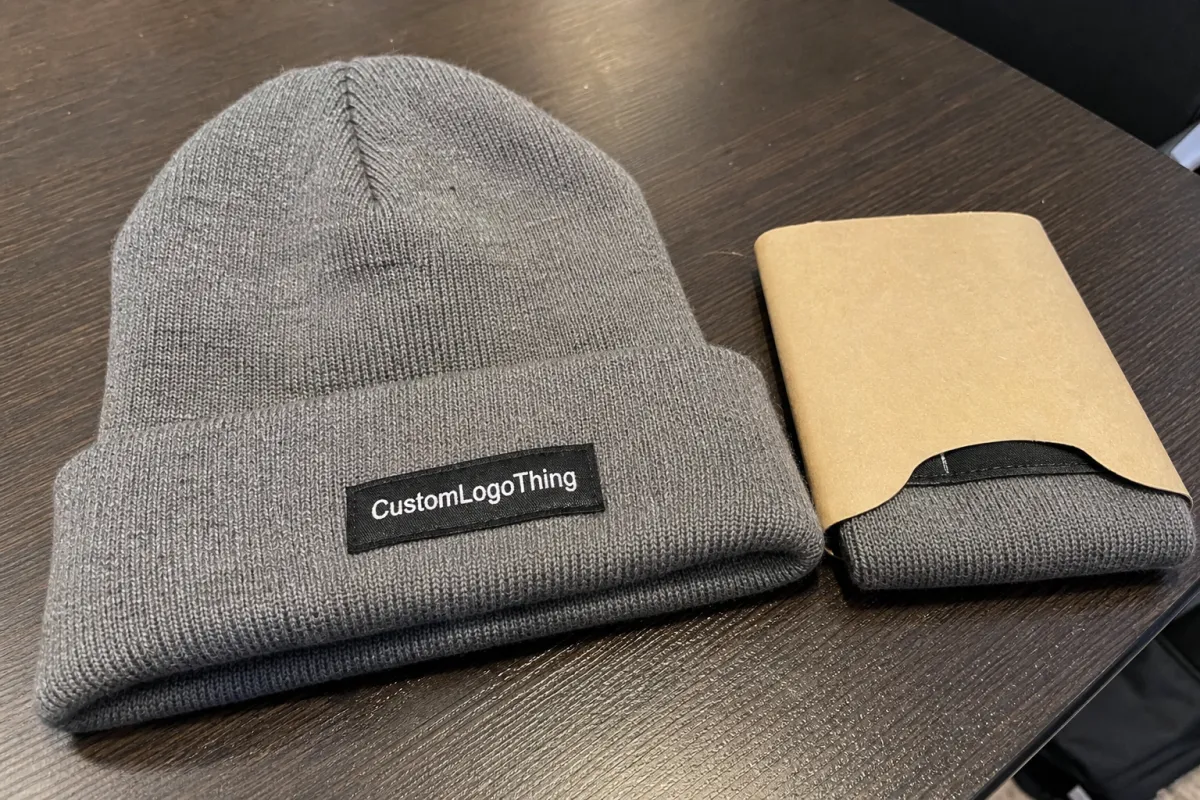
The construction also changes how the item is perceived. A dense rib knit with a clean cuff reads as deliberate, not disposable. It looks closer to retail than to giveaway-bin filler. Attendees do not inspect it closely, but they do notice whether it has body, whether the logo sits flat, and whether it collapses after one use.
That matters in a booth setting. Staff hand out products quickly and attendees scan quickly. Nobody is comparing yarn counts, but everyone can tell when the item feels warm enough to keep. If it performs, the branding travels farther than a low-value trinket.
From a budget standpoint, bulk winter hats can be more efficient than smaller items that are handed out in larger numbers but kept by fewer people. A hundred worn beanies can outperform five hundred forgettable giveaways. The value comes from retention, not just volume.
One caution: do not overbuild the product simply because heavyweight sounds premium. An overly thick hat can be too warm indoors and uncomfortable for longer wear. The best spec usually lands in the middle: warm, structured, and wearable in mixed conditions.
What makes a heavyweight winter beanie actually heavyweight
“Heavyweight” should mean something measurable. In knitwear, it usually points to denser stitch coverage, thicker yarn, a tighter rib, and a hat that keeps its shape after repeated wear. The goal is not only warmth. It is structure.
Construction is the first decision. Single-layer beanies are lighter and usually cheaper, but double-layer builds trap more warmth and often look more substantial. Rib knit matters too. A tighter rib recovers better after stretching and supports decoration more cleanly than a loose knit.
Crown depth and cuff height are easy to overlook until sample review. Too shallow and the hat feels undersized. Too deep and it slouches. Cuff height affects both appearance and logo placement, especially if the decoration sits on the fold. A few millimeters can change the fit enough to matter.
Material choice affects both feel and price. Acrylic is the most practical base for many trade show programs because it is warm, predictable, and widely available. Acrylic-wool blends add warmth and a richer handfeel, but they raise cost and can introduce more variation. Recycled yarns can support sustainability goals, but they still need to be judged on stretch, pilling, color consistency, and recovery after packing.
Heavy does not always mean better. Some thick knits trap too much heat indoors, especially at events where people move between heated halls and outdoor queues. A mid-heavy construction often wears better than an ultra-bulky one because it stays on longer. The wearer is the final quality test.
Stitch uniformity is another sign of quality. If the ribs vary or the knit tension shifts across the crown, the hat loses its premium feel. That can happen when factories rush between small runs or when yarn supply changes mid-production. It is subtle, but knitwear shows subtle defects quickly because it sits close to the face.
Material, stitch, and decoration specs that move the quote
If you want a clean quote, the spec has to be specific. “Warm beanie with logo” is not enough. The quoting team needs yarn type, knit gauge, layer count, cuff style, logo size, and decoration method. Those choices change pricing more than most buyers expect.
Decoration is usually the biggest visual and cost lever. Embroidery is often the simplest option for a clean logo because setup is straightforward and production is well understood. Woven patches are useful when the art contains fine detail, small text, or a shape that would stitch poorly. Fully knitted-in artwork gives the most integrated look, but it usually requires more tooling and a higher minimum.
Color selection matters more than the render suggests. Stock yarn shades are the easiest route to control cost and timing. Custom-dyed yarns, matched PMS colors, or multi-color jacquard layouts all add complexity. Every extra color can mean additional sourcing, more machine setup, and a higher chance of shade variation between lots.
Small branding details also affect both labor and price. Inside labels, side tags, sewn-in tabs, hang cards, polybags, and retail belly bands all add material and handling. Those extras make sense if the hat will be sold or presented as a higher-end gift. If the beanies are going straight to a booth and then into attendees' hands, they may not need retail packaging at all.
Quality control should start before production. A logo that looks sharp on a flat proof can fail once it is scaled onto a cuff that stretches. Thin lines can blur and small type can disappear. Patch borders can crowd the knit if placement is off by even a small amount. Good buyers ask to see the logo at actual size, not just at the size that makes the render look attractive.
- Fastest path: stock body + embroidery
- Most premium feel: heavyweight knit + woven patch
- Most brand control: custom knit with matched colors
A practical rule for knitwear logos: if the mark cannot be read from several feet away, the artwork is probably too detailed. A beanie is not a brochure. The best art for this product is usually the simplest version that still represents the brand well.
Pricing, MOQ, and trade show heavyweight winter hats unit cost
Here is where the order becomes real. Trade show Heavyweight Winter Hats unit cost does fall with volume, but the curve is not linear. A 100-piece order and a 500-piece order may use the same factory, yet the pricing can differ sharply because setup, decoration, sampling, and freight are spread differently.
The minimum order quantity depends on how custom the program is. A stock acrylic beanie with embroidery can often start around 100 to 250 pieces. A heavyweight rib knit with a patch usually needs 150 to 300. Fully custom knit programs often want 300 to 1,000, especially when the design uses specific colors or a detailed pattern. Lower MOQs are possible, but they usually carry a higher cost per piece.
| Option | Typical MOQ | Cost per piece | Lead time | Notes |
|---|---|---|---|---|
| Stock acrylic beanie + embroidery | 100-250 | $2.40-$4.10 | 10-15 business days | Lower setup charges; best for fast trade show orders |
| Heavyweight rib knit + woven patch | 150-300 | $3.10-$5.20 | 12-18 business days | Good balance of premium look and bulk pricing |
| Double-layer acrylic-wool blend + embroidery | 300-500 | $4.80-$7.40 | 15-25 business days | Warmer handfeel; stronger retail impression |
| Fully custom knit jacquard | 300-1,000 | $3.90-$6.80 | 20-35 business days | Tooling fees apply; best for pattern-heavy branding |
The table only helps if the quote includes all the moving parts. Product cost, decoration, sample fees, packaging, and freight should be visible from the start. A quote that hides one of those pieces is not cheaper. It is just incomplete.
A clean quote usually comes from a clean spec sheet. If the material, logo method, packaging, and ship date are settled, the price is easier to trust.
To understand the real breakpoints, ask for pricing at two or three quantities. For example, 150, 300, and 500 pieces can show whether the unit cost drops enough to justify a larger run. That comparison is more useful than staring at one number and calling it a plan. It also shows where setup charges stop dominating the order.
Rush fees and freight can make a lower unit cost irrelevant. A cheaper hat that arrives too late is still a bad purchase. The best decision usually accounts for the event calendar first and the line item second.
Production steps and lead time from art file to ship date
The production path should be straightforward. Artwork review comes first. Then the decoration method is confirmed, a proof is issued, and any sample or mockup is approved. After that, the hats go into production, then inspection, then packing, then shipment.
Lead time depends on how much custom work is involved. A stock-body order with embroidery or a patch tends to move faster than a fully custom knit program. If the art file needs cleanup, the PMS colors are not final, or the label placement is still being discussed, the schedule slides. Many delays are approval delays, not production delays.
Buyers can protect the schedule with a few habits. Send vector art instead of a low-resolution image. Confirm delivery addresses before production begins. Approve proofs quickly, but only after checking the logo scale and the exact placement on the cuff. Those steps prevent revisions that eat into a deadline.
Freight needs its own planning. Air freight is fast and expensive. Sea freight is slower and more economical, which makes it useful for programs planned ahead of time. Domestic ground can be a middle path if the hats are already in-country. The right choice depends on event date, destination, and risk tolerance.
Packaging and transit quality matter too. Hats are not fragile like glass, but they can still be crushed, distorted, or packed inconsistently. Well-run programs check carton counts, carton labels, and bulk packing density before shipment. Standards such as ISTA help because they treat shipping as part of quality control.
How we keep winter hat orders consistent across reorders
Reorders expose weak systems quickly. If the first run was approved from memory instead of documentation, the second run often drifts. The logo scales differently. The patch lands a little higher. The shade of yarn is close, but not identical.
The fix is documentation. Save the approved artwork, placement measurements, stitch or patch size, thread references, color codes, and packing instructions. If the hat uses embroidery, keep the digitized file. If it uses a woven patch, archive the final artwork and border spec. If the beanie is fully knit, preserve the color map and final gauge. Reorders should start from the approved record, not from a screenshot.
Fit consistency deserves the same discipline. Crown depth, cuff height, and stretch recovery should stay stable from run to run. A beanie that feels tighter on one order than the last will get noticed, especially by staff who wear it daily during a campaign. Quality checks should include measurement verification, trim cleanup, label position, and count accuracy.
There is a financial benefit too. Strong reorder records reduce sample cycles and revision time. They also make quoting faster, which matters when multiple teams want the same item at once. Good records shorten the conversation; bad records force everyone to rehash the same decisions.
Next steps to lock specs and request a clean quote
Before requesting pricing, tighten the brief. Decide on quantity, delivery date, target budget, decoration method, and color direction. If there is a logo file, send it. If there are reference photos, send those too. If the idea is still rough, say so plainly. A vague request usually returns a vague quote.
- Choose the hat style: stock acrylic, heavyweight rib knit, or fully custom knit.
- Pick the decoration: embroidery, woven patch, sewn label, or knit-in artwork.
- Set two or three quantity tiers to see the real bulk price break.
- Confirm packaging needs, including polybagging, bands, or insert cards.
- Check freight timing against the event date before you approve production.
That last step saves the most headaches. A well-made hat that lands after the booth opens is still a failed purchase. If the schedule is tight, build in room for proofing, production, inspection, and transit. If the schedule is not tight, use the extra time to improve the spec instead of chasing the lowest possible number.
The strongest orders usually balance warmth, logo clarity, and production speed. A stock body with a clean embroidered mark can be the best answer. A custom knit can be the right answer too, but only when the branding justifies the extra tooling and time. The most reliable route to trade show Heavyweight Winter Hats Unit Cost that makes sense is simple: lock the spec, compare quantity tiers, and place the order before the calendar compresses the lead time.
FAQ
What affects trade show heavyweight winter hats unit cost the most?
Quantity, decoration method, and yarn choice usually drive the biggest changes. Stock colors and embroidery keep the price lower. Custom yarn matches, multi-color knit patterns, and specialty packaging add cost quickly. Freight can also change the total more than buyers expect.
What MOQ should I expect for heavyweight winter hats for trade shows?
A stock beanie can often start around 100 to 250 pieces. Custom knit programs usually need a higher minimum, often 300 pieces or more. The more complex the design, the higher the MOQ tends to be. Low minimums are possible, but the unit price usually rises to compensate.
Can I customize the logo on trade show heavyweight winter hats?
Yes. Common options include embroidery, woven patches, sewn labels, and knit-in artwork. The best method depends on logo complexity, budget, and the look you want. Fine detail and small text usually work better on patches than directly in knit stitches.
How long does production usually take after artwork approval?
Stock-body orders can move in about 10 to 15 business days, while more customized programs may take 20 to 35 business days. That does not include freight. If you are working to a fixed event date, account for proofing time and shipping separately so the schedule stays realistic.
What do I need to request an accurate quote for bulk beanies?
Send quantity, delivery date, logo file, decoration preference, color needs, and any packaging requirements. If you want a better pricing comparison, ask for multiple quantity tiers. That reveals the true unit cost instead of forcing you to guess at the breakpoints.
If you want the pricing conversation to stay clean, the short version is simple: define the spec, compare a few quantities, and verify freight timing before production begins. That is the most reliable way to quote trade show Heavyweight Winter Hats unit cost without creating avoidable delays or surprise charges.