Subscription Woven Label Beanies unit cost looks higher than a plain blank hat until you count the repeat orders, the dead stock, and the sales you lose when a winter promo ships in packaging that feels unfinished. A woven label gives a basic beanie a retail-ready face without forcing you into custom knit minimums or heavy embroidery that can change the hand feel in a bad way.
For recurring merch, staff kits, welcome boxes, and seasonal drops, the real question is not whether you can get the cheapest hat. It is what the program costs per piece once MOQ, setup charges, and reorder timing are all in the same spreadsheet.
Why a label upgrade changes reorder math
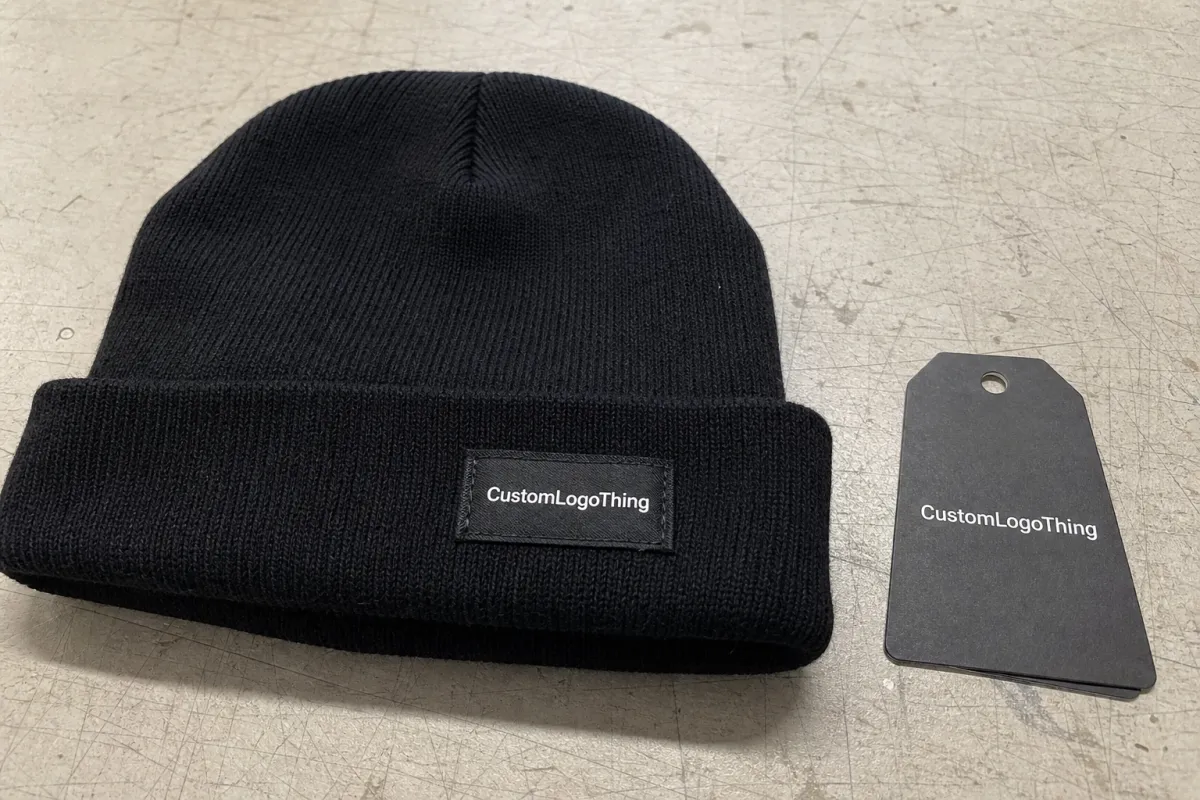
A blank beanie is fine if you are buying filler inventory. It is a weak choice if the product needs to carry a brand, a message, or a retail price. That is where a woven label earns its keep. It adds visual structure without the bulk of a stitched emblem, and it usually lands in a cleaner price band than a fully custom knit beanie program.
From a packaging buyer's point of view, subscription Woven Label Beanies unit cost should be judged by repeatability, not just first-order price. A recurring program lives or dies on consistency. If every drop looks aligned, reads well under store lighting, and ships on schedule, the merch feels intentional. If the label is crooked, the body color shifts, or the yarn feels cheaper on the second reorder, the discount on the quote stops mattering.
"Blank beanies are easy to quote. Repeatable beanies with consistent label placement are the ones that protect margin."
Woven labels also sit in a useful middle ground. They make a plain beanie feel retail-ready without pushing you into the higher setup burden of custom embroidery or the MOQ of a fully custom knit pattern. That matters for:
- Recurring merch drops that need the same look every time
- Winter staff kits where consistency matters more than novelty
- Retail launches where shelf appeal needs to do some work
- Welcome boxes and onboarding kits that get opened on camera
- Team issue programs where the item has to look deliberate, not random
Set expectations early. The quote should include material choice, fit style, label size, placement, pack format, and whether the price includes one-time setup charges or label weaving tooling fees. If those pieces are missing, the number on the page is not the real number.
How woven labels change the look, feel, and shelf appeal
Woven labels read cleaner than a lot of printed marks on knitwear. That is especially true on rib knit cuffs, where small details can disappear fast. A proper woven label keeps the logo sharp enough to read from three feet away under retail lighting, which is a pretty ordinary test, not some luxury fantasy.
Placement changes everything. Center cuff placement is the safest choice because it feels familiar and photographs well. Side seam placement can look more understated and is useful when the front panel needs to stay clean. Fold-over placement works well when the label itself is part of the design, not just a tag hidden inside a seam.
Here is the practical part buyers should look at in samples:
- Edge finish: Clean edges prevent the label from looking fuzzy or cheap.
- Thread count: A tighter weave usually improves logo readability and fine detail.
- Background color: High-contrast combinations read faster on a rack and on video.
- Placement tension: If the label pulls against the knit, it will pucker.
- Hand feel: The label should not scratch, twist, or add obvious bulk.
Woven labels outperform patches or direct embroidery when the brief calls for subtle branding, a lighter feel, or multi-color artwork that needs clean edges. They are also easier to standardize across recurring orders. If your brand team wants to compare label constructions before asking for quotes, our Custom Labels & Tags page is a useful place to narrow down the options.
One more thing. The sample should be judged on the actual knit surface, not just on a flat mockup. A good-looking label on paper can turn awkward on a stretchy ribbed cuff. That is the kind of problem that only shows up when someone bothers to test the real surface.
Fit, yarn, and decoration specs that affect the final result
The beanie body matters just as much as the label. A nice woven label on a sloppy blank is still a sloppy beanie. Acrylic, acrylic-wool blends, and recycled yarns each land in different price bands, and each one changes comfort, warmth, and shrink behavior. Cuffed rib knit usually gives the label a cleaner landing zone than a slouch shape, which can twist and hide the mark.
Gauge and stretch recovery matter more than most buyers expect. A dense knit looks better in photos and holds shape longer. A loose knit can make the label buckle or drift over time. Crown shape matters too. If the crown sits too high or too soft, the whole item can feel unbalanced even when the label is perfect.
Typical spec sheet details that save headaches:
- Beanie body: acrylic, acrylic-wool blend, or recycled yarn construction
- Style: cuffed, uncuffed, or slouch
- Label size: often 20 x 45 mm or 25 x 50 mm for clean cuff placement
- Stitch tolerance: usually within 3-5 mm depending on the factory
- Logo colors: confirm Pantone references if the brand is strict about match
- Care note: include wash instructions if the item ships retail or DTC
- Packaging format: bulk pack, folded with insert, or individual polybag
For subscription programs, approval should not stop at artwork. Ask for a sample or photo proof that shows the label on the actual beanie body. Check three things: fit, readability, and hand feel. If any one of those is off, the savings on a low quote can evaporate fast.
Most buyers also underestimate how much a clean spec sheet helps the next reorder. If the label placement, color codes, and package format are written down, future production is faster and less vulnerable to guesswork. That is exactly why the good programs are boring. Boring is good.
Subscription woven label beanies unit cost: pricing and MOQ
This is the part everyone asks about first, and fair enough. Subscription Woven Label Beanies unit cost is a real budgeting line, not a vanity metric. The main drivers are the base beanie style, label complexity, number of label colors, placement, packaging, shipping destination, and order size. MOQ changes the math because small runs spread setup charges and labor across fewer units.
If you want a clean read on bulk pricing, compare quotes by quantity ladder instead of staring at the lowest line item. A quote that looks cheap at 250 pieces may be more expensive at 500 once the supplier stops charging the same setup charges twice. The opposite happens too. Sometimes a slightly larger order drops cost per piece enough to cover the extra inventory without much risk.
| Order size | Typical unit cost | MOQ pressure | What usually moves the price |
|---|---|---|---|
| 100-249 pieces | $6.80-$11.50 | Highest | Setup charges, manual sewing, small-batch packing |
| 250-499 pieces | $5.40-$8.20 | Moderate | Base beanie choice and one-label design usually drive most of it |
| 500-999 pieces | $4.30-$6.70 | Better balance | Bulk pricing starts to matter more than one-time setup |
| 1,000+ pieces | $3.60-$5.40 | Lowest | Freight, packaging, and color count become the bigger swing factors |
Those ranges assume a standard stock acrylic or acrylic-blend beanie with one woven label sewn on and bulk packed. Premium yarn, custom knit construction, or retail-ready packaging will add more. In practice, a recycled yarn body can add roughly $0.40-$1.00 per unit, and custom individual packaging can add another $0.25-$1.20 depending on the format.
Watch for hidden costs that ruin a quote fast:
- Rush fees: often 10-20% when the timeline is compressed
- Extra proof rounds: small fees that add up if artwork keeps changing
- Split shipments: useful, but rarely free
- Specialty packaging: inserts, belly bands, or retail cards change the math
- Artwork changes after approval: the fastest way to create avoidable charges
If a supplier will not break out setup charges and shipping separately, ask them to. That does not make you difficult. It makes the quote readable.
Production steps, lead time, and reorder calendar
The production path is simple on paper and messy in the real world. Artwork review comes first, then a mockup or digital proof, then sample approval if the program needs it, then label sewing, final packing, and shipping. Any one of those steps can stall if the spec is vague.
Realistic lead times depend on complexity. A repeat order with locked artwork and a stocked beanie body can move in about 7-12 business days after proof approval. A new label layout, color matching, or special packaging usually pushes that to 12-18 business days. Multiple colorways, private packaging, or a made-to-order knit body can extend the schedule to 15-25 business days, sometimes more if the order is large or shipping is split.
For subscription programs, lead time matters more than it does for one-off promos. A stockout does not just delay a box. It can interrupt a recurring revenue stream and force a rushed replacement at a worse price. That is why the reorder calendar should sit ahead of the last carton, not after it.
For shipments that need to survive carton handling, ask whether the outer pack is tested against ISTA transit testing standards. That is a practical way to reduce crushed cartons, bent inserts, and other avoidable nonsense that eats time later. If you are using paper hang tags or printed inserts, choose FSC-certified paper options when the sustainability story needs to be credible instead of decorative.
Build the calendar around peak season, launch dates, and delivery windows. If the beanies are tied to a holiday drop or a staff issue date, move the reorder trigger back by at least two weeks. That buffer is cheap. A rush fee is not.
What separates a dependable beanie supplier from a cheap quote
The cheapest quote is useless if the supplier misses placement, changes yarn quality, or ships inconsistent color lots across the order. Buyers learn this the expensive way. The real value is in control: consistent samples, written tolerances, and a process that does not collapse the moment the order gets slightly complicated.
Here is what I would ask for before trusting a vendor with recurring orders:
- Real samples: not just digital mockups, but the actual construction on the actual beanie body
- QC photos: clear pictures that show label placement, stitching, and overall finish
- Written tolerances: what counts as acceptable for placement, color, and size
- Clear change-order policy: you want to know what happens if artwork changes midstream
- Freight terms: who pays, when it ships, and whether duty or brokerage is included
- Replacement handling: a straight answer for defective units instead of a shrug
Communication matters more in recurring business than people admit. One clean reorder process saves more money than a one-time bargain that creates cleanup work later. If the supplier answers after the deadline, sends vague proofs, or avoids specifics about setup charges, the quote is already telling you something.
If you are still comparing label construction options, revisit our Custom Labels & Tags page and narrow the spec before asking for final numbers. A tighter brief usually gets a tighter price.
For recurring beanie programs, I care less about marketing language and more about whether the supplier can repeat the same result without drama. That is the difference between a decent first order and a dependable supply chain.
What to request before you approve the first run
Send a simple spec package. Not a paragraph. A spec package. The best ones include the logo file, preferred beanie style, label placement, quantity by color or size, shipping address, packaging needs, and due date. If the supplier has to chase basic information, the quote will drag and the risk of mistakes goes up.
Ask for a quote ladder that shows unit cost at several order levels. The goal is to see where the real break points sit. A 250-piece order might be the right call if you need cash flow flexibility, but a 500-piece run may lower cost per piece enough to justify the extra stock. That is the whole game with subscription woven label Beanies Unit Cost: trade a little inventory for a better unit economy, or keep the order smaller and pay more per piece.
Request a pre-production sample or a photo proof when the logo, color match, or packaging has to be exact. That matters most when the beanie is being sold retail or mailed directly to customers. If you are shipping into fulfillment or using branded inserts, make sure the pack format matches the channel, not just the pretty mockup.
Use this checklist before approval:
- Confirm the beanie body and fiber content.
- Confirm woven label size, placement, and color count.
- Confirm MOQ and the price break at the next tier.
- Confirm setup charges, tooling fees, and freight terms.
- Confirm the approval sample or proof process.
- Confirm the reorder lead time before the next launch date.
That is the clean way to buy recurring merch. Compare woven labels against embroidery if you need a different feel, confirm MOQ before you commit, verify the timeline, and judge the subscription Woven Label Beanies unit cost against the actual reorder plan, not just the first invoice.
What drives woven label beanie pricing the most?
Base beanie material and knit style usually set the starting price. Label color count, placement, and packaging add cost quickly. Rush timing, split shipments, and extra proof rounds can move the quote more than buyers expect.
What MOQ should I expect for subscription beanie orders?
MOQ depends on whether the beanie is stock-based or fully custom. Lower MOQs usually mean higher unit cost because setup is spread over fewer pieces. If you need recurring restocks, ask for tiered pricing before you commit.
How long does a woven label beanie order usually take?
Repeat orders are faster because the art and placement are already approved. New artwork, special packaging, or multiple colorways extend lead time. Build in extra buffer before seasonal launches so you are not paying rush fees.
Are woven labels better than embroidery on beanies?
Woven labels usually win when you want a cleaner, lighter, more retail-friendly finish. Embroidery can work better for bold, textured branding with fewer tiny details. The right choice depends on your logo, hand feel target, and price point.
What do I need to send for an accurate quote?
Send the logo file, quantity target, beanie style, label placement, and packaging needs. Include ship-to location and required delivery date so pricing reflects real freight and timing. Ask for tiered quantities so you can see the true unit cost breakpoints before you place the order.


