Five Panel Caps Private Label Order: Specs, MOQ, Pricing
A five panel caps Private Label Order succeeds or fails on the front panel, but that is only half the story. The flat front gives a logo more room than a stitched six-panel crown, which is why the style keeps showing up in streetwear, outdoor gear, and brand merch that wants to feel retail, not throwaway. The same strength can turn into a weakness fast. A bad crown shape, weak fabric, or sloppy decoration sits in plain view. There is nowhere to hide, and that is exactly why buyers need to get the build right before they talk about price.
I have seen brands spend weeks perfecting artwork, only to approve a cap body that made the logo look awkward in person. On screen, the cap looked fine. On a head, it was kind of a mess. That gap between mockup and reality is where a lot of private label programs lose money. A cap is not a small decision. It is a visible piece of merchandising, a margin-sensitive item, and often the first physical object a customer touches before deciding whether the brand feels deliberate.
Think of it less like a blank accessory and more like a compact packaging system for your identity. The panel structure, the fabric hand, the closure, the stitch density, and the inside labeling all shape how the product reads. A five panel cap is a little like a small billboard with fit problems. If the front panel wrinkles, the closure feels cheap, or the logo floats too high, the whole five panel Caps Private Label order loses credibility before it reaches a shelf.
Buyers often begin with a mood board and end up with a product that looks nothing like the original idea because the practical details were never pinned down. That happens more often than people admit. A buyer sends an image of a clean, low-profile cap and gets back something taller, stiffer, or more promotional-looking because the sample sheet did not spell out the structure. The factory filled in the blanks. Factories are very good at guessing in ways that cost money.
Five Panel Caps Private Label Order: What Buyers Miss
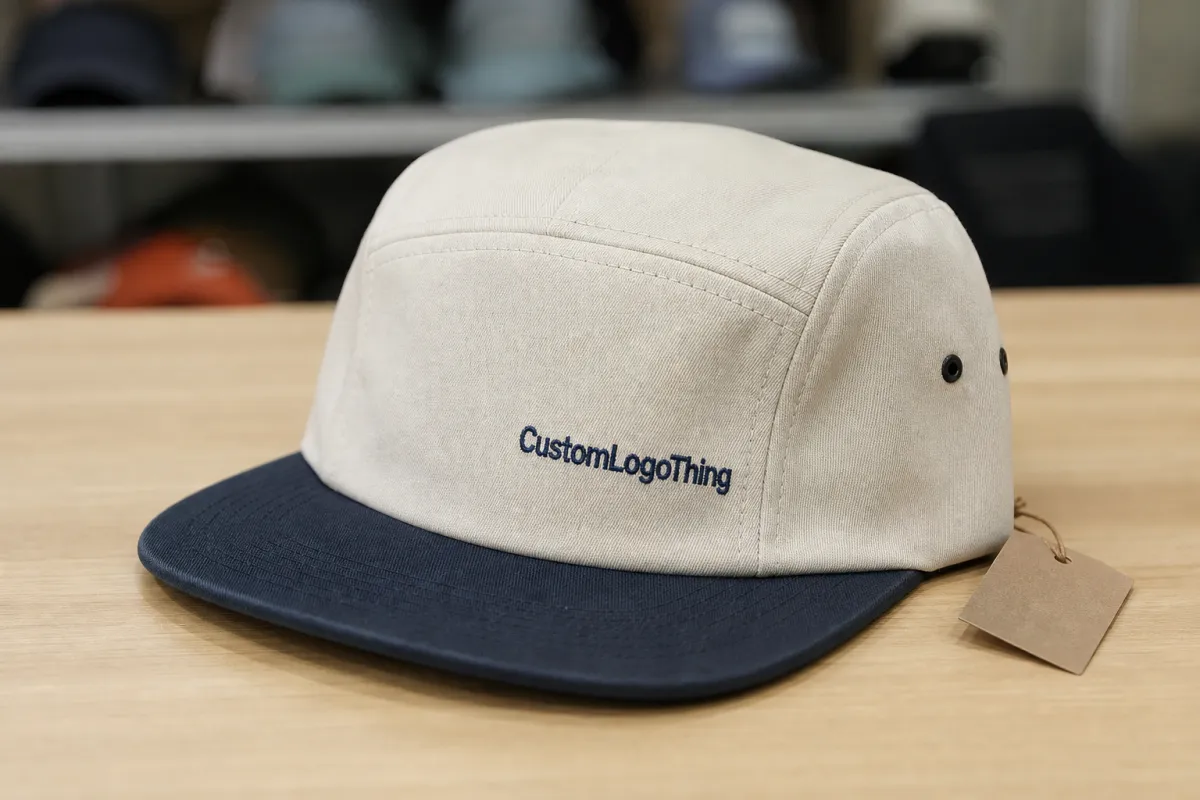
The front panel carries the story. In a five panel cap, one uninterrupted section sits across the forehead, so the logo has space to breathe. That advantage matters. A six-panel build introduces a center seam that can split embroidery or make a print look cramped. For labels selling streetwear, outdoor products, or a cleaner promo line, a five panel caps private label order usually delivers a sharper first read with less visual noise.
The missed details are rarely dramatic. Crown height gets ignored. Fabric weight gets treated like a line item instead of a design choice. Closure quality is left for later. Most buyers notice the artwork first and only think about structure after samples arrive. If the crown sits too tall, the cap starts looking boxy. If it sits too low and too soft, the front panel collapses under dense embroidery. If the fabric is thin, the cap may look good in a photo and feel disposable in hand. Nobody is gonna call that premium.
Here is the part people miss: a cap is judged in motion, not on a flat proof. The front panel bends when someone puts it on. The brim changes the line of the face. The closure changes how secure the fit feels after an hour, not just in the fitting room. That is why a sample that looks perfect on a table can still feel wrong on a head. The shape has to hold up in real use, not just in a rendering.
These are the failures that show up most often in a five panel Caps Private Label Order:
- Wrong crown profile - The cap looks like a blank instead of a designed product.
- Weak fabric - Thin cotton or low-grade polyester signals low value immediately.
- Poor decoration choice - Heavy 3D puff on an unstructured front panel can warp and pucker.
- Cheap closure hardware - A scratchy snapback or flimsy strap damages the fit experience.
- Loose color control - Small shade shifts become obvious across a production run.
If the front panel looks soft and cheap, the whole cap reads that way. No logo fixes a weak base. Buyers often spend on decoration first and then act surprised when the cap underneath undermines the brand. That order of priorities causes avoidable problems.
The better way to think about the product is simple: the cap has to do three jobs at once. It must carry branding clearly, wear comfortably, and fit the channel it will sell through. A streetwear line can support stronger color and bolder embroidery. An outdoor program may need lighter fabric, better airflow, and practical closures. A promo order usually wants economy without looking disposable. The construction can stay similar, but the details should change with the use case.
That is why a five panel caps private label order is really won before production starts. The sample spec has to be exact. The buyer has to decide whether the cap belongs in retail, wholesale, event merchandising, or private label packaging. Leave that open, and the factory fills the blanks. I have watched that exact mistake create three revision rounds on what should have been a simple run. The fix was not dramatic. It was just clearer instructions.
Five Panel Caps Private Label Order Specs That Sell
Construction comes first. A five-panel build usually means one front panel, two side panels, and two rear panels. The next choices split quickly: structured or unstructured, low profile or slightly higher crown, flat brim or pre-curved. Structured caps give the front panel more support for embroidery, especially when the logo is wide or dense. Unstructured caps feel softer and more casual, which pairs well with woven patches or small flat embroidery.
Material choice should follow the market, not mood. Cotton twill remains the default for good reason: it is familiar, durable, and easy to decorate. Polyester and nylon are lighter, dry faster, and suit active or outdoor positioning. Corduroy and brushed cotton push the product toward a more premium read, but they also change how the logo lands and how the cap photographs. If the brand wants a cleaner private label appearance, the fabric has to support that direction instead of fighting it.
Decoration deserves its own decision tree. Flat embroidery is the safest and most readable option for a five panel caps private label order. 3D puff works if the logo has enough shape and the front panel has enough structure to carry it. Woven patches give crisp detail and a more retail feel. Silicone patches and rubber badges move the cap toward a technical or sporty look. Internal branding matters too, because a private label buyer usually wants the cap to feel custom inside and out, not just branded on the outside face.
If woven side tags, sweatband labels, or custom care labels are part of the program, keep the branding stack organized. A cap with the right outside mark but no internal label system feels unfinished. That is where Custom Labels & Tags help pull the piece together. For buyers building a wider product line, that detail often matters more than a second logo hit.
Closures and brims are not small choices. They shape comfort, fit, and the first try-on. Snapbacks are familiar and easy to adjust. Strapbacks can feel a little more refined if the hardware is chosen well. Hook-and-loop is practical but can read cheaper unless the rest of the build is tight. Flat brims suit streetwear and stronger logos. Pre-curved brims make the cap feel more casual and ready to wear out of the box.
Finish details separate a tidy cap from a believable private label product. Eyelets should be even and cleanly sewn. The sweatband should sit flat, with stitch lines that stay true. Thread density on embroidery needs to be high enough for crisp detail, but not so heavy that the front panel warps. Color matching matters more than many buyers expect, especially across crown fabric, thread, and label stock. Small mismatches are exactly what make a cap look assembled rather than designed.
For sustainability-minded programs, ask about material sourcing and paper components early. If hang tags or packaging insert cards matter, look for FSC-certified or equivalent paper options through FSC. That is a small move with visible impact. It signals that the five panel caps private label order was planned as a product line, not patched together after the fact.
There is also a practical comparison that helps buyers make better choices. A dense embroidery file on a small front panel can add minutes to every unit, while a woven patch often shifts that labor into a faster attachment step. On a hundred pieces, that difference is just a number on paper. On a thousand pieces, it becomes real time, real labor, and real cost. That is why product choice and production choice should be discussed together, not in separate meetings.
Process and Lead Time for Five Panel Caps
Start with a clean spec sheet and reference images. If the buyer cannot describe the cap, the factory will fill in the gaps, and that usually means extra revisions. A useful spec sheet for a five panel caps private label order should cover target quantity, cap color, fabric, crown structure, brim style, closure, decoration method, and packaging instructions. Leave out one of those pieces and the quote becomes fuzzy fast.
The sampling path should stay simple. Artwork cleanup and placement review come first. A blank sample or strike-off follows if the logo needs approval. A pre-production sample then confirms the actual cap build before bulk production begins. This is the stage where smart buyers slow down and check everything: logo size, panel alignment, closure feel, and color match. One extra day here can spare a week of complaints later.
Timing is usually less mysterious than suppliers make it sound. Artwork confirmation often takes 1-3 days when files are usable. Samples usually take 7-14 days depending on decoration and trim complexity. Bulk production often lands in the 20-35 business day range after approval. A simple five panel caps private label order can move faster; a more custom one with specialty patches, custom taping, or unusual fabric usually takes longer. That is production reality, not a delay tactic.
What slows the schedule? Too many artwork rounds. Late color decisions. Custom trims that need separate sourcing. Busy production windows. Freight booking delays. Buyers sometimes assume the factory is slow when the order kept changing after it had already been translated into a production plan. That part is on the process, not just the mill or the sewing line.
Good quality control keeps a private label cap from turning into a pile of expensive problems. The process should include fabric inspection, logo placement checks, stitch count review, color checks against approved references, carton count verification, and packing confirmation. For export shipments, carton handling and transit testing should align with recognized shipping standards. The ISTA shipping test standards are a useful reference point when the order moves through longer distribution chains or fragile retail packaging.
Packing can matter just as much as the cap itself. Buyers should decide whether caps are packed flat, pre-shaped, individually bagged, or bulk packed by color. Mixed color runs are possible, but they add sorting time and increase the chance of the wrong ratio landing in the wrong carton. For a five panel caps private label order, clear packing instructions usually save more money than they cost.
One more thing gets overlooked: reorder consistency. The first run can look perfect and the second run can drift if the factory does not keep the same fabric lot, thread code, or label reference. That is why approval notes and photo records matter. They are boring, yes, but boring paperwork is what keeps the next order from becoming a new puzzle.
Five Panel Caps Private Label Order Pricing and MOQ
Pricing starts with the base cap and climbs with every decision layered onto it. Fabric choice, closure type, decoration method, label count, packaging format, and total quantity all affect the final number. A simple cotton twill cap with flat embroidery and a standard snapback is one price. The same cap with a woven patch, custom inner label, hang tag, and individual polybag is a different product, even if the front logo looks almost identical.
For realistic MOQ planning, the market usually falls into a few bands:
| Build Level | Typical MOQ | Unit Price Range | Best For | Main Tradeoff |
|---|---|---|---|---|
| Simple cotton twill, flat embroidery, standard closure | 100-300 pcs | $2.80-$5.50 | Startup runs, test drops, promo launches | Fewer customization layers |
| Retail-ready build with patch, woven label, custom taping | 300-500 pcs | $2.10-$4.20 | Brand stores, wholesale, repeatable SKU programs | More setup and approval steps |
| Premium build with special fabric, mixed branding, custom packaging | 500-1,000+ pcs | $1.65-$3.60 | Established brands and larger private label launches | Higher up-front commitment |
Those ranges are directional, not a quote. Country of origin, labor rates, trim availability, and freight strategy can move the final number in either direction. A five panel caps private label order with dense embroidery, specialty trims, or heavier thread counts will push higher. A simpler build with one decoration method and standard packaging will sit lower. The best unit pricing usually appears at 1,000 pieces and above because setup costs spread across more units. That is basic math, not a pitch.
Hidden costs catch people off guard. Digitizing often runs $25-$80 depending on logo complexity. Custom molds for silicone or rubber patches can add $60-$150 or more. Hang tags may cost $0.10-$0.25 each, while custom inner labels can add $0.08-$0.18. Extra samples, split shipments, special packing, and freight all stack up. A buyer focused only on unit price usually underestimates landed cost by a wide margin.
Quote comparison needs discipline. Ask every supplier to confirm the same specs: fabric, closure, decoration method, packaging, and delivery terms. If one quote includes a woven patch and another uses flat embroidery, they are not the same product. If one quote includes carton packing and another assumes loose bulk packing, the apparent savings are fake. Comparing quotes without matched details is how people end up buying apples from one supplier and a banana with a logo from another.
A cleaner pricing strategy is to simplify where it does not hurt the product. One base fabric. One decoration method. One closure style. Fewer color breaks. Standard packaging where possible. That usually keeps the five panel caps private label order commercially sane while still looking like a real brand item.
There is a useful comparison here with footwear and bags: buyers often accept complexity in those categories because the fit or function makes it obvious. Caps are trickier because the changes are subtler. A half-centimeter shift in logo placement can look harmless on a spreadsheet and wrong in person. That is why a low quote should never be the only winning number.
Why Choose Us for Private Label Headwear
Private label buyers do not need poetry. They need clear quotes, clear specs, and repeatable execution. That is the actual difference between a vendor that can produce one sharp sample and a partner that can make the same product again without drift. A five panel caps private label order should not feel like a new experiment every time it is reordered. The crown should sit the same. The logo should land the same. The packaging should count out the same.
Consistency matters more than flashy claims. A good cap line is built on repeatability: the same fabric shade, the same stitch density, the same front-panel placement, the same label position, the same carton count. Private label programs fall apart when the first run looks strong and the second run suddenly has a different closure feel or a slightly different crown height. That is not a brand system. That is a headache with a logo on it.
Our support stack stays practical. Artwork cleanup happens before sampling so the logo is not guessed into place. Label placement guidance keeps the inside of the cap from looking random. Packaging options are laid out early, not after production is already moving. Pre-shipment photos catch obvious issues before freight leaves the building. That sounds basic because it is basic, and basic is what reduces surprises.
Buyers also care about margin, even when they do not say it outright. A cleaner private label run means fewer chargebacks, fewer replacements, and less dead stock sitting in a warehouse because one color or one cap profile missed the mark. If you are building a broader program, our Wholesale Programs are set up for repeat ordering, faster reorders, and better line consistency across SKUs.
One honest note: no supplier can promise that every cap will look identical forever, because fabric lots, thread dye lots, and packing environments can shift slightly. The better test is whether those shifts are measured, controlled, and documented. That is the difference between real manufacturing discipline and marketing language.
The cheapest quote is often the most expensive decision. A cap that misses on fit, labeling, or packing burns time after delivery, and time tends to cost more than the unit price gap.
From a buyer’s point of view, the value is not just the cap. It is the absence of mess. A clear five panel caps private label order gives you one less thing to chase, one less thing to explain to a customer, and one more product that looks like it belongs in the line instead of drifting into it by accident.
Next Steps to Place the Order
If you want a quote that is actually useful, gather five things first: target quantity, cap color, decoration method, label style, and delivery deadline. That alone removes most of the back-and-forth that slows a five panel caps private label order. If you already know the material and closure, include those too. It is much easier to quote a real product than a vague idea.
Send vector artwork whenever possible. A clean AI, EPS, or SVG file saves time and prevents distortion in embroidery or patch setup. Add a reference image of the cap style you want so the front panel shape, brim type, and closure are not interpreted three different ways. If inside branding matters, include that request at the same time. That is where Custom Labels & Tags can be specified early instead of patched on later.
Decide whether you need samples, packaging, or mixed colors before the quote is finalized. A cap order with one color and one decoration method is a different production setup than a run with multiple colorways and custom cartons. If margin is tight, keep the base style consistent and vary only the decoration. That gives you more control over cost and less risk of production confusion.
A simple approval path works best: review the mockup, confirm the sample, lock production, then book freight. Do not let approvals drift for days while the artwork gets adjusted in circles. A disciplined five panel caps private label order moves faster because every decision has a deadline. That is how a product line reaches market looking planned.
The clearest takeaway is this: lock the structure before you chase decoration. Choose the crown profile, fabric, closure, and labeling system first, then price the logo around that build. That order saves time, protects margin, and keeps the final cap looking intentional instead of improvised.
If you want quick answers before you request a quote, the FAQ covers the basics. If you already know your spec set, send it over and keep the order moving. A five panel caps private label order is easier to price, easier to produce, and easier to repeat when the details are clear from the start.
What is the MOQ for a five panel caps private label order?
Simple builds can start around 100-300 pieces depending on the factory setup. Better pricing usually begins around 300-500 pieces. If you mix too many colors, trims, or decoration methods, the MOQ can climb.
How long does a five panel caps private label order take?
Samples often take 7-14 days. Bulk production usually runs 20-35 business days after sample approval. Freight time depends on air versus sea and the destination, so that part needs a separate check.
What decoration works best on five panel caps private label runs?
Flat embroidery is the most reliable option because it is readable, durable, and easy to repeat. Patches work well for a more premium retail look. Keep the front panel design simple so the logo stays clean and visible.
What details do you need to quote a five panel caps private label order?
Quantity, cap color, fabric, closure, decoration method, and delivery location are the core items. Send vector artwork and any reference images. Tell the supplier if packaging or custom labels are required.
Can I mix colors or styles in one five panel caps order?
Yes, but mixed colors or trims can raise cost and complicate the schedule. Ask whether the mixed colorways can stay within one production run. If margin matters, keep the base style consistent and vary only the decoration.


