A Five Panel Caps supplier checklist saves buyers from a very common mistake: assuming that two caps with the same logo will wear, sew, and ship the same way. In practice, crown depth, seam layout, visor shape, and closure choice can change fit and decoration quality enough to make one quote look cheap and the other look expensive for good reason.
For Custom Logo Things, the point of the checklist is not paperwork for its own sake. It is a buyer tool for comparing suppliers on the same terms, catching weak stitching before production, and making sure artwork that looks centered on screen does not land crooked on a finished cap.
What a Five-Panel Cap Supplier Checklist Covers
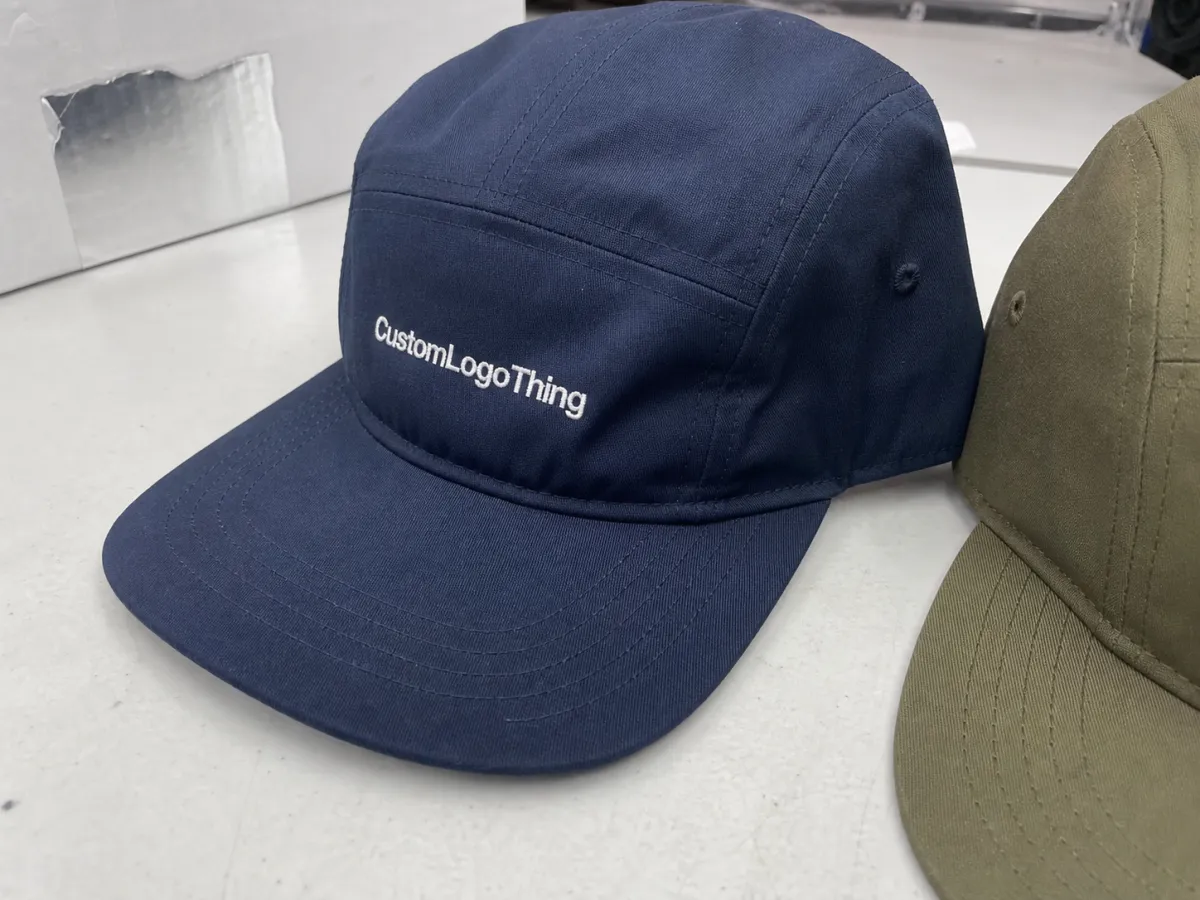
A five-panel cap can look simple from a distance, but the structure is doing a lot of work. One front panel, two side panels, and a back panel pair may sound straightforward, yet the stitch count, seam placement, and visor build all affect how the cap sits on the head and how a logo reads across the front. That is why a Five Panel Caps supplier checklist should start with construction, not price.
Two suppliers can quote what sounds like the same product and still be talking about very different caps. One may use a softer crown with minimal reinforcement, while another builds a firmer front panel that holds embroidery flatter. One may offer a snapback closure; another may default to a fabric strap or buckle. The finished experience can be miles apart.
A solid checklist keeps buyers focused on the items that actually change the order:
- Panel construction and crown depth
- Visor shape and stiffness
- Closure type and size range
- Decoration method and logo placement
- Packing standard and carton count
Honestly, most sourcing headaches start when someone compares samples by appearance alone. A cap that looks fine on a flat lay can still feel too shallow, pinch at the temples, or distort a logo because the front panel is too soft. The checklist protects the buyer from that kind of mismatch and makes each quote easier to judge apples-to-apples.
Production Steps and Sampling Timeline for Five-Panel Caps
Good suppliers move through a familiar production path. First comes the tech pack or product brief, then pattern setup, sample making, fit review, pre-production approval, bulk sewing, trimming, inspection, packing, and shipment. Every step matters because a mistake early in the process usually multiplies later, especially once logos, labels, and closure hardware are already committed.
Here is where delays usually appear. Artwork often needs more back-and-forth than buyers expect, especially if the logo has small lettering or multiple thread colors. Fabric sourcing can add days if the shade is custom. Embroidery digitizing can take longer than the buyer budgeted if the design has tight curves or dense fill. Closure selection sounds minor, but swapping from a stock snapback to a custom buckle or strap can shift the schedule.
For timing, a blank cap made from stock fabric can sometimes move from approval to bulk shipment in about 10 to 15 business days, depending on the factory load and packing method. A decorated cap more often lands in the 15 to 25 business day range after sample approval, and a second sample round can add another week or more. Freight is its own variable, so build a buffer if the caps must arrive before a launch, show, or retail drop.
If the supplier cannot explain where the time goes, that is a warning sign. A clear timeline should separate sample making, artwork approval, bulk production, packing, and transit rather than blending everything into one vague promise.
Blank versus decorated matters too. A plain stock cap can be fast because the factory is working from existing materials and existing patterns. Add embroidery, woven labels, private labels, or custom color matching, and the schedule becomes more sensitive to approvals. That is normal, not a flaw. The buyer just needs to plan for it.
Pricing, MOQ, and Quote Factors That Change Unit Cost
A quote should never be just one number. A proper supplier quote separates the base cap price, setup or digitizing fees, sampling charges, packaging, and freight if it is being priced separately. Without that breakdown, two quotes can look close while hiding very different landed costs.
MOQ changes price more than many buyers expect. A 300-piece order with a Custom Woven Label, special closure, and a 6,000-stitch front logo will usually cost more per unit than a 3,000-piece order using stock fabric and a standard snapback. The factory has to spread setup, cutting, sewing, and decoration over fewer units, and that shows up in the math.
Typical planning ranges, depending on decoration and material, often look something like this:
| Order Type | Typical MOQ | Common Unit Range | Main Cost Drivers |
|---|---|---|---|
| Blank stock cap | 200-500 pcs | $1.20-$2.50 | Fabric choice, closure, packing |
| Embroidered logo cap | 300-1,000 pcs | $2.75-$5.50 | Stitch count, digitizing, front reinforcement |
| Custom colors or trims | 500-2,000 pcs | $3.75-$6.75 | Special fabric dye, labels, closure hardware |
| Low-volume premium run | 100-300 pcs | $5.00-$9.00 | Sample-level setup, special packaging, manual handling |
Those figures are planning ranges, not promises. Still, they are useful because they make the hidden drivers obvious. Fabric weight, stitch density, panel reinforcement, decoration method, packaging format, and whether the factory is using stock or custom components all shape the final number.
Ask one simple question if a quote seems unusually low: what was removed? Sometimes the answer is less packaging, a lighter fabric, a smaller logo area, or no pre-production sample. That does not always make the quote wrong, but it does mean the buyer is comparing a different product.
For shipping cartons, pack tests, and transit abuse, buyers who need more protection should ask about current ISTA test methods at ISTA. If paper inserts, hangtags, or retail sleeves matter to the order, ask whether the paper stock can be sourced with FSC certification through FSC.
Material, Fit, and Decoration Checks That Protect Quality
The right material changes the whole cap. Cotton twill feels familiar and takes embroidery well, but it may not hold a sharp shape as firmly as heavier builds. Brushed cotton has a softer hand and a more casual look, while polyester blends can resist wrinkles and keep color consistency strong across larger runs. Canvas adds weight and structure, which can help a premium retail cap feel more substantial, though it may run warmer on the head.
Fit matters just as much as fabric. Check crown depth, because a shallow cap can feel tight even if the head circumference sounds right on paper. Review the visor curve, since a flatter bill reads differently from a pre-curved one and changes the style immediately. Confirm the sweatband material if the cap is meant for long wear, and verify the closure adjustment range so the cap fits the audience you are actually serving.
Decoration is where a lot of buyer pain shows up. A front panel that is too small can push a logo downward. A seam running through the decoration zone can break up the artwork. A crown without enough reinforcement may let embroidery sink, especially with dense designs above 8,000 stitches. Those are small details, but they decide whether the cap looks premium or merely printed.
These checks also affect how the cap photographs. Retail buyers often discover too late that a logo looks fine in a mockup but sits too close to the visor once stitched. If the cap is being sold online or used in a promotional drop, the front panel height and logo placement template should be confirmed before any bulk sewing starts.
From a buyer's point of view, the safest approach is to treat fit and decoration as one decision, not two. The cap has to wear well and present the logo clearly at the same time. If either side fails, the product will feel off even if the unit cost looks attractive.
Five Panel Caps Supplier Checklist: Approve a Run Without Guesswork
This is the part where the Five Panel Caps supplier checklist becomes practical rather than theoretical. The goal is to remove assumptions before money changes hands. A buyer should be able to hand the same brief to two or three suppliers and know that any difference in the quote comes from a real product difference, not from missing information.
- Request a spec sheet with cap size, crown height, visor style, closure type, fabric weight, and decoration method.
- Send reference images for the fit, finish, and logo placement you want, not just a logo file.
- Confirm available materials and ask whether stock fabric or custom sourcing is being used.
- Review a pre-production sample and compare it against the approved measurements, not memory.
- Lock artwork placement with a template showing distance from seams, visor edge, and center point.
- Approve packing details such as polybagging, carton count, inserts, and labeling language.
Compare suppliers by asking the same exact questions about stitch count, seam reinforcement, tolerance on measurements, and inspection method. If one supplier answers in broad terms and another gives actual numbers, the second one is usually giving you a better base for a reliable order.
Before you release a purchase order, make sure the final approval file includes these items:
- Artwork version and placement reference
- Final measurements for crown, visor, and closure range
- Bill of materials with fabric, trim, and label details
- Production timing and sample approval date
- Ship-to details and carton marking instructions
That level of control may feel tedious, but it is the cheapest insurance in the order. A buyer who approves specs clearly almost always spends less time arguing over what was meant and more time receiving the right cap.
Common Sourcing Mistakes That Cause Delays or Rework
The biggest mistake is treating every five-panel cap as interchangeable. Two suppliers can both say “five-panel” and still build different crowns, use different visor inserts, or place seam lines in different spots. Once the logo is added, those differences become visible fast.
Here are the mistakes I see most often:
- Approving artwork without a placement template, which leads to logos sitting too high, too low, or too close to a seam.
- Skipping a sample review because the blank cap looked fine in photos.
- Ignoring size tolerances, especially when the order is meant for a wide user group.
- Forgetting packaging details such as polybags, inserts, barcode stickers, or retail tagging.
- Comparing quotes with different assumptions, then discovering the real difference after production starts.
The cheapest quote is often the one with the most assumptions hiding inside it.
Those misses turn into very real costs. Rework delays shipping. A second sample round pushes out approvals. Incorrect labeling creates receiving issues at the warehouse. If a launch date is fixed, the whole problem compounds, because every extra day reduces the room to recover from freight delays or internal sign-off changes.
For apparel and promotional buyers, the safest mindset is simple: no assumption is too small to check. A seam location may seem trivial in a spreadsheet, but on a stitched cap it is the difference between a clean logo and a crooked one.
Expert Tips to Control Cost Without Sacrificing Quality
There are good ways to lower cost, and there are sloppy ways. The good ways usually preserve the cap's look and wearability. The sloppy ways hide quality problems until the order lands on a dock or a desk. A thoughtful Five Panel Caps supplier checklist helps buyers stay on the first path.
One practical move is to use standard closures unless a custom closure is truly part of the brand story. Stock snapbacks, fabric straps, or common buckle systems are easier to source, easier to replace, and usually cheaper than custom hardware. The same logic applies to approved stock fabrics: if the color and hand-feel already work, there is no reason to pay for a custom mill run just to chase a marginal difference.
Another useful tactic is to combine colorways or artwork variants in one production window. That can help the supplier hold the same cutting settings, thread colors, and packing method across the run. If you know reorders are likely, ask the factory to archive the digitizing file, approved measurements, and trim references so the next batch stays consistent.
For quality control, ask for production photos or a short inspection report before shipment, especially if the caps are tied to a promotion, a retail release, or an event date. A quick photo set of the front panel, closure, inside seam finish, and carton packing can catch a problem before freight leaves the dock. Many buyers also request an AQL-based inspection on the final run, which gives the receiving team a clearer standard for pass/fail decisions.
If paper packaging is part of the story, using FSC-certified stock for hangtags or inserts can support the brand without changing the cap itself. That kind of detail matters more now because buyers and end customers notice the whole package, not just the logo on the front panel.
Next Steps: Compare Samples, Lock Specs, and Place the Order
The cleanest way to move forward is to turn the checklist into a simple internal spec sheet, then request two or three quotes that are aligned line by line. Do not compare unit price until every supplier is quoting the same fabric, closure, logo size, packing method, and order quantity. Otherwise, the lowest number may just be the least complete number.
From there, approve one reference sample and document the final measurements, decoration placement, and packaging details in writing. That record becomes the standard for production and a useful reference if the supplier changes a material or asks for a substitution later. It also protects the buyer team if reorder timing is tight and the original sample is no longer in hand.
Before payment or purchase-order release, confirm the production calendar, carton count, label copy, and ship-to address one more time. Small errors in that final step can create bigger headaches than a slightly higher unit price ever would. A disciplined five panel caps supplier checklist keeps the order aligned from sample approval through final delivery, which is the real goal.
What should a five-panel caps supplier checklist include?
Material, crown fit, visor shape, closure type, decoration method, MOQ, sample process, lead time, and packing details should all be on the list. A strong checklist also asks for measurement tolerances, artwork placement rules, and the supplier's QC method so comparisons stay fair.
How do I compare quotes from different five-panel cap suppliers?
Make sure every quote uses the same fabric, closure, decoration size, packaging, and quantity before you compare unit price. Separate setup fees, sampling charges, and freight from the base cap price so the true landed cost is easier to see.
What affects five-panel cap pricing the most?
Fabric choice, embroidery or printing complexity, MOQ, closure style, and special packaging usually have the biggest impact on price. Small changes in panel reinforcement or stitch count can also move unit cost, especially on lower-volume orders.
How long does a five-panel cap sample and bulk order usually take?
Sample timing depends on artwork approval and material availability, while bulk timing depends on decoration method, color matching, and packing requirements. A good supplier will give a clear timeline for sample rounds, production, and shipping, plus any buffer needed for revisions.
What mistakes should buyers avoid when ordering five-panel caps?
Do not approve artwork without a placement template, and do not skip fit or size checks just because the cap looks simple. Also confirm the exact materials, packaging, and delivery terms early so delays do not show up after production starts.