Hotel Five Panel Caps MOQ: Order Custom Caps Confidently
For hotel buyers, hotel Five Panel Caps MOQ tends to surface right after the design is approved and just before the budget meeting gets uncomfortable. That timing is not a coincidence. A five-panel cap looks simple, but the difference between a 50-piece test order and a 250-piece opening run can change the price, the lead time, and the decoration method that still makes financial sense.
The useful question is not only, "How much per cap?" It is: which construction, artwork method, and packing spec will hold up across front-of-house, outdoor service, and repeated washing without pushing the unit cost into the wrong range? A clean logo and a realistic MOQ often save more money than a late-stage discount ever does.
For buyers preparing a quote request, the shortest path is to keep the order brief in one place: quantity split, logo file, target ship date, color references, and any brand rules. If those details are scattered across emails, the first sample usually wastes time.
Why Five-Panel Caps Work for Hotel Teams
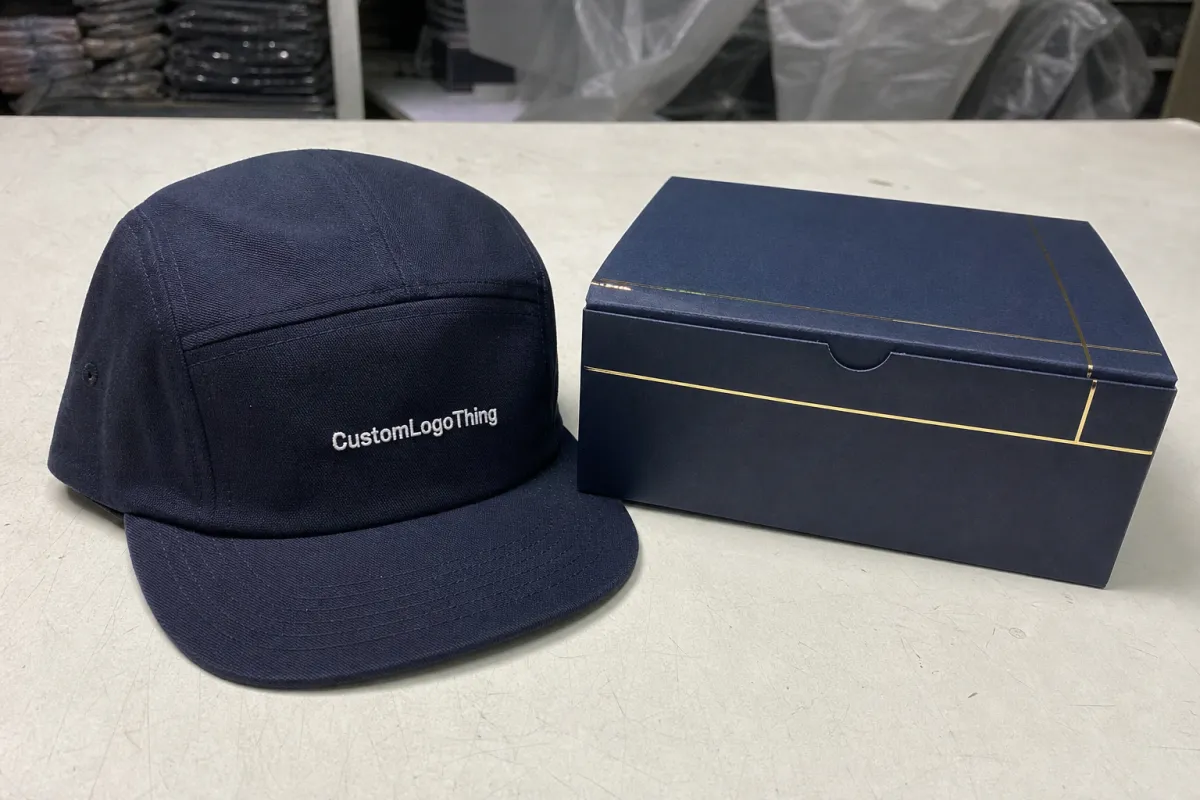
Five-panel caps have an advantage that matters in hospitality: the front panel gives the logo more uninterrupted space. On a busy property, that is worth more than it sounds. A logo that sits cleanly on one panel reads better from across a lobby than the same logo squeezed across seams.
That front-panel clarity also helps hotel teams that move between roles. Valet staff need a polished look that still breathes. Concierge teams need something structured enough for guest-facing moments but light enough for long shifts. Pool and event staff need a cap that looks deliberate rather than generic. Five-panel construction does that well because it stays visually simple.
There is another reason buyers keep returning to this style: it photographs well. Property photos, staff portraits, and guest snapshots all catch the cap at eye level. If the crown is too tall, the brim too stiff, or the fabric too heavy, the cap stops reading as part of the uniform and starts looking like event swag. That shift is subtle, but it affects how the whole program feels.
Five-panel caps also handle embroidery and patch placement more predictably than many promotional caps. The front panel is usually flatter, so the logo has a better chance of staying centered and legible. That matters more than aesthetic preference. A hotel uniform is judged in motion, under mixed light, and often at a distance of several feet.
Buyers usually get the best results when they compare four practical details before ordering:
- Structured crown: keeps the logo area flatter and more consistent.
- Low-bulk silhouette: looks sharper in guest-facing roles than a heavy promotional cap.
- Breathable fabric: helps in outdoor service areas and warm climates.
- Adjustable closure: makes size sharing easier across shifts and departments.
That combination is why five-panel caps often beat generic six-panel options for hotel programs. The front panel is easier to control, the silhouette is cleaner, and the finished piece reads as part of a uniform system rather than an afterthought. For a small accessory, that distinction has a bigger visual impact than many procurement teams expect.
Product Details Buyers Should Compare Before Ordering
Before you approve a run, compare the cap construction as carefully as you compare the artwork. Panel stitching, crown height, seam placement, and front-panel stiffness all shape the final result. Two caps can carry the same logo and still feel completely different on staff because one has a firmer structure while the other collapses slightly after wear.
Decoration choice is the next decision point. Flat embroidery is still the most straightforward option for bold logos and short text. Woven patches work better for fine detail and sharp edges. PVC and silicone patches create a more dimensional look, which some resort brands prefer because it reads cleaner in photos. Leather patches push the cap toward a premium or lifestyle signal, but they are not always the best fit for daily uniform use.
None of those decoration methods is automatically better. The right answer depends on logo complexity, budget, and the tone the property wants to send. A small boutique hotel and a large conference property often need different visual language, even if both want the same cap body.
Brim shape matters more than most people think. A flatter visor looks modern and can suit resort or lifestyle properties. A pre-curved brim feels more traditional and can be easier for staff who want the cap to look ready to wear straight from the box. If staff will move between indoor and outdoor areas, the brim should be checked under direct light, not just on a screen mockup.
The comfort details deserve equal attention. Sweatband material, ventilation eyelets, closure quality, and crown depth shape whether staff actually wear the cap all shift. A cap that irritates after four hours will end up in a locker, no matter how good the logo looks. That is wasted spend, not a branding problem.
| Decoration option | Typical MOQ | Setup or tooling fees | Typical cost per piece | Best use case |
|---|---|---|---|---|
| Flat embroidery | 50-100 units | $25-$60 digitizing/setup | $2.80-$4.25 | Bold logos, simple text, lower-cost uniform runs |
| Woven patch | 100-200 units | $45-$90 tooling | $3.40-$5.60 | Fine detail, sharper edges, more controlled branding |
| PVC or silicone patch | 100-300 units | $60-$120 mold/tooling | $4.20-$6.80 | Premium look, dimensional branding, resort programs |
| Fully custom cap build | 300+ units | $80-$200 pattern/tooling | $4.90-$7.90 | Exact color control, custom trims, brand-led launches |
Those numbers are directional, not fixed. Fabric weight, panel count, closure type, color changes, and packaging will move the price. A stock-supported cap with standard embroidery can land well below a custom build, while custom trim or specialty fabric can push the first order higher than expected. The pattern is familiar: the more the cap is tailored to one brand, the more the setup cost has to be absorbed somewhere.
A sample is not a formality. It is the only version that matters before the purchase order lands.
Specifications to Confirm on the Final Cap Sample
The sample stage is where loose preferences become actual specifications. If the cap will be worn every day, start with the fabric. Cotton twill gives a familiar hand-feel and a traditional uniform look. Brushed cotton softens the surface and can make the cap feel less promotional. Recycled polyester and performance blends dry faster and usually perform better in humid or outdoor conditions. A 240-280 gsm cotton twill will feel different from a lighter 190-220 gsm performance blend, and that difference can change both comfort and structure.
Ask for the exact panel count, stitch density, visor reinforcement, and inner taping. A sample may look right from three feet away and still fail if the front panel buckles after a few wears or the visor loses shape. The point of a sample is not just visual approval. It is to check whether the build survives real use.
Color control matters more than buyers often expect. Lock in Pantone references or approved swatches before mass production, especially if the cap needs to sit next to a resort polo, a branded apron, or a seasonal launch palette. A half-step off in navy or sand can make a uniform set look mismatched even when each item is technically "close enough."
If the cap will see heavy outdoor use, ask about UV exposure and wash durability. Hospitality staff move from sunlight to air-conditioned interiors all day, and that cycle is harder on fabrics than many teams assume. Dark shades can fade differently from light ones, and certain coatings or finishes can change after repeated washing. That is why a quick hand check is not enough. The fabric should be treated as part of the working environment, not just the styling.
Packaging deserves a decision too. Bulk-packed caps are cheaper and efficient for back-of-house distribution. Individual polybags, size stickers, and labeled cartons add cost, but they help when orders are split by property or department. If the caps are traveling a long distance, ask whether the cartons are suitable for export handling or rough transit. For orders that move through multiple handoffs, packaging quality matters almost as much as the cap itself.
One more thing: do not approve artwork from a flat mockup alone. Request the logo size on the actual front panel, the thread or patch color references, and the closure style in writing. That keeps the final production run from drifting into "close enough," which is usually the most expensive phrase in apparel procurement.
- Fabric: cotton twill, brushed cotton, recycled polyester, or performance blend.
- Artwork: embroidery, woven patch, PVC patch, leather patch, or silicone patch.
- Construction: panel count, crown height, seam shape, visor reinforcement.
- Finish: sweatband, eyelets, closure type, and packing method.
For buyers who also manage branded inserts or hangtags, FSC-certified paper guidance is a useful standard to compare against. It does not affect the cap body, but it does matter if the presentation package is part of the guest experience. In hospitality, small details tend to accumulate into one impression.
Hotel Five Panel Caps MOQ, Pricing, and the Unit-Cost Curve
Hotel Five Panel Caps MOQ is rarely a single number. It shifts with the base cap, decoration method, logo size, and whether the order is stock-supported or fully custom. A stock cap with embroidery may start around 50 or 100 units. A custom fabric order with a molded patch or specialty trim can push the minimum higher. In practice, the MOQ often reflects not just the factory's preference but also the minimums of the fabric mill, patch vendor, or embroidery setup.
The unit-cost curve is easy to miss if you only look at the final quote. Setup charges, digitizing, sample prep, and tooling fees are fixed costs. Spread those across 50 caps and the price per piece rises quickly. Spread them across 300 caps and the landed cost usually improves. That is why the first small order often feels expensive while the next replenishment looks more reasonable.
There is a tradeoff, though. A lower MOQ is useful for new properties, seasonal pilots, or staff role testing. Bulk pricing matters more for chain-wide rollouts, repeated replenishment, or properties that know the cap will stay in circulation all year. The better buyer is not the one who always wants the smallest order. It is the one who knows which order size protects the budget without creating dead stock.
There is also a quality side to MOQ that rarely gets discussed. Very small runs can sometimes lead to looser production attention if the factory is juggling several custom jobs with different materials. On the other hand, oversized orders can expose a weak spec because any flaw gets multiplied. Neither extreme solves the problem. A reasonable minimum, backed by a clean sample, usually produces the most reliable result.
Here is a practical way to think about the pricing ladder:
- Lower MOQ: faster proof of concept, less inventory risk, higher cost per piece.
- Mid-volume order: often the best balance of unit cost and flexibility.
- Bulk order: better pricing, but only sensible if sizing, color, and branding are stable.
A useful quote should separate the variables. Ask for the cap base, decoration method, setup charges, shipping, and any packing or labeling fees. That makes comparison easier because you are not trying to decode a blended number with hidden costs inside it. For procurement teams, that clarity prevents budget surprises and gives finance something verifiable.
One additional benchmark helps: ask whether the quoted sample charge is credited back on bulk confirmation. Some suppliers do this; others do not. The difference is not trivial, especially on lower-volume hotel programs where the sample stage can account for a meaningful share of the first-order spend.
Use this quote checklist if you want fewer back-and-forth emails:
- Quantity by colorway and role.
- Decoration method and artwork file type.
- Expected MOQ and any breakpoints for bulk pricing.
- Sample cost, setup charges, and tooling fees.
- Target ship date and destination.
- Packaging requirements, including individual packing if needed.
The strongest hotel buyers do not ask for the cheapest quote first. They ask for the quote that shows where the cost changes and why. That is the difference between a number that looks good on paper and a program that can actually be repeated.
Production Steps, Lead Time, and Approval Milestones
The workflow should be controlled, not mysterious. A reliable supplier will move from artwork review to digital mockup, then to sample or pre-production proof, then into production, inspection, packing, and shipment. If any stage is skipped, that is a warning sign. The front-panel logo, closure, and thread colors need written confirmation before mass production starts.
Lead time depends on stock availability and decoration complexity. A standard stock cap with embroidery can often move in about 12-15 business days after approval. Custom patches, specialty fabrics, or color matching can add another week or two. If the order is tied to a hotel opening or an event rollout, build in buffer time. Catching a problem before the line starts is far cheaper than fixing it after production is underway.
Sample timing also matters. A sample that takes a week to approve does not sound dramatic until it pushes the entire order past the desired delivery window. For that reason, the approval process should be treated like part of production, not as an informal prelude. The more complex the logo or trim, the more useful a pre-production proof becomes.
The order should also be tied to a realistic shipping plan. For domestic runs, that may mean standard ground service and a straightforward pack-out. For larger programs, ask how cartons will be labeled and whether the supplier can maintain SKU separation by department or property. That is especially helpful if one order needs to be split between front-of-house, housekeeping support, and outdoor teams.
Procurement teams like written milestones for a reason: they reduce assumptions. The best approval chain usually includes:
- Mockup approval: confirms placement, size, and color direction.
- Sample approval: confirms the actual feel, shape, and finish.
- Pre-production signoff: locks the production reference before the run starts.
- Inspection checkpoint: confirms quality before packing and shipment.
That process is not overkill. It is how uniform programs stay predictable. A property opening or seasonal refresh leaves little room for guesswork, and a cap is too visible to tolerate sloppy execution. If the supplier offers an inspection report, ask what it covers. Stitch count, logo placement, color match, and closure function are more useful than vague approval language.
One practical detail can save time on future orders: ask whether the supplier retains your artwork file, trim choices, and color references for reorders. A hotel brand with multiple properties will eventually need replenishment. If the documentation is stored well, the next run is faster and less error-prone. Reorders tend to expose whether a vendor actually has process discipline.
What a Hospitality Supplier Should Prove Before You Buy
Repeatability is the first thing a supplier should prove. The same logo placement. The same crown shape. The same color match. If a supplier cannot keep those stable across reorders, a multi-property hotel group will spend more time correcting uniforms than using them. Consistency is the product, not just the hat.
Transparency is the second test. Good suppliers explain tradeoffs plainly. They should tell you if a patch will hold detail better than embroidery, or if a lower MOQ changes the cost per piece in a way that makes bulk pricing less attractive. If the quote hides those mechanics, the relationship usually becomes harder after the first revision.
Communication speed matters too, but not in the shallow sense. What matters is whether the proof includes the exact data the buyer needs: thread colors, patch dimensions, packaging format, and lead time by stage. That matters most when a team is balancing uniforms, guest amenities, and other purchase orders at once. Delays often come from missing information, not from the production line itself.
The right supplier does not just sell caps. The right supplier removes uncertainty from the order.
For larger hospitality programs, ask whether the vendor can manage SKU notes by property, department, or season. That sounds administrative, but it is the difference between clean replenishment and a box of almost-right caps sitting in storage. A supplier who keeps records well is usually worth more than a supplier who only sends the lowest first quote.
Quality control should be specific. A useful inspection process checks color consistency, stitch density, logo alignment, closure function, and packing count. In many apparel categories, AQL 2.5 is a common reference point for defect sampling, although the exact standard depends on the buyer's internal policy. The point is not to chase a perfect number. It is to know what "acceptable" means before the cartons leave.
If you want a quick screen before committing, compare the offer against three questions:
- Can they repeat the same build on the next order?
- Do they explain the setup charges and tooling fees clearly?
- Will the caps still look right after real wear, not just on a mockup?
The answers reveal more than a polished product sheet ever will.
Next Steps for Quote, Sample, and Purchase Order
Start by mapping the order in plain numbers: total quantity, color split, and which teams will wear the cap. That tells you whether one run or multiple SKUs makes more sense. A front-of-house cap and a pool staff cap may share the same body, but they do not always need the same finish or packaging.
Send a vector logo file, brand color references, and any placement rules. Then ask for a mockup that shows the front panel, side profile, and closure. If the supplier only shows a flat artwork file, keep pushing until the actual cap shape is visible. That is where most approval mistakes hide. The mockup should answer proportion questions, not just color questions.
For a cleaner procurement process, request the quote in one reply that includes MOQ, decoration method, sample cost, and lead time. That lets you compare options without chasing separate notes. It also makes it easier to judge whether the cap is priced as a stock item with decoration or as a more customized build with higher setup charges.
Before you release the order, confirm three things in writing: the final hotel Five Panel Caps MOQ, the sample approval point, and the shipment destination. If you are ordering for a property opening, seasonal refresh, or multi-site rollout, that check is not clerical clutter. It is the safeguard that keeps production moving without rework.
The broader lesson is straightforward. A five-panel cap can be a strong hospitality uniform piece, but only if the buyer treats it like a controlled purchase. Get the construction right, match the decoration to the logo, and let MOQ and unit cost guide the decision instead of forcing the cheapest headline number. That is how hotel teams end up with a cap program they can repeat without starting over.
What is the MOQ for hotel five-panel caps?
MOQ depends on whether you choose stock caps, custom fabric, embroidery, or patch decoration. Lower minimums are more common on stock bases with standard branding; fully custom builds usually require more units. For Hotel Five Panel Caps MOQ, a practical starting range is often 50-100 units for stock-based embroidery and 100-300 units for more customized patch work.
Can I mix colors or departments in one hotel cap order?
Yes, but each colorway or SKU can affect pricing and MOQ. Grouping the same cap body with different logos or minor branding changes often keeps the order more efficient. If too many versions are split across a small quantity, the cost per piece usually rises because setup work gets spread across fewer units.
Which decoration looks best on five-panel hotel caps?
Embroidery is the most common choice for bold logos and clean brand visibility. Patches are better for fine detail, textured branding, or a more premium hospitality look. If the logo has thin lines or small type, a woven or PVC patch can be more reliable than thread alone.
How long does production usually take after approval?
Timing depends on stock, decoration complexity, and sample approval speed. Standard runs often move in about 12-15 business days after approval, while fully custom builds can take longer. If your property launch is fixed, ask for the earliest realistic ship date and leave room for corrections.
What should I send to get a fast quote on hotel caps?
Send the logo file, quantity, desired colors, decoration method, and target delivery date. Include the shipping destination and any brand standards so the first quote is accurate. If you already know packaging preferences or whether you need individual packing, add that too, because it can change the total landed cost.