Buyer Fit Snapshot
| Best fit | Folding Cartons with Logo projects where brand print, material claims, artwork control, MOQ, and repeat-order consistency need to be specified before quoting. |
|---|---|
| Quote inputs | Share finished size, material target, print colors, finish, packing count, annual reorder estimate, ship-to region, and any compliance wording. |
| Proofing check | Approve dieline scale, logo placement, barcode or warning zones, color tolerance, closure strength, and carton packing before bulk production. |
| Main risk | Vague material claims, crowded artwork, missing packing details, or unclear freight terms can make a low unit price expensive after revisions. |
Fast answer: Folding Cartons with Logo: Design, Cost, and Process should be specified like a repeatable production item. The safest quote records material, print method, finish, artwork proof, packing count, and reorder notes in one written spec.
Production checks before approval
Compare the actual filled-product size with the drawing, then confirm tolerance on folds, seals, hang holes, label areas, and retail display edges. Reserve space for logos, QR codes, warning copy, and material claims before decorative graphics fill the panel.
Quote comparison points
Review material grade, print process, finish, sampling route, tooling charges, carton quantity, and freight assumptions side by side. A quote is only useful when the supplier can repeat the same color, closure quality, and packing count on the next order.
The box is often the first physical proof a shopper gets of what a brand stands for, and folding Cartons with Logo have a very short window to do that job well. A carton that is clean, proportioned properly, and easy to read can communicate more confidence than a louder package that feels crowded or unsure of itself. I have stood at enough press checks to know this: if the logo reads cleanly from a few feet away, the rest of the carton has a much easier time doing its work.
Folding Cartons with Logo: Why They Often Win the Shelf Test
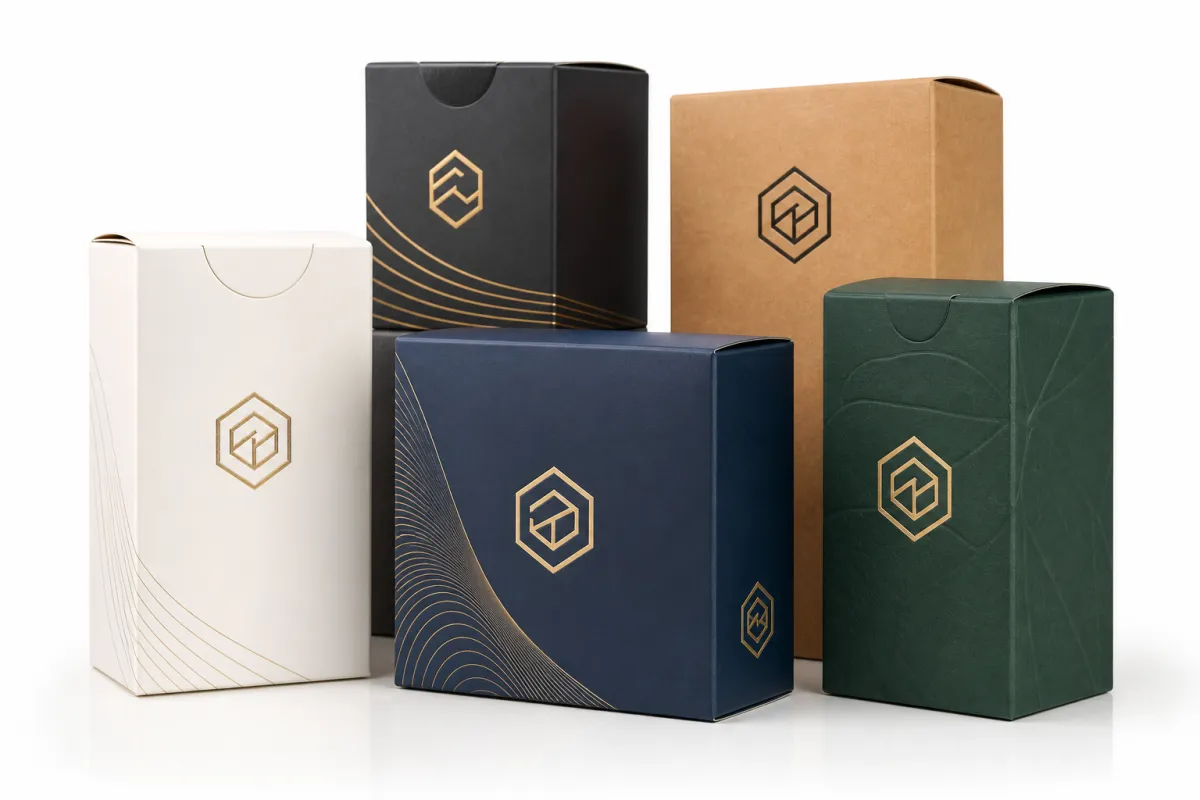
For a packaging buyer, folding cartons with logo solve several needs at once. They protect the product, carry the required information, and present the brand in a format that ships flat, stacks efficiently, and can be assembled without a fight on the packing line. That flat-shipping advantage matters more than people sometimes admit. A carton that folds down cleanly can reduce warehouse footprint, cut freight volume, and make short runs far less awkward to manage.
The basic structure is simple, but the visual job is not. A folding carton starts as paperboard, then gets cut, scored, folded, and glued into a finished package. The outside panels are where the brand gets its voice, while the inside can stay plain or hold a second layer of communication, such as instructions, a QR code, or even a small message that makes the unboxing feel a little more considered. folding cartons with logo show up across cosmetics, supplements, candles, snack foods, soap, small electronics, and other lightweight goods that need retail-ready presentation without overcomplicating the package.
A modest product in a well-made carton can look more premium than an expensive product in weak packaging. That sounds almost too simple, but it holds up in real retail. Buyers sometimes spend a long time arguing over board thickness or special finishes and miss the shelf question that really matters: can the logo be read from a few feet away? If the answer is yes, folding cartons with logo often start selling the product before a hand ever touches the box.
That effect is not just cosmetic. The logo helps build recognition, and recognition lowers hesitation. A shopper moving through a crowded shelf is not thinking in packaging jargon; they are looking for a signal that says the brand is organized, credible, and worth a second look. A strong mark on a restrained matte carton can carry that signal with very little noise.
"If the logo is hard to read at arm's length, the carton is asking too much of the shopper."
Many packaging teams underestimate how much trust is built in the first two seconds. folding cartons with logo are not a shortcut, and they are not a magic trick either, but they are one of the most efficient ways to make a product feel ready for retail, ecommerce unboxing, or a premium gift set. The logo does more than decorate the box; it anchors memory, supports price perception, and helps repeat purchases feel familiar.
Category matters too. Wellness and beauty benefit from cartons that feel controlled and clean, since that visual language supports care and precision. Food packaging, especially shelf-stable items, often benefits from clear branding that suggests freshness and consistency. Home fragrance can turn a simple carton into something display-worthy. In each case, folding cartons with logo carry identity as much as they carry ink.
There is also a practical retail truth that gets overlooked: the logo is often the fastest way for a buyer, merchandiser, or distributor to sort your product from the rest of the shelf clutter. Even if the formula, scent, or ingredients are excellent, the carton has to create that first signal of order. If it does not, the shopper may never get close enough to care about the details.
How Folding Cartons with Logo Are Made and Printed
Everything begins with structure. folding cartons with logo are commonly made from paperboard grades such as SBS, CUK, or CCNB, with thickness often ranging from 14pt to 24pt depending on product weight and the hand feel a brand wants. A lightweight cosmetic insert may do well in 16pt SBS. A heavier candle jar or bottle accessory may need a stiffer board, deeper scores, or an auto-lock bottom so the base stays firm and the carton does not belly out under load.
After the board is selected, the dieline sets the rules. Cut lines, creases, glue flaps, tuck tabs, dust flaps, and window openings all shape where artwork can safely live. If the front panel measures 3.5 inches wide and the score line removes usable area on both sides, the logo cannot be placed casually in the center and left to chance. folding cartons with logo need artwork planned around the folds, not around a blank canvas that exists only in theory.
The printing method shapes the result as well. Offset printing is common for higher-end retail cartons because it handles fine detail, solid color areas, and tight color control with confidence. Digital printing works well for shorter runs, fast proofs, and projects that need multiple SKUs without large setup costs. Flexographic printing often fits simpler graphics or longer production runs where speed matters more than image nuance. The right method for folding cartons with logo depends on quantity, artwork complexity, and the finish level the brand expects.
Finishing can change the feel of the logo more than the artwork itself. Matte aqueous coating creates a softer surface and usually reduces glare under store lighting. Gloss makes color pop, which can help bright food or impulse items. Foil stamping brings reflected light and can elevate a logo if used with restraint. Embossing and debossing add tactile depth, which suits prestige brands, though they also introduce tooling cost and more opportunities for misalignment if the file is not set up carefully.
Spot UV deserves careful treatment. Applied well, it can make a logo stand apart without turning the entire carton into a shiny billboard. Applied poorly, it can look busy or land slightly off register. The same caution applies to soft-touch lamination, which feels excellent in hand but may scuff if the carton moves through a rough distribution path. folding cartons with logo should be built for real handling, not only for a photograph on a sample table.
One detail that saves time and frustration: do not build a logo from a screenshot or a low-resolution image file. Use vector artwork whenever possible, then verify color values in CMYK, Pantone, or spot ink language before the press run begins. A logo that looks fine on a website can fall apart at print scale if the lines are too thin, the type is too small, or the file was compressed too heavily. That kind of thing is fixable early and a headache later.
Cost and Pricing Factors for Folding Cartons with Logo
Pricing for folding cartons with logo usually comes down to six variables: board grade, carton size, print coverage, number of colors, finishing choices, and order quantity. If a buyer asks only for a box quote, the supplier has to fill in the blanks, and blanks tend to cost money. The strongest quotes come from exact dimensions, a sample or drawing if one exists, clear artwork expectations, and a quantity target that is not vague by several thousand units.
Volume changes the equation because setup costs get spread across more cartons. A small run may carry a higher unit price because press setup, dieline prep, plates, and proofing cost roughly the same whether the order is 1,000 pieces or 10,000. That is why folding cartons with logo can look expensive at low quantity and much more reasonable once the run grows. The math is simple enough: the fixed cost stops dominating each box.
For a basic one-color logo carton on standard SBS board, a buyer might see something like $0.18-$0.32 per unit at 5,000 pieces, and perhaps $0.07-$0.14 at 25,000 pieces, depending on size and plant efficiency. A mid-tier retail carton with full-color print and matte coating may land around $0.28-$0.55 at 5,000 pieces. A premium carton with foil, embossing, or a window patch often lands in the $0.55-$1.20 range at lower quantities. These are directional figures only, but they show how quickly folding cartons with logo move from ordinary to premium once finishing and structural complexity enter the picture.
Hidden costs tend to catch buyers by surprise. Plates may run $150-$600. A foil die or embossing die can add another $200-$900 depending on size and complexity. Proofing can stay modest on a digital sample, or it can rise if multiple press proofs are needed. Freight, palletization, warehouse storage, and design revisions all show up eventually. The cheapest quote on paper is not always the cheapest landed cost, and it is definitely not always the least stressful one.
| Carton Type | Typical Spec | Approx. Unit Cost at 5,000 | Approx. Unit Cost at 25,000 | Best Fit |
|---|---|---|---|---|
| Value logo carton | 16pt SBS, 1-color print, aqueous coating | $0.18-$0.32 | $0.07-$0.14 | Supplements, inserts, light retail items |
| Mid-tier retail carton | 18pt SBS, 4-color print, matte coating | $0.28-$0.55 | $0.12-$0.24 | Beauty, candles, specialty food |
| Premium feature carton | 18pt SBS, foil, emboss, soft-touch finish | $0.55-$1.20 | $0.22-$0.48 | Prestige goods, gift sets, launch items |
That table is not a quote sheet; it is a pressure test. If a supplier's number falls far outside those bands, ask why. Sometimes the reason is completely valid: heavier board, more waste on press, special die cutting, or a compressed schedule that requires an expedited slot. For folding cartons with logo, the right question is not "Why is this expensive?" but "Which spec is driving the price, and can that spec change without hurting the product?"
If the carton will carry regulated content such as nutrition panels, supplement facts, or country-of-origin text, bring that copy into the layout and proofing cycle early. Revisions after plates are made are expensive in a way that feels unfair and still very real. A buyer who locks the artwork late can erase the savings from an otherwise smart spec. I have seen teams save a few cents on material and lose weeks because the legal line changed after approval. That stings.
Production Process and Timeline for Folding Cartons with Logo
The path from idea to shipment is usually clear enough, provided the details arrive in the right order. For folding cartons with logo, the process often begins with a packaging brief, moves into structural design and dieline creation, then shifts to artwork setup, proof approval, production, finishing, and shipping. Each step can move quickly or slowly depending on how complete the initial brief is.
For a simple digital carton, a realistic timeline may be 7-12 business days from proof approval to ship, assuming the artwork is ready and no tooling change is needed. Offset jobs with special finishes often take 12-20 business days, sometimes longer if foil or embossing dies must be produced. If a project needs a custom window patch, a special glue pattern, or several rounds of proofing, folding cartons with logo can stretch into a 4-6 week window from first quote to warehouse arrival.
Most delays come from the same few places. Missing logo files slow the artwork stage. Color disagreements slow proof approval. Late copy changes can force a new dieline or a new plate. Approval lag, which sounds harmless, can quietly move a project by several days because press schedules are often booked in blocks. A brand may think it is waiting on production, while the real bottleneck is a single unanswered email in a marketing inbox. That happens more often than anyone likes to admit.
Design time and manufacturing lead time should be treated as separate pieces of the calendar. Design time covers the back-and-forth work of shaping the artwork, checking the fit, and making sure the brand language aligns with the carton geometry. Manufacturing lead time begins after approval and includes prepress, printing, curing, die cutting, folding, gluing, and packing. folding cartons with logo only move quickly when both sides of that timeline are respected.
For shipping confidence, some brands request transit checks aligned with ISTA methods, especially if cartons will be packed into master cases and move through distribution. For paper sourcing, FSC certification helps buyers document responsibly sourced fiber. Those standards do not replace good packaging engineering, but they do give the buying team a clearer paper trail and a more useful quality conversation.
A practical planning habit is to build in slack before a launch or seasonal reset. If cartons are tied to a retail display date, order early enough to leave room for a second proof or a corrected quantity. folding cartons with logo are rarely the only item in a launch calendar, and that is exactly why a small delay in packaging can ripple into photography, fulfillment, and store setup. It is better to be a little early with packaging than to be heroic in week eleven.
Step-by-Step: Planning Folding Cartons with Logo
The safest way to order folding cartons with logo is to work backward from the product. Start with the physical item, not the artwork. Measure length, width, depth, and any irregular features such as pumps, caps, or rounded corners. Check whether the carton is only for retail presentation or whether it also needs to control movement during shipment. A cosmetic carton that lives inside a shipping case has different needs than a display carton sitting loose on a shelf.
- Define the product fit. Measure the item with enough tolerance for insertion and removal, then decide whether internal support, an insert, or a tighter sleeve is needed.
- Choose the carton style. Tuck-end, reverse tuck, auto-lock bottom, sleeve, and display cartons each solve a different set of problems. The opening experience matters, but so does stackability and line speed.
- Collect the artwork assets. Get the vector logo, approved brand colors, legal copy, barcode data, ingredient text, and any required compliance language before design starts.
- Request a dieline. Check panel widths, glue flap placement, score lines, and bleed areas before the logo is locked into place.
- Approve a proof or sample. Confirm color, scale, fold behavior, and print sharpness before the full production run starts.
That sequence sounds basic, yet it prevents a long list of avoidable problems. folding cartons with logo often fail not because the logo is weak, but because the carton spec was chosen before the product was measured carefully. A box can look perfect in a mockup and still perform badly if the insert is loose, the tuck flap fights the opening motion, or the glued seam lands in the wrong place.
A second habit worth keeping is to organize artwork by priority. The logo, product name, and one key benefit should be the most legible elements on the front panel. Secondary details can move to a side panel or back panel. If everything is loud, nothing feels important. For folding cartons with logo, the front panel should usually answer three questions quickly: what is it, who made it, and why should the shopper care?
If the carton includes special finishes, ask for a structural and print proof. Even a short-run sample can reveal issues that a PDF cannot show: soft-touch drag, foil glare, barcode contrast, or the way a score line affects the logo near the fold. That proof is not a luxury; it is cheap insurance for the project.
Teams that expect a product line to grow should think beyond the first SKU. A repeatable system for folding cartons with logo makes future sizes cheaper and faster because the layout logic, finish choices, and brand hierarchy stay consistent. The first carton should not be treated as a one-off. It should serve as a template for the next three or five cartons in the line. That is where the real value starts to show up.
Common Mistakes with Folding Cartons with Logo
Most mistakes with folding cartons with logo are not dramatic. They are small misses that pile up. A logo file is fuzzy. The box width is guessed. The supplier is asked for "something nice" instead of a clear spec. Then the finished carton looks almost right, which is often worse than obviously wrong because the buyer can feel that the budget was spent without the result feeling fully resolved.
- Using low-resolution logo files. A raster logo can look acceptable on screen and still print soft or jagged at package size.
- Designing only the flat layout. A logo can land too close to a fold, glue seam, or tuck flap if the dieline is ignored.
- Assuming all paperboard behaves the same. Brightness, coating, stiffness, and surface texture all change how the logo reads.
- Overcrowding the front panel. Too much copy can weaken the logo's impact and make the brand feel less certain.
- Underestimating lead time. Proofing, shipping, and revisions can add days even when the print run itself is straightforward.
Another common trap is choosing a finish because it looks impressive in a sample room, not because it suits the product. A soft-touch finish can feel expensive, but if the carton will be handled a lot, it may scuff sooner than a buyer expects. A shiny coating may help a food item stand out, while the same gloss might make a wellness box feel too loud. folding cartons with logo should be judged in context, under the same light and handling conditions the shopper will face.
Design teams also sometimes treat white space as wasted space. That is rarely true. White space gives the logo room to breathe, especially on small cartons where a crowded face can turn premium packaging into a bulletin board. In retail, a quieter carton can read more expensive than a busy one, and a strong logo placed with confidence often beats a page packed with claims.
There is also a budgeting mistake worth calling out. Buyers may focus on unit price and forget freight, storage, minimums, or waste allowances. A carton that saves two cents on paper can cost more once pallets, reprints, or rush shipping are added. For folding cartons with logo, total landed cost matters more than a single line-item win.
Finally, do not assume the first proof is enough if logo placement is brand-critical. A second check can spare a lot of regret. That matters even more for new product lines, where packaging is doing heavier brand work because the shopper does not yet know the item. I would rather see a team spend one extra day reviewing a sample than spend three months explaining a bad run.
Expert Tips to Improve Folding Cartons with Logo
The best folding cartons with logo often feel simple rather than empty. Simplicity is harder than it looks because it demands discipline. The logo needs room, the product name needs hierarchy, and the benefit statement has to be clear enough for quick retail scanning. If the layout can do that in one glance, the carton is earning its place.
A useful rule is to match the finish to the category, not to an abstract idea of luxury. Soft-touch lamination can suit beauty, fragrance, and high-end personal care because it creates a calm, tactile surface. Matte aqueous coating often works better for supplements, wellness, and medical-adjacent products because it feels clean and controlled. Gloss can help food or bright impulse items read faster under strong store lighting. folding cartons with logo should feel like they belong to the product family, not like they were borrowed from another aisle.
Test two logo placements if the mark is doing major work. One version may look strongest centered and large; another may feel better with a smaller logo higher on the panel and the product name below it. Shelf context changes everything. A carton that stands out in a flat proof may vanish next to competing brands in a crowded aisle. That is why folding cartons with logo should be checked in a realistic lineup whenever possible.
"A carton is not a poster. It is a small structure that has to sell, ship, and survive handling at the same time."
Think in systems rather than one-offs. If the brand will launch multiple sizes, build the master layout so future SKUs can reuse the same visual logic. That keeps artwork cleaner, shortens approval cycles, and reduces the chance that one carton family drifts away from the others. folding cartons with logo are easier to scale when the front panel rules stay stable from the beginning.
It also helps to check the carton under three conditions: flat on a table, under retail-style lighting, and inside a shipper. Those three views reveal different problems. A logo may look excellent on a bright monitor and weak under warm store lights. A finish may feel premium in hand and then disappear inside a shipping case. The more conditions you test, the less likely the finished carton will surprise you.
One last practical point: a strong carton does not need to feel crowded to be complete. Many of the better folding cartons with logo use fewer elements rather than more. They rely on structure, proportion, and consistent branding to carry the message. That discipline often reads as confidence, which is exactly what a first-time shopper is looking for.
Next Steps for Folding Cartons with Logo
If you are preparing to source folding cartons with logo, build a one-page brief before asking for quotes. Include the product dimensions, target quantity, expected shelf life, required product information, finish preference, and budget range. That one page can save several rounds of clarification, and it usually leads to tighter pricing because the supplier is quoting a real job instead of a moving target.
Then gather the print-ready assets. The logo should be in vector format if possible. Brand colors should be specified clearly. Legal copy, barcodes, and any regulated text should already be approved. Once those pieces are in place, ask for three things in the same conversation: a structural dieline, a finish recommendation, and a production estimate. That gives you a better apples-to-apples comparison across suppliers, and it reduces the usual back-and-forth that slows carton projects down.
It also helps to compare one value-oriented option and one premium option. A basic carton may deliver the right shelf read at the lowest cost, while a premium carton may justify a higher price only on the hero SKU. That comparison often shows where folding cartons with logo create real return and where the brand is paying for shine it does not need. Sometimes the answer is obvious once you see the two versions side by side.
Use the first sample carefully. Check print clarity, fold performance, corner strength, and the exact location of the logo relative to scores and seams. If the sample passes, lock the spec and keep it as the reference for future orders. Reuse is underrated in packaging. A stable spec makes later runs easier to forecast, easier to reorder, and easier to keep on brand.
The most useful next step is straightforward: decide what the carton must do, then choose the smallest spec that does that job well. That keeps folding cartons with logo focused on shelf impact, reliable production, and predictable cost instead of unnecessary extras. If the logo reads clearly, the structure fits correctly, and the finish matches the category, you are already ahead of a lot of packaging on the market.
Frequently Asked Questions
What file type works best for folding cartons with logo artwork?
Vector files such as AI, EPS, or press-ready PDF usually print cleaner than JPG or PNG files. Keep fonts outlined or packaged, and make sure the logo is scaled for the actual carton panel, not for a website header. If the artwork uses gradients, small text, or thin lines, ask for a proof before approval. That extra check is cheap compared with reprinting a run that missed the mark.
How do folding cartons with logo affect unit cost?
Unit cost usually drops as quantity rises because setup costs are spread across more cartons. Simple cartons cost less than versions with foil, embossing, or multiple print passes. Exact size, board grade, and finish choice can shift the price more than many buyers expect, especially on short runs. A carton that looks inexpensive in concept can become pricey once structural changes and finishing are added.
What is a realistic turnaround for folding cartons with logo?
Simple digital runs can move faster than large offset orders with special finishing. Artwork approval, dieline changes, and proofing often add the most time. If the carton needs tooling, window patching, or foil stamping, plan extra lead time before launch so the schedule does not get squeezed. For seasonal products, that buffer can be the difference between shipping on time and missing the shelf window entirely.
Do folding cartons with logo need special coatings or finishes?
Not always, but coating can improve scuff resistance, color appearance, and perceived quality. A matte finish usually feels more restrained, while gloss can make graphics stand out under store lights. The right finish depends on the product, the handling path, and the budget. If the carton is going to be handled a lot, choose a finish that can take the abuse without making the logo look tired.
How can I make sure my logo prints correctly on folding cartons?
Use a proper dieline and keep critical logo elements away from folds, seams, and glue areas. Request a proof or sample to check color, scale, and placement before the full run. Confirm exact brand color values with the supplier so the result stays consistent across future orders, especially if you plan to reorder folding cartons with logo later. If the logo is central to the brand, compare the proof against the actual product in hand, not just on a screen.
For brands that need packaging to do real work on shelf, in transit, and in the customer's hand, folding cartons with logo are one of the most practical tools available. The strongest version usually keeps the spec tight, the logo legible, and the production plan realistic. Before you approve the job, check three things one last time: the carton fits the product, the logo reads cleanly from arm's length, and the finish matches the way the package will actually be handled. That is the point where good packaging stops being theoretical and starts doing the job.
Related packaging resources
Use these related guides to compare specs, costs, quality checks, and buyer decisions before making the final call.


