Why Restaurant Groups Need a Carton Packing Checklist Before Bags Ship
Forty cartons arrive before the morning rush. Half are marked by flavor, some by size, two have old SKU names, and nobody can tell which boxes belong at which location. A frosted zipper bags carton packing Checklist for Restaurant groups is not administrative decoration; it is the difference between a controlled packaging rollout and an operations manager counting bags beside the walk-in while the prep team waits.
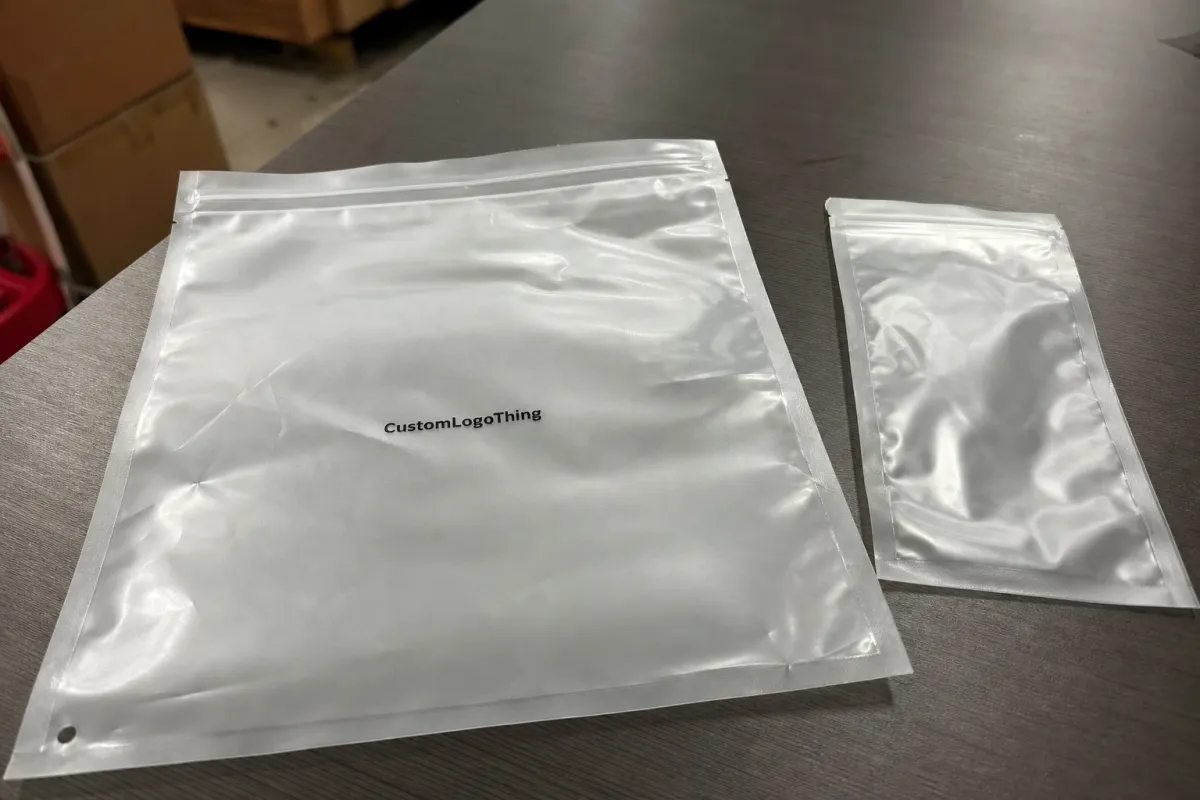
Frosted Zipper Bags are semi-translucent resealable plastic bags used for cookies, snacks, dry mixes, meal kit components, retail sauces, catering add-ons, and premium grab-and-go items. They look cleaner and more intentional than basic clear poly, especially when the product needs a softer retail presentation. They also show dust, rub marks, fingerprints, and crushed zipper mouths faster than plain commodity bags. Pretty packaging asks for better handling. That is the trade.
Restaurant groups have packing problems that single-location buyers rarely feel. Multiple SKUs move through central warehouses, franchise locations, commissaries, temporary launch sites, and seasonal menu calendars. A single cafe can survive one vague carton because the person who ordered it may also be the person receiving it. A 35-location group cannot rely on memory, Slack messages, or a handwritten note taped to a box.
A useful checklist controls the count per carton, SKU separation, inner pack style, print orientation, barcode labels, carton strength, moisture protection, master carton marking, pallet layout, and destination routing. Most packaging failures do not begin with the printed bag itself. They begin with instructions that were too loose to survive production, freight, and store receiving.
Packaging truth: a store manager should open a carton and know what they have in under 30 seconds. If they need scissors, a spreadsheet, and three phone calls, the packing plan failed.
How Frosted Zipper Bags Are Packed, Counted, and Cartoned
The basic production flow sounds simple. Printed bags are inspected, stacked, counted, bundled, placed into inner poly sleeves or smaller cartons when needed, loaded into master cartons, labeled, sealed, then prepared for parcel, LTL, or pallet shipment. The work becomes less simple once sizes, gussets, zipper profiles, and destination splits enter the order.
Common carton counts are 100, 250, 500, or 1,000 bags per carton. The right number depends on bag width, height, film thickness, zipper bulk, gusset depth, and whether bags are loose packed or sleeved. A 4 x 6 inch flat zipper bag may pack densely and stay tidy. A 9 x 12 inch frosted stand-up pouch with a heavy zipper and bottom gusset needs more space, more careful stacking, and often a lower carton count.
Carton dimensions deserve real attention. Oversized cartons let bags shift, curl, slide, and abrade against each other. Undersized cartons compress zipper tracks, bow the mouth of the bag, and bend corners. Neither result looks premium on a shelf, and both can make a clean printed bag feel cheap before the customer ever touches it.
Frosted film also needs cleaner handling than standard clear poly. Matte and frosted finishes can show pressure marks, dust, rub lines, and oily fingerprints. For retail-facing launches, first orders, or multi-location programs, inner sleeves of 100 or 250 pieces usually make receiving easier and keep the bags cleaner. Loose bulk packing still has a place, especially for commissary use, but it should be a deliberate choice rather than the default.
Carton labels should include item name, bag size, print version, order number, quantity, carton number, gross weight, destination, lot code, and launch notation if applicable. Master cartons work well for warehouse shipping. Inner cartons or sleeves help restaurants receive manageable units without opening one large box and scattering bags behind the counter.
Before sealing, the supplier should verify counts, spot-check print position, test zipper closure, inspect seal strength, and confirm carton labels against the purchase order. For larger restaurant group orders, first-carton photos are worth requesting. They show label placement, carton count, inner packing, and SKU separation before the order leaves the packing area.
Key Specs to Confirm Before Carton Packing Starts
Lock the bag specification before anyone finalizes the carton plan. Confirm width, height, bottom gusset, film thickness, zipper type, hang hole, tear notch, frosted finish level, print colors, print coverage, and food-contact expectations. If those specs keep changing, carton counts and shipping estimates will keep moving too.
Film thickness is always a tradeoff. Lighter gauges reduce unit cost, carton weight, and sometimes freight expense. Heavier gauges feel better in hand, support bulkier products, and tolerate repeated opening. For small dry snacks, many buyers land around 3 to 4 mil. For heavier meal kit components, retail mixes, or products handled repeatedly, 4 to 5 mil may be the better fit. Cheap can be acceptable. Flimsy rarely helps a restaurant brand look careful.
Frosted finish options vary by material and converting method. Buyers may choose full frosted film, frosted front with a clear window, matte translucent film, or a frosted stand-up pouch structure. If product visibility sells the item, keep a window large enough to show the contents honestly. If brand presentation matters more than seeing every crumb, full frosted film can look cleaner and more controlled.
Zipper style affects both use and packing. Standard press-to-close zippers work for cookies, granola, nuts, dry mixes, and many shelf-stable add-ons. Heavier zipper tracks suit repeated opening, thicker contents, or meal kit components that will be handled by customers more than once. The more rigid the zipper, the more carefully cartons need to be sized so the tracks are not flattened in freight.
Food-contact suitability should be confirmed before quoting, not after artwork approval. Ask about material structure, odor control, clean handling, and documentation needed by procurement or quality teams. If your organization references transit testing or distribution standards, the International Safe Transit Association is a useful reference point for package performance concepts, especially when cartons will move through warehouses and mixed freight networks.
Artwork also changes packing behavior. Heavy ink coverage, white ink layers, metallic effects, matte coatings, and large flood prints may require extra cure time or more careful stacking before cartoning. A one-page spec sheet should include the bag drawing, material, print method, carton count, carton label format, delivery addresses, and acceptable overrun or underrun percentage. For restaurant buyers, that document becomes the practical backbone of the packing checklist.
Cost, MOQ, and Unit Cost Variables Buyers Should Expect
Pricing depends on bag size, film thickness, zipper type, print method, number of colors, quantity, carton packing style, label requirements, and shipping method. A single price without those details is a guess, even if it arrives in a polished spreadsheet.
Custom frosted zipper bags usually become more cost-effective as quantity increases because setup, plates, production preparation, and proofing time spread across more units. Lower MOQs may be available through digital print or semi-custom programs, but the unit cost is higher. Larger runs lower the unit price, yet they require better inventory planning, cleaner SKU discipline, and enough storage space to keep cartons from becoming a back-room obstacle course.
| Order Scenario | Typical Quantity | Likely Tradeoff | Carton Packing Advice |
|---|---|---|---|
| Test launch | 1,000-3,000 bags | Higher unit cost, lower inventory risk | Use smaller cartons or 100-count sleeves for easy store allocation |
| Regional rollout | 5,000-15,000 bags | Better unit cost, more SKU coordination | Separate cartons by region, SKU, and launch phase |
| Chain-wide program | 25,000+ bags | Lowest unit cost, higher storage commitment | Use pallet maps, barcode labels, and documented overrun rules |
As a rough buying range, small digitally printed frosted zipper bags may land around $0.35-$0.85 per unit at lower quantities. Larger custom runs can drop into the $0.12-$0.35 per unit range depending on size, print coverage, film structure, zipper, and run length. Bigger stand-up pouches, heavy gauges, specialty finishes, or dense multi-color coverage can push higher. The exact job drives the number. Annoying, but true.
Carton packing can add cost through custom labels, location-specific sorting, inner bundling, poly sleeves, master carton separation, pallet configuration, and warehouse routing. The hidden costs usually come from small, late decisions: unclear carton counts, last-minute address splits, rushed proof approvals, artwork revisions after plating, or SKU names changing after carton labels have already been printed.
Shipping economics can be rude. Bags are light but bulky, so dimensional weight may matter more than actual weight. Oversized cartons with low pack density make freight less efficient and increase the chance of crushed corners or shifted stacks. Ask for price breaks at two or three quantities, such as 5,000, 10,000, and 25,000 units, and quote the packing method at the same time as the bag. Carton requirements should not be a panicked add-on after production is complete.
Production Steps, Timeline, and Lead Time for Multi-Location Orders
A typical custom bag order moves through spec confirmation, artwork review, quote approval, digital proof, sample or pre-production approval when needed, production scheduling, printing, curing, converting, quality control, carton packing, palletizing, and shipping. A delay at any step can multiply across multiple SKUs and destinations.
Lead time varies based on quantity, print complexity, material availability, production schedule, and buyer approvals. A straightforward reorder may move in 10-15 business days after proof approval. A first-time, multi-SKU frosted bag program can require 20-35 business days, especially if food-contact documentation, carton label review, pre-production samples, or split shipments are involved.
The quiet villain is often proof approval. Not production. Not freight. Proof approval. If marketing needs three days to review logo size and operations needs four more days to approve carton counts, the schedule has already lost a week before the bags are made.
Proofing checkpoints should include logo size, print orientation, color targets, zipper placement, frosted opacity, barcode readability, bag dimensions, and carton label content. Barcodes deserve special caution. A PDF scan is not the same as a printed label under tape, stretch wrap, and warehouse lighting. If the receiving team scans inventory, test the actual label size and stock before thousands of cartons are labeled.
Restaurant groups should align packaging production with menu launches, seasonal promotions, franchise meetings, warehouse receiving windows, and internal distribution schedules. Ordering when inventory is already gasping is how rush fees, split shipments, and awkward substitutions appear.
Parcel shipping can work for small urgent replenishment. LTL is usually better for larger carton loads. Palletized freight reduces carton damage when cartons are stacked consistently, wrapped securely, and labeled on visible faces. If sustainability claims matter to the brand team, ask about responsibly sourced paperboard and review resources from the Forest Stewardship Council for accurate paper sourcing language.
Build a simple approval chain: marketing approves artwork, operations approves carton counts, procurement approves pricing, and warehouse teams approve label format. Timeline control comes from decisions made before production, not frantic emails after cartons are sealed.
Step-by-Step Frosted Zipper Bags Carton Packing Checklist for Restaurant Groups
Use this as a working checklist, not a file that disappears into someone’s downloads folder. A Frosted Zipper Bags Carton Packing checklist for restaurant groups should be clear enough that a supplier, warehouse receiver, and store manager can all understand it without translation.
- Confirm the bag spec sheet. Include size, thickness, zipper, gusset, finish, print colors, artwork version, and food-contact expectations.
- Assign practical SKU names. Warehouse, restaurant, accounting, and purchasing teams should all understand the name. Cute internal nicknames are charming until receiving has no idea what arrived.
- Choose carton count per SKU. Base the count on store usage, storage space, and reorder rhythm. Do not force small locations to store six months of bags beside the mop sink.
- Define inner pack requirements. Common options include 100-count sleeves, 250-count bundles, 500-count inner cartons, or loose bulk packing for commissary use.
- Create carton label rules. Include product name, bag size, quantity, SKU, location group, carton number, PO number, lot code, and handling notes.
- Confirm carton strength and fit. Bags should stay flat, clean, and protected. Zipper tracks should not be crushed, and cartons should not bulge once sealed.
- Request first-carton photos for new orders. This is especially useful for multiple SKUs, frosted finishes, or location-specific labels.
- Document overrun and underrun rules. Decide whether extra cartons ship to corporate, a distributor, a warehouse, or the highest-volume store group.
- Match the packing list to the purchase order. Do it before shipment, not after someone discovers a mystery carton on the receiving dock.
- Save the approved version. The reorder should not restart from scratch. Repeatability is the point.
A simple packing brief can carry most of the load. Use columns for SKU, bag size, product use, quantity per carton, number of cartons, destination, label text, and pallet or parcel instructions. Fancy software is optional. Clarity is not.
Common Carton Packing Mistakes That Create Store-Level Chaos
The first mistake is using one generic carton label for multiple bag sizes or print versions. That guarantees extra counting work and at least one annoyed operations call. Labels should be boring, specific, and readable from three feet away.
The second mistake is mixing SKUs in the same carton without inner dividers or clear sub-labels. It saves a few minutes during packing and burns hours during receiving. Bad trade.
Another common miss is choosing carton counts based only on production convenience. A 1,000-count carton may be efficient for freight, but terrible for a small cafe storage shelf. For smaller locations, 100-count or 250-count inner packs often make more sense even if they add a little labor cost.
Zipper compression gets ignored too often. Overpacked cartons can flatten zipper tracks, bend the top edge, or make the bag mouth look sloppy on retail shelves. Frosted bags are supposed to signal care. Crushed zipper mouths signal that someone rushed the last ten feet of the process.
Barcode and SKU label testing is another quiet failure point. A carton label can look fine on screen and scan poorly after printing, taping, stretch wrapping, or rubbing against other cartons. If your warehouse scans inventory, test the actual label stock, size, placement, and barcode density.
Launch inventory should be separated from replenishment inventory. Otherwise stores may open the wrong cartons first, leaving campaign bags buried behind cups, lids, and that one battered box nobody wants to move.
The final mistake is treating frosted zipper bags like commodity poly bags. The finish, print, zipper, and carton presentation all affect whether the final product feels premium or careless. The checklist protects that presentation after the bags leave the press.
Before You Request a Custom Bag Quote
Gather five items before contacting a manufacturer: bag dimensions, target quantity, artwork file, carton count preference, and shipping destination list. If your company has food-contact documentation requirements, add those as well. It saves everyone from the fake quote that looks attractive for five minutes and falls apart once real details appear.
Ask for two packing options. One can be optimized for lowest unit cost. The other can be optimized for easier restaurant receiving. Sometimes the better packing method costs slightly more on paper and saves payroll later. Restaurant labor is not free, despite what some spreadsheets seem to believe.
Confirm whether cartons should be plain, branded, barcode-labeled, palletized, or split by region, warehouse, franchisee, or launch phase. If cartons are going to a distributor, ask what label format they prefer before the supplier prints anything. Distributor receiving rules can be painfully specific, and fixing labels after shipment is usually more expensive than asking early.
For new programs, request photos of the first packed cartons before shipment. This is not micromanaging. It is cheap insurance, especially with multiple bag sizes, frosted finishes, or location-specific labels.
Document the final approved packing method and use it as the reorder standard. The best Frosted Zipper Bags Carton Packing checklist for restaurant groups keeps custom packaging from turning into a receiving-room scavenger hunt. Send the spec sheet, artwork, estimated rollout date, and carton packing preferences together so the supplier can quote the real job, not a cleaner imaginary version of it.
FAQ
What should be included in a frosted zipper bags carton packing checklist for restaurants?
Include bag size, film thickness, print version, SKU name, quantity per carton, carton label text, lot code, PO number, destination, carton number, inner pack style, and handling notes. For restaurant groups, add location splits, launch timing, warehouse routing, and instructions for extra cartons.
How many frosted zipper bags should be packed per carton?
Common carton counts range from 100 to 1,000 bags. The right count depends on bag size, zipper bulk, film thickness, storage space, and how fast each location uses the bags. Smaller cartons help store teams. Larger cartons may reduce packing and freight cost.
Do frosted zipper bags cost more to carton pack than regular clear bags?
They can. Frosted finishes may need cleaner handling, sleeve protection, tighter carton fit, or extra inspection to reduce scuffs and pressure marks. The bag itself may also cost more depending on material, print coverage, zipper type, and order quantity.
What is the best carton label format for restaurant group packaging orders?
Use plain, useful labels: SKU name, product use, bag size, quantity, carton number, PO number, lot code, destination, and barcode if your warehouse scans inventory. Avoid vague labels like “custom bags” or “promo packaging.” That is how cartons disappear into storage purgatory.
How early should restaurant groups order custom frosted zipper bags before a rollout?
First orders should usually allow several weeks for artwork approval, proofing, production, carton packing, freight, receiving, and store distribution. Reorders can often move faster once specs, labels, and packing methods are approved, but multi-location programs still need buffer for freight and internal allocation.

