Frosted Zipper Bags Carton Packing Checklist For Retail Boutiques
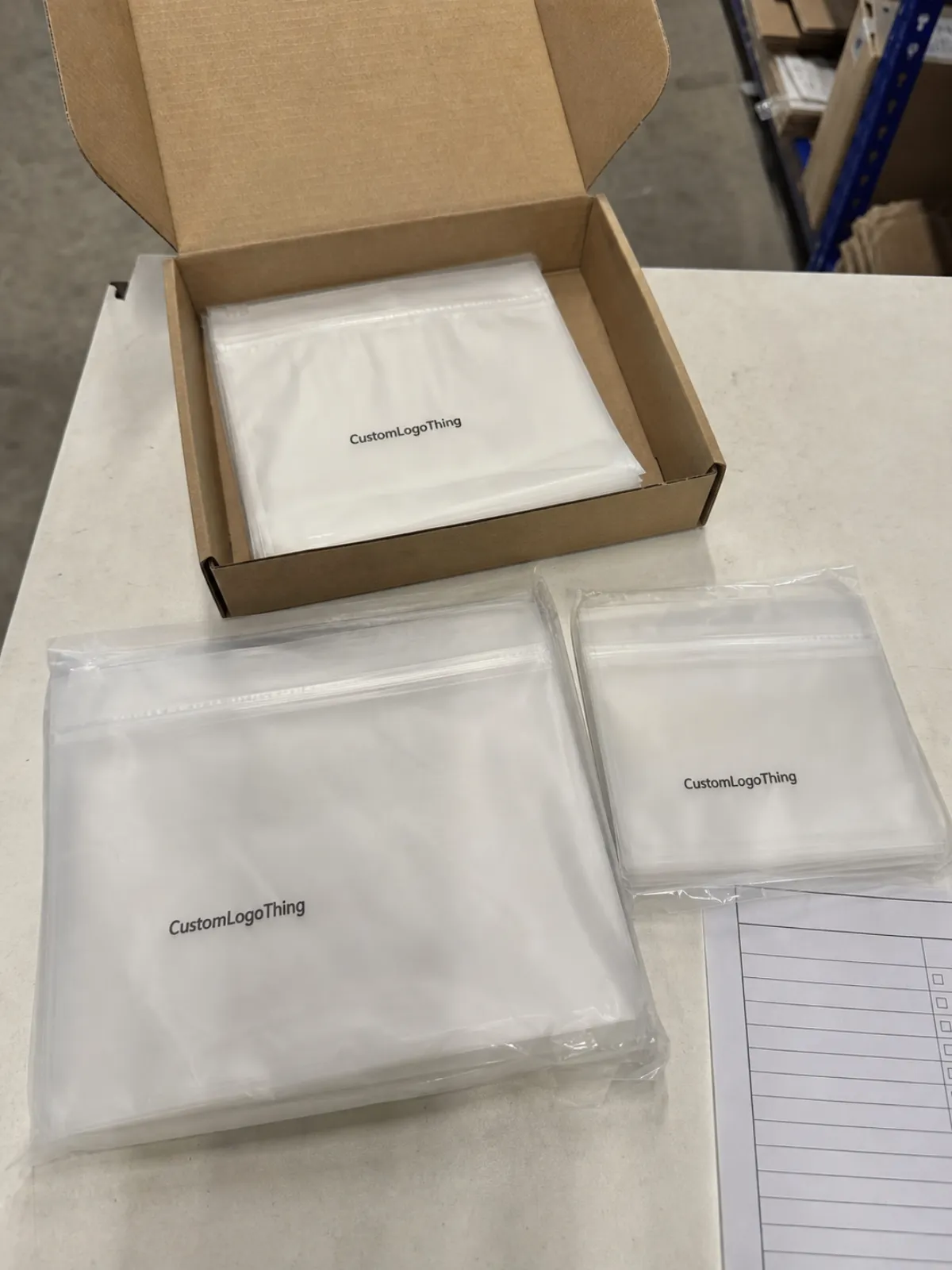
A frosted zipper bag can leave the packing table looking clean and expensive, then reach a boutique with scuffed panels, curled corners, or zipper edges pressed into the bag face because the carton was packed in a hurry. A Frosted Zipper Bags Carton Packing checklist for retail boutiques is a practical pre-shipment control list used to confirm bag count, carton strength, inner protection, labeling, orientation, and transit readiness before finished packaging leaves the supplier.
That may sound like warehouse detail, but it shows up in the selling environment. If a store team opens a master carton and finds dusty matte surfaces, mixed logo versions, or uneven counts, receiving slows down immediately. Someone has to recount, clean what can be cleaned, separate questionable pieces, and decide whether the bags are still suitable for customer-facing use.
Frosted PE and EVA-style zipper bags need slightly different handling from glossy Clear Poly Bags. Their softened, diffused finish is one reason boutiques use them for apparel, cosmetics, jewelry, candles, accessories, and giftable products. The same matte surface can also make abrasion, pressure marks, and corrugated dust more visible, especially under bright retail lighting or on darker printed logos.
Carton packing should not be treated as an afterthought after the print, size, and zipper choice are approved. For a packaging buyer, it affects presentation, inventory accuracy, store transfer speed, return handling, and whether custom logo bags still feel premium when they reach the register, packing bench, or stockroom shelf.
Practical rule: the carton should protect the bag finish, preserve the count, and let a busy boutique team verify the shipment without opening and sorting every single piece.
How Frosted Zipper Bags Are Packed Before Cartoning
After production, the normal flow is direct: bags are printed or finished, checked for zipper alignment and surface defects, counted into bundles, protected with inner sleeves or liners if specified, then arranged in cartons according to size, gauge, closure style, and shipment quantity. A 2.5 or 3 mil press-to-close bag behaves differently from a heavier 5 mil frosted slider pouch, so the packing method should match the real material, not a generic carton plan.
Most Frosted Zipper Bags should be packed flat. Sharp folding can distort the zipper track, pinch a slider, weaken the sealed edge, or leave stress lines across the front panel. The bag may still function, but it can look pre-handled before it ever reaches a customer.
Bundle size deserves more attention than it usually receives. Smaller 50-piece or 100-piece inner packs are easier for boutique staff to count, split between locations, store on shallow stockroom shelving, and move into pop-up kits. One large loose stack may save a little packing labor at the supplier, but it can create compression marks, uneven piles, and more awkward handling during receiving.
For higher-finish retail packaging, carton liners, tissue interleaving, or clean inner poly bags can be worth specifying. I would look closely at added inner protection when the bags include custom logo printing, metallic ink, heavy ink coverage, hang holes, slider closures, or a wide zipper rib. Raised closures can rub against nearby frosted panels during a short parcel trip, and the risk only increases on longer LTL or container shipments.
Carton orientation should follow the bag shape and opening style. Zipper heads, sealed edges, and printed logo panels should not all be forced against one pressure point while cartons are stacked, tilted, or pallet-jacked. The aim is not to make the packing unnecessarily elaborate. It is to let the bag arrive with the same soft, clean, boutique-ready appearance it had during final inspection.
Key Specs To Confirm Before The Carton Is Sealed
Before sealing cartons, confirm the essentials: bag width, height, bottom gusset if used, material thickness, zipper type, print position, print color, logo orientation, carton quantity, carton dimensions, and gross weight. These details belong near the top of any packing checklist because they catch the mistakes that are hardest to fix after cartons are taped, labeled, palletized, and loaded.
Frosted Zipper Bags are commonly made from PE-based film structures for flexible retail use, though resin blends, additives, surface treatment, and frost level vary by supplier. A lighter 2.5 mil frosted bag needs different pressure control than a 4 or 5 mil pouch with a heavier closure. Stiffer films can bridge inside the carton and create corner pressure; softer films can wrinkle if the carton is underfilled or handled roughly.
Count accuracy is not a minor administrative issue. Boutiques often distribute packaging across multiple counters, stockrooms, store locations, event kits, or fulfillment benches. If each carton is supposed to hold 500 pieces but one box contains 462 and another contains 538, the shortage may not be discovered until the bags are already in daily use.
Ask whether bags are packed as an exact loose count per master carton or divided into smaller inner packs. Inner packs add some labor and film cost, but they usually make receiving, partial storage, and store transfers cleaner. Five inner packs of 100 pieces inside a 500-piece master carton, for example, are easier to verify than one loose 500-piece stack.
| Carton Packing Choice | Typical Use | Cost Impact | Buyer Benefit |
|---|---|---|---|
| Loose flat stack | Basic, low-touch orders | Lowest packing labor | Simple, but harder to count, split, and inspect |
| 50 or 100-piece inner packs | Boutique stockrooms and store transfers | Small labor and film increase | Cleaner counting and easier partial use |
| Carton liner | Printed, premium, or long-transit shipments | Low to moderate material cost | Reduces dust, rubbing, and moisture exposure |
| Heavy export carton | LTL, palletized, or container shipments | Moderate carton cost increase | Improves crush resistance and corner protection |
Carton strength should match the shipping route. Parcel networks expose cartons to drops, belt systems, compression, and repeated handling. LTL freight adds another layer of risk because mixed freight can be stacked unevenly or rehandled several times. Ask about corrugated grade, edge crush resistance, tape pattern, and whether the carton is intended for parcel shipping, palletized freight, or container loading. For transit testing terminology, the International Safe Transit Association is a useful reference.
Carton labels should include SKU, bag size, finish, logo version, quantity per carton, carton number, purchase order, destination, and handling marks such as keep dry, do not crush, or this side up. A pre-shipment packing photo is also valuable. One clear image of the open carton can show whether the bags are flat, protected, and arranged in a way that receiving staff can understand quickly.
Process And Timeline: From Approved Sample To Packed Cartons
The packing plan starts before the bags are finished. A typical project moves through artwork confirmation, material selection, proof or sample approval, bulk production, inline inspection, final counting, carton packing, carton marking, palletizing when needed, and shipment booking.
Finalize the packing checklist before bulk production ends. Carton size, inner pack quantity, label format, and mixed-SKU instructions affect how finished goods are handled at the packing table. If those instructions arrive after the bags have already been stacked and boxed, the supplier may need to reopen cartons, sort pieces, relabel boxes, or repack the order. That adds time and increases handling risk.
Lead time depends on print method, zipper style, bag size, material availability, order quantity, inspection requirements, and retail-specific labeling. A repeat order using existing artwork and a common size may move faster than a first custom logo order with new art, a special gauge, or a nonstandard carton configuration. Buyers should separate production lead time from shipping transit time because carton packing, export paperwork, trucking, customs, appointment delivery, and final receiving windows can sit outside the bag manufacturing schedule.
Launch orders need more buffer than reorders. Holiday merchandising sets, pop-up shop supplies, and new store openings are especially sensitive because the packaging is often needed before the product can be displayed, fulfilled, or handed to a customer. A late carton of zipper bags can hold up more than packaging inventory; it can affect the product launch itself.
Timeline control improves when the buyer provides final artwork, carton quantity preference, shipping marks, destination details, and receiving rules at the beginning. If cartons need to be sorted by store location, product line, colorway, or seasonal collection, say so early. That request changes counting, labeling, pallet organization, and sometimes carton dimensions.
Cost, Pricing, And MOQ Details That Affect Carton Packing
The unit cost of a frosted zipper bag is shaped by material thickness, bag size, zipper type, print coverage, ink colors, order quantity, and packing requirements. A small two-color frosted PE pouch will not price the same as a larger apparel bag with a slider closure, thicker film, and heavier printed coverage.
As a practical planning range, custom frosted zipper bags may land around $0.18-$0.28 per unit for a 5,000-piece order in a moderate retail size, depending on film thickness, print method, print coverage, zipper style, and packing method. Larger bags, heavier gauges, additional colors, specialty closures, or lower quantities can push the price higher. Setup, plate, or tooling charges may be separate, and freight can shift the landed cost more than the buyer expects.
Carton packing can change pricing even when the bag specification stays the same. Smaller inner bundles, heavier export cartons, carton liners, custom shipping labels, palletization, and mixed-SKU sorting all add labor or material. Those costs are not automatically wasteful if they prevent scuffs, count disputes, or receiving confusion, but they should be visible in the quote.
MOQ works the same way. Higher order quantities often reduce per-bag manufacturing cost, yet they increase storage needs, carton count, freight planning, and label discipline. A 20,000-piece order distributed across four boutique locations needs much cleaner carton identification than a single 1,000-piece reorder going to one back room.
Ultra-light cartons are not always cheaper in the real landed sense. Weak board can save a small amount upfront, then lead to crushed corners, opened seams, damaged zipper tracks, and receiving disputes. For premium custom logo bags, a properly sized carton with a clean liner is usually a better buying decision than a thin carton packed to its physical limit.
Ask suppliers to separate line items where possible: bag production, print setup, special packing, carton labeling, palletizing, and freight. Clear pricing makes it easier to see what is driving cost and which packing choices are worth keeping. The lowest unit price is not the same as the best result if the bags arrive scratched, short-counted, or poorly marked.
For sustainability and material documentation, buyers may also want carton or paperboard claims supported by recognized programs such as the Forest Stewardship Council. Not every project needs FSC-certified cartons, but if your boutique publishes packaging standards or vendor requirements, ask before production starts rather than after cartons are purchased.
Step-By-Step Carton Packing Checklist Before Shipment
Use this Frosted Zipper Bags Carton packing checklist for retail boutiques as a working inspection sequence, not just a form attached to the order. The sequence matters because each check catches a different failure before the cartons enter transit.
- Verify the bag against the approved sample or proof. Check frosted opacity, logo placement, zipper operation, edge sealing, material thickness, and overall hand feel.
- Confirm the count method. Record pieces per inner pack, inner packs per carton, total pieces per carton, and total carton count across the order.
- Inspect the carton interior. Make sure the board is clean, dry, free from exposed staples, rough edges, broken corrugation, or loose dust that could mark the frosted surface.
- Protect the bags inside the carton. Use a liner if specified, flat stacking, consistent bundle orientation, and enough space to prevent crushing without allowing the bags to slide.
- Check zipper and print direction. Avoid concentrating sliders, zipper ribs, or printed panels into one abrasive pressure point if alternating orientation would reduce stress.
- Weigh the packed carton. Compare gross weight with the expected range. A meaningful mismatch can indicate a count error, wrong SKU, or missing inner pack.
- Seal with the correct tape pattern. For parcel shipments, use a strong H-tape pattern so cartons can tolerate flipping, dropping, and stacking.
- Apply clear carton labels. Include SKU, quantity, size, finish, logo version, carton number, PO number, and destination details.
- Photograph the shipment condition. Capture the open carton, sealed carton, shipping mark, and pallet configuration if applicable.
Weight checks are especially useful on repeat orders. If the same SKU and carton count normally produce a carton around 12.5 kg, a carton at 10.8 kg deserves attention before shipment. The reason might be harmless, but it could also point to a short pack or wrong inner bundle count.
Photos are not just paperwork. They help resolve shortages, scuffs, and mixed-carton questions quickly because the buyer and supplier can both see how the goods were packed before they left the facility.
Common Packing Mistakes That Damage The Boutique Finish
Overpacking is one of the most common causes of damage. Squeezing too many frosted zipper bags into one carton can bow the panels, stress the closure, and leave pressure marks that show under store lighting. A tight carton may look efficient during packing and still produce poor results after two days in stacked transit.
Underpacking creates the opposite problem. If bags move inside the carton, the frosted surfaces can rub against carton walls, tape edges, broken corrugation, staples, or neighboring bags until the matte finish looks dusty or scratched. Movement is a problem. Excess pressure is a problem. Good packing sits between the two.
Mixing sizes or logo versions without clear dividers and labels creates a quieter but expensive headache. Boutique staff may not notice the mismatch until the wrong bags have already been placed at the register or fulfillment bench. Carton-level SKU confirmation is essential when multiple sizes, colors, finishes, or logo versions ship together.
Moisture control also matters. Plastic bags resist water better than paper packaging, but corrugated cartons can absorb humidity. Damp board can transfer odor, dirt, fibers, or staining onto the bag surface. Long storage in a humid room can also soften cartons and reduce stacking strength.
Rough internal carton surfaces, exposed staples, weak seams, and poor-quality board can all mark matte plastic packaging. Recycled content is not automatically a problem, but the interior surface and carton construction still need to be suitable for a frosted retail finish.
Skipping carton weight checks hides count errors. Loose label rules hide sorting errors. Many packing failures are not dramatic; they are small handling choices that reduce presentation quality and create extra labor for the receiving team.
Building A Boutique-Ready Packing Spec
Start with a short written brief. Name the bag size, material thickness, frosted finish level, zipper style, print details, carton quantity, inner pack quantity, label requirements, delivery destination, and any store-level sorting rules. If you already have a checklist, attach it to the purchase order rather than sending it later as a separate message.
Choose carton quantities around how the bags are actually received and used. A 100-piece inner pack may be easier for a small boutique team than one loose master carton, even if both options contain the same total quantity. For a busy store, countability is labor control.
Ask for a pre-shipment packing photo or brief packing report showing the open carton arrangement, carton label, sealed carton, and pallet layout if the shipment is palletized. Request a target gross weight range per carton and compare it during receiving, especially on repeat orders where the same SKU should produce consistent weights.
Keep one approved carton label format on file. Reorders drift when label wording changes, PO numbers disappear, or SKU descriptions are shortened until no one knows which size is inside without opening the box.
For launch orders, ask for one carton to be packed and photographed before the full order is closed. It is much easier to adjust bundle direction, liner use, carton fill, or label layout early than to repack finished cartons later.
A practical packing spec does not need to be long. It needs to be specific enough that the finished frosted zipper bags arrive clean, countable, correctly labeled, and ready for the sales floor or fulfillment bench without extra sorting drama.
FAQ
What should a frosted zipper bag carton label include for boutique orders?
A good carton label should include SKU, bag size, material or finish, logo version, color, quantity per carton, carton number, purchase order number, and destination. If the order includes several stores or product lines, add store name, collection name, or location code so staff can sort cartons without opening every box. Keep the wording consistent across reorders to reduce receiving mistakes.
How many frosted zipper bags should be packed in one carton?
The right count depends on bag size, material thickness, zipper type, and carton strength. A good carton should be full enough to prevent shifting but not so tight that it compresses the zipper track or leaves pressure marks on the frosted surface. For boutiques, 50-piece or 100-piece inner packs often make counting, storage, and store transfers easier.
Do frosted zipper bags need inner poly bags or carton liners?
Not always. They are useful for premium printed bags, long-distance shipments, humid routes, or cartons with rough interior board. A liner helps reduce carton dust, surface rubbing, and moisture exposure during transit and storage. For high-end boutique packaging, the small added packing cost can protect the clean matte finish.
How can I reduce scratches on frosted zipper bags during shipping?
Pack bags flat, use consistent bundle orientation, avoid loose movement inside the carton, and prevent zipper tracks or sliders from rubbing heavily against printed panels. Use clean corrugated cartons, add liners when needed, and avoid overstuffing. Open-carton photos before shipment are a simple way to confirm protection before the order leaves the supplier.
What affects the cost of frosted zipper bags carton packing for retail boutiques?
Cost is affected by bag size, material thickness, zipper style, print coverage, order quantity, carton strength, inner packing method, and labeling requirements. Store-by-store sorting, smaller inner bundles, pallet labels, and protective liners may add labor or material cost. Compare quotes by finished condition and receiving efficiency, not only by the lowest per-bag price.

