Frosted Zipper Bags Carton Packing Checklist for Wine Shops
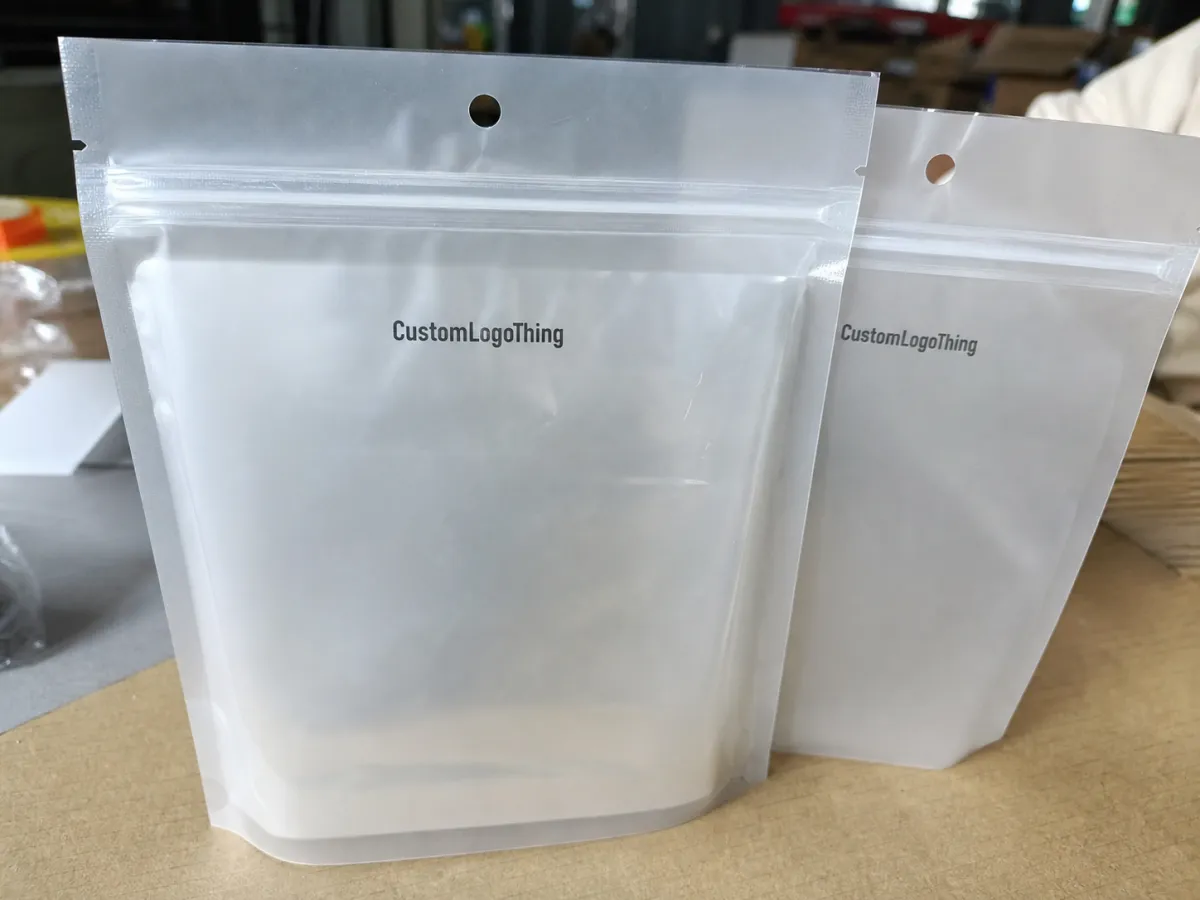
A shipment can look perfect on paper and still create headaches at the back door. The cartons may arrive on time, the print may match the proof, and the count may be exact, yet the bags are packed so heavily that one staff member cannot move them safely, or the bag size only works for the lightest version of the gift set. That is why a Frosted Zipper Bags Carton Packing checklist for wine shops is not a paperwork formality. It is the part of the order that keeps a packaging decision usable once it reaches a retail floor, a stockroom, and a busy tasting calendar.
Frosted Zipper Bags are semi-translucent PE or PP pouches or handle bags with resealable closures. Wine shops use them for corkscrews, tasting cards, bottle stoppers, gift cards, chocolate pairings, club-member kits, and small retail bundles. Some versions can carry light bottle-adjacent items, but that depends on the film gauge, zipper strength, seals, gusset design, and how the load behaves in the real world. A bag that looks polished in a photo is not automatically suitable for glass, rigid inserts, or repeated reuse.
Wine retail also changes the handling standard. Accessories with hard edges do not compress the way apparel does. Small jars, boxed tools, and folded cards can push into seams and zipper tracks. Seasonal rushes bring extra pressure, because a holiday gift program often needs the packaging to be stored, counted, and grabbed quickly by staff who do not have time to decipher vague carton labels. The checklist should connect the bag spec, the carton spec, and the receiving process before production begins.
Most problems start earlier than buyers expect. They approve a sample, then assume the cartons will behave the same way. But carton packing decisions determine whether the order can be stored, stacked, and opened without wasted labor. The right checklist reduces surprise, protects the branding, and prevents a small dimensional miss from turning into a pile of unused inventory.
How Frosted Zipper Bags Work in a Wine Retail Setting
A well-made frosted zipper bag usually includes a frost-finished film, side seals, a zipper track, and either a flat or gusseted bottom. Some versions add a die-cut handle, a hang hole, a write-on area, or custom printing. The frosted finish softens what is inside without hiding it completely, which is useful for Wine Shops That want a package to feel elevated but not overbuilt.
That balance is what makes the format attractive. A rigid gift box can run from about $1.20 to $4.00 per unit before freight, depending on structure and print. A custom frosted zipper pouch often lands in a lower range, sometimes around $0.18 to $0.65 per unit, though larger sizes, thicker film, special finishes, or multi-color artwork can push higher. Those ranges are only reference points. Resin costs, print coverage, quantity, and shipping lane all affect the final number.
The lighter end of the use case is straightforward: tasting cards, loyalty gifts, bottle openers, small pairings, shelf talker kits, or gift-card bundles. The more demanding end needs closer review: boxed accessories, mini bottles, heavy inserts, or anything with concentrated weight in one corner. A zipper track that feels smooth with a folded card may strain under a heavier set.
Buyer rule: a sample shows appearance. Carton packing shows whether the product can actually be received, stored, counted, and moved without creating a second problem.
Film thickness matters, but not in isolation. A 120-micron bag can feel sturdier than an 80-micron version, yet it also increases carton weight, freight cost, and storage footprint. A sticky zipper can make a premium bundle feel cheap in seconds, while a clean closure gives the whole kit a more finished impression. If the bag is meant to be reused, that should be clear in the spec and reflected in the closure quality.
Compliance and sustainability should be discussed early, not after approval. Ask whether the film is recyclable in the relevant local stream, whether recycled content is available, and whether the bag is being sold or handed out as reusable retail packaging. Regional rules differ, especially when handle style or retail use comes into play. The EPA recycling guidance is a practical reference point, but it does not replace local requirements at the counter.
Key Specs to Verify Before Carton Packing Begins
The first layer of the checklist is the bag itself. Confirm outside width, usable inside width, total height, usable height below the zipper, gusset depth, seal width, zipper width, handle placement, print area, and film thickness. If those measurements only live in email threads, they will be missed later. Put them on the proof and on the approval sheet.
Usable space matters more than the headline size. A 10-inch bag does not necessarily accept a 10-inch insert once the zipper, side seals, and gusset geometry are included. That matters in wine retail because many bundle pieces are rigid rather than soft. A corkscrew box, tasting card, chocolate bar, and voucher can create hard corners that press into the seams and distort the finish.
Do a real load test before carton rules are locked. Put the heaviest intended bundle into the bag. Close the zipper five times. Hold it by the handle for 60 seconds. Stand it upright for 10 minutes if the bag will be displayed that way. Then inspect the zipper track, side seals, scuffing, and any stretch around the gusset. This simple test tells you more than a polished render ever will.
The carton spec deserves the same level of attention. Confirm bags per inner pack, inner packs per master carton, total bags per carton, carton dimensions, gross weight, net weight, burst strength, and pallet count if the order is large enough to palletize. If the cartons will be stacked, ask for the stacking pattern and pallet height. Shipping vibration, corner compression, and repeated handling are common failure points, which is why transit concepts used by organizations such as ISTA are relevant even for retail packaging.
| Spec Area | What to Confirm | Why It Matters for Wine Shops |
|---|---|---|
| Bag size | Usable width, height below zipper, gusset depth | Rigid accessories and gift inserts need real internal room |
| Film | Material, frost level, thickness, recycled content option | Changes feel, compliance profile, carton weight, and cost |
| Zipper | Closure smoothness, track alignment, repeated-use test | Poor closure makes a premium bundle feel poorly made |
| Carton | Case count, gross weight, carton strength, label layout | Controls receiving speed, staff safety, and storage accuracy |
A 500-count carton can seem efficient until someone has to carry it down a narrow stairwell or shelve it in a cramped stockroom. Smaller case packs may add a little corrugate cost, but they can reduce compression damage and make cycle counts easier. For wine shops, carton packing should also list SKU, size, frost level, logo version, PO number, carton sequence, lot number, and any seasonal campaign code. Those details save time later, especially when a reorder is mixed with old stock.
Pricing, MOQ, and Unit Cost Signals to Question
Price is never one number. Film thickness, dimensions, zipper quality, frost finish, color count, print method, carton configuration, and freight distance all affect the landed total. A clean unit price can hide expensive terms elsewhere.
For a basic custom frosted zipper pouch, a working range might be $0.18 to $0.28 per unit at 5,000 pieces for smaller sizes with simple one-color printing. Larger handle bags, thicker films, special finishes, or more complex logos can move into the $0.35 to $0.75 range. Unusual gussets, reinforced handles, or specialty inks can go beyond that. These numbers are guides, not promises. They move with resin prices, freight markets, and print coverage.
MOQ deserves scrutiny. A quote may look attractive at 10,000 units, but a wine shop should compare that number against real seasonal demand. If the bag carries a dated event name, holiday artwork, or a club-only message, overbuying can turn a lower unit price into dead stock. Paying slightly more per usable bag is often cheaper than storing obsolete cartons for years.
Request tiered quotes at 1,000, 3,000, 5,000, and 10,000 units using the same spec. Compare landed cost, not headline cost. Include setup, sampling, freight, upgraded cartons, inner polybagging, palletization, and liftgate delivery if those apply. For smaller retailers, receiving labor is part of the cost too, even if it does not appear on the invoice.
| Quote Item | Typical Signal | Buyer Question |
|---|---|---|
| Low unit price | May exclude freight, setup, or stronger cartons | What is the landed cost per usable bag? |
| High MOQ | Can lower unit cost but raise obsolete inventory risk | Will this artwork still be useful after the event? |
| Thicker film | Better feel, higher cost, heavier cartons | What is the gross carton weight? |
| Special carton labels | Improves receiving, may add a small fee | Can labels show SKU, PO, count, and lot number? |
A useful formula is simple: landed unit cost = product cost + setup + freight + expected receiving labor, divided by usable bags after defects or damage. If one supplier looks dramatically cheaper, check film gauge, zipper quality, print durability, carton strength, and whether freight is excluded. A low price paired with weak cartons is not a bargain once rework starts.
Production Steps, Lead Time, and Carton Timeline
The usual path runs through inquiry, spec confirmation, quote, artwork setup, digital proof, sample or pre-production approval, mass production, carton packing, quality inspection, freight booking, and delivery. Each step has a decision attached. If the decision stalls, the schedule slips.
Build backward from the event date. Holiday baskets, wine club pickup weekends, tasting events, private-label launches, and gift fairs all have hard deadlines. Late packaging often forces staff to use plain bags or delay bundle assembly, and both choices weaken the presentation the buyer was trying to build.
Timing varies by spec. Artwork review may take 2 to 4 business days if files are clean. Sampling can add 7 to 14 business days, depending on size, print method, and whether a pre-production sample is required. Production often runs from about 10 to 25 business days for many custom zipper bag orders, with longer windows for large quantities or special materials. Shipping time depends heavily on domestic versus overseas sourcing.
Many delays are buyer-side delays. Missing vector art. Unconfirmed size. Unclear carton count. Payment pending. A delivery contact who has not been briefed. The calendar rarely lies about where the delay started.
Lock carton specs early. Changing from 250 bags per carton to 500 after production planning can affect carton size, freight quote, label layout, pallet configuration, and receiving instructions. Add buffer time for sample revisions, weather issues, local delivery congestion, and inspection questions. A realistic schedule should name the owner, the due date, the decision required, and the consequence if that decision slips.
Rush orders only make sense under narrow conditions: standard bag size, print-ready artwork, simple one-color logo, no unusual carton labeling, and acceptance of fewer customization options. If the checklist still has open questions, rushing the job mostly speeds up the mistake.
Step-by-Step Carton Packing Checklist for Buyers
Use the checklist as a working control sheet, not a formality. One good approval page can save hours of sorting later.
- Confirm intended contents. Separate accessories, tasting kits, bottle-adjacent merchandise, and gift sets by weight, shape, and retail use. Do not treat all wine shop packaging as one category.
- Approve dimensions with real products. Pack the actual corkscrew box, card insert, chocolate bar, voucher, or mini bottle. Record the tested items and the fit result.
- Verify material and zipper performance. Check frost level, film gauge, seal strength, closure smoothness, and whether the bag stands, stacks, or hangs as intended.
- Approve artwork and print placement. Frosted film can mute dark inks and flatten metallic tones. View the logo under store lighting, not only on a white screen.
- Set carton packing rules. Confirm bags per inner pack, inner packs per carton, carton dimensions, gross weight limit, label format, and palletization preference.
- Define inspection points. Include pre-pack count check, random zipper test, print registration check, seal check, carton crush check, and label accuracy review.
- Prepare receiving instructions. Tell staff how many cartons to expect, where to store them, which label details to match against the PO, and how to report damage before signing.
- Keep one sealed control carton. Save it for future reorders, especially if the shop repeats seasonal, club-member, or private tasting packaging.
A strong Frosted Zipper Bags Carton Packing checklist for wine shops also assigns responsibility. If everyone owns the approval, no one really does. Give one person the bag fit decision, one person the artwork check, one person the receiving review, and one person the final purchasing sign-off. That small amount of structure prevents a lot of drift.
Common Mistakes That Create Waste, Returns, or Slow Receiving
The first mistake is choosing from a photo alone. Frosted plastic can look more substantial online than it feels in hand. A load test quickly shows whether the bag can handle the intended bundle or whether it should be reserved for lighter items.
The second mistake is ignoring gross carton weight. A large case may reduce corrugate use, but it can create handling issues for small retail teams, narrow stockrooms, or basement storage. If one person has to move the carton, the weight should be realistic. Convenience at the supplier side can become a strain at the shop.
The third mistake is approving a logo only on screen. Frosted material changes contrast. Warm retail lighting can wash out pale gray, champagne, blush, or matte silver artwork. Ask for a sample or production photo on the actual film if brand readability matters.
The fourth mistake is mixing SKUs in unlabeled cartons. During a busy tasting weekend, staff can grab the wrong carton and end up using the wrong size or seasonal version. Clear carton labels reduce that kind of avoidable waste.
The fifth mistake is forgetting local packaging rules. Some jurisdictions treat Plastic Retail Bags differently depending on thickness, handle style, reusability, or point-of-sale use. Ask for material details from the supplier, then verify the local rule independently.
The sixth mistake is ordering too close to the event. A clean production run can still miss the sales window if freight slows down. The seventh is forgetting overage. Samples, damaged cartons, training, display setup, and last-minute VIP packs can use 2% to 5% more bags than the spreadsheet suggests.
The final mistake is assuming the next reorder will match the first one without documentation. If the checklist is not saved, the second batch may arrive with a different frost level, zipper feel, carton count, or label layout. Small packaging changes become brand changes when customers notice them in hand.
Next Steps Before You Approve the Cartons
Create a one-page approval sheet before payment. Include bag specs, artwork version, carton packing rules, delivery address, receiving contact, and event deadline. Keep it plain. The goal is fewer surprises, not more paperwork.
Ask for three proof points before release: a finished sample or production photo, a carton label mockup, and a written carton packing breakdown showing total units per carton and gross weight. If the order is large, ask whether the cartons will be palletized and how many cartons should land on each pallet.
Run a small shop-floor simulation. Have the person who will assemble the gift sets pack ten sample bags, close each zipper, and place the finished units where they would actually be stored or displayed. If the zipper slows them down after ten bags, it will slow them down much more after 600.
Compare at least two quotes on landed cost. Include setup, freight, carton strength, MOQ, and storage impact. If paper inserts, corrugated dividers, or branded wraps are part of the same program, verify those claims through sources such as the Forest Stewardship Council. Plastic and paper components often travel together in one retail campaign, so the whole package should be reviewed as a set.
Set a reorder trigger while the first shipment is still fresh in everyone’s memory. A practical line is to reorder when remaining stock falls below four weeks of planned use. Keep notes on carton weight, zipper stiffness, bag fit, print contrast, and storage issues. Those notes matter more than a polished spec sheet when the next season comes around.
A Frosted Zipper Bags Carton Packing checklist for wine shops gives buyers a clean way to connect branding with receiving reality before the cartons land at the back door. It protects the logo, the staff, the event schedule, and the customer’s first impression of the bundle.
FAQs
What should be included in a frosted zipper bag carton label for a wine shop?
Include SKU, bag size, logo version, color or frost finish, quantity per carton, PO number, lot number, gross weight, and carton sequence such as 1 of 12. Add a seasonal or event code if the bags are tied to holiday baskets, wine club pickup, or tasting kits. Labels should be readable on at least two sides so staff can identify inventory without moving every box.
How many frosted zipper bags should wine shops pack per carton?
The right count depends on bag size, film thickness, and staff handling limits, not only supplier preference. For larger or thicker bags, lower carton counts can prevent compression damage and make receiving easier. Ask for gross carton weight before approving the case pack, especially if cartons will be carried by one person.
Are frosted zipper bags strong enough for wine bottles?
They can be suitable for light wine-related merchandise, but bottle use depends on film gauge, seal strength, gusset design, handle structure, and tested load rating. Never assume a standard zipper bag can carry glass bottles without a physical load test. If the bag will hold bottles, request reinforced construction and test with the heaviest real product configuration.
How early should a wine shop order custom frosted zipper bags?
Start as early as possible before a fixed event because artwork approval, sampling, production, carton packing, freight, and receiving can each create delays. Allow extra time if the order requires custom size, multi-color printing, special carton labels, or palletized delivery. For repeat orders, keep the prior checklist and control sample to shorten approval time.
What is the biggest pricing mistake when buying frosted zipper bags for wine retail?
The biggest mistake is comparing only the quoted unit price and ignoring landed cost. Freight, setup fees, MOQ, carton count, storage space, receiving labor, and defect overage can change the true cost per usable bag. Ask suppliers to quote identical specs at multiple quantities so price breaks are visible and comparable.

