Gift shops sell small things that still have to look considered. A postcard, a pair of earrings, a pin, a mini candle, a seasonal trinket, or a bundled set may be low in size, but it carries the store's visual standard. That is why Frosted Zipper Bags for gift shops bulk pricing keeps surfacing in buyer searches: the bag has to protect the item, make the display cleaner, and keep the cost structure predictable enough for repeat orders.
Frosted Zipper Bags sit in a useful middle ground. They look more finished than a plain utility bag, less formal than a rigid box, and easier to standardize across multiple product types. For shops that mix jewelry, stationery, souvenirs, and small gift sets, that middle ground matters. The presentation needs enough polish to support markup, but not so much packaging that the margin gets trapped in materials.
There is also a practical reason these bags stay popular. Staff can restock them quickly. Customers can see the product without the harsh shine of a fully clear bag. And once the dimensions are set, buying in bulk becomes easier to forecast. A good order is one where the unit cost, thickness, and print method line up with actual sell-through instead of idealized shelf plans.
The Counter Display Problem These Bags Solve
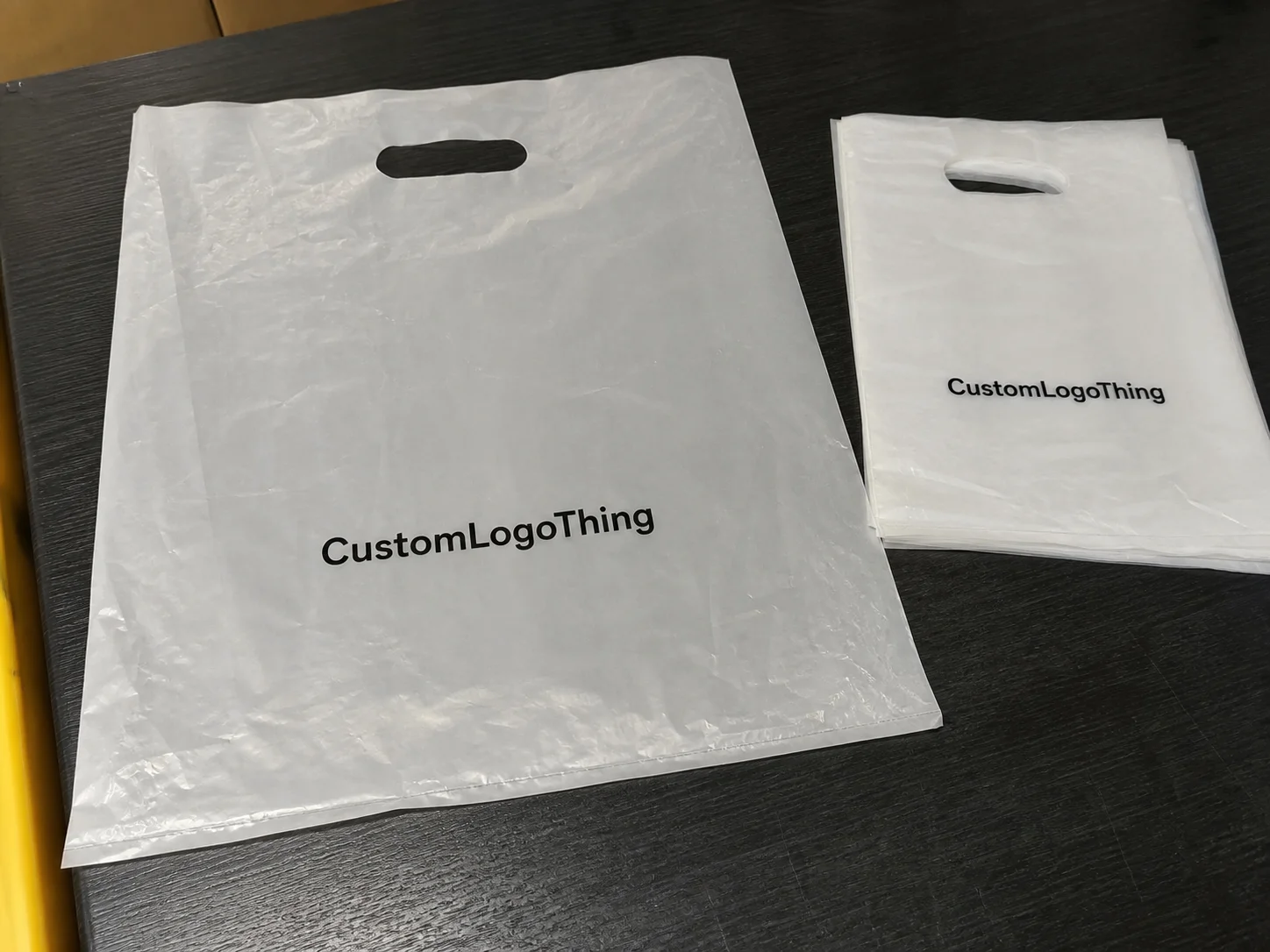
A gift shop counter usually carries a mixed pile of small items with different shapes, price points, and fragility levels. One tray holds earrings. Another holds cards and stickers. A nearby peg strip might have keychains, magnets, or seasonal add-ons. Loose merchandise looks untidy fast, and fully boxed packaging often adds more bulk than the item deserves. Frosted zipper bags solve that middle problem: they organize the product without burying it.
The frosted finish changes the way the item reads under retail lighting. Clear bags can throw glare and make a display look busy, especially if there are many colors competing on the same surface. A frosted surface softens that contrast. The product remains visible, but the bag creates a calmer background that helps the eye separate one item from another. In a shop with crowded counters, that small shift can improve how premium the assortment feels.
The zipper closure matters for a different reason. It signals reusability, which customers notice quickly, and it makes handling easier for staff. Bags that can be opened and closed several times are better for back-room sorting, seasonal swaps, and register packing. In retail packaging, convenience is not a side benefit. It affects speed, labor, and whether the team keeps using the bag or starts reaching for something else.
“The best retail packaging is usually the one that disappears into the sale without looking disposable. It should protect the item, hold up to repeated handling, and still feel intentional on the counter.”
That is the real appeal behind frosted zipper Bags for Gift Shops bulk pricing. The search is not just about plastic bags. It is about buying something that can support a shop's presentation standard across dozens or hundreds of small transactions without making the economics fragile.
Product Details That Affect Selling Value
Most frosted zipper bags used in retail are made from PE, usually chosen for its flexibility, low weight, and clean surface finish. The material is familiar because it works across a wide range of uses without feeling overly specialized. For lightweight products such as stickers, jewelry, and stationery, a thinner film can be enough. For items with harder edges, slightly heavier bundles, or repeated handling, a thicker gauge tends to hold up better and feels less disposable in the hand.
Thickness is not just about durability. It changes how the bag hangs, how much it wrinkles, and how the product inside is perceived. A flimsy bag makes even a nice item look cheaper. A very thick bag can overstate the value of a low-ticket product and push the packaging cost beyond what the item can support. That balance matters more than many buyers expect, especially when the same bag format is used across several departments.
The frosted surface also gives a useful visual cue. It reduces the bright, hard shine that clear bags can produce, but it does not erase the contents the way a fully opaque pouch would. That makes it easier to group products by category or season while still letting customers confirm what they are buying. For counter sales, that combination is hard to beat.
Ask about the zipper construction before you compare frosted Zipper Bags for Gift Shops bulk pricing. A smooth zipper with an even track saves time every time it is used. A weak closure may not fail immediately, but if it catches, misaligns, or opens unevenly, staff will notice within the first shipment. The bag might look fine in a product photo and still create friction at the register.
Common uses in gift retail include:
- Jewelry and small accessories
- Postcards, stickers, and stationery sets
- Mini candles or bath items
- Seasonal gift bundles
- Souvenir items and impulse purchases
Printing should stay restrained unless the brand has a clear reason to go heavier. A small logo, a short brand name, or a simple warning line is often enough. Dense ink coverage reduces the frosted effect and moves the bag toward a different visual category. If the point is to keep the product visible, the artwork should support the material, not fight it.
Specifications Buyers Should Confirm Before Ordering
The fastest way to create a bad quote is to be vague. Before requesting frosted zipper bags for gift shops bulk pricing, define the bag's dimensions, thickness, finish, closure style, print area, and carton count. Otherwise, two suppliers may appear to be quoting the same item while actually pricing different constructions. That is one of the most common sources of confusion in packaging purchasing.
Dimensions should be exact. Width and height need to be clear, and any gusset or expansion detail should be stated if it affects usable space. Thickness should be specified in microns or mils, not left as “standard” or “medium,” because those terms vary too much between manufacturers. Finish should also be pinned down. A soft haze, a more matte frosted look, or a near-clear finish can all be described as frosted in casual conversation, but they do not behave the same on the shelf.
Buyers should also look at how the zipper is built and how the seams are sealed. That matters more than marketing language. A low-cost bag with weak seams can cost more in staff time than a slightly higher-priced bag that stays consistent through packing and restocking. The visible failure is not always the expensive one.
A useful specification checklist looks like this:
- Exact dimensions in width and height, plus any gusset or expansion detail.
- Thickness stated in microns or mils.
- Frosted finish level, especially if the bag must match a previous order.
- Zipper style and whether it is single-track or another closure type.
- Print area and number of colors, if branding is needed.
- Carton count for receiving, storage, and warehouse planning.
Sampling is worth the time. Open and close the zipper a few times. Hold the bag under store lighting. Check whether the haze hides too much or too little. If there is printing, view it from the distance a customer would actually stand at the counter. A logo that looks crisp at arm's length can become weak or off-center once it is sitting on a display tray.
For buyers managing packing and transit quality, standards from groups like ISTA can be helpful even for simple packaging, because handling problems are often what create waste. If your setup includes paper inserts or printed cards, FSC may matter for those components, though the bag film itself is usually separate from that certification path.
Cost, Pricing, and MOQ Planning
The economics are straightforward once the variables are defined. Frosted zipper bags for gift shops bulk pricing usually depends on four things: size, thickness, print complexity, and total quantity. Once those are fixed, the remaining quote differences become easier to compare. Without them, a lower number can hide a thinner bag, a smaller print area, or freight that was not included.
MOQ deserves more attention than it usually gets. A low MOQ is attractive if the shop is testing a new product line, but the unit cost can climb enough to erase the advantage. A larger MOQ often lowers per-bag cost and may make sense for a fast-moving item with steady sell-through. The wrong decision is not ordering too little or too much in the abstract. It is ordering a quantity that does not match turnover.
For planning purposes, plain frosted zipper bags can land in a range around $0.08 to $0.18 per unit at moderate volume, depending on size and thickness. Printed bags of similar size often move closer to $0.14 to $0.32 per unit once setup, ink coverage, and artwork handling are included. These are planning ranges, not fixed market rates. Freight, carton count, and supplier structure can move the landed cost up or down.
| Option | Typical MOQ | Cost Driver | Best Use |
|---|---|---|---|
| Plain frosted zipper bag | Lower to medium | Size and thickness | Fast-turn gift items, mixed assortments |
| Single-color custom print | Medium | Artwork setup and ink coverage | Branded retail presentation |
| Multi-color custom print | Higher | Tooling, registration, and labor | Seasonal promotions or premium lines |
Quote comparisons should always include the hidden items. Ask whether tooling, setup, samples, and freight are part of the number. A low unit price can be misleading if the carton count is awkward or the shipping assumptions are incomplete. Also ask for pricing by size. Gift shops rarely buy one universal bag, so a realistic order may involve several SKUs with different dimensions and cost tiers.
Cash flow should be part of the decision, not an afterthought. A larger run can improve the unit price and still be a bad purchase if the size sells unevenly or only during one season. The better approach is to compare the order against expected weekly sell-through. If the item is a stable seller, a bigger MOQ can make sense. If it is tied to a short seasonal window, a tighter order is safer.
Process and Lead Time From Quote to Delivery
The cleanest orders move in a simple sequence: send specs, confirm plain or printed construction, review the proof or sample, and release production. Delays usually start when one of those steps is incomplete. A buyer who sends dimensions, thickness, quantity, artwork files, and delivery address up front usually gets a more accurate quote and fewer follow-up questions.
Lead time depends mainly on three things: customization, proof approval, and production queue. Plain bags can move faster because there is no artwork approval or print setup. Printed orders take longer, especially if the logo must sit in a specific position or if the color match matters. Seasonal buying makes this more sensitive. Holiday orders do not forgive late approvals.
For many custom bag orders, production often falls in the 12 to 15 business day range after proof approval, though that still depends on order size and the current queue. Shipping time comes after production. If the bags need to arrive before a store reset, build in receiving time, sorting time, and any internal labeling work. Same-week arrivals are a planning mistake, not a scheduling strategy.
Useful information to include at the start:
- Confirmed dimensions and thickness
- Vector artwork or a clean logo file
- Target carton count and total quantity
- Delivery address and preferred arrival window
- Whether samples are needed before full production
Freight timing matters as much as production timing. Multi-location buyers especially need a cushion, because one late carton can hold up a whole replenishment cycle. A bag order is not just a print job. It is part of the merchandising calendar, and the calendar usually moves faster than the factory schedule.
What Makes a Supplier Easy to Reorder From
Reordering should be uneventful. The best supplier is one that keeps the same dimensions, the same zipper feel, and the same material consistency across later runs without making the buyer re-specify everything from scratch. That consistency saves time, but more importantly it reduces mistakes at receiving and on the sales floor.
Speed matters too. A gift shop often discovers late in the season that a certain item is moving faster than expected. If the supplier can answer with clear size options, realistic MOQ guidance, and honest limits on print complexity, that is more useful than a polished pitch. Buyers need useful constraints, not optimism.
Quality control should focus on the failures that actually show up in retail. Do the zippers close evenly? Are the seams straight? Does the frosted finish look consistent from carton to carton? Is the print drifting or fading at the edges? Those details decide whether the bags feel dependable or become a nuisance after the first shipment.
Directness is valuable here. A good supplier will say when a design is too busy for the print area, when a thickness is unnecessary, or when an order is too small to reach a better price tier. That kind of answer may not sound glamorous, but it usually saves money and avoids disappointment later.
When comparing vendors, ask for the same data every time: SKU dimensions, MOQ, unit price, freight assumptions, print method, and reorder consistency. Once those are lined up, the practical difference between a decent supplier and a dependable one becomes much easier to see.
Next Steps for Buying the Right Bag Mix
The smartest way to build a bag order is to separate inventory into three groups. First are daily sellers, the items that move steadily and need reliable packaging in regular volume. Second are premium items, which can justify a thicker bag or a small printed logo because the presentation supports the price. Third are seasonal items, which should be bought carefully so leftover stock does not sit through the rest of the year.
Once those groups are clear, request pricing by size and quantity instead of asking for one broad quote. That gives a better view of bulk pricing and lets you compare the cost per piece against actual sell-through. A bag that looks cheap in isolation can become expensive if it forces a higher MOQ or does not fit the product cleanly.
Before approving a custom run, order samples or a small test quantity if the bag will carry your logo or be used in a special display. Check the zipper feel, the haze level, and the way the item sits inside the bag. Confirm artwork, carton counts, and delivery date before production starts. Those are small checks, but they prevent the most common retail packaging mistakes.
For a gift shop, the goal is not to buy the lowest-priced bag on a spreadsheet. It is to Buy the Right mix of appearance, durability, and repeatable purchasing. That is why frosted zipper bags for gift shops bulk pricing should be tied to shelf turnover, practical specs, and a reorder pattern the team can actually manage.
The strongest purchasing decisions are usually unglamorous. They start with a clear bag size, a realistic MOQ, and a finish that suits the products already on the counter. If those three things are right, the rest of the order tends to follow with fewer surprises.
What affects frosted zipper bags for gift shops bulk pricing the most?
Size, thickness, print requirements, and total quantity drive most of the price. Custom artwork and multiple colors usually raise the unit cost compared with plain bags, while higher volume often improves pricing and reduces freight cost per bag.
What MOQ should a gift shop expect for frosted zipper bags?
MOQ depends on whether the bags are plain or custom printed. Standard sizes usually allow lower thresholds than heavily customized orders, so it helps to ask for pricing by size and compare MOQ against actual sell-through.
How long does production usually take after approval?
Lead time depends on order size, customization, and the current production queue. Proof approval and artwork readiness can shorten turnaround, but shipping time should always be added separately when planning seasonal inventory.
Can frosted zipper bags be used for small retail gifts and accessories?
Yes. They work well for jewelry, pins, stationery, small toys, and bundled gift items. The frosted finish gives a cleaner presentation while still showing the product silhouette, and the right thickness depends on whether the item is lightweight or has sharp edges.
What should I ask for in a quote before ordering?
Request size, thickness, quantity, print details, MOQ, sample policy, and delivery timing. Ask whether freight and tooling are included so you can compare total landed cost, and confirm carton counts plus reorder consistency if you plan to restock the same SKU.


