Retail Frosted Zipper Bags material Thickness Guide for Buyers
The retail Frosted Zipper Bags material thickness guide matters because a pouch can look polished in a photo and still feel soft, wrinkled, or underbuilt once it is hanging on a peg or stacked near a checkout display. For Custom Logo Things buyers, the real question is not just how thick the film is. It is how that thickness changes shelf presence, zipper feel, and the way the bag protects the product after a few hands touch it.
Thickness is usually discussed as mil or microns, then translated into practical behavior: stiffness, hand feel, puncture resistance, and how well the bag holds shape. A thicker frosted pouch often looks cleaner and more intentional. It is not automatically the right answer. The right spec depends on the product weight, display goals, handling frequency, and budget. That is what this guide is built to sort out.
Why thickness changes the shelf impact of frosted zipper bags
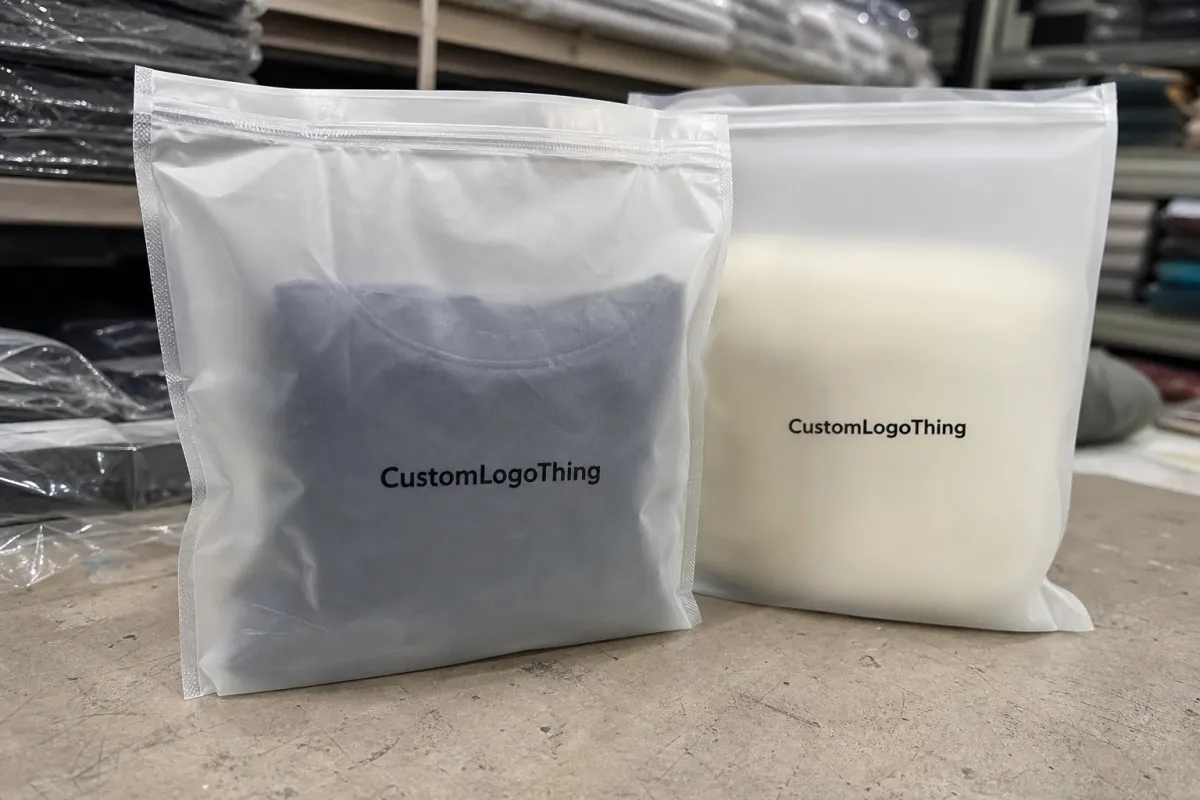
A frosted zipper bag is doing two jobs at once. It protects the item, and it sells the item. If the film is too light, the pouch can collapse, crinkle, or show drag marks from handling. That makes even a good product look cheaper than it should. If the film is too heavy, the bag can feel rigid in a way that does not fit soft goods, small accessories, or sample packs that need a little visual breathing room.
The frosted finish adds another layer to the decision. Frosted film diffuses light, hides fingerprints better than clear plastic, and softens the view of the contents. That can be useful in retail presentation, especially when the inside product has mixed textures or busy shapes. Thickness changes how that frost reads on shelf. A thicker pouch often looks cleaner because it resists creasing. It can also obscure the contents more than a buyer expects, which matters when the product itself is the hook.
Buyers usually need to think in three layers: the branded look, the physical feel in hand, and the way the bag behaves once packed. A good retail frosted zipper bag should stand up to normal handling without feeling overbuilt. That is the balancing act. A bag that feels too soft on the shelf can make a premium item look ordinary; a bag that feels too stiff can work against lightweight products.
A bag can be pretty and still be wrong. Shelf presence, zipper behavior, and protection all need to line up.
How thickness affects strength, clarity, and use
Added thickness usually improves puncture resistance, seam durability, and the bag's ability to hold shape during packing and display. It also gives the zipper area and bottom seal more material to resist stress. That matters for items with corners, metal hardware, or anything dense enough to push against the film. If a product is sharp or angular, a lighter gauge can look fine in a sample and still fail in real handling.
There is a tradeoff between rigidity and flexibility. A heavier-gauge frosted bag can feel premium because it sits neatly and opens cleanly, but it may reduce the soft drape some brands want for apparel accessories, gifts, or curated sample kits. Shoppers notice that immediately, even if they never think about the thickness number. They know whether the zipper closes smoothly and whether the bag feels effortless or fussy.
Thickness and frost level work together as well. A thicker film can diffuse contents a little more, which is helpful if the display should look organized instead of busy. On the other hand, if the point of sale depends on seeing color, finish, or texture inside the bag, too much opacity can hide the detail that sells the product. Frost is not just decoration. It changes how the product reads through the pouch.
Repeated opening matters too. In retail, shoppers may open the bag in-store, close it again, then reopen it later at home. Better thickness helps the zipper area stay aligned and keeps the mouth of the bag from deforming after a few cycles. Still, thickness alone does not guarantee performance. Resin quality, film structure, seal width, and zipper construction shape the final result just as much.
- Thicker film usually improves puncture resistance and shape retention.
- Thinner film often feels softer and suits lighter, lower-risk products.
- Zipper quality and seam design matter as much as the gauge.
- Frost level changes visibility, so judge thickness with the actual product inside.
Key factors that determine the right gauge for retail use
The first thing I look at is the product itself: weight, shape, and any sharp edges. A soft accessory in a pouch has a very different stress profile than a compact item with corners, metal hardware, or rigid inserts. If the product pushes hard against the film, a lighter gauge may be enough for a short presentation run but not for transport or repeated consumer handling.
Retail presentation matters just as much. Cosmetics, apparel accessories, sample kits, and premium gift items often need a pouch that looks neat on a peg and still feels pleasant in the hand. If the bag is part of the first impression, the thickness should support that role. Buyers sometimes overspec the film because they want “premium,” but premium is really a mix of structure, print quality, fit, and consistency. Raw thickness is only one piece.
Storage and distribution are the other half of the story. Warehouses stack cartons, pallets get moved, and store staff handle products far more often than brand teams expect. If the bag needs to survive transit inside a corrugated mailer or sit in a back room for weeks, the spec should account for that reality. Outer cartons in kraft paper or corrugated cardboard can help protect the pouch, but they do not replace a sensible film gauge.
Material type matters too. Most retail Frosted Zipper Bags are made from LDPE or a PE blend. The frosted look comes from the film itself, not from some magic coating that solves every problem. That is worth saying plainly because buyers sometimes assume a frosted pouch is stronger or greener by default. It is neither. It is just a different film build with a different visual effect.
For international sourcing, thickness should always be stated in both mil and microns. One mil equals 25.4 microns. That avoids confusion when a supplier reads a spec in one unit and the buyer compares samples in another. A bag described as 6 mil is roughly 150 microns. Small unit mistakes turn into expensive sample rounds.
Here is a practical starting point, not a rulebook:
| Use case | Typical thickness range | Why it fits | Watchout |
|---|---|---|---|
| Light sample kits | About 4-6 mil / 100-150 microns | Keeps the bag neat without overbuilding cost | May feel too soft for sharp or dense items |
| Jewelry and small accessories | About 6-8 mil / 150-200 microns | Better structure for hanging displays and repeat use | Check zipper feel and seam strength |
| Apparel add-ons or gift sets | About 8-10 mil / 200-250 microns | Stronger shelf presence and better shape retention | Can hide product detail if frost is heavy |
| Heavier retail items | About 10-12 mil / 250-300 microns | More puncture resistance and a firmer hand feel | May cost more than the product needs |
That table is a starting point, not a prescription. A thin but well-made pouch can outperform a heavier one if the product is gentle and the zipper is solid. The retail frosted zipper Bags Material Thickness guide works best when the bag is treated as part of the actual use path: packing, transit, shelf display, customer interaction, and home storage.
Cost, MOQ, and timing basics for thickness changes
Thicker material usually raises unit cost because it uses more resin, can slow certain production steps, and adds freight weight. The increase may look small on paper, then show up quickly over a run of 5,000 or 10,000 pieces. Depending on size, print coverage, and zipper style, a move from one thickness band to the next can shift the quote enough to change margin planning. That is why buyers should compare the full spec, not just the pouch price.
MOQ can also change when thickness changes. If the bag moves into a custom gauge, a custom size, or a custom zipper configuration, the supplier may need different setup time or material sourcing. A reorder of an existing spec is usually easier than a first-time custom run. For buyers, that means the quote should spell out whether the price is based on stock film, a stocked zipper profile, or a true custom production run.
There are smart places to save. If the bag is only for a lightweight item, do not pay for a heavy gauge that the product never needs. If the print coverage is complex, simplify the artwork or reduce the number of ink hits. If the size is larger than necessary, trim it back so the pouch is not carrying extra material just to feel impressive. The best quote is often the one that fits the product closely instead of trying to solve every possible use case at once.
As a rough market reality, a modest thickness upgrade can add a small amount per unit, while a custom size plus custom print plus a heavier zipper can push costs up much faster. Small runs tend to feel expensive because setup is spread over fewer bags. That is not a supplier trick. It is just how packaging production works.
Ask for multiple thickness options in the same quote. Side-by-side pricing makes the difference between “slightly more expensive” and “needlessly overbuilt” easy to see. It also helps buyers judge the actual premium for a better hand feel or stronger shelf presence. If outer packaging is part of the program, ask about recycled materials, kraft paper inserts, or FSC certified cartons. The pouch price may be one line item, but the full presentation often includes shipper, label stock, and transit packaging.
Lead time is tied to all of this. Stock-style frosted zipper bags may move quickly, often in days or a couple of weeks depending on inventory and printing. Custom sizes, custom film thickness, and branded runs usually take longer because material sourcing, sample approval, and production scheduling all need to line up. A clean timeline beats a rushed one every time.
Process and QC: from spec sheet to finished bags
A clean production run starts with a clear spec sheet. The buyer confirms dimensions, thickness, zipper style, finish, print needs, and use case, then the supplier checks whether the chosen film and closure can support the item properly. After that comes artwork or branding review, proof approval, and sample sign-off if the project is custom. Once those pieces are locked, manufacturing can move forward with fewer delays and fewer revision loops.
Thickness changes can affect lead time because the supplier may need different film stock or a slightly different seal process. Thicker film can change how the zipper aligns or how the finished pouch lays flat. That is why a sample is worth the time. A quick reorder is usually simpler because the tooling and material are already known, while a new spec usually needs more back-and-forth and a longer window before shipment.
QC should be practical, not ceremonial. Check actual film thickness at several points on the bag, not just one corner. Look at seal width and seal consistency. Open and close the zipper repeatedly to see whether it tracks smoothly or catches. Fill the pouch with the real product and make sure the corners do not punch through the film. If the bag is meant for retail hanging, confirm the top does not distort under weight.
Ask for the things that usually fail first: zipper engagement, side seam integrity, bottom seal strength, and clarity consistency across the lot. A frosted pouch can look uniform in a stack and still vary slightly in finish from one run to the next. That kind of inconsistency matters when the bags sit side by side under bright retail lighting. It is better to catch it in samples than in a warehouse receiving report.
Packaging teams that compare their internal standards against ISTA test methods are usually thinking in the right direction. Not every frosted zipper bag needs formal transit testing, but it does need a realistic look at drop risk, vibration, stacking, and whether the pouch will arrive looking fresh or scuffed. If the retail program includes paper-based outer packaging, FSC certification can support the paper side of the pack without overstating what the plastic pouch does.
Common mistakes buyers make when choosing bag thickness
The biggest mistake is choosing the thickest possible film without asking whether the item actually needs that level of rigidity or puncture resistance. A heavier gauge can absolutely improve structure, but if the product is soft and light, the bag may end up feeling overbuilt. That wastes money and can slow packing because the pouch does not behave the way the team expected.
Another common error is ignoring how the bag will be used on the shelf. A hanging display puts different stress on the top seal than a stacked display. A zipper that will be opened repeatedly in store needs a better closure feel than a bag that will be sealed once and never touched again. If the buyer only thinks about the bag in its sealed state, the final spec can miss the actual retail experience.
Price-only comparisons cause trouble too. A lower unit cost is not a win if the final bag creates returns, dents the product, or looks too soft for a premium shelf. The right question is what the packaging costs relative to product value and the risk of lost sales. That is a much better commercial lens than comparing two quotes by material thickness alone.
Buyers also forget to match thickness with zipper and seam design. A strong film can still underperform if the closure is weak or the seams are narrow. The bag might pass a casual look test but fail where it matters most: the mouth, the corners, and the bottom seal. Sampling catches that before production, which is why skipping samples is usually the most expensive shortcut in the whole process.
One more problem: approving a spec without checking how it photographs under retail lighting. Frosted film can read very differently on camera versus under a store spotlight. A thickness that looks elegant in a sample room may look hazy or too opaque on shelf. If the pouch is part of the sell-through strategy, that visual test belongs in the approval process.
- Do not choose thickness by feel alone; test it with the actual product.
- Do not assume a thicker pouch fixes a weak zipper or poor seam.
- Do not approve a spec without checking shelf behavior under real lighting.
- Do not ignore how often shoppers will open and close the bag.
- Do not forget to compare the full packaging system, including outer cartons and inserts.
Practical tips for choosing the right spec
Test the bag with the exact product, not a stand-in. Sharp corners, dense contents, and repeated opening can change the outcome quickly, and a pouch that looks fine with a sample item may behave very differently once it is filled with the real product. That is especially true for retail accessories, cosmetics, and gift sets where the contents are compact but not always forgiving.
Ask for a side-by-side sample set in two or three thicknesses. Put them under the same lighting, fill them the same way, and compare how each one holds shape, how easy the zipper is to close, and how premium the bag feels in the hand. The answer is often obvious once the samples are sitting next to each other. Buyers who do this rarely overpay for unnecessary film.
Write the final spec before requesting the quote. Include size, thickness, zipper style, print needs, target use case, and whether the bag needs to sit in a retail tray, hang on a peg, or ship inside a corrugated mailer. If you want a more polished system, you can also ask about kraft paper sleeves, recycled materials in outer packaging, or an FSC certified carton that complements the pouch without turning the whole order into a greenwashed claim.
For display-driven programs, a slightly heavier film is often worth the better hand feel and stronger first impression. For low-risk sample kits, a moderate gauge is usually enough. The retail frosted zipper bags material thickness guide is really about fit: fit for the item, fit for the shelf, and fit for the budget. Compare samples, verify pricing at each thickness, and confirm the lead time before you place the order. That is the cleanest way to avoid paying for more material than the product actually needs.
One last practical point: if the product line is seasonal, lock the spec early. A two-week delay on packaging can be harmless in July and painful in October. Packaging schedules do not care about merchandising calendars. They just take the time they take.
FAQs
How do I choose the right thickness for retail frosted zipper bags?
Start with the product weight, shape, and any sharp edges that may stress the film. Then match the thickness to the retail setting, since shelf display, shipping, and repeat customer handling all affect performance. Request samples in more than one thickness so you can compare feel, stiffness, and zipper function side by side.
Does thicker film always mean a better frosted zipper bag?
No. Thicker film can improve stiffness and puncture resistance, but it can also add cost and reduce flexibility. The best choice is the thickness that fits the product and retail use, not the thickest option available. A balanced spec often performs better because it feels intentional and is easier to pack.
What thickness works best for lightweight retail items or sample kits?
Lightweight items usually need enough film to keep the bag looking neat and structured without overbuilding the spec. Sample kits often benefit from a thickness that protects contents during handling while keeping unit cost under control. If the contents are soft and low-risk, a moderate gauge is often enough for a clean premium presentation.
How does thickness affect unit price and MOQ for frosted zipper bags?
Heavier film usually increases unit cost because it uses more material and can affect production efficiency. MOQ can shift when thickness changes, especially if the order also includes custom size or printed branding. Ask for quotes at multiple thicknesses so you can see the real cost jump before committing to a spec.
What should I ask for in a quote before approving production?
Confirm the exact size, thickness, zipper style, and whether print or special finishing is included. Ask for lead time, sample availability, and any pricing difference between thickness options. Make sure the quote reflects the actual retail use so the final bag performs well on shelf and in transit.

