A Frosted Zipper Bags sample checklist for wine clubs matters because the first sample often exposes problems that are invisible in a quote or render. The wrong opacity, an awkward zipper, or a size that only works when the inserts are perfectly flat can turn into packing delays and a second round of samples.
For wine clubs, these bags are usually part of a larger kit with tasting notes, membership cards, small accessories, or seasonal inserts. That means the sample has to be judged in context. The key question is not whether the bag looks good alone, but whether it works with the actual contents, on the actual line, at the actual packout speed.
Why frosted zipper bags sample checklist for wine clubs matter
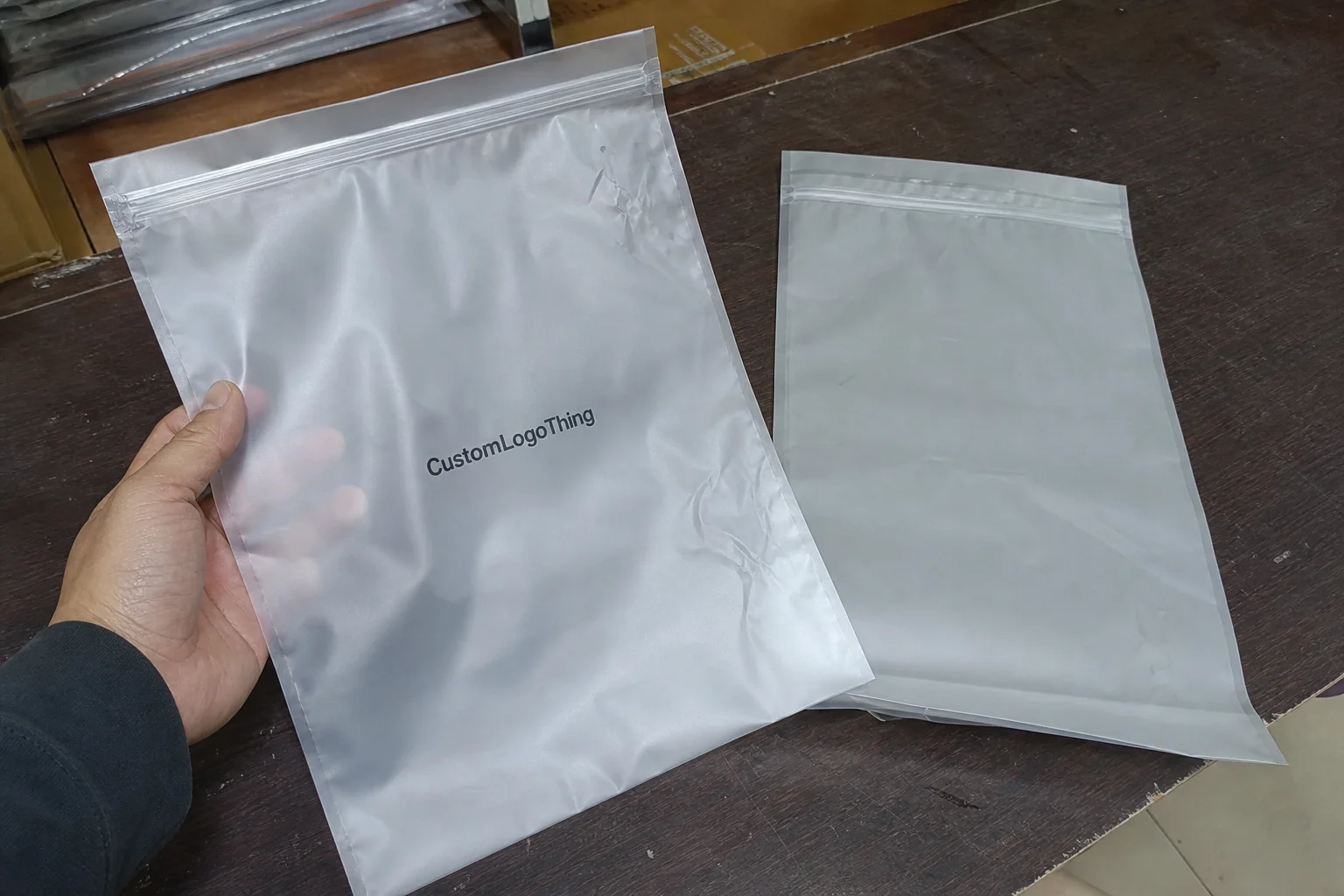
Frosted Zipper Bags are flexible plastic pouches with a press-to-close zipper and a matte, semi-translucent finish. The frost softens the contents without fully hiding them, which is useful when a wine club wants a curated look without making the kit feel heavy or sealed off.
The Frosted Zipper Bags Sample Checklist for wine clubs should start with the real use case. A pouch can look roomy in a product sheet and still fail once folded paper, sleeves, and a small accessory are added. A few millimeters of lost width can create corner stress, zipper bowing, or a bag that has to be forced shut.
Wine clubs usually use these bags for:
- Membership welcome materials
- Tasting notes and cellar cards
- Small accessories such as corkscrews or pour spouts
- Seasonal gifts and branded inserts
- Sample kits and trial-program collateral
The bag is part of the presentation layer, not the shipping structure. If it sits inside a shipper, mailer, or larger carton, it still needs to survive handling, but the stress profile is different from direct bottle shipping. If you are validating the full package system, a transport reference such as ISTA is useful even when you are not pursuing certification.
Early on, the cheapest sample is the one that reveals a mistake before the run is approved. A bag that is slightly too narrow, too glossy, or too soft can trigger a second sampling cycle that costs more in time and labor than the sample itself.
How the sample bag should work in a real wine club kit
A sample only matters if it behaves like production. If your team loads inserts first and seals second, the opening has to accept the bundle without buckling. If the bag is meant to be reused by the member, the zipper needs to hold after repeated open-close cycles, not just the first one.
That is why a frosted bag review should include handling, not just appearance. A pouch can feel premium in hand and still be annoying on the line if the zipper is stiff, the seal line is uneven, or the film drags against paper. Small frictions slow labor and create avoidable rejects.
A practical sample checklist should include:
- Confirm the pouch opens wide enough for the full content bundle.
- Pack the exact insert set used in the club shipment.
- Close the zipper three times and check for smooth engagement.
- Set the filled bag on its side and look for corner strain or bulging.
- Inspect whether the contents stay aligned after light handling.
- Review the bag under normal warehouse lighting, not only studio lighting.
There is also a presentation issue inside the functional one. Frosted film reduces contrast, which usually makes the kit feel cleaner and more premium than a fully clear pouch. Push the opacity too far, though, and the contents lose definition. Small print becomes harder to read, and branding can feel muted instead of intentional.
Zipper style deserves real attention. Standard press-to-close zippers are common, but some profiles grip better than others and feel more secure after repeated use. If the end customer will open the pouch, test it with someone who has not studied the spec. If they need an explanation to close it, the closure is not ready.
One simple test catches a surprising number of issues: pack the pouch, seal it, place it flat, then press gently across the center. If the bag twists, the contents slide too freely, or the zipper bows open under light pressure, the dimensions or film gauge need another look.
Key material and size factors to confirm before approval
Film thickness is the first spec buyers notice once they handle the sample. Too light, and the bag reads as fragile. Too heavy, and you may pay for a sturdier feel than the use case needs. Ask for the actual thickness, whether listed in mils or microns, so you can compare samples on something more stable than gut feel.
For Frosted Zipper Bags used in wine clubs, common film ranges are often in the 3 to 6 mil zone, though the right number depends on what the bag is carrying, how often it will be reused, and whether it needs to stand up inside the kit. Thin film can work for light inserts. Heavier film makes more sense if the pouch holds accessories, heavier cards, or multiple folded pieces.
Size needs the same discipline. Measure the packed kit, not just the flat insert. Folded paper, sleeves, and soft goods all take more space than their flat dimensions suggest. A bag that is technically close enough can still look strained once the closure is engaged.
Before approving a final spec, confirm these points:
- Width and height: match the packed bundle, not the individual insert.
- Frost level: decide how visible the contents should be.
- Zipper clearance: make sure the closure sits high enough to seal cleanly.
- Corner strength: check for stress when the pouch is filled to capacity.
- Label adhesion: test whether stickers or tags stay put on the frosted surface.
Frost level changes more than many teams expect. A light frost allows logos and color blocks to remain readable. A heavier frost gives a quieter look, but it can flatten contrast and make fine text harder to read. If your brand relies on thin type, pale colors, or small elements, test the artwork against the actual film before signoff.
Print placement matters too. Logos placed too close to the seal line can feel cramped once the bag is loaded, and artwork can shift visually if the top edge is not accounted for in the layout. If the project uses labels instead of direct print, check adhesive performance on the frosted surface. Some stocks hold at first and then begin lifting at the corners after handling.
For clubs that want packaging to align with responsible sourcing goals, the FSC system is a common reference point for paper inserts and cards. That does not change the pouch material itself, but it matters when you are balancing appearance, cost, and sourcing standards across the full kit.
Also confirm that the zipper line leaves enough room for any header card, printed copy, or reinforcement strip. If the design and the closure fight each other, the final bag will look crowded even when the dimensions are technically correct.
Process and timeline for sample review and approval
The cleanest review process is still the simplest one. Request the sample, receive it, measure it, pack it with the actual contents, test the closure, and collect feedback from every team that will touch it. Packaging, operations, marketing, and fulfillment see different failure modes, and one team rarely catches them all.
A practical review sequence looks like this:
- Request the sample with the intended use case clearly described.
- Inspect dimensions, film feel, zipper action, and seal alignment.
- Pack the real wine club contents and repeat the test several times.
- Record issues with photos, measurements, and short notes.
- Revise the spec or approve it for production.
Timing gets messy when the contents are still changing. A sample can move quickly once it is in hand, but approvals slow down if the inserts are not final, logo files are missing, or the team has not decided whether the frost should be light or heavy. Seasonal launches are the hardest because there is less margin for correction before fulfillment dates lock in.
For a stock sample, a few days is usually enough for review once it arrives, provided the contents are available and the decision-makers are in the loop. If the bag is custom printed, build in extra time for artwork proofing and any revision round. That can add several business days before production starts, and more if the layout needs repositioning.
Keep one approved sample on file. A PDF does not tell you how the zipper feels or how the film reacts to light. The physical sample gives the team a real benchmark when reorder time comes back around months later.
It helps to give one person ownership of the final notes. If comments live across different inboxes, the final spec turns into a scavenger hunt. That is usually how a one-off correction becomes a recurring problem on the first production lot.
Cost, pricing, and MOQ tradeoffs to watch
Pricing for frosted zipper bags usually comes down to size, film gauge, zipper style, print complexity, and order quantity. Samples almost always cost more per unit than a production run because they are built to validate the spec, not optimize scale.
| Option | Typical sample cost | Best use | Main tradeoff |
|---|---|---|---|
| Stock frosted sample | $15-$40 plus freight | Fast fit check and basic zipper test | Limited sizing and no branding |
| Custom prototype | $40-$120 | Exact dimensions, film feel, and artwork placement | Higher upfront cost, lower spec risk |
| Pre-production sample | Often close to production pricing on small quantities | Final verification before a full run | More expensive if revisions are still likely |
MOQ matters if the wine club has multiple tiers or seasonal programs. A standard membership pouch and a premium-tier pouch can mean two minimums, two storage plans, and two reorder schedules. That is not a reason to avoid custom packaging, but it is a reason to ask for the full program economics before approving the spec.
Ask for pricing in three parts: sample cost, production unit cost, and any setup or print charge. That breakdown makes comparisons cleaner. A lower unit price can be misleading if the setup fee is high or the bag size creates packing waste on the line.
There is a common trap here. A buyer saves a few cents by choosing thinner film, then loses more in labor because the pouch wrinkles, shifts, or requires extra care during packing. Another team chooses a near-match size and later finds that the contents scrape the zipper line, slow the station, and create rejects.
For most buyers, the real question is not which bag is cheapest. It is which bag creates the least risk while still matching the wine club experience. Those are not the same answer, and the difference usually appears after the first packout, not during the quote stage.
Common mistakes that waste time or inflate reorders
The biggest mistake is approving a sample without packing it with the actual contents. Empty bags are deceptive. They look roomy until the tasting card, membership insert, and accessory are inside, and then the fit issue appears too late to avoid revisions.
Ignoring zipper feel is the next expensive habit. A closure that looks fine in a photo can be frustrating on a high-volume pack line. If it takes too much force, the result is slower output, uneven closure lines, and rejects. That is a labor issue as much as it is a packaging issue.
Artwork assumptions cause trouble as well. If the logo sits too close to the top seal, the layout can feel cramped once the bag is filled. Fine text and light colors also disappear faster in frosted film than many teams expect. Review the sample under ordinary room light, not just in a bright design studio.
Test the bag the way the member will receive it. Stack it, handle it, close it twice, and look at it from arm’s length. If the bag still feels intentional after that, the spec is closer to production-ready.
Durability checks get skipped more often than they should. A bag can pass a desk review and still split at a seam, distort at the corners, or scuff badly in transit. If the pouch will rub against a rigid insert, outer carton, or divider, simulate that contact before approval.
Price-only comparisons create reorder problems too. Two bags can look nearly identical in a quote and still behave very differently because one uses a better zipper profile or a thicker, more stable film. If the standard changes after the first shipment, the savings were temporary.
Expert tips and next steps for a clean final spec
The best final spec is short, specific, and easy to use without interpretation. Build a one-page document that includes the bag dimensions, film thickness, zipper type, frost level, artwork location, and an approved photo of the packed sample. That gives reorder teams a practical reference instead of scattered emails.
Keep one physical approved sample with the written spec. That solves a problem that crops up months later when someone needs to verify how the bag should feel, close, and present inside the kit. Memory is a poor control standard.
Before you lock the order, test the bag with the exact wine club contents, including any seasonal card or tier-specific insert. If your club has more than one shipment type, test the lightest and fullest loads. The narrowest margin usually shows whether the spec is safe or only barely acceptable.
If the bag carries printed branding, ask for a pre-production proof. That step lets you verify logo contrast, frost behavior, and placement before the full run is released. It is a modest delay that can prevent off-center artwork, weak contrast, or a layout that looks crowded once filled.
The final decision should tie back to use, not appearance alone. Measure the kit, review the sample against a checklist, confirm the price structure and lead time, and approve only after the packed bag passes handling tests. That is the practical purpose of the Frosted Zipper Bags Sample Checklist for wine clubs: it keeps the buying decision grounded in how the bag will actually perform.
What should be on a frosted zipper bags sample checklist for wine clubs?
Include size, film thickness, zipper performance, frost level, artwork placement, and fit with the actual inserts or accessories used in the wine club kit.
How do I test whether a frosted zipper bag fits my wine club contents?
Pack the real items, close the zipper, check for strain at the corners, and confirm there is enough room without excess slack or wrinkling.
Are frosted zipper bags better than clear bags for wine club packaging?
Frosted bags usually create a softer, more premium presentation while reducing direct visibility, which can help the kit feel curated and intentional.
What affects the price of frosted zipper bags for wine club orders?
Size, material gauge, zipper type, print complexity, quantity, and whether you need samples or custom setup all influence the final unit cost.
How long does the sample-to-production process usually take?
Timing depends on revisions, artwork approval, and quantity, so plan enough lead time to review the sample, adjust the spec if needed, and confirm production before fulfillment.


