Frosted Zipper Bags unit cost for wine clubs is the sort of line item that looks harmless until the order grows, the spec drifts, or a rush reorder lands in the middle of a shipping window. Packaging is rarely the biggest budget item in a club program, but it can become one of the most annoying. A bag that looks premium, fits the bottle correctly, and survives handling is doing real work. A bag that fails on any of those points becomes a hidden cost center.
The appeal of Frosted Zipper Bags is simple: they add polish without forcing the club into a rigid gift box or a complicated insert system. The translucent finish softens the look of the bottle, the zipper makes the format reusable, and the overall effect suggests care without overbuilding the pack. That combination matters because wine club members judge presentation quickly. They may not analyze packaging the way a buyer does, but they absolutely notice when the shipment arrives looking deliberate rather than improvised.
For clubs that ship monthly or quarterly, repeatability matters more than novelty. The best packaging choice is usually the one that keeps unit economics steady, holds shape through fulfillment, and avoids extra labor at pack-out. That is why the right question is not simply whether the bag looks nice. It is whether the bag improves presentation while keeping the Frosted Zipper Bags Unit Cost for wine clubs inside a range that still leaves room for freight, inserts, and the bottle itself.
Why frosted zipper bags fit wine club packaging so well
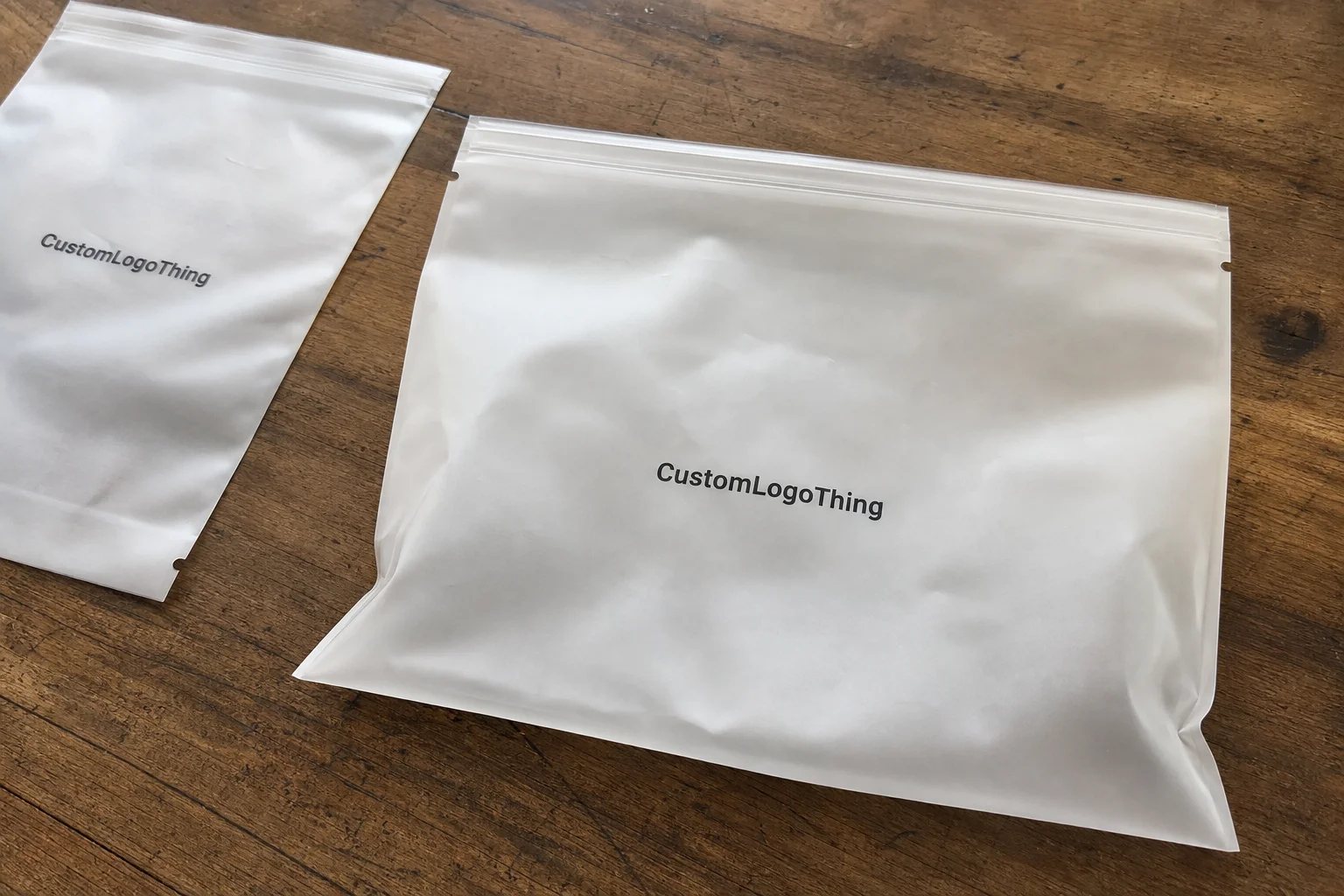
Wine club packaging has a narrow job description. It has to protect the bottle, make the delivery feel intentional, and avoid slowing the line. Frosted Zipper Bags fit that brief better than many buyers expect because they sit in the space between plain poly packaging and a rigid presentation box. They are lightweight, easier to store than cartons, and more forgiving than a custom insert structure when bottle shapes vary slightly from one shipment to the next.
The frosted finish does more than reduce visual harshness. It also hides some of the minor scuffs and handling marks that make clear packaging look cheap after a few touches. That matters in a warehouse or packing room, where cosmetic wear builds faster than brand teams usually anticipate. A frosted surface is less revealing, which is useful when bags are packed, moved, and re-handled before they ever reach a member.
There is another practical benefit that gets overlooked: reuse. Members tend to keep zipper bags because they are useful for storage, travel, gifting, or holding papers and accessories. That means the packaging can live beyond the original shipment. A box is usually discarded. A zipper bag often stays in circulation. From a brand perspective, that creates more exposure per unit spent than a single-use sleeve usually can.
Not every club needs premium packaging in the theatrical sense. Some do need a presentation layer that raises perceived value without pushing the order into luxury territory. The frosted format is good at that balancing act. A clean logo, a restrained seasonal message, or a small graphic often performs better than a busy print that tries to announce itself from across the room. The member gets a package that feels composed. The buyer gets a format that can be repeated without drama.
The tradeoff is that a bag is still a bag. If the dimensions are wrong, if the zipper is weak, or if the film is too thin to hold shape, the premium effect disappears quickly. Presentation is not the same as performance. The useful packaging choice is the one that does both.
Bag construction and branding details that change the buying decision
The basic build usually starts with frosted PE film, a zipper closure, side seams or bottom seams, and a printed surface. That sounds straightforward, but small construction decisions change both the feel and the failure rate. Film gauge affects stiffness and puncture resistance. Seam width affects how well the bag tolerates shifting bottles. Zipper quality affects how the pack line behaves under pressure. These are not decorative details. They shape the actual unit cost because they change scrap rate, labor time, and complaint risk.
Film thickness deserves more attention than it often gets. Thin film lowers the apparent price, but if the bag collapses around the bottle or wrinkles aggressively, the packaging looks underdeveloped. Overly thick film adds material spend and may make the bag feel stiffer than necessary. For wine club use, a mid-range gauge often makes the most sense because the bag needs enough body to support the bottle without becoming a hard shell. That balance is worth more than an extra millimeter of plastic no one asked for.
Branding should be approached with the same restraint. One-color print on frosted film often looks cleaner than a crowded layout with gradients, multiple fonts, and too many small details. Minimal artwork tends to hold up better during print registration, and it is easier to keep consistent across reorders. If the goal is to build recognition, clarity beats decoration. A logo, a club name, and perhaps a short seasonal line are usually enough.
Clear-panel or mostly transparent variations can work for some programs, but they expose everything. Label scuffs, cap issues, dust, and packing inconsistencies all become visible. Frosted film provides a modest buffer. It gives the bottle a neat silhouette without demanding perfection from every surface of the bottle itself.
There is also the print method to think about. Simple one- or two-color branding tends to be more stable than complicated full-coverage art, especially on flexible film. Heavier coverage can look impressive, but it often raises setup complexity and increases the chance of alignment issues. That is why some buyers discover that the cheapest-looking artwork in the proof becomes the best production choice. Packaging is full of these small reversals. The cleanest option is not always the most expensive one.
Sizing, thickness, and closure specs for single-bottle and gift sets
Fit should begin with the bottle, not with the artwork layout. That sounds obvious, but it is easy to forget once a mockup starts looking good. A standard 750 ml bottle, a Burgundy bottle, a Champagne-style bottle, and a bottle with a taller capsule are not interchangeable. Small differences in shoulder height or body width can change how the bag closes and whether the label survives handling without scuffing.
For a single bottle, many clubs end up in a general range of 4 to 4.5 inches wide, 2.5 to 3.5 inches gusset depth, and 13 to 14.5 inches tall. Two-bottle configurations usually need a wider footprint and more breathing room, often around 7.5 to 8.5 inches wide with additional height to manage the necks. Those figures are starting points, not universal rules. Bottle shape matters more than the label on the spec sheet. One tall, narrow bottle can be more difficult than two standard ones.
Closure quality is not optional. A zipper that tracks cleanly and closes consistently is worth paying for because it reduces packing friction. A weak zipper creates two problems at once: the pack-out team slows down, and the bag becomes more vulnerable in transit. That is especially true for member packs that are moved multiple times between pick, pack, staging, and shipment. A bad closure does not only create a presentation issue. It creates labor waste.
Inserts deserve the same attention. If tasting notes, membership cards, or promotional pieces are going inside the bag, leave headspace. Too little room and the paper buckles. Too much and the insert shifts around enough to make the pack feel loose. The bag should hold the bottle and paper in a way that feels intentional, not forced.
- Label clearance: the bottle should not rub against the inner surface enough to scuff the label or capsule.
- Gusset depth: enough room for the bottle to sit naturally without twisting the seams.
- Closure margin: the zipper should not sit under strain when the bag is closed.
- Insert space: paper pieces should fit without bending the top of the package.
- Display need: add a hang hole only if the bag will actually be merchandised that way.
For clubs that package multiple bottle types across the year, standardizing around the most difficult bottle is often the smarter move. It is better to have a slightly roomy bag that handles all planned SKUs than a tight fit that only works on one label family. The cost of a rejected pack line is much higher than the cost of a little extra film.
Frosted zipper bags unit cost for wine clubs: pricing and MOQ drivers
The price is usually shaped by five variables first: size, film thickness, print coverage, zipper type, and quantity tier. Once those are set, freight, duties, sample approvals, and lead-time pressure start influencing the final landed number. A buyer can get fooled by a low factory quote if the real shipping and setup costs are still hiding in the background.
MOQ matters because setup work is spread across the run. A supplier still has to prep the line, handle print registration, confirm the dimensions, and manage the first-run inspection whether the order is 500 pieces or 10,000. That is why small runs are usually expensive per unit. There is no magic trick around that. The math simply gets better when the fixed costs are shared across more bags.
For directional budgeting, a simple frosted zipper bag with basic one-color branding might land around $0.42 to $0.68 per unit at 500 pieces, while a larger run can move toward $0.16 to $0.29 per unit at 5,000 pieces. Those are rough ranges, not commitments. Size and artwork can push the number up quickly, and a custom zipper or heavier gauge film will shift it again. Still, the curve is useful. It shows why club buyers often save more by improving the spec than by squeezing one more quote.
Standard sizes usually price better because the supplier can source stock dimensions and reduce waste. Custom sizes are worthwhile when the bottle shape truly needs them, but custom everything is expensive in a way that is easy to underestimate. The unit cost does not only reflect material. It reflects handling complexity. A bag that is awkward to pack or difficult to keep consistent costs more even before the artwork is considered.
| Option | Typical MOQ | Typical unit cost | Best for |
|---|---|---|---|
| Standard size, one-color logo | 500 to 1,000 units | $0.16 to $0.45 | Core club shipments and repeat orders |
| Custom size, simple print | 1,000 to 3,000 units | $0.24 to $0.62 | Bottles with unusual shape or height |
| Custom size, heavier print coverage | 3,000 units and up | $0.32 to $0.85 | Premium gifting, seasonal drops, stronger branding |
Special finishes can move pricing faster than some buyers expect. Metallic ink, full-surface print, custom zipper profiles, embossing, or heavier film all add cost. So does a compressed timeline. If the order has to move quickly, suppliers have less room to consolidate production or schedule the run efficiently. A quote that looks attractive but leaves out freight, duties, or rework assumptions is not actually attractive. It is incomplete.
For budget planning, the most useful comparison is not just between suppliers. It is between versions of the same bag. Standard size versus custom size. One-color versus full coverage. Mid-gauge film versus heavier gauge. That comparison usually reveals the fastest savings because it strips away the noise and shows where the money is really going.
Quality-control checks that prevent expensive reorders
Packaging problems are usually found late, which is the worst possible time. The proof looked fine, the quote was approved, and then the first production batch arrives with a zipper that sits crooked or a print that looks slightly off from the mockup. A little extra inspection upfront is cheaper than replacing bags after the club schedule has already been set.
Quality control should start with the sample or dieline, not with the finished shipment. Check the bottle fit physically, not just visually. A bag can appear large enough on paper and still pinch the neck or compress the shoulder. That kind of mistake is common because bottle geometry is not intuitive. It needs a real object in the bag, not a digital rendering.
Print registration should be checked under normal viewing conditions. If the logo floats too close to the seam, or if the artwork is too small to read from a few feet away, the bag may still be technically usable but underperforming as branding. The same goes for color variation. Flexible film can make colors appear darker or softer than they do on paper. What looks fine on screen may read differently on translucent material.
Then there is functional testing. A zipper needs to open and close without snagging, and the bag should tolerate routine handling without seam failure. For club shipments, the relevant question is not whether the bag survives a single gentle use. It is whether it survives production handling, carton loading, transit vibration, and the member opening the package later. That is a more realistic standard.
Some buyers ask for transit testing aligned with recognized methods such as [ISTA](https://www.ista.org/) procedures, which is a sensible ask when shipping volume is significant. The point is not to create a lab exercise. It is to reduce avoidable risk before the order scales. The cost of a sample run is usually trivial compared with the cost of a failed shipping cycle.
Production steps and timeline for custom wine club orders
A well-run order usually moves through a predictable chain: quote request, artwork review, proof, sample or dieline check, approval, production, quality inspection, and shipment. If a supplier cannot explain this sequence clearly, delays are almost guaranteed later. The work itself is not complicated, but the handoffs matter. Most packaging delays are process problems, not manufacturing mysteries.
Standard specs with final artwork tend to move the fastest. Once the dimensions are confirmed, the zipper style is selected, and the file is press-ready, production can stay relatively efficient. Trouble starts when the buyer changes the bottle size after quoting, moves the logo late in the approval cycle, or asks for a different finish after the proof is already approved. Each change resets part of the workflow.
Typical slow points include:
- Dimensions changing after the quote is issued.
- Color corrections after the first proof round.
- Artwork edits that alter print placement.
- Split shipments across multiple membership tiers.
- Internal approval delays that leave the project idle.
Lead time is also affected by order size. Smaller runs can move quickly if the spec is simple, but they do not always benefit from the same production priority as larger, repeatable orders. Bigger runs may take longer overall yet run more smoothly once they are queued because the supplier can justify more stable production planning. The important thing is not the fastest possible date. It is the date the club can actually depend on.
For recurring shipments, the smartest move is to finalize the spec before the next club cycle starts. That lets the supplier store dimensions, print details, and closure requirements on file. Reorders then become an exercise in repetition instead of reinvention. That saves time and usually saves money too, because fewer questions need to be answered from scratch.
If the packaging also touches sustainability requirements, ask early about paper inserts, carton components, or chain-of-custody options through [FSC](https://fsc.org/). Not every order needs it, but orders that do should not be improvising at the last stage. Procurement gets more expensive when sustainability targets are bolted on after the packaging structure is already locked.
What a reliable supplier should prove before you place the order
A trustworthy supplier can explain the tradeoffs without hiding behind vague language. They should be able to tell you what raises the price, what the MOQ is, what changes the lead time, and what a reorder will look like six months later. That sounds basic. It is also where many packaging projects go sideways.
The first thing to verify is whether the supplier can keep specs consistent across runs. Wine clubs depend on repeatability. The second is whether they can quote with enough detail to show where the cost is coming from. If the estimate is just a lump sum with no clear breakdown, it is hard to know whether the low number is real or merely incomplete. Buyers need enough detail to compare alternatives without guessing.
A good supplier should be willing to discuss tradeoffs plainly:
- Standard sizes lower the cost per piece but may require a fit compromise.
- Heavier film improves body and resistance but increases material spend.
- More print colors and larger coverage can add setup time and approval complexity.
- Custom tooling makes sense only if the bottle or presentation demands it.
Service quality matters more than many buyers admit. Fast quoting saves internal time. Clean sample support reduces fit errors. Reliable production visibility helps club managers schedule outbound shipments without surprises. None of that is flashy. It is simply the difference between a packaging vendor and a packaging risk.
The best suppliers also know how to say no to a bad spec. If a design is likely to crease, if a closure is underbuilt, or if a proposed size is too tight for the bottle family, they should say so before production starts. That is not resistance. It is useful technical feedback.
How to lock the spec sheet and get cleaner quotes
Before asking for pricing, assemble the practical basics: bottle dimensions, quantity, print requirements, insert size, ship-to location, and the date the packaging needs to land. A quote is only as useful as the information behind it. Incomplete specs usually produce low numbers that rise later once the missing details are filled in.
If the club has more than one bottle tier, request a sample or dieline early. That matters more than many teams think because one bag often has to serve different bottle profiles over the course of a season. A fit issue caught on a sample table is cheap. A fit issue caught during pack-out is not.
Review the proof with a production mindset rather than a marketing mindset. Check logo size, zipper location, label clearance, and seam interference. Confirm whether the quoted price includes freight, duties, and any secondary handling that may be needed. The cheapest number on the page is rarely the number that matters. The landed cost is the number that gets paid.
The most useful discipline is also the simplest: keep the spec tight, compare the Frosted Zipper Bags unit cost for wine clubs across quantity tiers, and lock the version that fits the bottle, the schedule, and the budget. Pretty packaging can help the club feel better finished. Reliable packaging is what keeps the program moving.
FAQ
What affects frosted zipper bags unit cost for wine clubs the most?
Size, film thickness, print coverage, zipper style, and order quantity are the main drivers. Larger bags use more material, heavier film raises material spend, and more print coverage increases setup complexity. The price usually drops fastest when the order moves into a larger quantity tier with a standard size.
What MOQ should a wine club expect for custom frosted zipper bags?
MOQ depends on the design, but custom runs usually sit above small test quantities because the supplier has to cover setup and print preparation. Simple one-color bags can often start at a lower minimum than heavily printed or unusually shaped bags. If the order volume is small, a standard size is usually the safer route.
Can frosted zipper bags fit a standard 750 ml wine bottle?
Yes, but the fit needs to be checked against the actual bottle shape, not just the stated volume. Height, shoulder profile, body width, and capsule clearance all matter. A sample or dieline check is the fastest way to confirm that the bag closes cleanly and does not stress the label or zipper.
How long does production usually take?
Turnaround depends on proof speed, order size, and whether the spec is standard or custom. Orders move faster when artwork is final and dimensions are already approved. Late changes, color corrections, and sample revisions extend the schedule. A buyer should assume that the earliest possible date is not the same as the safest one.
Are frosted zipper bags reusable enough to justify the spend?
Often, yes. Members tend to reuse them for storage, travel, or gifting, which extends brand exposure beyond the original shipment. Reuse value is strongest when the zipper works smoothly, the seams are strong, and the film is thick enough to hold up under normal handling.
For most wine clubs, the practical path is not to chase the cheapest quote. It is to lock a bag spec that fits the bottle, prints cleanly, and keeps the frosted zipper bags unit cost for wine clubs inside a range that still makes sense after freight and handling. If the numbers hold, the packaging stops being a variable and starts behaving like infrastructure, which is where it belongs.


