Skincare buyers tend to want the same three things from flexible packaging: a clean shelf presence, dependable handling in fulfillment, and a format that does not drag freight costs upward. That is why a printed Frosted Zipper Bags quote for skincare often comes into the conversation once a brand moves past plain stock pouches and starts looking for packaging that feels more deliberate without jumping into rigid cartons or jars.
From a packaging buyer’s point of view, Frosted Zipper Bags solve a practical problem as much as a visual one. They soften the look of the product inside, protect against dust and handling, and stay light enough for ecommerce kits, retail bundles, and subscription shipments. When the spec is right, the pouch feels polished but not overdesigned. When the spec is wrong, it can print weakly, close unevenly, or show scuffs too easily, which is exactly why the quoting stage deserves attention.
Why frosted zipper pouches feel premium and practical for skincare
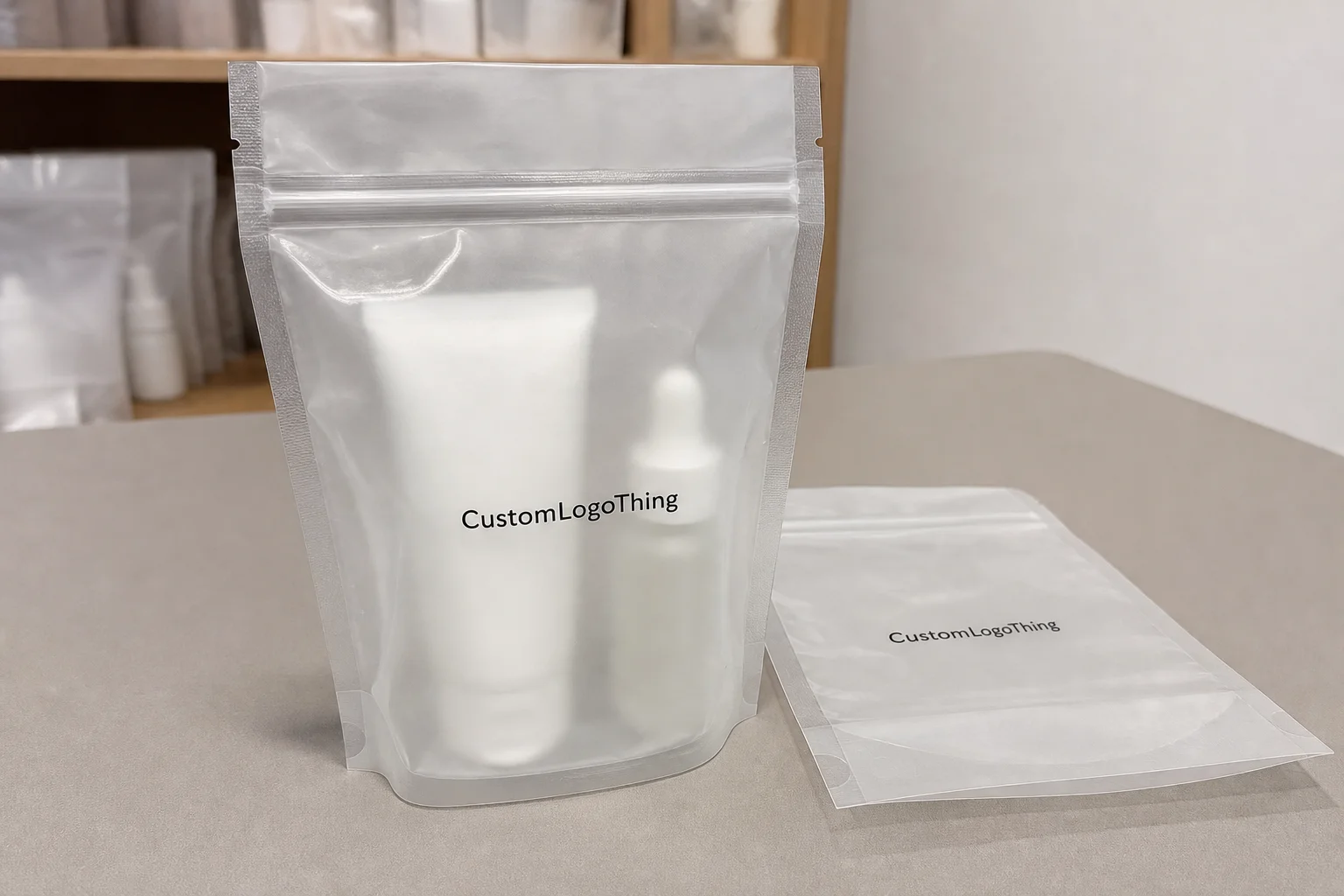
Walk through any skincare buyer’s sample table and the same tension appears again and again: the package has to look elevated enough for retail, yet still move through packing lines, shipping cartons, and bathroom drawers without becoming a nuisance. A printed Frosted Zipper Bags quote for skincare usually starts here, because this format sits in a useful middle ground between presentation and daily use.
The frosted film does quiet but important work. It reduces the harsh “all plastic” look that a clear pouch can have and gives logos and type a softer, more cosmetic feel. The product inside stays partially visible, which works well for sachets, sheet-mask bundles, cotton pads, bath salts, and sample sets, but the view is controlled enough that seams, fill lines, and folds do not dominate the design.
For travel kits and refill formats, the zipper matters as much as the film. A resealable closure keeps the pouch useful after opening, especially for items customers use over several days or store in a vanity drawer. That usefulness is one reason brands keep returning to a Printed Frosted Zipper Bags Quote for skincare rather than moving to a more rigid structure that adds weight, storage bulk, and shipping cost.
“The best cosmetic pouch looks good on shelf and still behaves in a packing carton. If it is attractive but awkward, operations will notice fast.”
Frosted zipper pouches also keep shipping straightforward. Flexible packaging usually takes up less cube than boxes, which helps when a brand is trying to keep freight predictable. For seasonal kits, introductory sets, and refill launches, that combination of low weight and branded presentation is hard to beat.
They work best when the pouch supports the product story without competing with it. These bags are not trying to be luxury cartons. They are trying to be clean, useful, and easy to brand. That is a sensible fit for many skincare lines, particularly when the product sells through ecommerce and retail at the same time.
Film, zipper, and print details that shape the final result
The quote can shift a lot depending on the structure you choose. PE film is common for softer, more economical pouches, while PET/PE laminations are often selected when a buyer wants better stiffness, better print presentation, and a more polished hand feel. A frosted finish can be created through film selection or surface treatment, and the final look depends on opacity, gloss level, and how much white ink sits under the artwork.
Zipper style matters more than many first-time buyers expect. A standard press-to-close zipper is suitable for a lot of sample packs and light retail sets, but some products need a more secure resealable profile, a cleaner closing feel, or a tamper-evident feature. If the pouch will be opened and closed repeatedly, the closure should feel smooth and predictable rather than stiff or sloppy.
Printing method affects both price and appearance. Flexographic printing is often efficient for repeat production and simpler graphics. Gravure can support higher-volume runs with excellent detail consistency, though it makes more sense when the order quantity justifies the tooling. On frosted surfaces, white ink underlay is often the difference between a logo that reads clearly and one that looks washed out. Darker colors usually hold up better than delicate tints, but every artwork file should still be checked on a proof.
Optional features can add value, but they also change the quote. Common choices include:
- Matte or soft-touch finish for a smoother cosmetic feel
- Clear windows for limited product visibility
- Hang holes for peg display
- Tear notches for easier opening
- Rounded corners to soften the silhouette
- Gussets when the pouch needs more internal volume or stand-up support
For skincare, barrier performance should be discussed early, especially if the contents are moisture-sensitive. Powders, sheet masks, wipes, and non-liquid kits usually pack well in frosted zipper bags, but if the product is highly sensitive to humidity or oxygen, the film structure has to be chosen with that in mind. A pouch can look elegant and still be the wrong barrier for storage.
Packaging standards also matter. If you are comparing suppliers, ask whether they can speak to seal strength testing or transit performance using references such as ISTA shipping test guidance. That does not solve every issue, but it does tell you whether the supplier understands distribution stress rather than just print appearance.
Key specifications to confirm before requesting samples
Most quote delays come from missing details, not from difficult manufacturing. Before requesting samples, buyers should lock in the bag dimensions, thickness in microns or mils, closure type, print colors, finish, and whether the pouch needs gussets, a hang hole, or a tear notch. Those basics sound simple, yet they are the difference between a usable quote and a rough estimate.
Artwork should be clarified before sampling as well. Confirm logo size, placement, bleed area, copy limits, and any regulatory text that must appear on the pack. If a pouch needs ingredient or caution copy, it is better to settle that during proofing than to discover later that the type is too small or the layout crowds the zipper zone.
Product dimensions matter more than many brands expect. A 10 mL sample sachet, a 30 mL travel set, and a refill bundle all sit differently inside the same general pouch size. Usable interior volume changes quickly once seal margins, zipper space, and gusset behavior are accounted for. That is why a detailed spec sheet beats a vague “small pouch” request every time.
Here is a simple way to think about the structure choices:
| Specification area | What it affects | Buyer note |
|---|---|---|
| Film thickness | Stiffness, puncture resistance, retail feel | Heavier contents usually need more thickness |
| Zipper type | Resealability and consumer experience | Ask for a sample close-and-open test |
| Print coverage | Ink usage and appearance on frosted film | Full coverage usually costs more than a simple logo |
| Gusset style | Capacity and stand-up behavior | Useful when the pouch has to sit upright |
| Finish | Surface feel and brand perception | Matte and soft-touch options often raise the quote |
Practical checks matter too. Ask how the zipper aligns, whether the seals are consistent, and how the printed surface holds up when rubbed or packed against other cartons. Scuff resistance matters more than many brands assume, especially for retail-facing displays where the bag may be handled multiple times before purchase.
If the pouch has to stand upright or carry a heavier fill, structure should come before decoration. A good-looking bag that collapses on the shelf is still a weak package. From a buyer’s point of view, the shape has to serve the product first.
Cost, pricing, MOQ, and what changes the quote
When brands request a printed frosted zipper bags quote for skincare, they are usually comparing more than one supplier, so the pricing structure needs to be clear. The main cost drivers are size, material structure, number of print colors, print coverage, finish, zipper style, thickness, and total order quantity. Those are the levers that shift a quote from economical to premium.
Lower MOQ orders almost always carry a higher unit cost. That is not a trick; it is simply how setup works. Plates, cylinders, press calibration, and inspection time have to be spread across fewer bags, so each unit carries more of that fixed cost. If you order 2,000 pieces, the unit price may look noticeably higher than a 10,000-piece run, even if the bag design stays the same.
As a practical range, simple Custom Frosted Zipper pouches can sometimes sit around $0.12-$0.22 per unit at higher volumes, while smaller runs, heavier print coverage, or added features may move closer to $0.25-$0.45 per unit or more. Those are not fixed prices; they depend on size, print method, and market conditions at the time of quoting. Still, they give buyers a useful starting point.
Special features can push the price upward quickly:
- Matte coating or soft-touch lamination
- Extra print colors or metallic accents
- Custom window shapes
- Upgraded zipper profiles
- Heavier film gauges
- Rounded corners, hang holes, or tear notches
Shipping deserves attention too. The bag price is only part of the landed cost. Carton configuration, inner packing method, and freight mode all matter. A pouch packed in bulk poly bundles may cost less to prepare than one packed in retail-ready cartons, but the right choice depends on how your warehouse receives and stores the product. Freight by air, sea, or courier will change the final number more than some buyers expect.
If sustainability is part of your purchasing criteria, ask what material options are available and whether the supplier can explain recycling compatibility or material reduction choices. The EPA’s plastics guidance is a useful reference point for broader material discussions, even though packaging decisions still depend on the product and local recycling infrastructure.
The fastest way to get a comparable quote is to provide the exact bag dimensions, artwork files, quantity, and use case in one message. A supplier can quote much more accurately when they know whether the pouch is for samples, retail sets, travel kits, or refill packaging. That context changes the answer in a very real way.
Production steps, proofing, and realistic turnaround
The standard workflow is straightforward, but each step affects timing. It usually begins with an inquiry, followed by a spec review, artwork check, digital proof or mockup, sample approval if needed, production, inspection, and shipment. A clean handoff between those stages keeps the project moving. A messy handoff slows everything down.
Artwork quality often determines speed. Clean vector files, final copy, and correctly outlined fonts reduce back-and-forth. If the art needs reconstruction or the logo file is low resolution, the proofing stage takes longer and the risk of revision goes up. That is true for every packaging line, not just skincare pouches.
Sample lead time can differ from bulk production time. If a pouch needs custom printing, special finishes, or new tooling, the sample may take longer because the factory is verifying print registration, zipper behavior, and seal quality before releasing the design. A small revision at the sample stage is normal and usually cheaper than making the same mistake in a large run.
Typical production time depends on order size and complexity, but many custom printed pouch runs fall into a range of 12-20 business days from proof approval once the spec is final. Shipping time is separate. Destination, freight method, and customs handling can add several more days, especially for international orders. Buyers should ask for a schedule that clearly separates sample timing, production timing, and transit timing so expectations stay accurate.
One more practical point: if your approval chain is slow, the calendar will slip even when the factory is ready. In practice, the fastest orders are rarely the ones with the most aggressive production promises. They are the ones with the least confusion up front.
Quality checks that matter before approving an order
Good cosmetic packaging looks simple when it is finished, but it takes discipline to keep it that way. Before approving an order, check color accuracy, print registration, zipper function, seal strength, edge finish, and material uniformity across the run. If any one of those drifts, the package loses consistency, and inconsistency is what customers notice first.
Frosted pouches can expose defects more easily than some brands realize. Scratches, haze, ink smudging, and uneven seal lines stand out because the finish is already soft and diffused. That is great when everything is clean. It is less forgiving when the run is rushed or the handling is rough.
Soft cosmetic packaging can still fail in ordinary use if the zipper is misaligned or the seal width changes from one area to another. That may sound minor, but it is exactly the kind of problem that turns into returns, complaints, or a weak first impression at retail. Ask how the bags are inspected and whether the supplier uses AQL-style checks or another documented inspection method before shipment.
For buyers who want a more structured quality reference, packaging and distribution standards from organizations such as the Packaging Machinery Manufacturers Institute and packaging industry resources can help frame expectations, while ISTA testing guidance remains useful for transit and handling assumptions. The point is not to overcomplicate the order. The point is to make sure the pouch survives the actual route it will travel.
From a brand perspective, quality is not only about durability. It is about presentation. A polished frosted pouch tells the customer the product was handled carefully before it ever reached the shelf or mailer. That perception is part of the package’s job.
How to request a quote and move from spec sheet to production
If you want the quote process to move quickly, gather the bag dimensions, desired material, zipper style, print count, quantity, and artwork files before you contact the supplier. That one step removes a surprising amount of friction. It also helps you compare suppliers on the same basis instead of comparing rough estimates that are not truly equivalent.
Reference photos help too. If you want a specific level of frost, a certain zipper feel, or a pouch that resembles a sample you already have, send a clear image with notes. Some packaging goals are easier to show than to describe. That is especially true with finish, opacity, and how the logo should sit on the film.
When you ask for a printed frosted zipper bags quote for skincare, it helps to include the use case in plain language. Say whether the pouch is for samples, retail sets, travel kits, or refill packaging. The supplier can then guide the thickness, zipper profile, and print structure more accurately.
Confirm these approval points in writing:
- Proof sign-off
- Sample approval, if required
- Estimated production window
- Shipping method and delivery window
- Any inspection or acceptance criteria
If you are still comparing options, use the quote conversation to ask whether the pouch structure is suitable for the product type, not just whether it is printable. That distinction matters. A good supplier should be able to explain why one film structure is better for a light sample pouch while another is better for a heavier retail bundle.
For brands ready to move forward, the next step is simple: Contact Us with your dimensions, artwork, quantity, and target use, then review the sample against your brand color, zipper feel, and shelf presentation before releasing the full order. That is the cleanest way to turn a good idea into dependable packaging.
FAQ
What details do I need to request a printed frosted zipper bags quote for skincare?
Provide bag dimensions, material preference, print colors, zipper type, and order quantity. Include artwork files or a simple logo mockup so pricing and proofing are accurate. Tell the supplier whether the bags are for samples, retail sets, or refill packaging.
What is the usual MOQ for custom frosted zipper bags used for skincare?
MOQ depends on print method, size, and structure, but custom printed runs often require a minimum quantity to cover setup costs. More colors, special finishes, and custom features can raise the minimum order requirement. Ask for MOQ by size and print complexity rather than assuming one number fits every pouch.
Can frosted zipper bags work for liquid or cream skincare products?
They are best suited to packaged items, samples, wipes, powders, and bundled non-liquid goods unless the structure is specifically designed for leak resistance. If the contents include liquids or creams, confirm seal performance, film structure, and closure requirements before approving production. A supplier should verify whether the pouch is meant for secondary packaging or direct product contact.
How does printing look on frosted film compared with clear plastic?
Frosted film softens the background and gives logos a more premium, diffused look. White ink underlays often improve contrast and help brand colors stand out. Fine text and small details should be reviewed in a proof because opacity and artwork size affect readability.
What is the fastest way to avoid delays when ordering skincare zipper bags?
Send final artwork, exact dimensions, and quantity in one request. Approve proofs quickly and confirm whether samples are required before bulk production. Clarify the timeline for proofing, production, and shipping so the schedule stays realistic.
If your brand needs packaging that looks clean, ships well, and gives customers a strong first impression, a printed frosted zipper bags quote for skincare is a practical place to start. Share the exact spec, review the proof carefully, and choose the pouch structure that fits the product rather than forcing the product to fit the pouch.


