Beauty packaging gets judged quickly, and a printed Frosted Zipper Bags quote for beauty is often the first step for brands that want something cleaner and more polished than a plain poly pouch, but less expensive and less rigid than a carton. In gift sets, sample kits, and retail counter displays, the bag is usually the first thing a customer notices, so the finish, zipper feel, and print clarity matter more than many buyers expect.
From a packaging buyer’s point of view, Frosted Zipper Bags do a useful job: they soften what is inside, but they do not hide it completely. That balance works especially well for bath salts, sheet masks, beauty accessories, travel kits, and promotional bundles where presentation needs to feel controlled and tidy without pushing the order into costly secondary packaging.
Why frosted zipper bags work so well for beauty packaging
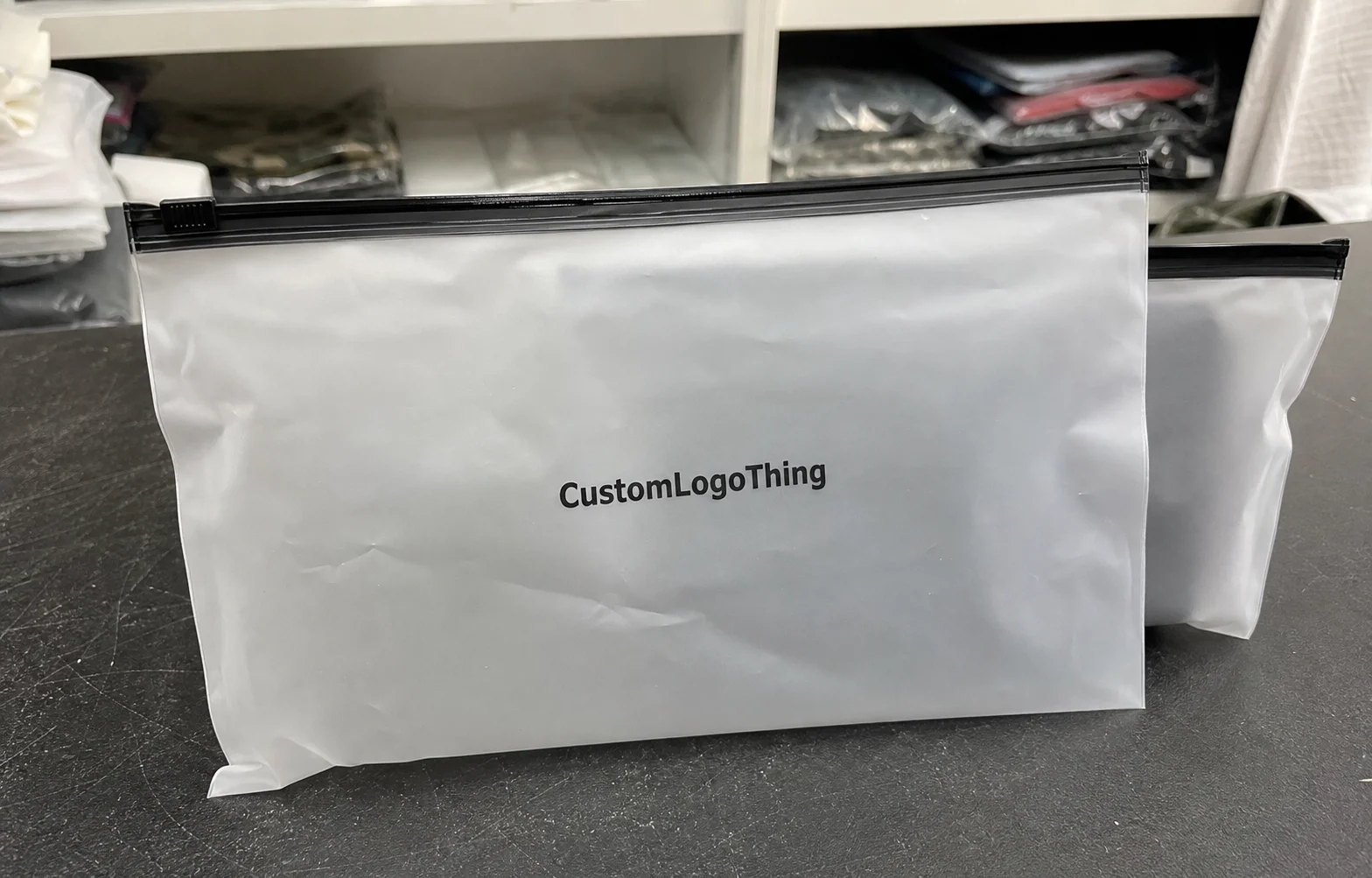
Beauty products are often bought on appearance before performance, and the bag has to support that first impression. A frosted zipper bag gives the pack a muted, premium look that reads as intentional rather than plain, while still allowing the customer to see shape, color, and arrangement through the surface. That matters on shelf, in influencer kits, and at pop-up counters where the packaging needs to look organized even before it is opened.
The zipper closure adds real functional value. Many beauty items are handled more than once, so a reclosable pouch helps keep contents together after the first use. That is useful for sample sachet bundles, reusable accessories, travel-size skincare sets, and bath or spa items that may be opened, closed, and carried around several times.
Frosted surfaces also hide the little flaws that show up during normal handling. Fingerprints, scuffs, and minor rubbing marks tend to be less obvious than on a clear glossy bag, which helps the package hold its look during shipping and store display. In practice, that can reduce the number of packs that look tired before they even reach the customer.
If you are comparing package formats, this is usually the middle ground between a basic clear zipper pouch and a printed carton. It gives a stronger shelf impression than plain film, but it does not carry the material and assembly cost of rigid packaging. For many beauty brands, that is the exact zone they want.
“A good beauty pouch should look clean from three feet away and still hold up in the hand. That is the real test, not just how it looks in a mockup.”
Printed bag details, materials, and beauty-friendly finish options
Most Custom Frosted Zipper Bags are built from LDPE or a similar flexible film structure, chosen because it can seal well, fold neatly, and accept printing without becoming overly stiff. Thickness is usually selected based on the product weight and the amount of handling expected. For lighter promotional sets, a thinner pouch may be fine, while heavier jars, comb sets, or multi-item kits often need a thicker wall for better shape retention and seal strength.
Finish choice affects both appearance and print contrast. A fully frosted surface gives the softest look and the most muted view of the contents. A semi-frosted finish still hides glare but shows more detail inside, which can be useful if the brand wants a product-forward appearance. Matte-leaning films sit closer to a soft satin look and often feel more upscale, though the exact result depends on the base resin and the print process.
Zipper style matters more than many buyers realize. Standard press-to-close zippers are common and cost-effective. Slider zippers improve convenience for retail or travel use, but they add cost and can extend lead time. Some beauty packs also use a tear notch with a zipper so the consumer has a cleaner initial opening path while still keeping reclosability after use.
Printing on frosted film is usually straightforward, but the artwork should be designed with the surface in mind. Simple logos, one-color line art, and clear typography generally produce the cleanest result. More complex artwork can work too, but buyers should expect more attention to ink density, registration, and contrast, especially when dark brand colors sit on a translucent base.
Useful bag features for beauty packaging often include:
- Hang holes for peg display at retail
- Gussets for added volume or a more stable fill profile
- Custom sizing to match bundled product dimensions
- Heat-seal compatibility when the bag needs a secure secondary closure
- Rounded corners or shaped seals when the brand wants a softer visual finish
For brands that want more general context on packaging structures and material choices, the Packaging Institute is a useful reference point for basic industry terminology and material thinking.
Specifications that affect fit, appearance, and print quality
The best quote starts with exact dimensions. At minimum, a buyer should confirm width, height, gusset depth, zipper placement, and film thickness. If the pouch needs a flat bottom or stand-up profile, that should be stated clearly, because the construction changes how the bag sits, fills, and presents on shelf.
Product shape matters just as much as size on paper. A flat card or thin sample packet behaves very differently from a round jar, compact, or sponge set. Even when two items weigh the same, one may push the bag into a wider profile or create stress points near the zipper or side seals. A bag that is too tight can wrinkle the print, distort the logo area, or reduce closure performance.
Artwork setup should be treated as part of the specification, not an afterthought. Buyers should send vector files when possible, define Pantone targets if color matching matters, and keep text away from the zipper seam and edge seals. Safe print margins are not decorative details; they are the difference between a clean run and a batch that looks cramped or cropped.
There is also a practical question about use. Will the bag contact the product directly, or is it secondary packaging around a boxed item? Is it a retail display pouch, a shipping insert, or a promotional giveaway? Those answers affect film choice, closure selection, and whether the supplier should suggest a food-safe or product-contact-friendly structure. For packaging buyers, that distinction can change both compliance expectations and cost.
Before approving a final layout, a sample or at least a virtual mockup is worth asking for. Frosted film can make dark logos look deeper, while metallic inks can either elevate the look or lose sharpness if the contrast is not tested first. A mockup gives you a better read on how the real bag will behave under store lighting and against the actual product inside.
| Spec choice | Best for | Typical impact |
|---|---|---|
| 0.08 mm LDPE | Light beauty samples, small accessories | Lower cost, more flexibility, less structure |
| 0.10 mm LDPE | Most retail beauty kits and bundles | Better balance of strength and print clarity |
| Slider zipper | Travel sets, premium retail use | Better user experience, higher unit cost |
| Standard press zipper | General secondary packaging | Lower cost, simpler production |
One practical detail that gets overlooked is seal allowance. If the bag is being filled close to capacity, the usable interior can be smaller than the outer dimensions suggest, especially once zipper tape and side seals are factored in. That becomes more noticeable with thicker items such as jars, compacts, and tools. A careful supplier should flag this before the bag is approved, not after the first sample arrives.
Another common issue is print contrast on frosted film. Light brand colors can fade visually unless the ink laydown is strong enough, and ultra-thin type can disappear at small sizes. The safest route is usually a restrained layout with enough negative space around the logo, because crowding the artwork on a translucent surface tends to make the pouch look busier than intended.
Cost, pricing, MOQ, and how to compare a printed frosted zipper bags quote for beauty
When you request a printed Frosted Zipper Bags quote for beauty, the price is usually driven by five things: bag size, film thickness, print colors, zipper type, and order quantity. Custom features such as hang holes, special gussets, or premium closures add cost too, but quantity is often the biggest variable because the setup charges get spread across the run.
That is why small orders almost always have a higher unit price. The supplier still has to review artwork, prepare tooling or print setup, and run material through the press or converting line. Once those fixed costs are absorbed over a larger quantity, the unit cost drops in a way that feels much more reasonable to a buyer. In real terms, a run of 1,000 pieces may cost noticeably more per unit than 5,000 or 10,000, even if the material difference is modest.
For practical quoting, buyers should ask for pricing at two or three volume levels. That makes it easier to see where the price break happens and whether the move to a higher MOQ is actually worth it. It also helps prevent a common mistake: comparing one supplier’s low-quantity quote to another supplier’s bulk-tier pricing and assuming the cheaper one is automatically the better buy.
Here is a simple way to read a quote:
- Unit price — the per-bag cost at the quoted volume
- Setup or tooling — artwork, plates, or print prep
- Sampling — if a physical sample is requested
- Freight — shipping to your warehouse or 3PL
- Special options — slider zippers, custom finishes, extra seals, or special packing
The minimum order quantity can vary quite a bit by size and print complexity, so there is no honest one-size-fits-all number to quote. A simple one-color pouch with a standard zipper may have a lower MOQ than a large, multi-color, custom-shaped bag with a premium closure. The key is to compare like-for-like spec sheets, not just the headline number.
To make pricing easier to evaluate, ask for alternate tiers before you approve the order. One quote can show the exact spec you want; the second can show a simpler version with fewer print colors, a standard zipper, or a slightly thinner film. That gives you a clean read on where the extra cost is coming from.
| Quote item | What to verify | Why it matters |
|---|---|---|
| Bag size | Width, height, gusset, zipper position | Affects fit and material usage |
| Print method | Screen, flexographic, or other method used | Influences clarity, color count, and setup cost |
| MOQ | Minimum quantity per size and artwork | Changes unit price and stocking plan |
| Lead time | Production days after approval | Critical for launch planning |
| Freight terms | Who pays shipping and how it ships | Impacts landed cost |
For broader packaging and sustainability context, the EPA plastics resources can help teams think more clearly about material choice and recovery considerations, especially when beauty brands are reviewing packaging strategy across multiple product lines.
One thing that can change the cost picture quickly is the print count. A one-color logo on frosted film is usually easier to run than a full-coverage design with multiple tight registrations. That does not mean multi-color printing is a problem, but it does mean the quote should spell out how many colors are included and whether the price assumes one side or both sides of the pouch. Ambiguity there often leads to a later revision that slows the order down.
Shipping can also distort a quote if it is not lined up properly. Some suppliers price only the bags, while others include freight to a warehouse or 3PL. If you are comparing bids, the landed cost should be the real comparison point, not the ex-factory number alone. A lower unit price can disappear once packaging, cartons, and transit are added.
Production steps, proofing, and turnaround timing
The standard workflow is fairly consistent. It starts with artwork review and spec confirmation, then moves into proofing, production scheduling, printing, finishing, packing, and shipment. For a custom pouch, the proof stage is where most avoidable problems get caught. That is the point to confirm the bag dimensions, logo placement, copy accuracy, zipper style, and any color expectations that matter to the brand.
Proofing should never feel like paperwork only. It is the best chance to catch a logo that is too close to a seam, a typeface that becomes too thin on frosted film, or a color that looks weak against a translucent base. A few hours spent checking that proof can save days of rework later.
Lead time depends on quantity, artwork complexity, and the details of the bag construction. A repeat order with approved dimensions and artwork can move faster than a first-time custom pouch because the supplier already has the core setup information. If custom film, special zipper components, or extra finishing steps are involved, the timeline naturally extends.
Typical production windows are often discussed in business days after proof approval, not after the first inquiry. That distinction matters. A buyer may request a quote on Monday, but if artwork revisions continue for several days, the real clock has not started yet. Ask for the lead time in writing and make sure it reflects the version you are actually approving.
Shipping time is separate from production time, and that detail can derail a launch if nobody accounts for it early. Beauty packaging often feeds a retail reset, seasonal gift kit, or promotional rollout, and the bags rarely matter until they suddenly matter a lot. Build in freight transit and receiving time before the product assembly date, not after.
“The smoothest order is the one where the buyer sends the size, artwork, zipper preference, and target quantity together. That is usually what keeps the schedule honest.”
Quality control on this type of packaging usually centers on a few practical checks: zipper alignment, seal integrity, print registration, scuff resistance, and bag size consistency. A pouch can look fine in a photo but still fail if the zipper teeth do not close cleanly or the side seals are slightly uneven. For beauty brands, that matters because packs are often handled by retail staff, fulfillment teams, and end customers before they ever reach a sink or vanity.
It is also worth confirming how the supplier packs finished bags for shipment. Overcompressed cartons can create edge curl or light creasing on the printed area, especially on thinner films. For a high-visibility beauty launch, the way the bags are packed may affect how much sorting or inspection your team needs to do on receipt.
What to ask before approving a beauty packaging supplier
A good supplier conversation should feel factual and organized. Start with material details: what film is being used, what thickness is being quoted, and whether the bag construction matches the intended product use. Then ask about print method, dimensional tolerances, and zipper performance, because those three items usually reveal whether the quote is truly comparable to another quote or just similar on the surface.
It also helps to ask how the supplier controls color consistency across the run. Beauty brands often care a lot about tone and contrast, and a frosted film can make color behave differently than it does on a white carton. If the supplier cannot explain how they handle proofs, revisions, and acceptable variation, that is a sign to slow down before approving.
Other useful questions include:
- What file format do you prefer for artwork?
- How many proof rounds are included?
- What is the overrun or underrun tolerance?
- How are cartons packed for shipping?
- What happens if there is a seal defect or print error?
If the answer to those questions is clear and direct, that usually tells you more than a polished sales pitch. A trustworthy supplier can explain limits, tolerances, and trade-offs without hedging. For packaging that needs to support a beauty launch, that kind of clarity matters more than fancy language.
A supplier should also be able to state whether the pouch is intended for direct contact, secondary packaging, or display use only. That distinction affects the material recommendation and can shape the compliance paperwork you may need later. If the answer is vague, it is better to get it clarified before artwork is approved, because changing a structure after proofing tends to cost time and money.
When teams are buying multiple packaging components at once, it helps to keep the pouch spec on one page. Bag size, film thickness, zipper type, print colors, and quantity should all sit together so purchasing, design, and operations are reading the same version. The fewer moving parts in the approval stage, the easier it is to avoid an expensive mismatch between sample and final production.
Next steps for a fast, accurate beauty bag quote
If you want a fast, accurate printed frosted zipper bags Quote for Beauty, gather the basics before you send the request: exact size, target quantity, logo artwork, zipper style, and any finish preferences. If you already know you want a frosted look with a specific print effect, say that clearly. If you are undecided, ask for two quote scenarios so you can compare the cost of a premium spec against a simpler backup option.
Photos or dimensions of the actual beauty product help a lot. A supplier can size a bag on paper, but product photos show shape, depth, and how the pack will behave once filled. That reduces guesswork and usually leads to a more usable recommendation on the first try.
It is smart to request the quote, a proof, MOQ confirmation, and estimated turnaround together. That gives you one clean view of cost and timing, which is exactly what you need when packaging is tied to a launch date, retail reset, or seasonal kit assembly. If the supplier also gives freight guidance, even better, because landed cost is what eventually hits the budget.
When you are ready, send the spec sheet and artwork together through Contact Us so the team can quote the job accurately instead of coming back with avoidable revisions. For beauty brands that need a practical, presentable pouch, a well-prepared printed frosted zipper bags quote for beauty is usually the fastest way to get from idea to approved packaging.
FAQ
What do I need to request a printed frosted zipper bags quote for beauty products?
Provide bag size, quantity, artwork file, zipper type, and any special finish or gusset requirements. Include the product type so the supplier can check fit and suggest the right thickness or closure style.
Can frosted zipper bags be printed in multiple colors for beauty branding?
Yes, most suppliers can print one-color through multi-color artwork depending on the print method and file quality. Simpler designs usually produce cleaner results and better cost efficiency on frosted film.
What is the typical MOQ for custom frosted zipper bags?
MOQ depends on size, print complexity, and the bag construction, so it is best to ask for size-specific pricing. Higher quantities usually reduce unit cost, while smaller runs may carry more setup cost per bag.
How long does production usually take after approval?
Production time varies by order size, print details, and custom features, so the supplier should confirm lead time after proof approval. Shipping time should be added separately if the bags are needed for a launch or retail deadline.
Are frosted zipper bags suitable for direct beauty product contact?
They can be, depending on the material structure, intended use, and supplier specification. Always confirm whether the bag is meant for direct contact, secondary packaging, or promotional use before ordering.


