Frosted Zipper Poly Bags for sports clubs MOQ planning sounds like a narrow topic until you actually price the bags, check the dimensions, and try to fit real club merch into them. Then it gets practical fast. Jerseys. Wristbands. Sponsor kits. Giveaway sets. Event handouts. Suddenly the bag is doing more than sitting there looking tidy.
The good versions do three jobs at once. They protect the contents, make distribution easier, and present the club in a way that does not feel cheap. The bad versions are usually too flimsy, too small, or too expensive for the volume needed. Packaging has a way of exposing lazy planning. Annoying, but useful.
For clubs comparing options, the real questions are simple: what size fits the item, what thickness holds up, how much print area is needed, and how many units can the club order without choking the budget or filling storage with old stock. That is the part people skip right before they regret it later.
Why frosted zipper bags work for club merch
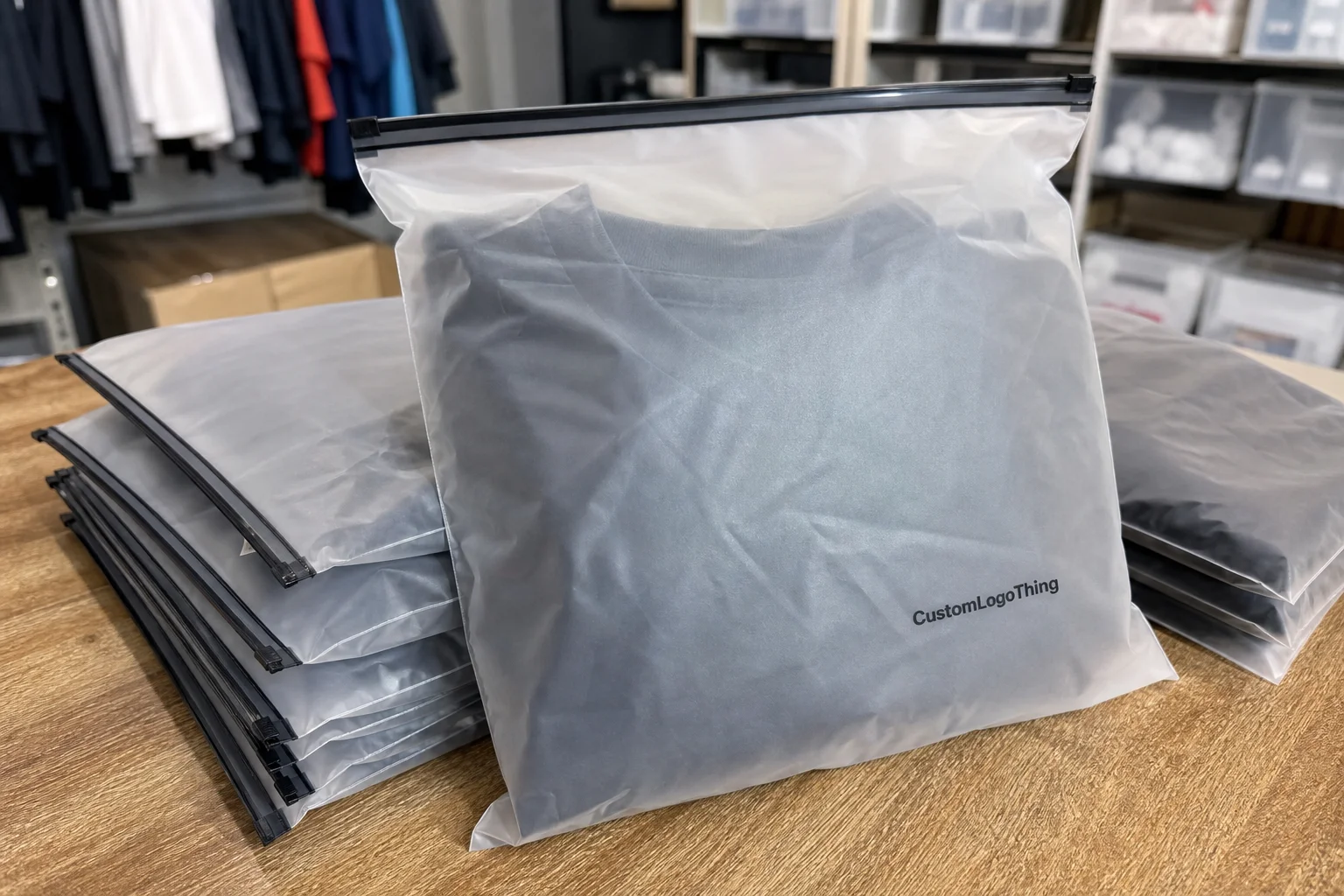
Sports clubs need packaging that does more than hold a product. It has to organize items on the table, survive transport, and still look controlled when a player, parent, sponsor, or customer takes it home. A frosted zipper bag handles that better than a plain sleeve in a lot of cases.
The frosted finish softens the background. It hides some of the wrinkles, scuffs, and uneven folding that make clear plastic look harsher than it should. That gives logos and team colors a cleaner backdrop without pushing the packaging into expensive territory. For many club programs, that slight upgrade is enough to make the merch table look more intentional.
The zipper closure matters just as much. People reuse the bag. They open it for the event, close it for travel, and keep accessories together longer than they would with a basic open-ended sleeve. That is useful for fan-store items, youth kits, tournament packs, and small sponsor sets that need to stay together after handoff.
Think of the bag as working packaging, not decoration. If it helps packing, sorting, carrying, and reuse, it has already paid for part of itself.
There is one catch. Frosted bags are not magic. A great bag still fails if the size is wrong or the artwork is too detailed for the surface. Clubs that treat packaging as part of the program, rather than an afterthought, usually get the better result.
That is where frosted zipper Poly Bags for Sports Clubs MOQ planning becomes a real decision, not just a product search. The order has to match the event volume, the type of item, the print goal, and the storage reality. Buy for the program you actually run, not the one you imagine in a clean spreadsheet.
What to confirm before requesting a quote
Before asking for pricing, define the bag construction clearly. Most club orders use frosted polyethylene film with a zipper closure. Depending on the use case, a hang hole, euro slot, or writable panel may also make sense. Those extras are not decorative fluff. They can help with retail display, inventory handling, or staff labeling.
Finish is worth deciding early. A light frost lets the contents show through more clearly. A heavier frost gives a softer, more premium look. It can also mute fine artwork if the print is busy or thin. For frosted film, simple logos usually perform better than crowded layouts packed with tiny text.
Printing options should be pinned down before the quote goes out. One-color branding is usually the easiest to produce and the most predictable on frosted film. Spot colors work well when a club has a strong identity color. Multi-color artwork can be done, but the quality depends on the print area, the file quality, and how much contrast the art has against the surface.
Sports clubs use these bags for folded jerseys, socks, wristbands, event passes, bottled items, accessories, and sponsor handouts. That means the bag has to fit the item instead of forcing the item to fit the bag. If the product is bulky or oddly shaped, a narrow bag becomes a packing headache and usually looks strained on the table.
Before quoting, confirm the details that affect performance and pricing:
- Seal strength and zipper function
- Bag thickness in mil or micron terms
- Sizing tolerances for width and length
- Print area and logo placement
- Food-contact suitability if the bags will hold snacks or team treats
Clubs that need a wider packaging range can review the broader product set on Custom Packaging Products and match the format to the use case instead of trying to force one style into every job.
Size, thickness, and print specs that change the outcome
There are four specs that matter most: width, length, usable interior space, and film thickness. Then come zipper style and print area. A bag can look large enough on a spec sheet and still feel tight once a folded jersey, insert card, or rigid item goes in. That mistake is common because people measure the outside and forget the package still has to work in the hand.
Thickness is not just a technical line item. Thinner film lowers the cost per piece, but it tends to feel less substantial and can show scuffing faster during packing and distribution. Heavier gauges cost more, but they usually improve durability and make the packaging feel more deliberate, especially for retail counters or sponsor-facing events.
Here is a practical way to compare the usual options:
| Option | Typical use | Approximate impact on unit cost | Best fit |
|---|---|---|---|
| Light gauge frosted zipper bag | Small giveaways, wristbands, passes | Lowest | High-volume distribution where function matters more than presentation |
| Standard gauge frosted zipper bag | Apparel, accessories, kit items | Moderate | Most club programs that want a cleaner retail look |
| Heavier gauge frosted zipper bag | Premium merch, sponsor kits, repeated reuse | Higher | Programs where durability and presentation both matter |
Size selection needs discipline. Leave room for folded apparel, inserts, and label cards, but do not oversize the bag so much that the contents sit loose. Too much empty space makes the package look underfilled and a little careless. Nobody wants a premium shirt in a bag that looks like it lost the fight.
Artwork should be treated with the same caution. Confirm bleed, safe zones, logo placement, and whether the frosted surface will soften a thin typeface or a low-contrast color. Fine lines can disappear faster than buyers expect, especially if the original design was built for paper instead of plastic.
For sponsor-facing orders or anything that has to look sharp under a table light, ask for a sample or at least a detailed proof. A spec sheet tells you the bag should work. The proof shows whether the print, opacity, and placement actually hold up on frosted film. Those are not the same thing.
Cost, pricing, and MOQ planning for club orders
For Frosted Zipper Poly Bags for sports clubs MOQ planning, pricing usually comes down to five variables: bag size, film thickness, print coverage, color count, and total order volume. A simple bag with one-color branding and a higher quantity will almost always cost less per unit than a heavier bag with full coverage and a small run. That part is boring, but it is also where most of the money goes.
MOQ planning should be treated as a budgeting exercise, not a guess. Clubs should estimate how many events, team drops, or sales cycles the bags need to cover, then compare that number with available storage and the chance of roster, sponsor, or logo changes. Ordering too little can raise the unit cost. Ordering too much can leave the club sitting on dead inventory.
Setup charges matter, especially for small runs. Printing on poly film often requires artwork prep, plates or screens, and other front-end work. Some suppliers call these tooling fees. Others call them setup charges. Different label, same effect. The first run often looks expensive because those costs are spread across fewer units.
When comparing quotes, check what is included. Freight, proofing, plate fees, Pantone matching, carton packing, and any special packing method can all change the final number. A quote that looks lower on the page can easily end up more expensive once those extras appear.
A useful rule for clubs is straightforward:
- Order enough for the full event cycle.
- Add a modest buffer for replacements and overages.
- Avoid buying so much that the stock outlives the campaign.
That last point matters more than people like to admit. Team colors change. Sponsors rotate. Club marks get updated. Cash tied up in outdated packaging is cash that cannot go toward the next drop, the next event, or better inserts.
For buyers comparing packaging formats such as mailers, retail bags, and bundle packs, Custom Poly Mailers can be a useful benchmark when deciding where frosted zipper bags fit in the total packaging mix.
For background on material handling and recycling behavior, the Packaging School and EPA recycling guidance are useful references. If a club uses fiber-based alternatives for some items, FSC is worth knowing as well.
Production steps, lead time, and approval flow
The production flow is usually predictable: artwork submission, spec confirmation, proof review, production, quality check, packing, and shipment. If one of those steps stalls, the timeline stretches. Clubs do best when one person owns the approval process instead of letting five people edit the same file at once. That is how deadlines get turned into folklore.
Lead time depends on whether the order is a stock-size bag with custom printing or a fully custom run with unique dimensions or features. Stock formats are faster because the bag structure already exists. Fully custom sizes, special zipper styles, or added features like writable panels take longer.
What usually slows things down is not the press. It is incomplete artwork, late changes after proofing, special color requests, or waiting for sign-off from too many stakeholders. A design review that drags for three days can delay shipment more than the print step itself.
There are a few ways to keep the schedule sane:
- Send vector artwork whenever possible.
- Confirm dimensions before the proof stage.
- Assign one final approver.
- Keep color notes simple and clear.
For many club programs, a realistic planning window is often 12 to 15 business days from proof approval for standard custom printing. That still depends on the exact spec, quantity, and supplier workload. If the order has to land before a tournament, season launch, or sponsor deadline, build in margin. Hoping for the fastest possible turnaround is not a plan. It is a mood.
Good approval flow also includes quality checks before shipment. Verify print alignment, zipper function, film clarity, carton counts, and packing condition. If the outer bag looks fine but the zipper jams or the print shifts off-center, the order is still a problem. Packaging only works if it arrives ready to use.
For quick answers about order flow, packaging terms, and reordering basics, the FAQ page can help before artwork is submitted.
How clubs should evaluate suppliers before placing the order
Price matters, but it should not be the only filter. A useful supplier should explain the specs in plain language, recommend a sensible size, and warn you if the artwork is too detailed for frosted film. If the only skill on display is quoting a number, that is not enough for a repeat club program.
Clubs should ask for sample photos or a physical sample whenever the bags are meant for retail sales, fundraiser kits, or sponsor-branded gear. On a screen, many options look similar. In hand, zipper feel, film clarity, and print placement can separate a good run from a disappointing one.
Consistency is another real issue. A club may reorder the same design six months later or next season, and the packaging needs to match. Color, zipper function, and print alignment should stay predictable. That matters even more when different volunteers are handling the bags at different locations and still need the same result.
Logistics deserve attention before the order is approved. Confirm carton pack counts, shipping method, and how the bags will arrive for storage and distribution at the club site. A clean product that arrives in sloppy packing creates extra work at handout time. Nobody wants to sort that out five minutes before doors open.
From a purchasing standpoint, the best suppliers are the ones who reduce decision noise. They do not oversell. They explain tradeoffs. They know when a standard size is enough and when a custom spec is justified. That kind of clarity saves clubs from expensive guesswork.
Practical next steps for ordering club packaging
Before requesting a quote, prepare three things: bag size, estimated quantity, and the artwork file or logo reference. That is enough for a supplier to narrow down material, print method, and pricing much faster than a vague request ever will.
Next, decide what the bags are actually for. Retail packaging, team kits, giveaways, and event handouts all place different demands on the bag. A retail-facing item may justify heavier film and cleaner print. A short-term giveaway may do just fine with a simpler spec and lower bulk pricing.
Ask for a spec sheet and a pre-production proof. That lets the club confirm fit, visual balance, and handling before committing to the full run. It also reduces the risk that a sizing mistake turns into a missed event deadline. Simple idea. Very useful in practice.
Save the approved artwork, final dimensions, and color notes for future seasons. Reorders are easier when the record is clean, and that matters for clubs that run the same events every year or manage recurring sponsor programs. Clean records save time and reduce the “why does this look different?” conversation.
Frosted Zipper Poly Bags for sports clubs MOQ planning works best when the order plan, artwork, and timeline are confirmed together from the start. Get those three pieces aligned and the packaging stops being a guessing exercise. It becomes a repeatable part of the club’s merch and distribution workflow.
What should clubs confirm before ordering frosted zipper poly bags for sports clubs MOQ planning?
Confirm the finished bag size, film thickness, zipper style, print colors, and whether the order needs hang holes or writable panels. Also check that the MOQ fits the event schedule and storage plan, not just the budget.
How does frosted film affect the print on club logo bags?
Frosted film softens the background, which can make logos look more premium and less harsh than clear plastic. Strong contrast, simple artwork, and proper proofing matter because fine details may not read as sharply on the textured surface.
What is a practical MOQ for sports clubs ordering custom zipper bags?
A practical MOQ is the smallest quantity that covers one event cycle, plus a modest buffer for replacements or extras. The right quantity depends on whether the bags are for retail, team distribution, or sponsor packages.
How long does production usually take after approval?
Production timing depends on spec complexity, print method, and whether the order is stock-sized or fully custom. Fast approvals and complete artwork usually shorten the overall lead time more than any single packaging change.
Can sports clubs reorder the same frosted zipper bag design later?
Yes, if the approved size, artwork, and print specs are saved clearly, reorders are much easier to repeat. Keeping the final proof and spec notes on file helps maintain consistency across seasons and events.


