For apparel buyers, the Garment Poly Bags for apparel brands seasonal buying plan is not really about plastic bags. It is about launch timing, cash flow, warehouse flow, and how cleanly a product reaches the customer. The bag is a tiny line item. The consequences are not tiny. Miss the packaging window and you get delayed shipments, repacking labor, inconsistent presentation, and a warehouse that starts improvising. That is never a good sign.
Poly bags are cheap enough that teams treat them as an afterthought. That is usually where the trouble starts. A bag that costs a few cents can still derail a drop if the size is off, the print approval slips, or the film is too thin for the garment. What looked like a minor sourcing decision becomes a fulfillment headache. In seasonal apparel, small misses compound fast.
The smarter approach is to plan packaging the same way you plan trims and labels: by sell-through, channel, and timing. A good Garment Poly Bags for Apparel brands seasonal buying plan aligns the packaging spec with the life cycle of the collection, not just the purchase order calendar.
Why seasonal packaging planning changes the math for apparel brands
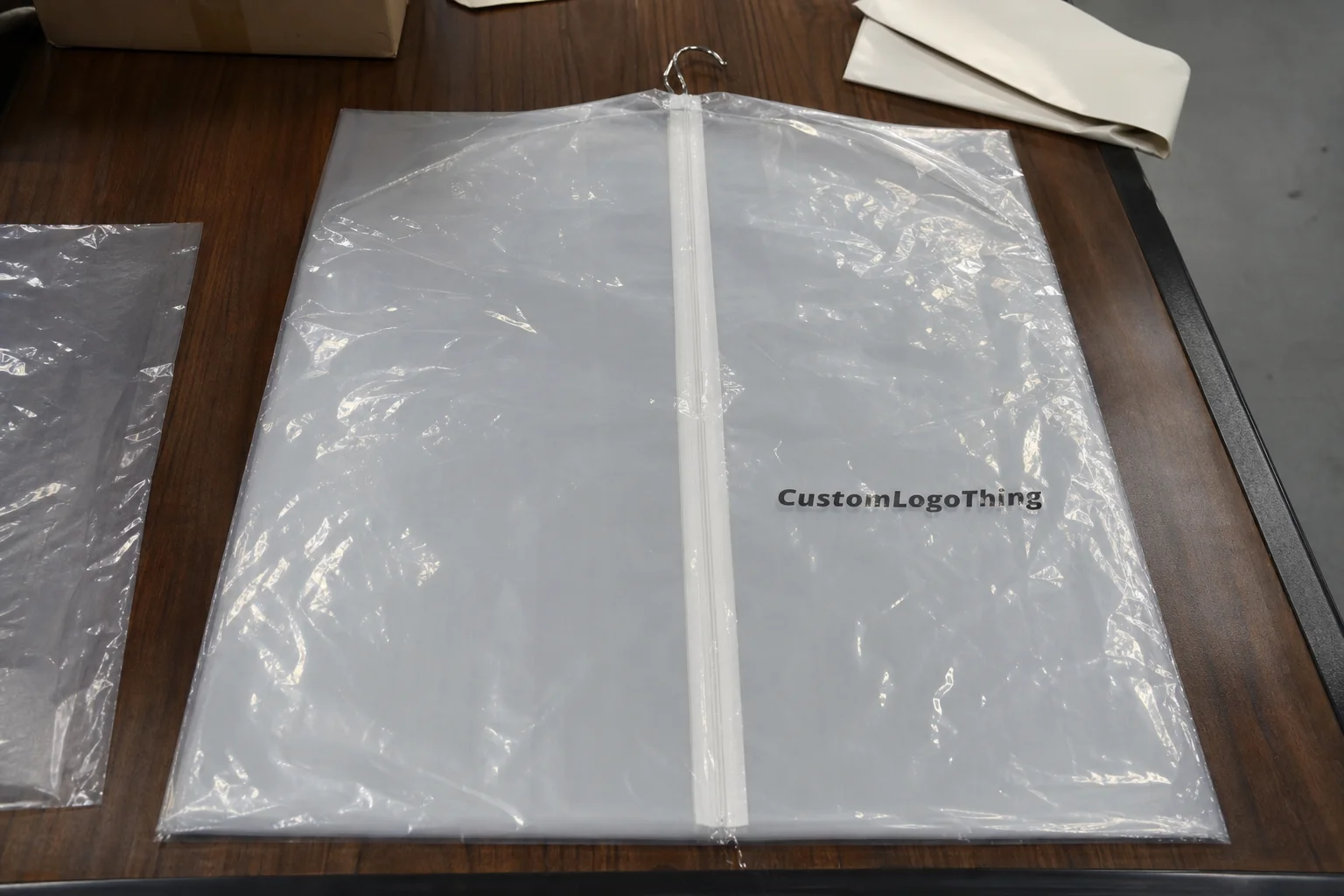
Seasonal demand does not behave like a neat spreadsheet. Launch drops, retail resets, social spikes, and promotions all pull inventory at different speeds. A style can move quickly in the first month and then slow to a crawl. Packaging demand follows that same pattern. Brands often need the majority of their bags early, then only small replenishments afterward.
That is why seasonal planning changes the math. Packaging should not be treated as a single annual buy unless the assortment is unusually stable. If you buy for the full year too early, cash sits in cartons. If you underbuy, you start paying for the same item twice through rush production, expedited freight, and extra labor.
Here is the part buyers learn the hard way: the cost of the bag is rarely the real cost. The real cost is the interruption. A packing line that pauses because the wrong size arrived can burn through labor budget in a day. A rush replacement can add 15% to 35% to the landed cost once priority production and air freight are included. Cheap bags become expensive very quickly when timing gets sloppy.
Practical rule: order packaging to match the launch curve, not the full annual sales forecast. For most apparel brands, that means an initial buy, a replenishment reserve, and a small emergency buffer.
The strongest seasonal plans are built around sell-through milestones. A core tee, a holiday fleece, and a limited capsule should not all use the same buying logic. If one line will move in six weeks and another may stretch into the next quarter, the packaging plan needs to reflect that difference. Otherwise, the warehouse ends up carrying boxes of bags for styles that already cooled off.
There is also a branding angle. A consistent bag spec helps the brand look controlled across channels. Retail teams want a neat shelf presentation. DTC teams want fast packing and low damage rates. Wholesale teams often want clear compliance marks and easy handling. The bag has to support all of that without creating extra work. That is a lot to ask from a thin piece of film, but that is the job.
Garment poly bag options that fit retail and DTC use
Different channels need different bag formats, even when the garment is the same. Retail cares about presentation and scan readability. DTC cares about packing speed, protection, and postage efficiency. If one packaging spec is forced to do both jobs badly, nobody wins.
- Flat poly bags: best for folded tees, basics, and lightweight tops. They are inexpensive, easy to store, and quick to use on a packing line.
- Resealable bags: useful for DTC orders, sets, and styles that may be opened and repacked. They also help with returns processing.
- Header bags: suited to socks, accessories, and hanging retail presentation. They work well on peg hooks.
- Suffocation-warning bags: standard for many apparel programs. The warning text needs to be visible and placed correctly.
For folded tees and lightweight knits, a clear LDPE bag with a size mark is often enough. For activewear or styles with zippers, thicker film makes sense because puncture risk goes up. Most buyers end up somewhere in the 1.25 to 2.5 mil range for apparel, though heavier product can justify more. Thin film saves money until it tears. Then the savings disappear in repack labor.
Clarity matters more than many teams expect. A clear bag makes inspection easier and usually looks cleaner in the warehouse. But too much gloss can make barcodes harder to read and can create glare under retail lighting. A slightly matte or frosted finish can help if the printed branding needs contrast. The right finish depends on where the bag will be handled most.
Printed size labels, logos, and barcodes are not decoration. They reduce mistakes. A visible size mark can shave seconds off each pack-out. That sounds trivial until a team is packing thousands of units a day. Seconds become labor. Labor becomes money. That is how packaging earns its place in the planning meeting.
Brands with a mixed assortment sometimes standardize the bag style across categories to simplify purchasing. That can work well if the garments fall into a narrow size range. It also reduces leftover inventory. The tradeoff is obvious: one spec is easier to manage, but it may not be ideal for every garment in the line. There is no magic answer here. Just fewer bad ones.
| Bag type | Best for | Typical strengths | Common tradeoff |
|---|---|---|---|
| Flat poly bag | Tees, basics, light knits | Low cost, fast packing, easy storage | Less premium presentation |
| Resealable bag | DTC, sets, returns-prone styles | Repack-friendly, neat presentation | Higher unit cost |
| Header bag | Socks, accessories, hanging retail | Display-ready, good for peg hooks | More material, more size planning |
| Suffocation-warning bag | Most apparel fulfillment programs | Safety language, broad use case | Print area can be limited by compliance text |
If your assortment spans multiple channels, standardizing the packaging family can simplify sourcing. That is why some brands combine garment bags with broader packaging programs, including Custom Packaging Products and, for fulfillment-heavy programs, Custom Poly Mailers.
Specifications to lock before you place a seasonal order
Before asking for pricing, confirm the full spec. “Clear poly bag” is not a specification. It is a starting point, and a vague one at that. Quotes can vary by 25% or more when the supplier has to guess at thickness, size, seal style, resin, and print requirements.
Start with the garment dimensions after folding. A bag needs enough clearance for insertion and closure, but not so much extra space that the garment floats around inside. As a rough planning range, many buyers allow 0.5 to 1.5 inches of clearance around the folded item. Thick fleece, layered knits, and hoodies need more room than a slim cotton tee.
Then lock the details that drive price and performance:
- Film thickness: often 1.25 to 2.5 mil for apparel, with heavier gauges used for bulkier items or better puncture resistance.
- Width and length: based on folded garment dimensions, packing method, and whether inserts are included.
- Flap style: adhesive flap, open top, or resealable closure.
- Adhesive type: permanent or peel-and-seal, depending on whether repacking is expected.
- Print coverage: one-color logo, full artwork, size marks, barcode placement, or compliance text only.
Material choice matters too. LDPE is soft, flexible, and forgiving, which makes it a common fit for folded apparel. PP is stiffer and can look crisper on shelf, though it is not always as easy to pack on high-volume lines. If recycled content is part of the brief, confirm whether the material is post-industrial or post-consumer recycled film. Those are not the same thing, and the supply behavior is different as well.
Thickness changes more than durability. It changes the feel in hand, the way cartons stack, and how the bag presents under lighting. A very thin bag can crease easily and look cheap. A very heavy bag can be overbuilt for lightweight product and add cost without improving function. Packaging teams call that “paying for confidence.” Finance usually has a different word for it.
Compliance should be checked early, not during production. For many apparel programs, suffocation-warning language has to sit in a specific area and remain readable after folding and sealing. If the bag will hang in retail, hole placement and hang-tab compatibility need review before approval. If the warehouse uses automation, the dimensions have to work with the equipment, not just with the tech pack. Standards from organizations such as the International Safe Transit Association are useful references for transit performance and package testing.
For sustainability claims, keep the language specific and documented. If the program includes paper components elsewhere in the line, the FSC standard may matter for those items, but it does not apply to poly film itself. Do not stretch the claim. Buyers and retailers notice that faster than brands expect.
Pricing, MOQ, and unit cost drivers to compare early
Pricing for garment bags is usually driven by five things: size, thickness, print colors, artwork complexity, and resin choice. A plain clear bag will always price below a custom printed version with compliance text and a reinforced seal. That part is simple. The problem is that buyers often compare quotes that are not built on the same spec.
MOQ tends to rise as customization increases. A stock-style clear bag may be available at a lower threshold, while a custom printed version can require 5,000, 10,000, or more pieces depending on finish and size. Special dimensions, heavier film, and multi-color artwork usually push the minimum up. That is not a supplier trick. It is the cost of setup. Print plates, changeovers, and testing have to be spread across the run.
For planning purposes, these ranges are a useful starting point, though actual pricing will move with region, freight, and resin markets:
| Order type | Typical MOQ | Approximate unit range | Notes |
|---|---|---|---|
| Stock clear flat bag | 1,000-5,000 pcs | $0.03-$0.08 | Lowest cost, limited branding |
| Custom one-color printed bag | 5,000-10,000 pcs | $0.06-$0.14 | Good for seasonal basics and branded presentation |
| Custom multi-color or specialty bag | 10,000+ pcs | $0.10-$0.22 | Higher setup, more artwork control |
| Heavy-gauge or specialty closure bag | 5,000+ pcs | $0.12-$0.28 | Better puncture resistance, higher material cost |
Seasonal budgeting should include split buys. Many brands do better with one launch order and one replenishment reserve than with one oversized purchase. That keeps the plan flexible if a style underperforms and prevents overstocking bags for items that get cut early. The risk of buying too much is not just storage. It is the cost of being stuck with the wrong spec after the assortment changes.
Rush cost is the silent killer. Priority production and air freight can erase the savings from a lower unit price. A lower factory quote that lands late is not actually a lower quote. Ask for the numbers broken out clearly: tooling, print setup, freight, carton count, and any additional handling charges. If you cannot compare landed cost, you are not comparing anything useful.
It also helps to review packaging examples from prior programs, especially if the line includes multiple formats or mixed packaging needs. Looking through Case Studies can show whether the supplier has handled similar specs and timelines. Quotes are one thing. Executing to spec on a seasonal deadline is another.
Process and lead time: how to schedule bags against apparel drops
Lead time is where seasonal planning often falls apart. The buyer spends weeks on garment production, then treats packaging like an item that can be ordered at the last minute. It cannot. Not if the goal is to ship on time and avoid chaos in the packing area.
The usual process is straightforward: artwork submission, spec confirmation, sample or proof review, production, inspection, and shipment. For a standard custom run, 12 to 15 business days from proof approval is common. Larger orders, complex artwork, and busy factory schedules can stretch that to 20 business days or more. Then freight gets added on top. Ocean shipping is slower, and air shipping is expensive. Neither option cares that your launch date is fixed.
- Confirm dimensions and closure from the garment tech pack or final packed sample.
- Approve artwork, including logo placement, warning text, and barcode location.
- Review a sample or digital proof for fit, color, and readability.
- Book production with enough buffer for inspection and shipping.
- Receive and stage inventory before the apparel reaches the packing floor.
Backward planning works better than hopeful planning. Start from the store launch date or warehouse receipt deadline, then count back through freight, production, proofing, and sample approval. If the line needs styled photography, the packaging often has to arrive before the bulk garments do. Photo samples should not look half-finished because someone forgot the bag spec. That kind of miss is avoidable.
A good scheduling rule is simple: place the packaging order before final apparel inventory arrives, not after it has already landed. That leaves room for inspection, carton labeling, and any corrections. It also protects the packing team from being handed a temporary substitute that later turns into a permanent headache.
Peak season adds its own friction. Print approvals move slower. Shipping slots tighten. Multi-size runs and multiple logo variants add more review time. That is normal. The way to protect the schedule is to simplify the bag spec where possible and keep artwork systems consistent across the line. Every extra version costs time. Sometimes a lot of time.
How to reduce waste, storage pressure, and last-minute reorders
Buying a full year of packaging at once looks efficient until the assortment changes. Seasonal apparel does not reward that kind of certainty. A more practical model is to buy in demand bands. For example, a brand may cover 60% of expected bag volume for launch and first replenishment, hold 20% for a second wave, and keep the remaining 20% as contingency. That structure matches how most collections actually sell.
Standardizing sizes helps too. If five styles can share one bag spec, inventory becomes much easier to manage. Leftover cartons are simpler to absorb, and the warehouse has fewer SKUs to track. This matters more than it sounds. Packaging sprawl does not usually fail loudly. It just slowly eats space and increases the odds of the wrong item being pulled.
Warehouse handling deserves more attention than it usually gets. Cartons should be labeled clearly by size, thickness, print version, and quantity. Fast-moving sizes should live near the packing stations, not at the back of the storage area behind slow-moving inventory. Once a bag is used at scale, it is not “just packaging.” It is a production input.
A modest overage of 3% to 5% is often enough to cover damage, returns, or style extensions without forcing a reorder. That small reserve is especially useful when a color outperforms and gets extended into a second drop. Emergency freight is far more expensive than a little planned cushion. That is one of the easier decisions in apparel operations.
If your packaging program also includes mailers, tissue, or inserts, keep the inventory model consistent across all of it. That makes the Garment Poly Bags for apparel brands seasonal buying plan part of one controlled system instead of a pile of separate purchases. Fragmented buying usually creates fragmented fulfillment. No surprise there.
What to do next before requesting a quote or approving production
Before asking for pricing, gather the facts that actually drive the quote: garment dimensions, fold style, expected volume, print artwork, warning language, preferred material, and ship-to timing. If any of that is missing, the first quote will be rough. Maybe useful, maybe not. Usually not enough to approve.
Request a sample or a spec review if the line is new. Fit, seal strength, and print readability are easy to misjudge from a screen. For retail programs, compare a stock clear bag against a custom printed version using the same seasonal assortment. That comparison usually shows whether branding is worth the added cost or whether a clean stock bag is the smarter choice for that drop.
Then tie the packaging purchase directly to the apparel calendar. Lock the spec, confirm MOQ, approve the timeline, and schedule the replenishment window before the next drop lands. That is the discipline behind a workable Garment Poly Bags for apparel brands seasonal buying plan. Nothing glamorous. Just controlled, measurable, and cheaper than scrambling later.
If the goal is clean shipping, consistent presentation, and fewer avoidable rush charges, the packaging calendar has to come first. Brands that plan that way usually spend less over the season because they stop buying under pressure. That is not a miracle. It is just better timing.
How do I choose garment poly bags for apparel brands seasonal buying plan without overordering?
Base the order on style count, expected sell-through, and replenishment timing rather than total annual volume. Use one bag spec across multiple styles when possible, because that reduces leftover inventory. Keep a small safety stock for fast movers and first reorders so you are not forced into a rushed second buy.
What MOQ should I expect for custom apparel poly bags?
MOQ usually rises with custom printing, special sizing, and thicker film. Standard clear bags often allow lower minimums than fully printed bags. Ask for separate MOQ pricing for stock, printed, and specialty versions so you can compare real options, not blended assumptions.
Which specs matter most for retail-ready garment poly bags?
Size, thickness, closure type, and warning label placement are the first items to confirm. For retail presentation, clarity and print quality matter as much as durability. For warehouse handling, consistent dimensions and easy sealing improve packing speed and reduce mistakes.
How long does production usually take for custom garment poly bags?
Timing depends on artwork approval, quantity, print colors, and factory workload. Sampling and pre-production checks can add time, especially for new specifications. Build the schedule backward from your apparel launch or warehouse receiving date so the bags arrive before the garments need to be packed.
Can I order different sizes for one seasonal apparel line?
Yes, but it can raise total cost and complicate inventory management. Many brands reduce expenses by standardizing one or two bag sizes across several SKUs. Choose separate sizes only when garment dimensions or presentation needs truly require it.


