When a hotel group runs low on Garment Poly Bags for hotel groups rush reorder planning stops being a packaging task and turns into an operations problem. One late carton can slow laundry, housekeeping, and inter-property transfers at the same time. The bag is small. The disruption is not.
From a buyer’s standpoint, the goal is not just “get more bags quickly.” It is to replace the same spec, keep the same print, and preserve the same delivery pattern so every property keeps moving without making up its own workarounds. That is usually where the trouble starts. The packaging looks minor, so it gets left out of the emergency planning until inventory is already thin.
Then the costs show up. Extra freight. Repacking labor. Temporary substitutes that do not quite fit. One short order can create three more problems, and procurement gets stuck explaining why a low-value item caused a high-value delay. Charming.
Custom Packaging Products can support repeat ordering, but only if the buyer starts with a clean spec and a clear approval trail. That matters even more in hotel groups, where several properties may be drawing from one shared stock pool and expecting the same packaging every time.
Why rush reorders fail when hotel inventory is already tight
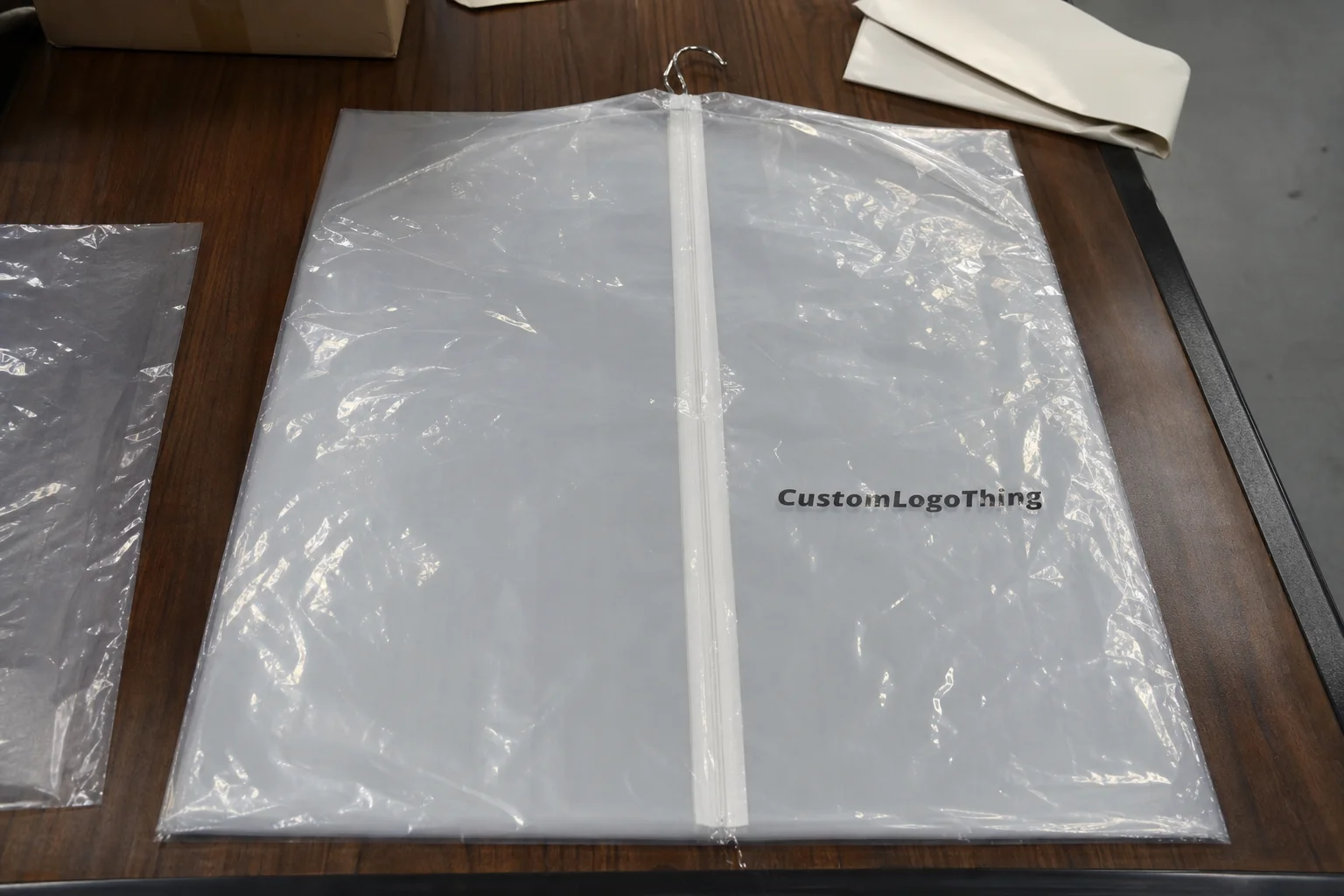
Packaging failures in hospitality rarely get flagged in a report. They show up in the laundry room, the receiving area, or on a packing table where staff has three minutes and too many uniforms to sort. A late shipment of Garment Poly Bags can stall pressed robes, replacement apparel, and guest-facing items moving between the laundry vendor, a distribution center, and property-level storage.
If one hotel is short, the workaround is annoying. If five properties are short, it becomes a network problem. That is why garment bags should be treated like controlled operational supply, not an afterthought. The unit cost may be low, but the operational exposure is not.
Hotels often underweight these bags because the invoice line looks harmless. Yet a few hundred missing bags can force staff to use oversized stock, overfill a bag, or leave garments unprotected while they wait for the next run. That leads to wrinkles, contamination risk, and extra handling. It also creates friction between operations and procurement, which is usually the part nobody budgeted for.
Rush reorders usually get expensive for three reasons:
- Temporary substitutions that do not match the original dimensions or clarity.
- Manual repacking that adds labor at the worst possible moment.
- Rush freight that pushes landed cost up fast, especially when shipments are split by property.
The smartest hotel-group response is repeatable replenishment. Lock the dimensions. Store the artwork. Keep a reorder path that does not require a fresh debate every time stock dips. If the order has to be rushed, the bag should already be defined.
“The best rush order is the one that already has a spec sheet attached.”
That sounds obvious because it is. It is also how buyers avoid paying twice: once for the bags, and again for the delay.
Product details that matter for hotel uniform and apparel packaging
Garment Poly Bags in hospitality do more than protect folded apparel. They hold uniforms, robes, spa items, housekeeping replacements, and all the pieces that move between laundry service, storage, and property distribution. The right format depends on the workflow.
Common styles include flat poly bags, pre-opened bags for faster packing, resealable bags with adhesive strips, and folded packs that dispense more easily at a busy station. For internal distribution, clarity and consistency matter more than shiny presentation. For guest-facing packaging, print quality and film clarity matter because the bag becomes part of the brand experience, whether anyone likes that or not.
| Bag style | Best use | Operational benefit | Typical tradeoff |
|---|---|---|---|
| Flat poly bag | Uniforms, robes, folded apparel | Simple, low cost, easy to stack | Slower packing unless pre-opened |
| Pre-opened bag | High-volume packing lines | Speeds fulfillment and reduces hand labor | Usually costs more than plain flat film |
| Resealable bag | Reusable internal transfers | Useful for returns and property-to-property moves | Adhesive placement must be controlled |
| Printed identification bag | Multi-property hotel groups | Reduces mix-ups and speeds sorting | Artwork approval takes longer |
Clarity is not a cosmetic detail. In laundry and distribution settings, a high-clarity film makes it easier to identify what is inside without opening the bag. That saves time and reduces handling errors. Seal strength matters too. If the film gauge is too light, bags split during transport. If the layflat measurement varies too much, automatic or semi-automatic packing becomes less predictable.
Print can be functional, not just branded. Many hotel groups use logos, department codes, size labels, and property identifiers to reduce mix-ups between locations. A simple internal ID system often saves more money than it costs, especially when garments move across a shared distribution network.
One point buyers sometimes miss: these bags are usually better treated as operational packaging than promotional packaging. The job is repeatable distribution. Pretty helps. Accuracy matters more.
Specifications to lock before you approve artwork
If you want Garment Poly Bags for Hotel groups rush reorder planning to move quickly, specification discipline is the starting point. Buyers often ask for price before they fully define the bag. That usually creates a second round of questions, then a third. By then, the lead time is already slipping.
The core specs should be settled before artwork approval:
- Width and length based on the folded garment size.
- Gauge or thickness, chosen for the garment weight and handling conditions.
- Flap type, including adhesive strip placement if the bag is resealable.
- Material type, such as low-density poly, high-clarity film, or recycled-content film.
- Print requirements, including logo size, colors, and any variable text.
Thickness is one of the first places buyers get mismatched. For lighter apparel and internal distribution, a thinner film may be enough. For robes or garments that move between properties, a heavier gauge usually performs better. There is no magic number. The right choice depends on garment weight, fold size, and whether the bag is handled by staff, a laundry partner, or a third-party logistics provider.
Sustainability requirements can also shape film selection. Some hotel groups ask for recycled-content options or packaging that aligns with broader waste-reduction goals. If that is part of the brief, confirm whether the supplier can document the content claim and whether the film still meets handling requirements. Sustainability is useful only if the bag survives the workflow. Otherwise it is just a tidy brochure line.
Printing deserves the same attention. One-color logos are usually faster and simpler than multi-color graphics. If the design includes property names or department codes, ask whether variable text is printed directly or applied through labels. Registration tolerance matters if the logo has to stay centered. A few millimeters off can look sloppy on a clean white bag.
Also confirm vent holes, adhesive strip placement, perforation preferences, and any suffocation warnings required for the market. If the bags need environmental or quality review, ask whether the supplier can support relevant standards or documentation. For general packaging references, the Institute of Packaging Professionals is a useful industry resource, and transportation test protocols from ISTA help buyers think about handling risk instead of assuming the cheapest bag will hold up because, somehow, hope was supposed to be a process.
A clean spec sheet should let procurement, operations, and brand teams approve one version. Then that version can be reused across properties instead of being reinterpreted every time someone places a reorder.
Cost, MOQ, and unit cost tradeoffs
The price of Garment Poly Bags for hotel groups rush reorder planning depends on a few variables that are easy to measure once they are named: bag size, film thickness, number of print colors, total quantity, and whether the order needs rush production or accelerated freight. Buyers who ask, “What’s the best price?” usually get a vague answer. Buyers who ask for tiered quotes get something usable.
MOQ changes with the production method. Stock bags may be available in smaller quantities. Custom printed bags usually require a setup threshold because the press has to be justified. In practice, the MOQ can sometimes be reached more efficiently by combining several properties into one group-wide order instead of splitting the demand into many small requests.
That group approach often improves unit cost. A larger run can spread setup charges across more units, and a standardized artwork file can reduce prepress revisions. The tradeoff is obvious: one larger order requires better internal forecasting. If the chain is still uncertain about occupancy or renovation timing, a smaller reorder may be safer even if the per-unit price is higher.
For budgeting, useful quote language looks like this:
- Ask for tiered pricing at 5,000, 10,000, and 20,000 units.
- Separate setup charges from recurring unit pricing.
- Request freight estimates for standard and rush delivery.
- Confirm whether split shipments add handling or pallet fees.
For a typical custom run, a buyer might see a broad range such as $0.18 to $0.28 per unit at 5,000 pieces, depending on bag size, film gauge, and print coverage. Larger quantities can lower the per-unit cost, though not always dramatically if the order includes multiple colors or special packaging requirements. Stock bags usually price lower, but they rarely solve group branding or property identification.
There is another savings point that gets overlooked: recurring orders become easier when the supplier stores the artwork and spec history. That reduces quoting friction, which matters when procurement needs to move inside a short approval window. If the same bag is used across the group, standardization can simplify reorder math and keep total landed cost more predictable.
For buyers managing multiple packaging categories, it can help to compare the bag program with other apparel packaging formats such as Custom Poly Mailers for shipped goods or branded accessory packaging. Not every use case needs the same structure.
Cost is not just the invoice line. For hotel groups, the real number includes labor, freight, repacking time, and the cost of running short during a busy occupancy period.
Process and timeline for a fast replenishment cycle
A fast reorder works best when the approval chain is short and the inputs are complete. The sequence should be simple: inquiry, spec confirmation, artwork proof, proof approval, production, and freight booking. If one step is fuzzy, the schedule slips.
Most delays come from the same small list of problems:
- Missing dimensions or film thickness.
- Unfinalized logo files.
- Unclear ship-to instructions for each property.
- Late decisions on split shipments or partial delivery.
Stock bags can often move faster because there is no custom print approval. Custom-printed bags usually take longer, especially if artwork needs revision or if the supplier has to create a new print setup. For planning purposes, many buyers should expect roughly 12 to 15 business days from proof approval for a straightforward custom run, while stock items can move faster if inventory is already on hand. Rush freight may shorten the delivery window, but it pushes landed cost up.
That is why backup prep matters. Pre-approve an alternate logo version, store the latest art file, and keep a current list of shipping addresses for every hotel in the group. When the reorder is urgent, nobody wants to discover that the receiving dock changed three months ago and no one mentioned it.
Reorder timing should also follow operational cycles. Occupancy peaks, linen turnover, and renovation projects all affect packaging usage. A property undergoing room refreshes may use more garment bags than usual if uniforms, drapes, robes, or replacement items are moving through temporary storage. A smart reorder calendar accounts for those spikes instead of waiting for stock to hit zero.
For buyer teams that need standard documentation, internal spec records and a short FAQ page can shorten the approval loop. If the same group buys other printed packaging, the reorder logic can be shared across categories, which reduces chaos when someone is offsite or out sick.
Freight matters too. If the order needs fast arrival across multiple properties, ask whether the supplier can book a single pallet to a distribution center or direct-to-property split shipments. That choice changes both timing and cost. For hotels, time saved in receiving can be just as valuable as dollars saved in print.
How to compare suppliers for reliability, consistency, and support
Price is one axis. Reliability is the other. For hotel groups, the supplier has to do more than quote well. They need to hold film quality steady, keep print alignment consistent, and deliver the same bag dimensions on repeat runs. If the film changes from one reorder to the next, internal teams notice quickly, even if the artwork looks fine from ten feet away.
Good suppliers support the purchasing process with account history, stored files, and reorder reminders. That matters because hotel groups rarely buy in a simple one-time pattern. They reorder by property, by season, and sometimes by renovation schedule. A supplier that remembers the previous spec removes friction before it starts.
Ask practical questions:
- Can they provide production updates without being chased?
- Do they keep artwork files and prior approvals on record?
- Can they ship to multiple properties without altering the print version?
- Do they support staggered delivery if one location is more urgent?
- Will they confirm dimensional tolerance on repeat orders?
Documentation is also a trust signal. If the supplier can provide clear spec sheets, proof records, and consistent billing history, that reduces internal audit headaches. For groups that care about responsible sourcing, paper-based components or broader packaging choices may also be reviewed against programs like FSC, depending on the rest of the packaging portfolio.
Compare risk, not just quote lines. A slightly higher price can be worth it if the supplier stays accountable on timeline and communication. That is especially true for rush orders, where a delay costs more than a modest unit-price difference.
I think buyers sometimes overfocus on the print image and underfocus on service behavior. Yet service is what protects the inventory plan when the order turns urgent. A supplier that answers quickly, confirms specs accurately, and ships to the right locations is doing more for the hotel group than a low quote ever could.
If your packaging program spans multiple categories, keep the supplier list aligned across materials so future procurement can compare options inside one sourcing framework. That is usually easier than managing a pile of one-off exceptions.
Next steps to place a rush reorder without delays
To move quickly, start with a short internal checklist. Confirm the bag size, film thickness, print file, quantity by property, ship-to addresses, and required delivery date. If one of those items is missing, the quote will almost certainly come back with a follow-up question.
Before you request pricing, pull the last approved invoice or spec sheet. That gives the supplier a clean reference point and reduces redesign work. If the order is for multiple hotels, split the quantity by location in the same message. Do not bury that information in a later email thread and then act surprised when the quote turns into a scavenger hunt.
It also helps to ask for two options:
- The fastest ship date that protects inventory.
- The best price with a slightly longer timeline if the stock position allows it.
That comparison gives procurement something real to evaluate. If the difference is only a few days but the freight premium is large, the group may choose the slower option. If inventory is already tight, speed wins. There is no universal answer.
Partial shipments are worth discussing too. If one property is in a stronger position than another, a split delivery can keep the most urgent site moving without forcing the entire order to wait. Just make sure the product spec remains identical. A split delivery should not become a split standard.
For buyers who want to simplify repeat purchasing, the strongest habit is to keep a live reorder folder with the approved bag drawing, print proof, prior quote, and delivery list. That folder shortens every future request. It also reduces internal confusion when a different teammate places the next order.
Send the spec, artwork, quantity split, and delivery dates in one message, and garment poly bags for hotel groups rush reorder planning becomes a controlled procurement step instead of an emergency scramble. That is the difference between a shipment that fits the operation and one that merely arrives.
FAQs
How do I reorder garment poly bags for hotel groups quickly when inventory is low?
Send the last approved size, gauge, artwork file, and quantity split by property in one request. Ask the supplier to confirm stock availability, production slot, and freight options before revising the design. A stored spec sheet cuts out the back-and-forth on measurements and print details.
What affects the lead time for hotel group garment poly bag reorders?
Lead time depends on whether the order is stock or custom printed, plus the number of colors and total quantity. Missing artwork, late approvals, and address changes are common causes of delay. Rush freight can shorten delivery time, but it usually increases total landed cost.
What MOQ should hotel buyers expect for custom garment poly bags?
MOQ varies by bag size, print complexity, and supplier setup requirements. A group-wide combined order often meets MOQ more efficiently than separate property orders. Request tiered pricing to compare the unit cost at different quantity levels.
Can the same printed bag be used across multiple hotel properties?
Yes, if the dimensions and branding are consistent across the group. Standardizing one spec helps reduce reordering errors and simplifies inventory control. If properties need different identifiers, variable print text or labels can be added.
What information should I send with a rush quote request?
Include bag dimensions, thickness, material preference, print artwork, quantity, and ship-to locations. State whether you need partial shipments, split deliveries, or one consolidated drop. Provide the required delivery date so the supplier can quote the fastest feasible production plan.


