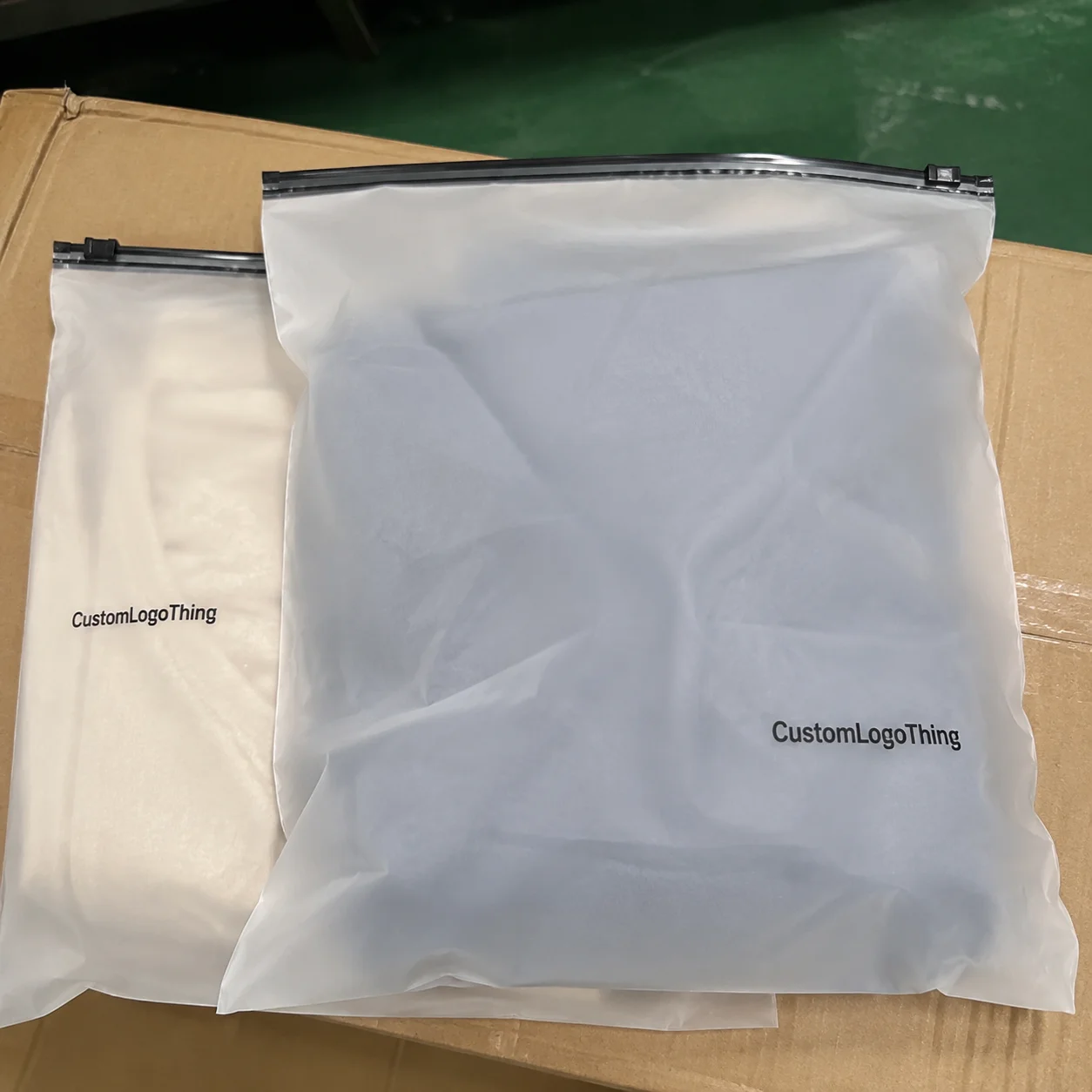
For buyers sourcing Garment Poly Bags for corporate buyers artwork proof checklist, the proof matters more than the bag itself in the early stage. Most delays start there. Not in the film. Not in the seal. Not in the print line. A vague proof creates rework, and rework burns time fast.
From a packaging buyer’s point of view, the bag has three jobs: protect the garment, present it cleanly, and survive warehouse handling without tearing, scuffing, or popping open too easily. Branding sits on top of that. It does not replace it. A sharp logo on the wrong size bag is still a bad order.
That is why a Garment Poly Bags for corporate buyers artwork proof checklist should be treated as a production control tool, not a box to tick. The proof is the last practical chance to catch low-resolution art, missing warning text, incorrect dimensions, or a placement issue that only shows up at actual size.
Corporate programs make the process stricter. Reorders may ship to multiple locations. Seasonal collections may need the same bag across different apparel sizes. National rollouts may require one master spec that survives months of use. Consistency is not a bonus in that setup. It is the job.
Garment Poly Bags for Corporate Buyers: What the Proof Must Catch
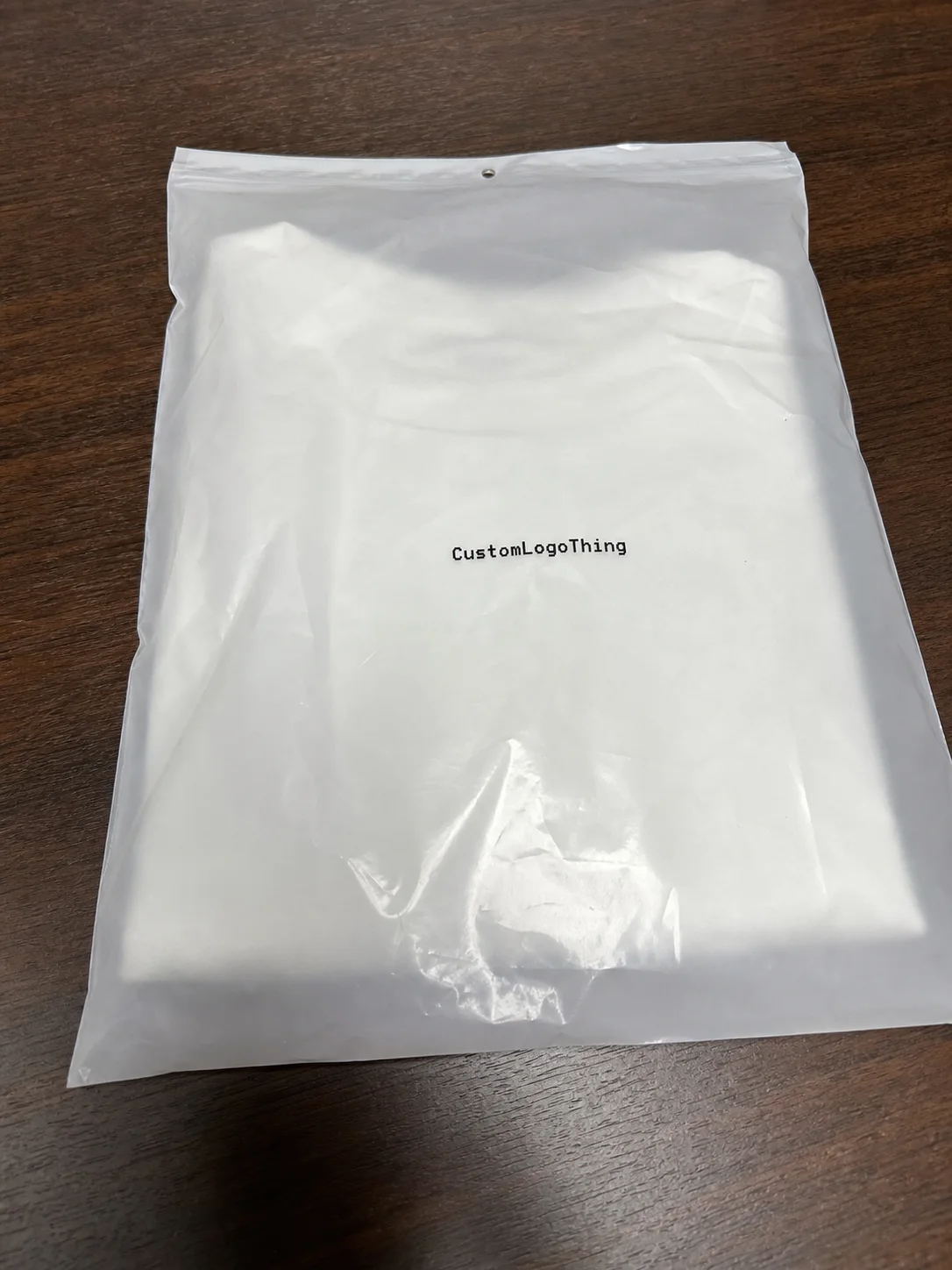
The proof should catch the things that cost money if they reach production. Start with logo size, copy accuracy, print placement, and bag construction. Then check the details buyers often skim past: a SKU line sitting too close to the seal, warning text split by a fold, or a barcode field crowded by artwork.
The common mistake is treating a proof like a pretty mockup. It is not. It is a production document. If the file is low resolution, the colors were never called out properly, or the dimensions were never confirmed against the finished packed garment, the approved proof can still print wrong.
That risk gets higher when several teams review the same order. Brand may care about appearance. Operations cares about fit and handling. Legal cares about warning language. Procurement cares about price and timing. If only one group signs off, the approval is incomplete.
“A proof that looks good is not the same as a proof that is ready for press. The best approvals are checked against the actual garment, the spec sheet, and the required copy.”
For corporate buyers, the goal is repeatability. If a polo program ships to ten distribution points or a seasonal assortment needs the same bag across multiple carton configurations, the approved proof has to hold up on every reorder. That means locking the variables that drift: size, gauge, ink count, side count, and text copy.
Some buyers keep related packaging specs together so programs stay aligned across formats. That usually means maintaining a single library for items such as Custom Packaging Products and Custom Poly Mailers. When internal specs match, new launches are easier and reorders stop turning into detective work.
Artwork Proof Checklist for Clean Approvals
A useful Garment Poly Bags for Corporate buyers artwork proof checklist should be short enough to use under pressure and specific enough to catch production mistakes. The cleanest way to review it is in the order the factory will see it: construction, artwork, placement, copy, and compliance.
Core items to verify on every proof
- Bag size — width, length, and any gusset dimensions must fit the folded garment.
- Film type — clear, frosted, or low-density poly changes the finish and stiffness.
- Gauge — confirm thickness in mil or microns so the bag has the right feel and puncture resistance.
- Logo placement — center position, offset, and distance from seal or flap should be clear.
- Ink colors — PMS references should be stated, not estimated from a monitor.
- Copy — warning text, care text, product descriptions, and legal lines must be complete.
- Barcode or SKU area — check spacing, contrast, and scan legibility if the bag carries one.
- Seal and closure style — adhesive flap, zip closure, or open-top construction should be confirmed.
File readiness matters just as much as layout. Vector art is still the safest option because it holds edge quality at production scale. If raster art must be used, it should be large enough for the final print size, with 300 dpi at actual size as a practical minimum for fine detail. Fonts should be outlined or embedded. PMS callouts need to be explicit before the proof is approved.
Transparent poly needs extra scrutiny. On a clear or frosted film, ink that looks strong on white paper may look weaker on plastic, especially when the artwork uses light colors or thin strokes. A white underprint may be needed to hold contrast. If the proof does not show that clearly, it is not ready.
Internal approval also needs discipline. One person should collect comments and send one response back. Brand can verify appearance. Operations can confirm fit and handling. Legal or compliance can confirm required language. Five separate email replies do not make the proof better. They just make it messier.
The simplest rule is still the best one: if anything on the proof is ambiguous, do not approve it. Print machines do not interpret intent. They follow the file.
| Proof Check Item | Why It Matters | Common Miss |
|---|---|---|
| Bag dimensions | Confirms fit for folded apparel and inserts | Proof uses nominal size instead of finished size |
| PMS color callout | Helps control brand consistency across reorders | Color is approved visually only |
| Warning text | Supports compliance and warehouse use | Copy is cut off or too small |
| Ink opacity | Keeps artwork readable on clear film | Thin ink loses contrast |
Material, Gauge, and Print Options That Change the Final Look
Bag material changes more than many buyers expect. Clear poly gives the most visibility for the garment itself. Frosted film softens the look and can hide minor scuffs. Low-density poly usually feels softer and more flexible while still protecting the product. The right choice depends on whether the pack goes to retail, warehouse, or direct ship.
Gauge affects hand feel, clarity, puncture resistance, and the overall impression of quality. A thinner bag may be fine for light folded apparel. Heavier garments, multi-piece sets, or items with sharp packaging edges usually need more thickness. In practice, buyers often compare around 1.5 mil, 2 mil, and 3 mil constructions, though the right spec still depends on load, handling, and presentation goals.
Print method changes the result too. Most garment bags use flexographic printing, which is efficient and consistent when the artwork is built correctly. Flexo handles bold logos well. Fine gradients, tiny text, and dense layouts are harder to reproduce cleanly. If the proof has thin rules or crowded copy, expect revisions.
Functional features matter just as much as decoration. An adhesive flap supports retail presentation. A hang hole helps with display. Vent holes reduce trapped air. Resealable closures can help with returnable or premium apparel packs. For certain programs, suffocation warnings or recycling marks are not optional. They are part of the spec.
Buyers comparing broader packaging programs often group garment bags with poly mailers, carton inserts, and branded retail pouches. That comparison is useful. The visual standard should stay consistent across the full pack-out, even when materials differ.
For sustainability-minded programs, buyers sometimes ask about recycled content, recyclable structures, or certification alignment. If that is part of the brief, verify the claim against the source material and avoid vague language. Organizations such as the Forest Stewardship Council and the U.S. EPA recycling guidance can help align terminology with current expectations, but the final package still has to match the material being sourced.
Size, Spec, and Compliance Details Buyers Should Lock Before Ordering
Before a purchase order goes out, the bag size should be checked against the folded apparel, any tissue or insert cards, and the way the item sits in the carton. A bag that is too tight can wrinkle the garment or stress the seal. A bag that is too loose looks sloppy and wastes material. That is a spec issue, not just a presentation issue.
The master spec should include width, length, side gusset if used, bottom seal style, thickness, and packaging format. Buyers should also confirm whether the bags are loose-packed, stacked, or supplied on rolls. That one detail changes line handling, carton counts, and sometimes labor time in fulfillment.
Compliance language needs the same attention as the artwork. Depending on the use case, you may need suffocation warnings, recycling marks, country-of-origin references, or retailer-specific text. If the bag will be used for both warehouse distribution and retail presentation, the warning copy may need to be more prominent than the logo. That balance should be visible on the proof before approval.
Standardizing the spec sheet across departments pays off quickly. One team should not work from an old PDF while another quotes from a spreadsheet and a third reviews an email thread. The finished product should match one approved construction every time, especially for reorder programs, subscription apparel, or national rollouts where one miss creates downstream mismatches.
The cleanest programs usually have one master spec, one approved artwork file, and one revision history. Lock those three pieces and new orders move faster. More importantly, the packaging team spends less time chasing clarifications that should have been settled before the proof went out.
For brands that want a documented process, standards like ISTA can help when the pack has to survive distribution testing, especially if the garment bag is part of a larger shipping system. The bag itself may not be tested in isolation, but the full pack-out often is.
Pricing, MOQ, and Quote Drivers for Custom Poly Bags
Custom bag pricing is rarely driven by one variable. It is usually a mix of bag size, gauge, ink count, print sides, film color, and special features. Add hang holes, resealable flaps, or heavier gauge material, and the unit cost rises. To compare suppliers fairly, ask for the same spec from each one.
For many custom garment bag programs, a realistic price range may sit around $0.08 to $0.22 per unit at higher volumes for simpler constructions. More complex bags with multiple inks, heavier gauges, or special closures can land above that. Smaller runs almost always cost more per unit because the setup is spread over fewer pieces. Exact pricing depends on print coverage, plate count, carton pack, and freight assumptions.
MOQ changes for the same reason. A one-color bag on standard film can usually support a lower minimum than a two-side print with tight registration and compliance text. Buyers sometimes focus on the lowest unit price. If that number only works at a volume the company cannot use, it is not the best quote. It is just the lowest-looking one.
Compare quotes on an apples-to-apples basis. Check whether the estimate includes plate charges, setup fees, proof revisions, freight, and standard packaging. If one supplier quotes a lower number but excludes setup or bills freight separately, the comparison is not real.
Most savings come from standardization, not from reducing film thickness below what the application needs. A fixed bag size used across multiple apparel lines, a reduced ink count, or a single approved print side can create better value than trying to shave a fraction off the gauge. If the bag fails in use, the savings disappear anyway.
For corporate buyers using Garment Poly Bags for corporate buyers artwork proof checklist as part of sourcing, the quote should be read as a production document, not just a price sheet. The better suppliers usually explain where the cost sits and which change would lower it without breaking the spec.
| Quote Driver | Lower-Cost Direction | Cost Impact |
|---|---|---|
| Ink count | Reduce from multiple colors to one or two | Often lowers setup and press time |
| Gauge | Use the lightest functional thickness | Can reduce resin cost |
| Print sides | Print one side instead of two when acceptable | Reduces complexity |
| MOQ | Order a standard volume that matches use rate | Improves per-unit economics |
Process, Timeline, and Proof Turnaround Steps
The process is straightforward, but each step needs a clean handoff. It starts with spec review and artwork submission, then moves to proof issuance, buyer approval, plate or setup preparation, production, and packing. If one step is unclear, the job waits.
Turnaround is lost most often in the proof stage. Missing artwork files, unclear copy, late legal edits, and internal approval loops can add days before production starts. A buyer may think the order is in process, but if the proof is still being redlined, the press is not running yet.
A complete spec sheet shortens lead time more than a rushed note ever will. When the supplier already has the bag dimensions, material, gauge, print sides, artwork layout, and carton requirements, the proof comes back cleaner and the approval cycle gets shorter. That is one of the few easy ways to speed up a program without paying for panic.
Typical lead times often look like this: proof turnaround in 1-3 business days after receiving proper files, then production in roughly 12-15 business days from final approval on many standard runs, depending on quantity and complexity. Rush jobs can move faster, but only when the artwork is complete and the spec is locked. If revisions are still open, the calendar stretches.
For seasonal launches or replenishment orders, build buffer time for one proof revision round. That extra margin is not wasted. It protects against the missing detail that usually appears once the layout is viewed at production scale. Buyers who plan for that buffer tend to avoid late freight charges and emergency approvals.
A clean approval also helps the packing team. Once size, copy, and print placement are confirmed, carton labeling, pack counts, and release timing can be scheduled without uncertainty. That matters when multiple ship-to locations need staggered delivery or when a warehouse has to stage inventory by style and color.
The practical point is simple: the earlier the proof is treated as the final production reference, the fewer surprises show up in the run. That stays true whether the order is a few thousand bags or a much larger replenishment program.
Next Steps to Finalize a Corporate Order
Before you request a quote, gather the approved logo file, target bag size, required warnings, expected quantity, and ship-to schedule. If those pieces are ready, the first proof is more likely to be useful, and the quote will reflect the actual job instead of a guess.
Assign one internal owner to collect revisions. Multiple people can review, but one person should consolidate the comments before they go back to the supplier. That keeps the proof from bouncing around with conflicting notes about copy, placement, or packaging format.
When the proof arrives, run it against the garment poly bags for corporate buyers artwork proof checklist. Confirm size, copy, logo placement, film type, gauge, compliance text, and carton expectations before approving anything. If one item is off, ask for a revised proof. That costs less than correcting a printed run.
Then compare quote details, release production only after the artwork and carton plan are locked, and keep the approved spec on file for the next order. For repeat programs, that file becomes the source of truth. That is exactly what a corporate packaging buyer wants when deadlines get tight and every reorder has to match the last one.
What should corporate buyers check first on garment poly bags artwork proofs?
Start with the bag size, print placement, and all text before worrying about color refinement. Then confirm the artwork file is vector or high resolution, with fonts outlined and PMS colors clearly called out. If warning or compliance copy is required, check that separately so it does not get buried in the layout.
How do I compare quotes for custom garment poly bags without missing hidden costs?
Match the exact construction, gauge, ink count, and print sides before comparing unit prices. Ask whether plate charges, setup fees, proof revisions, and freight are included or billed separately. Also verify MOQ and whether the quote assumes standard packing or special carton requirements.
Can I approve a proof if the logo looks slightly off on the screen?
No. Screen appearance can hide problems in scale, contrast, spacing, or legibility against the film. If the artwork feels crowded, too small, or unclear, request a revised proof. Treat the proof as the final production reference, not as a loose mockup.
What details usually slow down garment poly bags turnaround time?
Missing artwork files, unclear dimensions, and late copy changes are the biggest delays. Internal approval loops between brand, procurement, and operations can add more time quickly. A complete spec sheet and one decision-maker keep revision cycles under control.
What is the best next step after receiving a proof for garment poly bags?
Run the proof against a written checklist covering size, copy, logo placement, and compliance text. Confirm quantity, MOQ, ship date, and carton requirements before approving. Then send one consolidated approval so production can move without avoidable pauses.