The main risk in bag sourcing is not the headline price. It is the gap between the price and the actual spec. A bag that is too thin, too short, or poorly sealed creates extra labor, rework, and customer-facing defects. That is how a low quote becomes a higher total cost.
Streetwear packaging also has to do more than protect fabric. It needs to support presentation, keep folds clean, and avoid making the product look cheap in transit or at retail. If the film clouds the garment, traps static, or fights the pack line, the bag is costing you more than it should.
A useful quote tells you exactly what you are buying, what can change the price, and what the supplier will inspect before shipment.
Garment Poly Bags for Streetwear Labels Supplier Quote Checklist: Why the Wrong Bag Spec Raises Costs Fast
Most bad buys start with incomplete information. A buyer sends a garment size, gets a unit price back, and assumes the quote is comparable. Then production starts and the problems appear: the bag is too narrow for folded hoodies, too short for longer tees, or too weak to survive stacking and shipping. Every correction adds time and labor.
For streetwear labels, the bag has to protect the fold, keep the print visible, and fit the pack line. If one of those fails, the order slows down or arrives looking downgraded. In many cases, a slightly higher spec is cheaper overall because it reduces rejects, repacking, and damaged stock.
Bag specs are production decisions, not styling preferences. Size, gauge, seal style, and closure method all affect how quickly a team can pack and box orders. A vague quote leaves those details open. A usable quote defines them clearly.
That is why a Garment Poly Bags for streetwear labels supplier quote checklist should force every supplier to quote the same size, thickness, finish, and closure. Otherwise you are not comparing like for like.
- Weak seals increase damage and repacking.
- Poor clarity makes the garment look less premium.
- Wrong sizing slows folding and packing.
- Static cling creates line friction and a messy presentation.
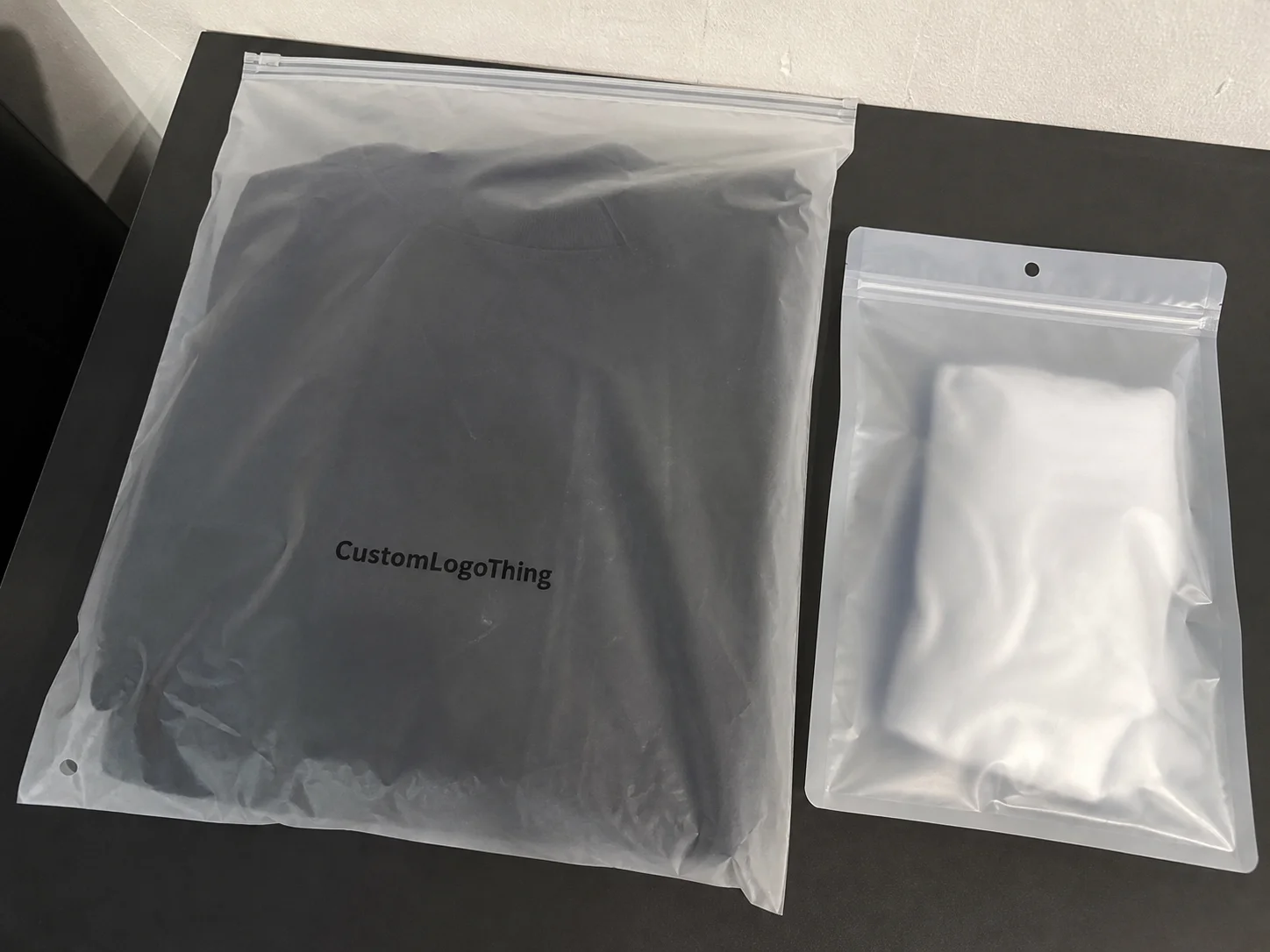
Carton efficiency also matters. Oversized bags reduce case count and increase freight. Undersized bags pinch the garment and create wrinkles before the item is boxed. If the quote does not mention packing density or carton count, it is not complete enough to judge the real cost.
Streetwear programs also need consistency across sizes. A medium tee bag and an XXL hoodie bag may not be identical, but they should still look like part of the same system. If one bag is cloudy and another is crystal clear, or one closure pulls neatly while the other curls at the edge, the presentation feels inconsistent.
Film, Finish, and Closure Options That Fit Streetwear
Film choice changes both the feel and the price. LDPE is the common workhorse because it is flexible and easy to pack. CPP gives a cleaner display feel and better stiffness, which can help when the bag needs to hold a sharper profile. Blended films sit between the two when a buyer wants more body without moving to a more expensive structure.
Material choices
For tees and lighter tops, 1.5 to 2 mil LDPE is often enough if the bag is sized correctly. Heavier hoodies, fleece, and layered sets usually need 2.5 to 3 mil to avoid stretching or seal failure. If the bag will sit in cartons for longer storage, ask for a thickness range rather than a single number. Film tolerance matters, and a quote that quietly reduces gauge is not a fair comparison.
Recycled-content film is now common, but it is not a free upgrade. It can change clarity, odor, and stiffness. That is fine if the brand accepts those tradeoffs. It is not fine if the supplier swaps in recycled content without confirming how it affects appearance and handling. Samples should show fold recovery, seal consistency, and surface finish before the order is locked.
Finish and presentation
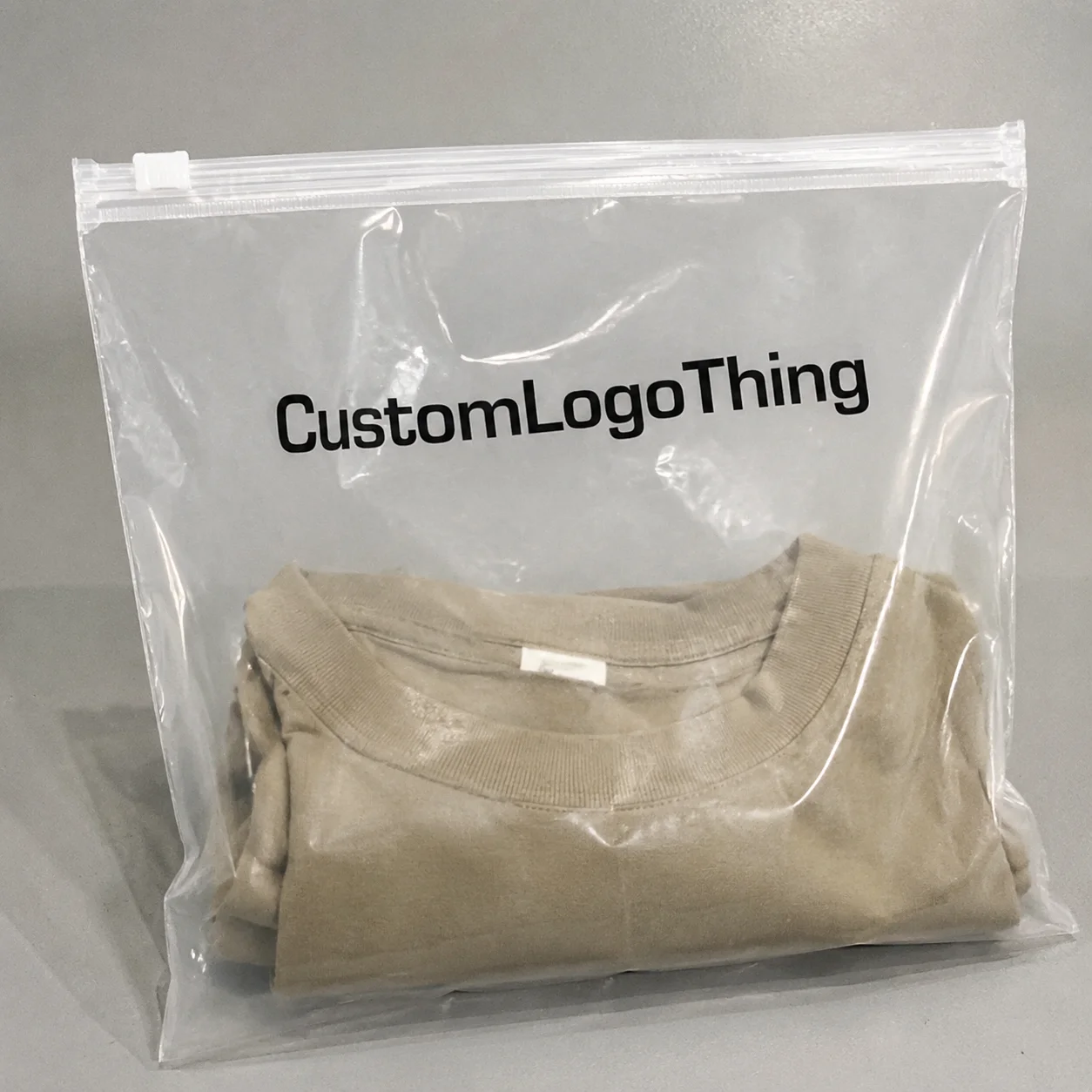
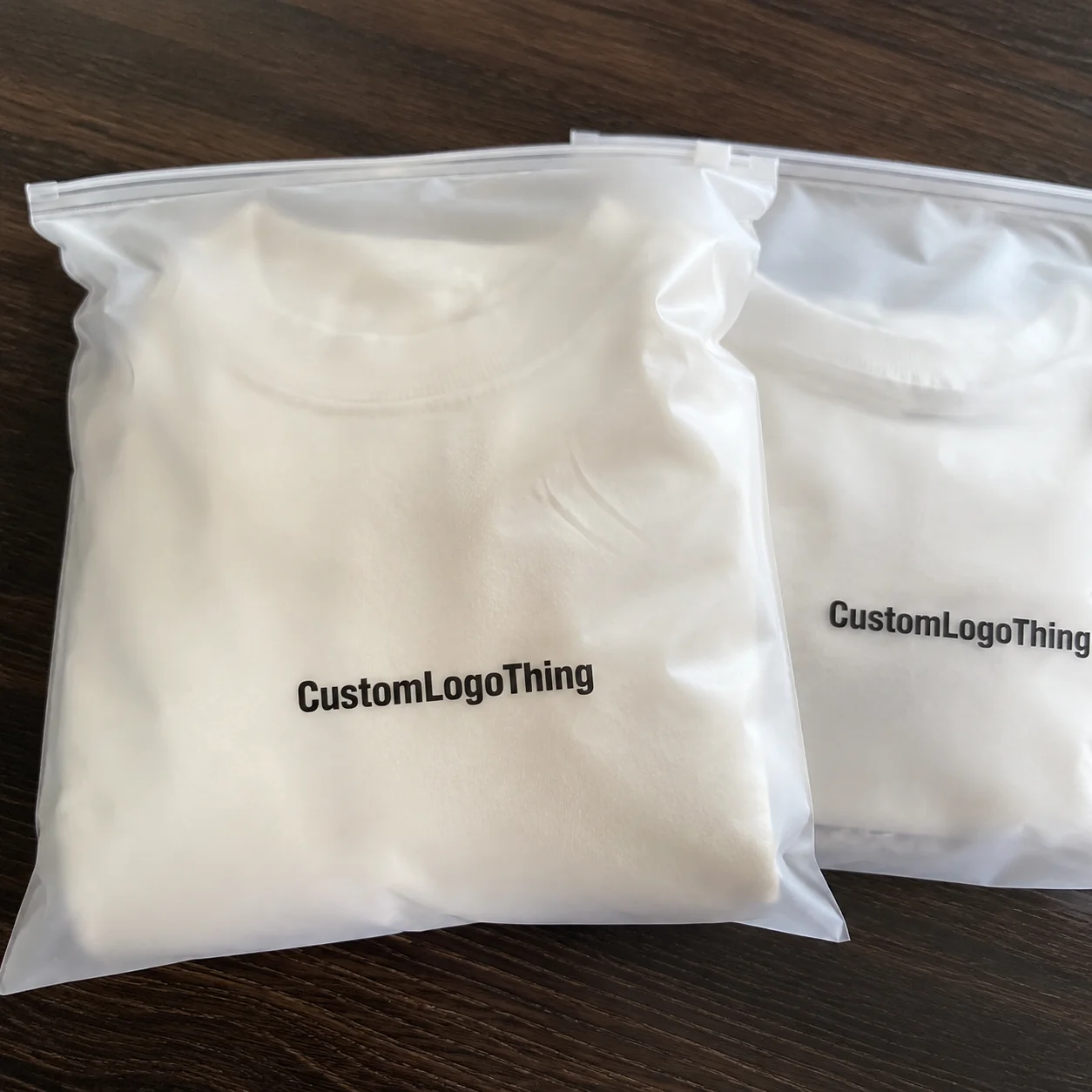
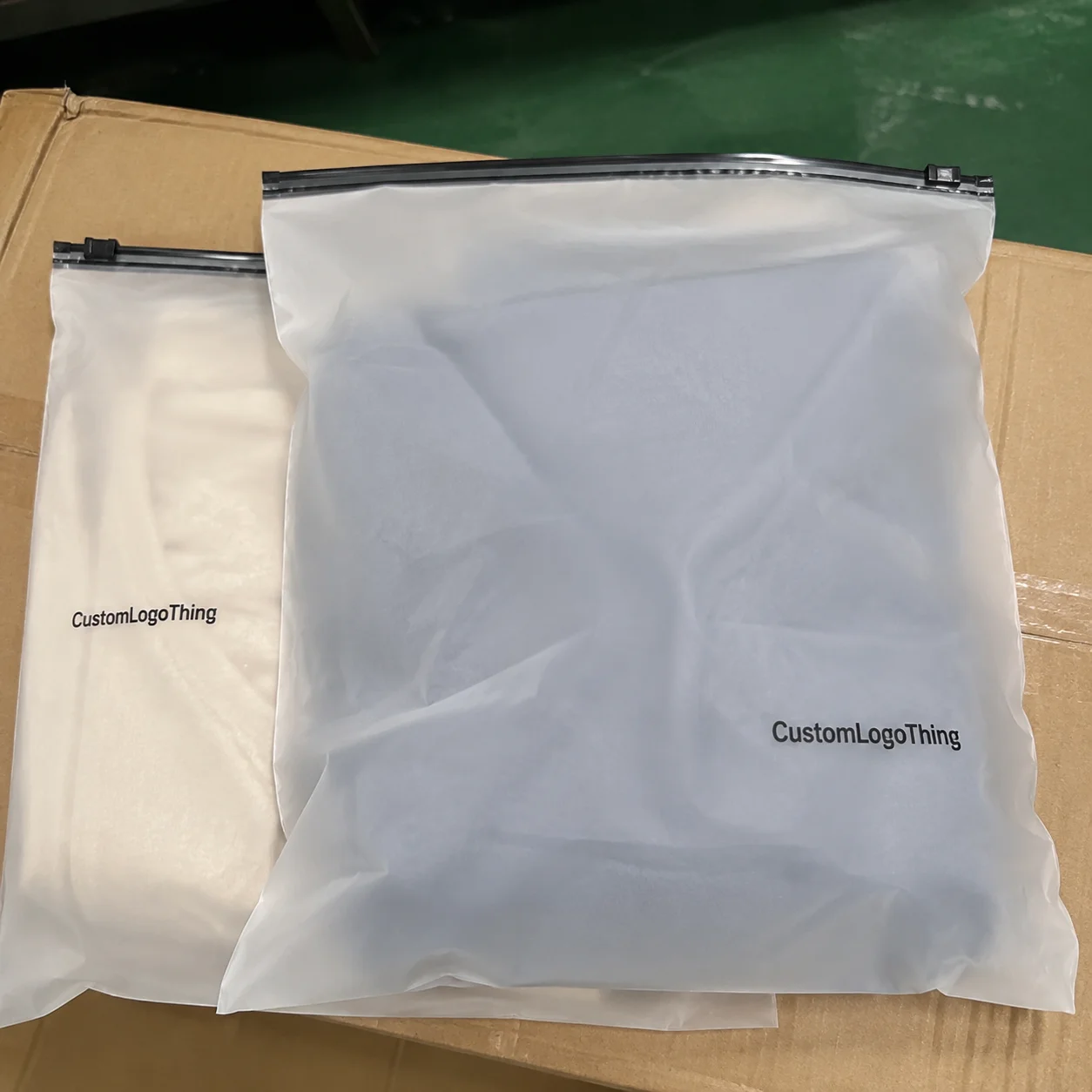
Crystal-clear bags show the garment best. Frosted bags hide scuffs and fingerprints better. Tinted or matte options can work for darker, more minimal streetwear programs, but they can also reduce product visibility. Each finish trades off cost, appearance, and pack speed.
If the garment has strong graphics or a detailed fold, clarity matters more than buyers sometimes expect. Cloudy film can dull the print under warehouse lighting or retail spotlights. Frosted film can look intentional, but it also mutes the garment slightly. The right choice depends on whether the priority is shelf impact, protection from handling marks, or lowest cost.
Closure and handling
Flap-and-seal is still the most practical option for high-volume packing. Adhesive strips are fast, but the adhesive has to hold up in warehouse conditions. Zip closures are useful for repeat use or returns, though they add cost and bulk. Open-top bags are cheap and fast, but they do not help if the garment moves during transit. Hang holes, vent holes, anti-static treatment, and fold direction should be included in the quote when they matter to the final result.
For basic packaging structure guidance, Packaging World and the industry specs referenced by ISTA are useful baseline sources. They do not choose the supplier, but they do keep the spec conversation honest.
Specs That Belong on Every Supplier Quote
If you want a quote you can compare, make the supplier answer in exact numbers. No “approximately.” No “standard size.” No promise that it will “fit most items.” Those answers are not useful enough to prevent mistakes later.
- Dimensions: finished width, height, gusset depth if used, and tolerance range.
- Thickness: in mil or microns, plus allowed variance.
- Material type: LDPE, CPP, blend, or recycled-content film if requested.
- Print details: one-color logo, multi-color artwork, full bleed, opacity, and safe zone.
- Closure: flap-and-seal, adhesive strip, zipper, open-top, or another closure type.
- Packing format: bags per pack, cartons per case, master carton size, and pallet assumptions.
- Performance target: seal strength, tear resistance, scratch tolerance, and folding durability.
Also ask how the supplier measures artwork registration and bag length. A bag can be “close enough” on paper and still miss the mark in production. If the logo drifts, the front panel looks off. If the bag is cut too short, the fold gets sloppy. If the bag is too tight, the garment wrinkles before it reaches the carton.
A strong Garment Poly Bags for streetwear labels supplier quote checklist should also cover carton labeling, barcode needs, and whether the supplier is packing by SKU or mixed assortment. The more the factory has to guess, the more likely you are paying for avoidable mistakes.
Ask for the proof format up front as well. Digital mockup, physical sample, or both. If the supplier cannot tell you exactly what gets approved before production starts, the quote is incomplete.
Quality questions matter too. How often is film thickness checked during the run? What happens if the seal line drifts? Is the final case count verified against the packing list, or just assumed? Those details separate a real production quote from a sales template.
Pricing, MOQ, and Unit Cost Benchmarks
Price only becomes useful after you break it into parts. You need the unit cost, setup fee, tooling or plate charge if print is involved, sample cost, and freight assumption. If those pieces are not separated, the quote can look cheaper than it really is.
For custom Garment Poly Bags, MOQ usually rises with size complexity, print coverage, and special finishes. A plain clear bag with a simple flap can usually start at a lower MOQ than a frosted, printed, or zippered version. Small runs are possible, but the unit price rises because setup costs are spread across fewer pieces.
| Option | Typical MOQ | Typical Unit Price | Best For | Watch Outs |
|---|---|---|---|---|
| Plain clear LDPE bag | 3,000-5,000 pcs | $0.03-$0.07 | Basic tees, fast pack lines | Can look generic if the film is too thin |
| Printed clear or frosted bag | 5,000-10,000 pcs | $0.08-$0.16 | Streetwear branding, retail presentation | Setup fees and color matching can change the quote |
| Thicker bag with closure upgrade | 5,000-10,000 pcs | $0.10-$0.20 | Hoodies, fleece, higher-touch presentation | More material means higher freight and carton weight |
| Special finish or custom feature bag | 10,000+ pcs | $0.14-$0.28 | Premium drops, retail programs, repeat lines | Tooling, proofing, and longer lead times are common |
Those ranges are only useful if the spec is identical across suppliers. A quote for 1,000 pieces and a quote for 20,000 pieces are not comparable without volume context. Ask for tiered pricing at two or three volumes so you can see where the break-even point sits.
Unit price also needs operational context. A bag at four cents may sound good until it requires a slower packing process and a separate adhesive step. A bag at eleven cents can be cheaper overall if it speeds packing and lowers inspection rejects. Labor belongs in the packaging cost, even if the quote ignores it.
Production Steps, Lead Time, and Proof Approval
The production path should be visible from the start: quote, artwork check, proof, approval, production, inspection, packing, shipment. If any step is unclear, delay is likely. A garment poly Bags for Streetwear labels supplier quote checklist should ask for each checkpoint in writing.
Lead time depends on complexity. Stock-style or near-stock bags move faster. Custom printing, unusual dimensions, anti-static treatment, and new tooling extend the timeline. A realistic window for a standard custom run is often 12-18 business days after proof approval, plus freight. If a supplier claims much faster without explaining capacity, ask again.
Most delays come from avoidable mistakes: artwork in the wrong format, a size change after the proof is already being made, vague color references, or an approval sent without tolerance notes. The factory is not the only place where errors happen.
Write the approval rules down before sending the order. Ask for:
- Artwork submission requirements.
- Proof turnaround time.
- Cutoff time for revisions.
- Production start date after approval.
- Ship window and freight method.
If the supplier can also confirm test expectations, that helps. For transit and packaging stress checks, ISTA is the standard reference many packaging teams use. It will not make a weak bag stronger, but it does help prevent hand-wavy quality claims.
Keep the schedule honest. If a drop date matters, build in buffer for proof revisions and freight booking. Last-minute artwork changes affect more than print. They can shift the whole line, from carton booking to export schedule.
Build in a sample stage whenever the spec is new. A physical sample catches closure behavior, fold fit, seal quality, and film feel in a way a PDF cannot. If the sample is wrong, fix it there instead of after the full run is in transit.
What a Reliable Supplier Should Prove Before You Sign Off
A reliable supplier should prove three things: they understand the spec, they control quality, and they answer quickly enough to keep the launch moving. Anything less is a risk.
Look for practical evidence, not vague branding language. Do they state thickness clearly? Do they show how they check seal strength and print registration? Do they confirm packing count per carton and the expected carton dimensions? Those are signs that the quote came from a real production process.
Communication speed matters. If a supplier takes four days to answer a simple spec question, they will probably take four days to answer a production issue. That is how orders stall.
Quality control should cover incoming film checks, in-process inspection, and final carton verification before dispatch. For streetwear, consistency matters because the bag is part of the presentation system. One cloudy batch or one sloppy print run can make a whole drop look uneven.
Ask how nonconforming bags are handled. Are defects counted against the run, replaced, or packed as-is with a note? If the answer is vague, the risk is on you. A supplier that takes QC seriously can describe the reject threshold, sampling method, and rework path without improvising.
Use the quote process to judge how seriously the supplier handles packaging across the board. If you are also buying folding cartons, inserts, or branded mailers, compare them with Custom Packaging Products and Custom Poly Mailers. If you need labels, size tags, or care labels to match the bag presentation, Custom Labels & Tags should be in the same conversation so the brand look stays consistent.
If the supplier keeps dodging direct questions, move the spec discussion forward before you approve anything. The quote should work for you, not the other way around.
The best garment poly Bags for Streetwear labels supplier quote checklist is boring in the right way. It removes guesswork, pins down the real cost drivers, and gives you a clean comparison across vendors.
Streetwear packaging lives or dies on details that look small until they hit production. The bag needs to fit the garment, survive handling, and keep the visual standard intact. If the quote does not show those things clearly, it is not ready.
What should be included in a garment poly bags for streetwear labels supplier quote?
Exact bag dimensions, material type, thickness, closure style, print details, MOQ, unit price tiers, setup fees, freight assumptions, and packing format. If any of those are missing, the quote is not complete enough to compare.
How do I compare garment poly bag quotes for streetwear labels fairly?
Put every quote on the same spec sheet. Check that the size, gauge, print coverage, finish, and closure are identical. Then compare setup costs, sample fees, packing details, and freight. A lower unit price can be misleading if the bag spec was reduced.
What MOQ is normal for custom garment poly bags?
It depends on size, print complexity, and tooling. Plain or near-stock bags often start lower, while printed or special-finish bags usually need larger runs. Ask for tiered pricing so you can see what happens at 5,000, 10,000, and target volume.
How long does production usually take after approval?
Simple custom runs can move faster than specialty bags, but the clock starts after artwork and proof approval. A standard custom order often lands in the 12-18 business day range before freight, though revisions and capacity can change that.
Can I get a sample before placing a full order?
Yes, and you should ask for one if fit, clarity, seal strength, or print alignment matters. A sample catches problems that are cheap to fix before production and expensive to fix afterward.