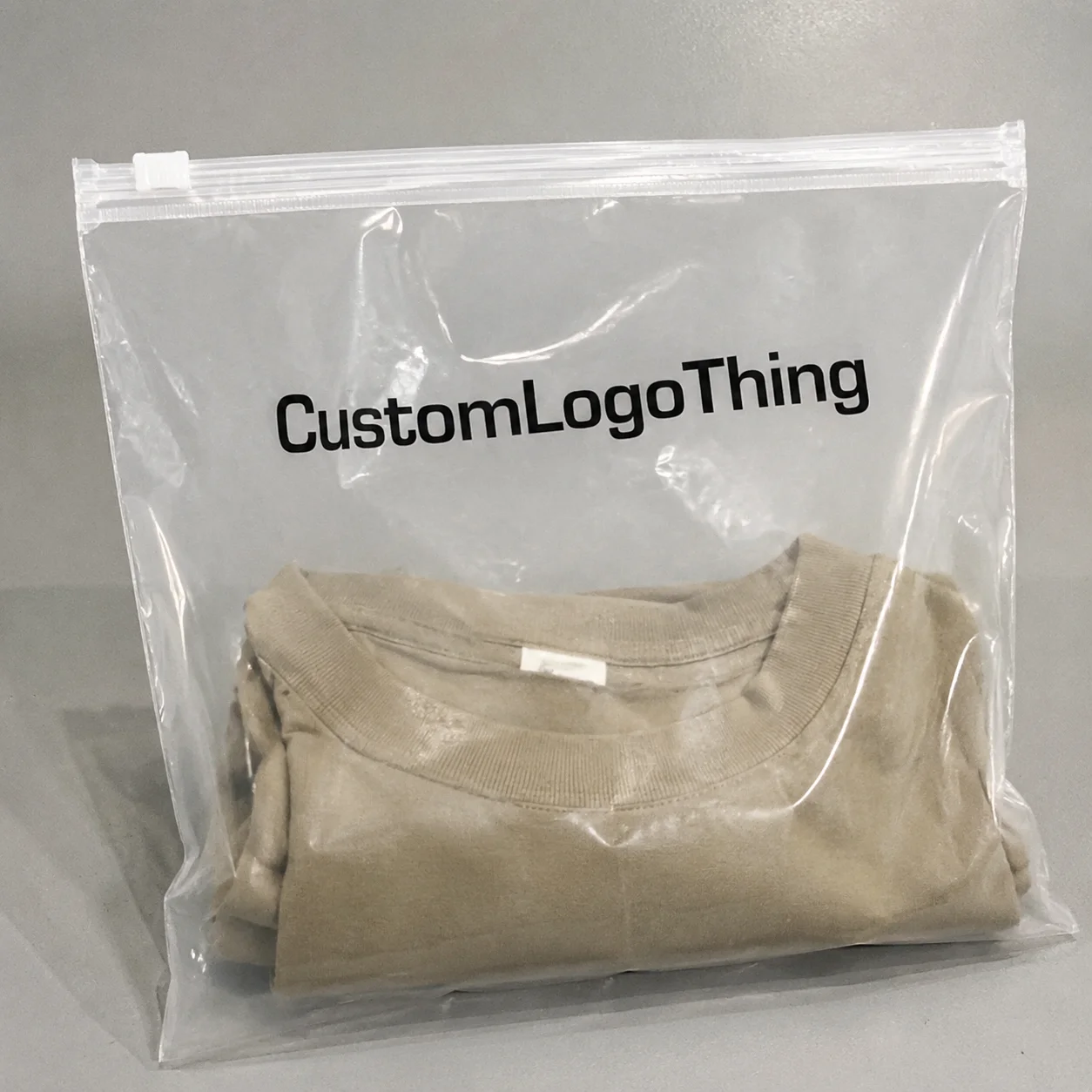
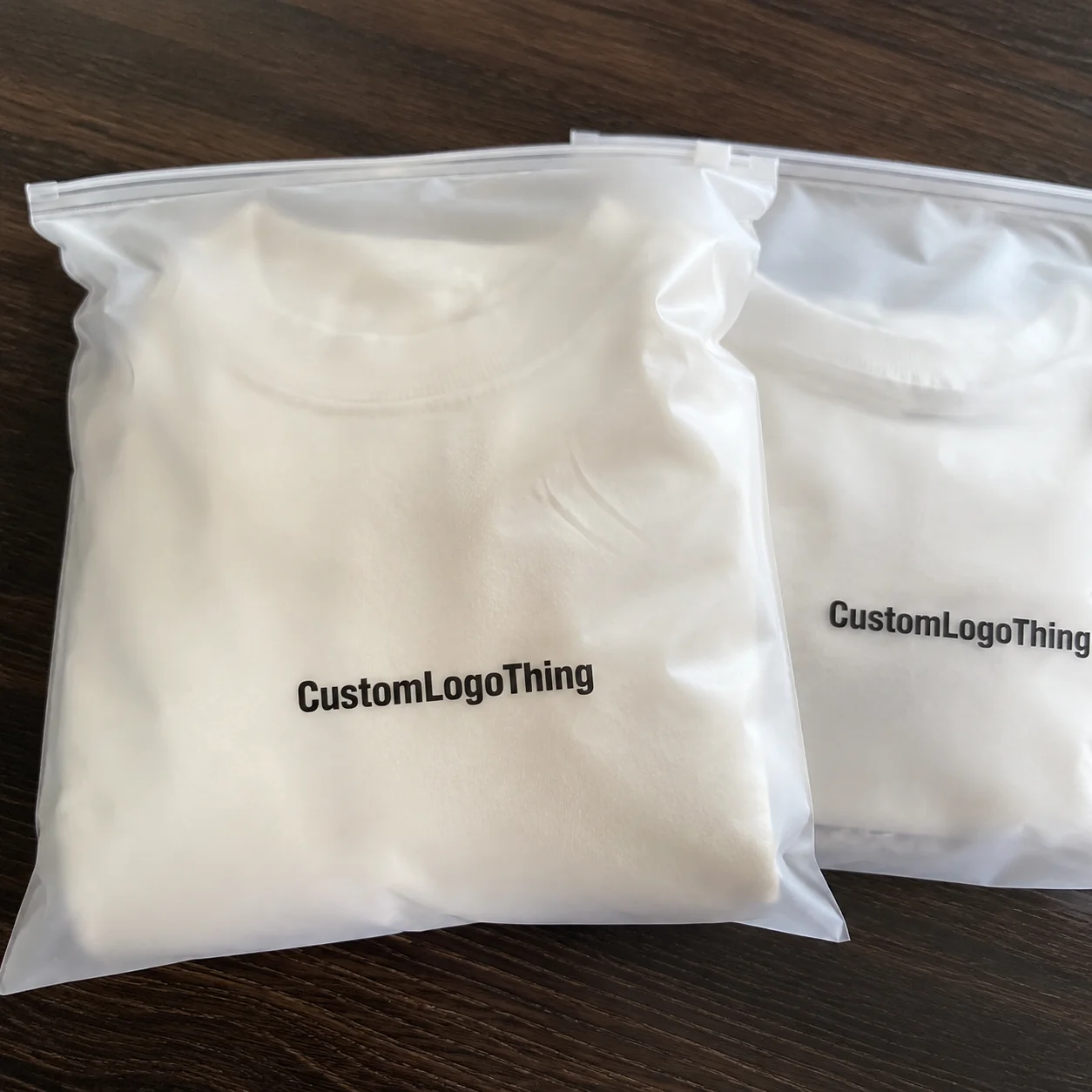
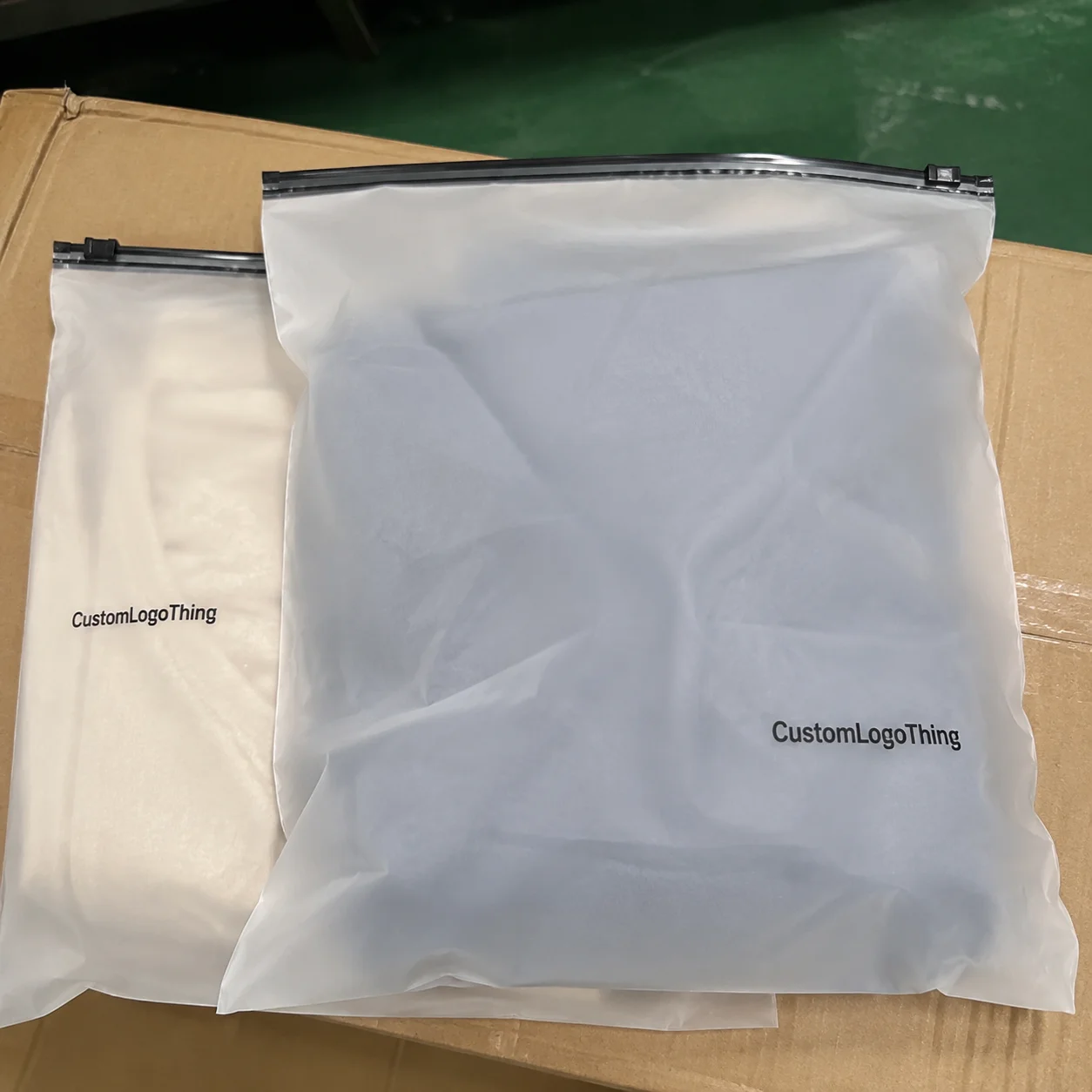
For corporate buyers, Garment Poly Bags for corporate buyers shipping carton plan decisions often matter more than one extra gauge point of film. A bag can look inexpensive on a quote and still raise labor, freight cube, or receiving errors if the carton plan does not fit the operation.
The better comparison is package protection plus carton efficiency plus how the product actually moves through the warehouse. Apparel programs, uniform distribution, and ecommerce insert packs all behave differently, so a bag that works in a retail DC may be awkward in a multi-site corporate issue program.
Buy the packaging system, not just the bag. A slightly higher unit price can still produce a lower landed cost if it reduces repacking, trims freight cube, and keeps receiving clean.
Why carton-fit beats overbuying thicker film
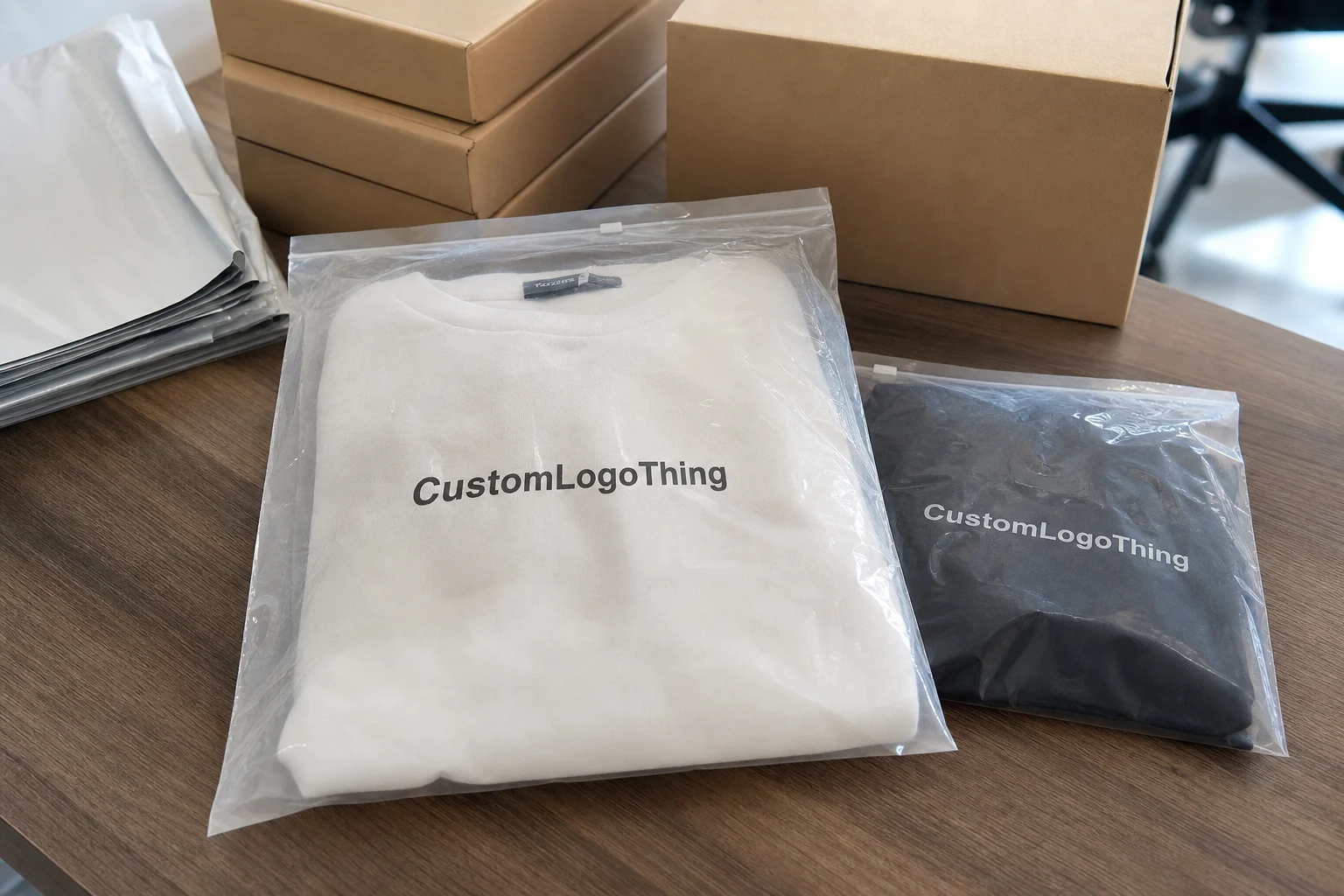
Most buyers start with film thickness because it is easy to compare. 1.5 mil, 2.0 mil, 2.5 mil. Clean numbers, easy quotes. The problem is that film alone does not tell you whether the bags will ship efficiently or handle well at receiving.
If the carton count is too low, labor rises because packers handle more units. If the carton is too large, you pay to move air and may trigger dimensional weight charges. Undersized cartons create crushed bags and boxes that look bad before they are even opened.
The better target is stable packing and predictable replenishment. That matters in internal distribution, retail replenishment, and ecommerce shipping alike. If the carton is easy to stack, easy to label, and easy to count, the bag disappears into the workflow.
That is why Garment Poly Bags for Corporate buyers shipping carton plan decisions should be made together. Separate the bag spec from the carton format and you invite waste. Tie them together and the program gets easier to source, easier to store, and easier to reorder.
Garment Poly Bags for Corporate Buyers Shipping Carton Plan
Standard Garment Poly Bags are clear or printed polyethylene bags used to protect folded apparel, uniforms, and other soft goods during storage and transit. Corporate buyers may order stock sizes, custom sizes, or custom-printed versions depending on the program. The carton plan is the distribution layer: how many bags go into an inner pack, how many inners go into a master carton, how cartons are labeled, and whether the product is palletized for single-site or multi-site delivery.
That difference matters more than people expect. A uniform issue program sending product to 40 offices needs a different pack-out than a retail replenishment program sending to three distribution centers. One buyer may care most about department-level issue and simple receiving. Another may care about pallet efficiency, barcode placement, and the ability to reorder the same spec without rebuilding the file set.
Before requesting quotes, lock in five items:
- Bag size based on the folded garment dimensions
- Film type such as low-density, high-density, or recycled-content blend
- Closure style including open top, wicketed, resealable adhesive, or vented
- Print coverage from one-color logo to full-panel branding
- Carton count plus inner pack configuration and pallet assumptions
If you are comparing related Custom Packaging Products, this is where the quote needs discipline. A vendor quoting only the bag and not the shipper format is not giving you the landed cost.
| Program type | Typical bag spec | Carton approach | Buyer priority |
|---|---|---|---|
| Uniform distribution | 1.5–2.0 mil clear poly, open top | 50–100 per inner, masters by department | Fast issue and easy labeling |
| Retail replenishment | 2.0–2.5 mil printed poly, good seal strength | Lower inner counts, pallet-stable cartons | Stackability and warehouse speed |
| Ecommerce insert pack | Lightweight poly with barcode or instructions | Compact master carton, parcel-friendly | Dimensional weight control |
| Multi-site corporate issue | Custom size with clear fit tolerance | Label by site, split pallet if needed | Simple receiving and reorder control |
None of those options is universal. A carton format that saves pennies in one environment can create labor in another. The right answer depends on garment type, handling frequency, shelf space, and whether the cartons are opened once or several times before use.
If your team is also quoting Custom Poly Mailers or Custom Shipping Boxes, the same rule applies: the packaging has to match the system. Product, carton, and freight are one decision, not three separate ones.
Specification details that control fit, seal, and stackability
Fit starts with size, but not just nominal size. Buyers should specify the folded garment dimensions, then account for seal area, folding tolerance, and the way the bags load into the carton. Too tight and packers fight the bag. Too loose and the contents shift, which makes cartons look unstable.
These are the specs that actually change performance:
- Width and length with an approved tolerance range, often around ±1/8 inch on repeat runs depending on tooling and material
- Gauge, commonly 1.5 mil to 3.0 mil for garment applications, with heavier films used where puncture resistance matters
- Seal strength, especially for heat-sealed bags used in warehouse handling
- Print registration, which affects logo appearance and barcode legibility
- Carton fill, because the bags need to fit without bowing the box walls
Film choice changes performance in ways that show up on the dock, not in a sample photo. Low-density polyethylene tends to feel softer and often offers better tear resistance in light-duty garment use. High-density film can be thinner for a given stiffness and may improve cube efficiency, but it usually feels crisper and can show creasing more easily. Recycled-content film supports sourcing goals, but the resin blend should be tested for clarity, seal consistency, and puncture resistance before release. If recycled-content language matters to your team, the EPA’s recycling resources are a practical reference: EPA recycling resources.
Functional features deserve the same attention. Wicketing helps on fast packing lines. Resealable adhesive can speed kitting. Venting matters for some folded apparel because it reduces trapped air in packed cartons. Antistatic treatment is worth asking about if the environment attracts dust or if the bag will be opened and reclosed repeatedly.
Warehouse compatibility matters too. A bag can look fine on paper and still fail if the carton is too long for standard shelving, too wide for pallet overhang limits, or awkward for automated label placement. Folding style also affects cube. A neat tri-fold that reduces carton height can outperform a flatter fold if it keeps the stack stable and lowers freight cube.
For transport validation, many programs use ISTA methods for parcel and distribution simulation. That is useful if the cartons will be handled multiple times or move through mixed carriers: ISTA testing standards.
Cost, pricing, and MOQ: what changes unit price
Unit price is driven by a short list of variables: resin cost, gauge, bag dimensions, print colors, closure style, carton configuration, and order volume. If one of those changes, the quote changes too. If several change, the quote can move a lot.
For standard stock garment bags, pricing can sit in the low cents per unit depending on size and quantity. Custom printed or heavier-gauge programs move higher, sometimes into the mid- or high-cents range or beyond once freight and special handling are included. What matters is the full landed number, not the cleanest-looking line on a spreadsheet.
MOQ usually starts lower for stock sizes and rises for custom dimensions or printed programs. A simple stock bag can often be bought in smaller runs. Custom film, custom print, or special recycled-content requirements usually push the minimum higher because of setup time, plate cost, and line scheduling. Reorders are often easier and smaller once the spec is locked and tooling is already in place.
The split that matters is product cost versus logistics cost. A slightly higher unit price can still reduce total cost if the carton plan improves pallet density, lowers damage, or cuts labor at receiving. That matters especially in multi-site corporate distribution, where one bad carton can create noise across several downstream teams.
| Cost driver | What changes | Typical effect |
|---|---|---|
| Resin and gauge | Film weight and material performance | Higher gauge usually increases unit cost |
| Print coverage | Ink usage, plates, setup time | More colors usually raise price |
| Carton configuration | Pack count and pallet efficiency | Better pack planning can cut freight cost |
| Order volume | Tooling amortization and run efficiency | Larger lots generally lower unit pricing |
| Freight terms | Who pays shipping and how it moves | Can change landed cost materially |
When comparing quotes, separate out tooling, plates, sample fees, freight terms, pallet specs, and any rerun charges. If a supplier bundles everything into one number with no detail, it becomes hard to compare fairly. A clean quote is better than a polished one.
For sourcing programs that include paper inserts, labels, or cartons, FSC can matter for the non-plastic components. The bag itself is plastic, but the shipper system may include paper-based materials that carry certified claims: FSC certification information.
Process and timeline: from sample approval to production steps
A clean quote-to-order process prevents drift. Start with a spec review, move to artwork, approve the sample or proof, then schedule production and confirm shipping. The sequence is basic, but projects still stall when one step is vague.
The common delays are predictable: missing dimensions, unclear carton requirements, late artwork, and changes after approval. If the carton count changes after proof, the pallet count, label format, and freight assumptions all need to be rechecked.
Lead time depends on order type. Stock bags move faster than custom film or printed runs. Custom jobs usually need extra setup and inspection. A 12 to 15 business day window after proof approval is a common planning baseline for simple custom work, but material availability, print complexity, recycled-content requests, and current production queue can extend that. Add buffer if the order needs split shipments or multiple ship-to sites.
Before approving production, the buyer checklist should include:
- Required-in-hand date
- Ship-to locations and receiving hours
- Pallet limits and overhang rules
- Whether split shipments are allowed
- Label format, barcode content, and inner-pack counts
That last point matters more than most teams realize. A shipment can arrive on time and still create receiving delays if the cartons are unlabeled or the inner counts do not match the invoice. Good suppliers know the job is not finished when the bags are made. It finishes when the shipment is received without chaos.
For broader corporate programs, order fulfillment discipline should be built into the spec. A bag that supports accurate picks, clean carton labels, and fast receiving is worth more than one that just looks good on a proof.
Why repeat buyers switch suppliers after the first reorder
The first order often looks fine. The reorder is where weak programs show themselves. That is when drift appears: dimensions change, seals vary, carton counts shift, and labels no longer match the approved file. If the first run was heavily manual but the reorder depends on memory, inconsistency shows up fast.
Documentation quality matters. Good suppliers keep spec sheets, approved artwork, carton data, and pallet notes aligned. They do not make the buyer rebuild the project from scratch. That lowers admin load, reduces mistakes, and shortens reorder release time.
Service affects cost more than many buyers admit. Fewer corrections mean fewer rejected pallets. Fewer rejected pallets mean fewer receiving disputes. Fewer disputes mean the operation keeps moving. That is real value, and it often matters more than a small price difference.
Repeat buyers usually do not switch suppliers because of one dramatic failure. More often, it is a stack of small issues: slow response time, weak proof control, carton count errors, or a reorder that arrives with the wrong label format. One mistake is annoying. Three mistakes are a sourcing event.
Stable programs also help buyers forecast inventory and avoid emergency freight. That matters in a corporate environment, where a packaging miss can interrupt issue schedules, store support, or fulfillment windows.
Next steps for quoting, artwork, and carton confirmation
If you are quoting Garment Poly Bags for Corporate buyers shipping carton plan decisions now, send the supplier the right inputs first: target size, garment type, annual usage, print artwork, and expected carton pack-out. If those five items are clear, the quote will be far more useful.
Confirm the carton plan before final approval. Do not wait until production is underway to discover that the pallet height is too tall for your dock, the master carton is too heavy for the receiving team, or the inner packs are too small for the line rate. Those are expensive surprises, and they are avoidable.
Sample review should be structured, not casual. Check fit on the actual garment. Test carton stacking. Confirm label placement. If the bag is printed, verify color, logo position, and barcode readability under warehouse lighting.
The easiest way to compare quotes is to keep the comparison plain:
- Unit cost for the bag itself
- MOQ for the first run and the reorder
- Lead time from proof approval to shipment
- Carton efficiency and pallet count
- Spec consistency across future orders
If one supplier is cheaper but cannot hold the spec, that is not a lower-cost program. It is a future correction cycle. If another supplier is slightly higher but keeps dimensions, carton counts, and artwork stable, the operational value is usually better.
For corporate procurement teams, the winning move is straightforward: compare the bags, compare the cartons, and compare the freight reality. That is how the program stays predictable at scale.
What size garment poly bags should corporate buyers order for standard apparel programs?
Size should be based on the folded garment dimensions, not the hanger size alone. Allow room for sealing, stacking, and carton packing so the bag does not crease or burst in transit. Request a sample with the actual garment inside before approving production.
How does a shipping carton plan affect garment poly bag pricing?
Carton pack count changes labor, freight cube, and pallet efficiency, so it affects landed cost. A tighter carton plan can reduce waste and lower shipping cost even if the bag itself is unchanged. Ask suppliers to quote product, carton, and freight assumptions separately.
What MOQ is typical for custom printed garment poly bags for corporate buyers?
MOQ usually rises with custom sizing, multiple print colors, and special film requirements. Stock-size bags generally have lower minimums than fully custom runs. Reorders can often be smaller once the tooling and specs are already approved.
How long does production usually take after artwork approval?
Stock items move faster than custom film or printed runs. A simple custom program often lands in the 12 to 15 business day range after proof approval, but material availability and print complexity can extend that. Build in extra time if you need pallet testing or split shipments.
Can we request recycled-content garment poly bags without hurting performance?
Yes, but the resin blend should be tested for clarity, seal strength, and puncture resistance. Ask for a sample and compare it against the product weight and handling conditions. Confirm whether recycled content changes MOQ, lead time, or print quality.