For a cosmetic launch, Garment Poly Bags for cosmetic brands retail launch checklist is not just a search phrase. It is the point where packaging stops being background noise and starts affecting how the product is received. The bag is part of the shelf read. If it wrinkles badly, hides the product, or shows up in the wrong size, people notice immediately.
Garment Poly Bags show up in cosmetic launches more often than brands expect. Folded tees, robes, tote bags, bundled merch, influencer kits, and gift-with-purchase items all need protection and presentation at the same time. The right bag helps packing move faster, keeps units clean, and avoids waste from oversized inventory that only eats warehouse space.
A bad bag does more than protect poorly. It makes the whole launch look less deliberate.
Garment poly bags for cosmetic brands: what they do at launch
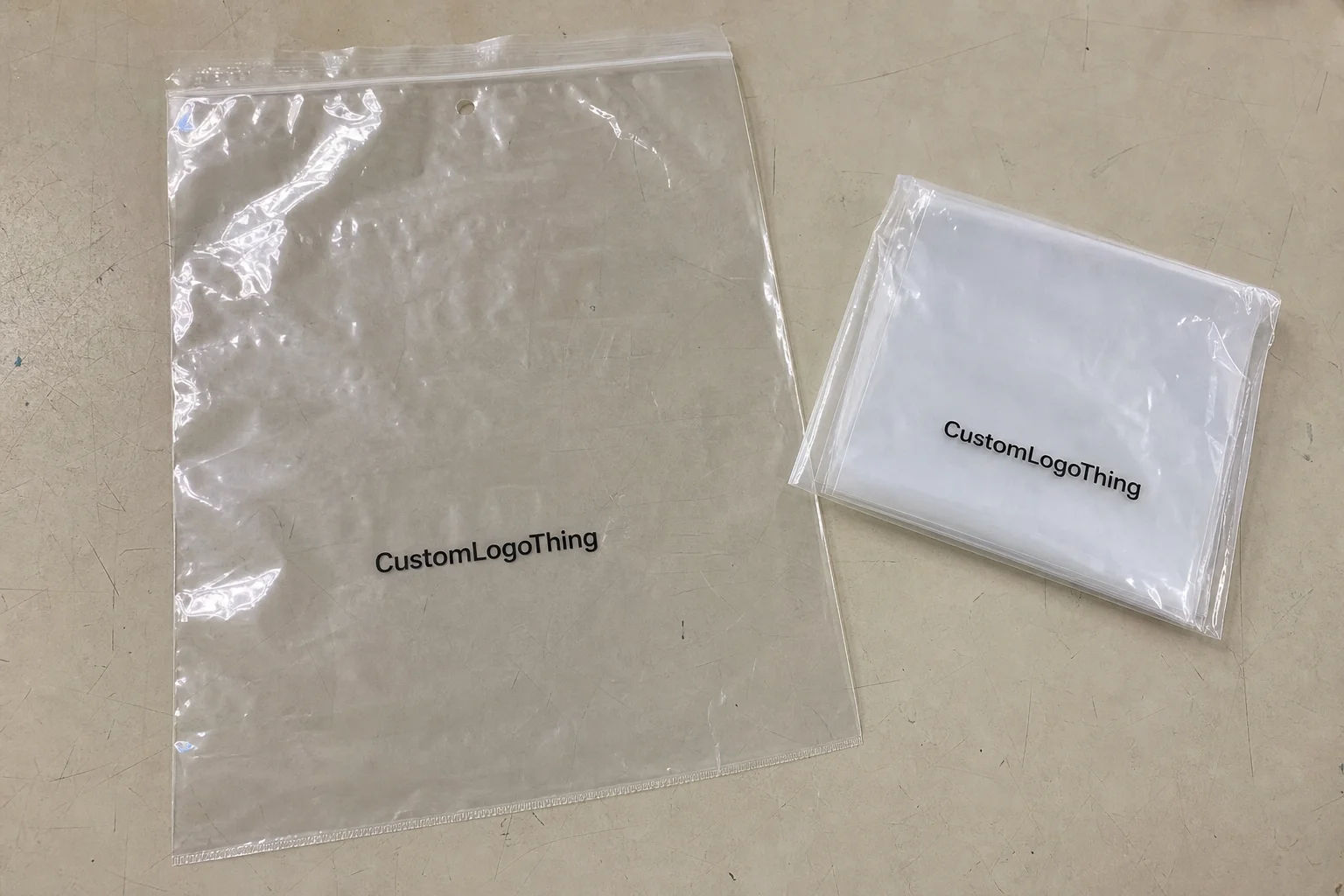
Poly bags are often treated like disposable supply. That mindset causes problems. For a retail launch, the bag has three jobs: protect the item, present it cleanly, and keep fulfillment moving. For cosmetics brands, those jobs matter even more because merch usually travels alongside fragile products, boxed sets, or promotional inserts that need to look controlled from the first touchpoint.
In practice, the bag becomes part of the brand story. A clear or frosted bag with a clean logo can make a folded tee, robe, or tote look retail-ready. A bag that is too loose, too cloudy, or poorly sealed does the opposite. Sloppy packaging reads as sloppy product. That is harsh, but it is also how retail buyers and customers react.
The risk is usually not the logo. It is sizing, seal quality, and visibility. A lot of launch issues happen because a brand chooses a bag by guesswork, then discovers that the item shifts inside, the flap curls, or the product disappears into an opaque film. That is how decent merch ends up looking cheap.
From a buyer’s point of view, the best bag is the one that protects, presents, and speeds up packing without forcing you to overbuy. If the launch needs 3,000 units, getting trapped in a 12,000-piece MOQ because the supplier only offers one awkward size is not planning. It is inventory clutter with better branding.
How retail poly bags work from warehouse to shelf
A retail poly bag has to survive the full route. The product goes in. The bag is sealed, folded, or zip-closed. Then it gets packed into master cartons, shipped, opened by warehouse staff, stacked, handled on shelf, and finally unboxed by the customer. If the bag looks tired at any point in that chain, the brand feels less premium.
That is why the functional side matters as much as the visual side. The bag should handle dust protection, some moisture resistance, and enough abrasion resistance to survive stacking. If the channel uses pegs or hooks, a hang hole stops being optional. It becomes the display system.
Transparency also changes behavior. Clear bags show the garment immediately. Frosted film softens the view and can read more elevated. Printed bags hide less of the product identity because the design becomes part of the presentation. None of those options is universally best. It depends on whether the launch is aiming for minimal, premium, playful, or utility-driven.
Operationally, better bag design can reduce packing time and cut avoidable damage claims. That matters when multiple fulfillment partners touch the same launch. If one team spends 20 seconds less per unit because the closure is easier and the product fits properly, the time savings add up quickly across a few thousand pieces.
Retail bags also need to be predictable under pressure. The film should open without sticking, the seal should stay flat, and the bag should not trap too much air around the garment. Tiny issues become big ones when a warehouse is pushing volume. A bag that is annoying to pack slows the whole line, and those minutes show up in labor cost.
Key specs that matter: film, thickness, seal, print
Start with material. LDPE is softer and more flexible, so it folds nicely and resists brittleness during handling. CPP is clearer and stiffer, which can make the bag look cleaner on shelf. Recycled-content options are worth considering if the brand wants a sustainability story, but expectations need to stay honest. Some recycled films look slightly less glossy or show more variation. That is normal.
Thickness is one of the easiest specs to get wrong. Thinner film lowers cost, but it wrinkles more and can feel flimsy. Heavier gauges hold shape better, stack nicer, and usually look more premium. For retail merch bags, buyers commonly look at ranges around 1.5 mil to 3 mil, depending on item weight and the presentation standard. Light, flat pieces can stay thinner. Robes, bundles, and pieces with inserts usually need more body.
Seal and closure style should match the use case. Bottom seals are common. Side seals can hold shape well. Adhesive strips work for quick packout. Zip closures are useful when the bag needs to be reopened by the customer or reused. Hang holes help in retail displays. And yes, suffocation warnings may be required in some channels. Ignore that, and you can turn a packaging order into a compliance problem.
Print choice depends on budget and volume. One-color branding is usually the easiest and cheapest. Spot color logos are a solid middle ground. Full-bleed art gives more shelf impact but pushes setup complexity and scrap risk up. Label-only approaches can work for smaller launches, especially when you want to test the market before committing to a full custom run.
There is also a practical quality-control layer most teams skip until something goes wrong. Check seal strength, print adhesion, clarity under retail lighting, and how the bag behaves after folding. A sample that looks fine on a desk can look terrible under bright store lights or inside a fulfillment carton. That is why a real sample matters more than a render.
| Option | Typical look | Best for | Tradeoff |
|---|---|---|---|
| LDPE, 1.5-2 mil | Softer, more flexible | Light garments, low-cost launches | Wrinkles more easily |
| CPP, 2-3 mil | Clearer, stiffer | Retail display, premium presentation | Usually costs more |
| Recycled-content film | Can vary slightly in clarity | Sustainability positioning | Not always as crisp visually |
| Printed full-bleed | High brand impact | Hero launches, influencer kits | More setup and print risk |
Retail launch checklist: sizing, sampling, and approval steps
Start with the product, not the bag catalog. Measure the actual folded garment or kit. Then add room for seams, inserts, tissue, cards, or a fold line that does not look crushed. A bag that is technically “big enough” can still fail if the item floats around inside it.
Request a physical sample or a dieline proof before you place the order. On-screen mockups are useful, but they hide too much. They do not show how the film behaves, where the folds land, or whether the print sits awkwardly near a seal. If the launch depends on retail presentation, a sample is cheaper than a reprint.
Check retail requirements early. Some stores want barcode placement in a specific spot. Some require hang holes. Some want a suffocation warning printed clearly. Some have rules for adhesive closures or resealable bags. And some want all of that in a very specific position, because apparently packaging should also do cartography.
Artwork approval needs a practical eye. Keep logos away from seals. Avoid tiny type on glossy or frosted film. Test contrast against the actual material, not just a monitor. What looks bold in a design file can disappear on clear plastic once lighting and reflection get involved.
Before any order is signed off, I would use this checklist for Garment Poly Bags for Cosmetic brands retail launch checklist work:
- Measure the folded product or kit accurately.
- Confirm bag style, film, and thickness.
- Request a sample or dieline.
- Check barcode, hang hole, and warning requirements.
- Review artwork on the actual film.
- Approve a small overage for backups and damaged units.
If the product includes inserts or a gift item, test the full packed configuration, not just the garment alone. That small difference can change the required width by enough to affect the quote, the seal line, and the shelf appearance. Packaging specs are unforgiving that way. A few millimeters can be the difference between a flat, retail-ready pack and a bag that bulges like a bad compromise.
Cost, pricing, MOQ, and quote drivers
Pricing is usually driven by size, thickness, print coverage, special finishes, and order volume. A small clear bag with no print is obviously cheaper than a custom printed, frosted, hang-hole version with a warning panel. That sounds obvious, but buyers still compare them as if they are close substitutes. They are not.
MOQs matter because setup costs get spread across the run. Smaller quantities almost always cost more per unit. That is how custom printing works. If the launch only needs 1,000 bags, expect a higher unit price than a 10,000-piece run. For many cosmetic launches, that tradeoff is acceptable if the bag is part of a limited drop or a test market.
For rough budgeting, plain stock-style poly bags may land around $0.05-$0.12 per unit at higher quantities, while custom printed retail bags often sit closer to $0.18-$0.40 per unit depending on size, film, print coverage, and volume. Smaller runs can move above that quickly. Shipping, plate charges, packaging extras, and freight timing can change the final number too.
When comparing quotes, compare the same spec set. Dimensions, film, thickness, color count, closure type, and delivery terms all need to match. Otherwise, one supplier will look cheaper because they quietly removed the thing you actually need. That is how bad apples hide inside a low quote.
The cheapest bag is not a win if it tears during packout, delays the launch, or forces a second run after the first shipment lands. Packaging is one of those places where low unit cost can become expensive very quickly.
If sustainability is part of the brief, ask whether the film is PCR or PIR, and get the claim in writing. “Recycled content” is not a useful label unless the team can explain what it means and whether the film still meets the presentation standard. A bag that looks rough and says the right thing is still a rough bag.
For a broader view of packaging options, brands can also review Custom Packaging Products and compare them against other launch items like Custom Poly Mailers when the collection needs shipping protection beyond retail display.
Process and lead time: from proof to production
The production path is straightforward, but every step can slow down if the brief is vague. It usually goes like this: spec review, artwork prep, proofing, material sourcing, printing, sealing, inspection, and shipping. If one of those steps has a missing measurement or an unresolved approval, the schedule slips.
Plain stock bags usually move faster than custom printed ones. A stock item might ship in days if it is already on hand. Custom work needs proof approval, press setup, and production time. A realistic timeline for custom garment poly bags is often 12-20 business days after proof approval, plus freight. Add more time if the film is special, the print is complex, or the quantity is large.
Approval bottlenecks are the usual culprit. One round of artwork changes can push the whole launch because the factory cannot print until the proof is signed off. That is why the brand, packaging, and operations teams need to stay aligned. If one person is still thinking about it while another person is booking freight, trouble is already scheduled.
Build buffer into the calendar. Sample revisions, freight delays, and retailer compliance checks can all add days. For launches tied to PR, pop-ups, or influencer drops, even a small delay can create a domino effect. Packaging should support the launch, not hold it hostage.
Standard production checks should include printed-color consistency, seal integrity, bag dimensions, and pack count verification. If the order is large enough, ask for a carton-level inspection plan. That does not mean overcomplicating the project. It means catching the obvious issues before they become a warehouse problem.
For standards and testing references, useful starting points include ISTA for distribution testing and EPA recycling guidance if the team is evaluating material messaging and disposal claims.
Common mistakes cosmetic brands make with poly bags
The first mistake is guessing the size. Brands often assume a medium or large bag will work, only to find the product shifts, creases, or looks small and lost on shelf. Measure the folded item. Then measure it again with inserts. Guessing is not a spec.
The second mistake is trusting artwork without a material test. A design that looks sharp on a screen can disappear on glossy film or get muddy on frosted film. If the retail display is busy, low-contrast print gets even weaker. Test on the actual material, not just a PDF.
Third, some teams ignore compliance until the end. That is a bad habit. Suffocation warnings, barcode placement, and hang-hole rules can affect the entire layout. Fixing that after artwork approval is wasted time and money.
Fourth, brands under-order backups. Damage happens. Sampling happens. Late influencer changes happen. If you only order exactly the launch quantity, you leave no cushion for reality. A 3%-5% overage is usually smarter than scrambling for a second run during launch week.
Fifth, teams sometimes forget how the bag will be used after launch. If the item is likely to be reopened, inspected, or repacked, a tear strip or resealable closure may be worth the added cost. If the bag is purely for shelf presentation, a simpler seal may be better. The right answer depends on the channel, not on habit.
If you want to see how other packaging programs are structured, Case Studies can be useful for comparing practical run sizes, spec choices, and launch timing decisions.
Here is the blunt version: most failures with Garment Poly Bags for Cosmetic brands retail launch checklist work are not dramatic. They are boring. Wrong size. Weak seal. Bad contrast. Too little lead time. Those are the things that quietly wreck a launch.
Expert tips and next steps for a cleaner launch
Ask for two sample versions if you can. One should be the exact spec. The second can vary slightly in thickness or closure. That lets you compare shelf appearance, packout speed, and how the bag feels in hand. Small differences matter more than most teams expect.
Compare quotes on a like-for-like basis. Same dimensions. Same film. Same print coverage. Same quantity. Same shipping terms. Otherwise, you are not comparing suppliers. You are comparing wishful thinking to a real quote, and wishful thinking never prints well.
Set one checklist with three owners: packaging, operations, and brand approval. That keeps measurements, compliance, and artwork from drifting around in separate email threads. Packaging projects fail when responsibility gets fuzzy. Simple as that.
Before approval, run one last physical review under the same lighting the product will see in market. Store lighting, warehouse lighting, and office lighting all behave differently. A film that looks clear in daylight can glare hard under retail LEDs. If the print still reads cleanly in that environment, you are in decent shape.
Next steps should be boring and exact:
- Finalize folded product measurements.
- Request a sample or dieline.
- Confirm compliance text and channel requirements.
- Approve artwork on the actual film type.
- Place the order with enough buffer for one revision cycle.
If the launch includes a broader packaging refresh, review the brand’s other launch materials together so the poly bag does not look like it came from a different project. Cosmetic launches are judged visually. Consistency is not a bonus. It is the baseline.
For brands ready to move from planning to ordering, garment poly bags for cosmetic brands retail launch checklist work should end with samples, approved specs, and a realistic schedule. That is how you get packaging that protects the product, supports shelf presentation, and avoids the last-minute scramble nobody needs.
FAQ
What size should garment poly bags for cosmetic brands use for a retail launch?
Measure the folded product first, then add room for inserts, seams, and a clean fold line. Choose the smallest size that still protects the item and keeps it looking intentional on shelf. A sample is the safest way to confirm fit before committing to a full run.
Do garment poly bags for cosmetic brands need warnings or special compliance text?
Retail channels often expect suffocation warnings and clear usage text on poly bags. Some stores also require hang holes, barcode placement rules, or closure restrictions. Confirm requirements before artwork approval, not after production starts. Fixing compliance later is expensive and annoying.
How much do custom garment poly bags for cosmetic brands usually cost?
Price depends on size, thickness, print coverage, material choice, and order volume. Smaller MOQs usually cost more per unit because setup is spread across fewer bags. Compare quotes with identical specs so you are not comparing apples to a box of oranges.
What lead time should I expect for garment poly bags before a cosmetic retail launch?
Plain stock options move faster than custom printed bags. Custom orders usually need time for proofs, approval, production, and freight. Add buffer for revisions and shipping delays so launch timing does not get wrecked by packaging.
What is the most common mistake when ordering garment poly bags for cosmetic brands?
Buying by price alone and ending up with bags that wrinkle, tear, or miss the shelf look. Skipping samples is another common problem, followed closely by ignoring compliance requirements until the last minute. That trio causes more delays than anyone likes to admit.
How do I keep the bag from looking too generic?
Use the right film, keep the print simple, and match the bag size to the product so the package looks intentional. A clean logo, proper transparency, and a crisp fold usually do more than piling on extra artwork. If the material looks cheap, more print rarely fixes it.


