Garment Poly Bags for Hotel Groups: Seasonal Buying Plan
For hotel procurement teams, Garment Poly Bags for hotel groups seasonal buying plan is not a packaging phrase to park and forget. It is a control point. If a linen refresh, holiday occupancy spike, or uniform rollout lands at the same time, thin inventory turns into rush freight, inconsistent bag quality, and delays that show up in laundry and housekeeping first.
Why hotel groups buy early: the hidden cost of seasonal stockouts
A hotel group can burn through inventory faster than a single-property buyer expects. One property changes uniforms, another adds spa robes, and a third starts pressing more guest amenity sets for peak season. If the garment packaging is not already in place, planned buying is what keeps the operation from paying for emergency shipments later.
The obvious cost is freight. The less obvious one is inconsistency. Rush replenishment often means partial cartons, odd counts, or different film thickness from one site to the next. That creates a small but real brand problem. Guests notice presentation changes from property to property, and back-of-house teams notice even faster when bags split, cloud over, or arrive packed in a way that slows handling.
Planned buying also gives procurement a fixed window for proofing, approval, and delivery. That matters more than it sounds. A clean seasonal order can land before occupancy jumps, so cartons are not stacked in hallways and linen rooms do not become a temporary warehouse. For multi-property groups, that is a cleaner operating model than chasing shortages property by property.
The practical comparison is simple. Emergency replenishment fixes one week. A planned cycle protects the next two seasons. That is why many buyers now treat Garment Poly Bags for hotel groups seasonal buying plan work as part of the annual sourcing calendar, not a last-minute reorder task.
Product details that matter for hotel operations
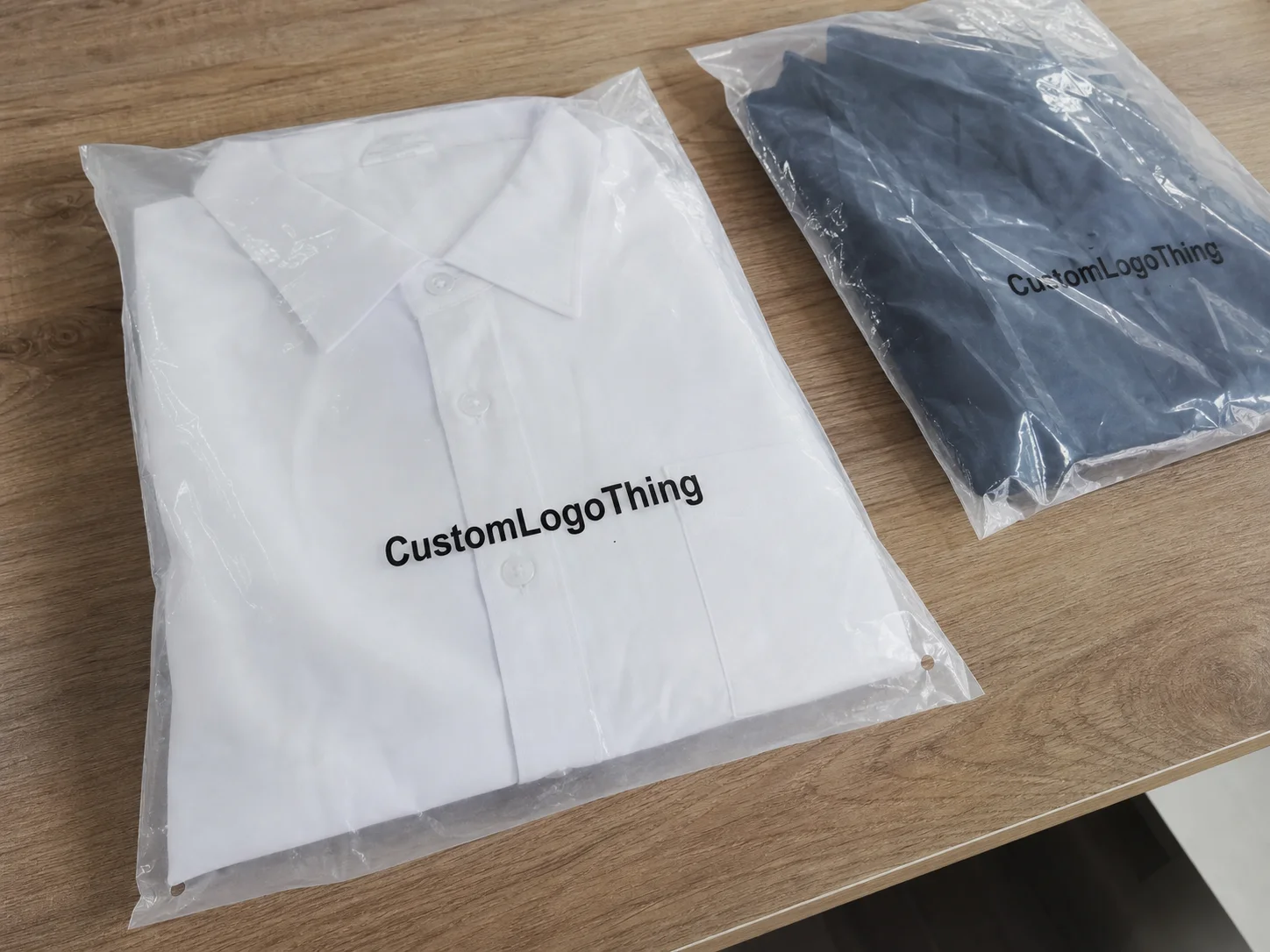
Hotels use Garment Poly Bags in more ways than a simple uniform cover. They protect pressed shirts, trousers, robes, spa apparel, seasonal bedding, and retail-style guest items that need to stay tidy in storage or transit. The right bag depends on the garment, the fold, and how often staff pull the item from the shelf.
LDPE is the common choice for a softer feel and better drape, especially when the bag must slide around folded garments without scratching them. PP tends to feel crisper and clearer, which can improve presentation for retail-facing programs or premium guest amenities. Clarity matters more than many buyers expect. A bright, transparent bag helps staff identify contents quickly, while a cloudy film slows sorting.
Common bag styles fit different workflows:
- Open-end bags are simple, fast, and economical for high-volume folding and packing.
- Resealable bags help for uniforms handled repeatedly or moved between departments.
- Suffocation-warning bags may be required for certain distribution programs and are often requested by compliance teams.
- Custom-printed bags support branding and make sorting easier across multiple properties.
Bag style also affects storage density. A stiffer film may stack cleaner in cartons, while a softer film can compress better in tight linen rooms. Neither is universally better. The right answer depends on whether the priority is presentation, packing speed, or protection during transit. If you are standardizing more than one item category at once, our Custom Packaging Products page is a useful starting point.
For transit performance, some buyers ask whether the packaging has been tested against common shipping stress. That is a sensible question. For more formal qualification, ISTA test methods are often used to evaluate how packaged goods behave under vibration, shock, and compression. The bag itself is not a parcel, but the logic still applies: if packaging fails before it reaches housekeeping, it has already cost time.
Specifications to lock in before you order
Strong buying starts with a spec sheet, not a quote. For hotel groups, the first decisions are usually dimensions, thickness, seal style, perforation, vent holes, and hang-hole options. If the bag is too short, folded garments wrinkle during handling. If it is too long, you pay for extra film and waste storage space.
Thickness should be matched to use case. A lighter bag may work for in-room presentation, but a thicker gauge is better for repeated handling in laundry or central storage. Many buyers request a sample range rather than a single guess, because the right thickness depends on the fold, the route the item takes through the property, and whether the bag is stored flat or stacked upright.
Print decisions matter too. One-color logo printing is usually the lowest-friction option, especially for properties that want a clean, controlled look. Multi-color print can look sharper, but it adds setup complexity and can extend approval time. Artwork should be supplied in vector format whenever possible, with clear notes on logo placement, safe area, and any copy that must appear on the bag.
Compliance and sustainability language should be settled before the PO is issued. If a buyer asks for recyclable material, the supplier should identify the resin and explain how it fits local recovery systems. That still needs local verification, because recycling acceptance varies by municipality. The EPA guidance on plastic recycling is a useful reference point for how film collection and recovery work in practice.
For brand control, I recommend separate specs by garment type. Shirts, trousers, robes, and long items do not always need the same dimensions. When purchasing, laundry, and housekeeping all work from one spec sheet, reorder errors drop. That matters more than a polished brochure. A hotel group does not need a clever package; it needs a repeatable one.
A useful rule of thumb: if the bag needs to travel only from laundry to storage, keep the spec simple. If it has to move through multiple departments, guest-facing areas, or off-site distribution, tighten the tolerances and check the film, not just the artwork.
Cost, pricing, MOQ, and quote structure
Unit cost moves on a few variables, and hotel buyers can usually control most of them. Film thickness is one. Bag size is another. Print coverage, order volume, and shipping method also shape the number on the quote. The same bag can price very differently depending on whether the order is a standard stock item or a custom run with logo printing and special packing counts.
For planning purposes, a custom garment poly bag can often land in a broad range such as $0.04-$0.18 per unit at mid-volume, with thicker film, multi-color print, or unusual sizing pushing higher. Very small orders usually price above that band. Large consolidated orders can come in lower, especially if multiple properties share the same spec. These are planning ranges, not promises. Freight, resin movement, and print setup all matter.
MOQ is where hotel groups either save money or accidentally create waste. A group with staggered openings may be tempted to order property by property, but that often means paying higher unit prices and paying freight more than once. Standardizing on fewer sizes reduces MOQ pressure and simplifies reorder timing. If a bag works for 80 percent of use cases, that is usually better than designing three almost-identical versions.
Here is a practical comparison buyers can use when sizing up options:
| Option | Typical use | Indicative unit cost | Lead time profile | Best fit |
|---|---|---|---|---|
| Stock open-end LDPE bag | Basic garment protection | $0.03-$0.08 | Fastest | Short notice, lower branding needs |
| Custom-printed LDPE bag | Uniforms, robes, guest-facing presentation | $0.06-$0.16 | Moderate | Standard hotel branding and repeat orders |
| Custom PP bag with higher clarity | Premium presentation and sorting | $0.08-$0.20 | Moderate to longer | Visible display and premium handling |
| Specialty bag with reseal or warning print | Compliance-heavy or repeated handling | $0.10-$0.24 | Longer | Controlled distribution and special workflows |
A quote should never be just a unit price. Ask for tooling, freight, sample approval, lead time, carton count, and reorder assumptions in writing. If a supplier leaves out freight or packaging counts, the landed cost is not really known yet. For related sizing work, our Custom Poly Mailers page can help teams that are aligning garment packaging with outbound shipping materials.
Here is the financial logic: if one standardized spec lowers cost by even a few cents per unit and cuts two emergency orders per year, it usually pays for the extra planning time very quickly. That is the point of seasonal discipline, not a theoretical savings slide.
Production steps and lead time for seasonal replenishment
A typical custom order follows a predictable path: specification review, artwork approval, sampling, production, quality check, and shipment. The sequence sounds simple, but timing changes fast if any one step stalls. Artwork revision alone can add several days. Sampling can add more if the first fit test does not match the hotel's fold or carton layout.
Most buyers underestimate proofing time, then try to recover it with rush production. That rarely helps. Rush work can increase cost by 10 percent to 25 percent, and sometimes more if the order has to jump queues or move by air instead of ocean or ground freight. Early approval is the cheapest form of risk control.
"The order that arrives before peak occupancy is the one no one notices. The order that arrives after the runout becomes everybody's problem."
A sensible timing framework for a hotel group looks like this:
- Confirm the seasonal demand window at least 8 to 10 weeks before the need date.
- Allow 5 to 7 business days for sample review and internal sign-off.
- Plan 12 to 15 business days from proof approval for standard custom production, longer for complex print or specialty features.
- Build in transit time based on the destination properties, not just the primary warehouse.
If the order serves multiple properties, synchronize delivery dates so one location does not stock out while another sits on surplus cartons. That is a common failure point in hotel procurement. The master order is placed on time, but the distribution plan is weak. garment poly bags for hotel groups seasonal buying plan only works if the internal handoff is treated as part of the purchase, not an afterthought.
There is also a quiet production constraint that buyers often miss: packaging itself. If the cartons are packed too loosely, they waste space in the warehouse and on the truck. If they are packed too tightly, the bags can crease, cling, or pick up static before they ever reach the property. Ask for the packing count and case dimensions, not just the bag spec.
How to compare suppliers on consistency, service, and repeatability
Price matters, but consistency decides whether a supplier is useful across seasons. Buyers should look at film gauge consistency, print registration, package counts, and on-time delivery history. A bag that varies in thickness from carton to carton creates handling complaints quickly, especially in busy laundry operations where staff can feel the difference immediately.
Single-factory control often gives better repeatability than fragmented sourcing, particularly for hotel brands that order the same item across multiple regions. When the supplier owns more of the process, it is easier to hold tolerances, match proofs to production, and repeat the same spec six months later without re-litigating the basics. Fragmented sourcing can work, but it usually needs tighter oversight from the buyer.
Sampling discipline is another separator. Good suppliers do not treat the sample as a courtesy. They treat it as a control point. The bag should be checked for size accuracy, film clarity, seal strength, print alignment, and how it folds with the actual garment load. If the supplier cannot support that kind of review, the reorder process will be less reliable.
Ask how reorders are handled. Do they keep print records and dielines? Can they repeat the same carton count? Do they hold approved color references for the next season? These questions sound operational because they are. Hotel groups do not buy one bag once; they buy a repeatable process.
It also helps to compare communication. A responsive account team matters more than a flashy quote deck. Property managers will call with practical questions, not marketing questions: How many cartons fit in the linen room? Can the bag be packed 500 per case instead of 250? Can the reorder stay on the same spec while the print remains unchanged? A supplier that answers clearly is worth more than one that only sells on price.
For buyers building broader packaging programs, consistency across categories matters. A hotel group that is already standardizing shipping cartons, liners, and amenity packaging can often fold garment packaging into the same control framework. That reduces confusion and helps purchasing see the full spend picture, not just one line item.
One more filter is worth adding: ask for defect handling on the first shipment, not after the third reorder. If a supplier has a clear process for shortages, print errors, or damaged cartons, the relationship is easier to manage during peak season. If they do not, the quote is cheaper for a reason.
Next steps for building a hotel seasonal order plan
Before requesting a quote, gather five inputs: bag dimensions, garment type, annual usage estimate, print file, and delivery schedule. Without those, suppliers are forced to guess, and guesses are expensive. The better the input, the cleaner the quote, and the fewer surprises show up later.
Then segment demand by season, property, and uniform program. A single national number is useful for budgeting, but it does not replace a property-level plan. The first order should reflect how much each hotel actually consumes in a busy week, not just what the chain bought last year as a total.
A practical purchasing checklist:
- Request one sample per garment type and test the fold.
- Confirm carton counts and warehouse labeling before approval.
- Set reorder thresholds before the busy season starts.
- Store approved artwork and spec sheets in one shared location.
- Review consumption after the first delivery and adjust the next run.
Hotels that treat garment packaging as a recurring procurement category usually spend less time reacting and more time controlling cost. That is the value of garment poly bags for hotel groups seasonal buying plan: fewer emergencies, cleaner storage, and a uniform presentation that holds up across properties. If the schedule is built once and reused, the buying process becomes predictable instead of reactive.
FAQ
What size garment poly bags for hotel groups should we order for uniforms?
Base the size on folded garment dimensions, not hanger size alone, so the bag fits cleanly without excess film. Separate specs for shirts, trousers, robes, and long garments if your property uses different folding methods. Ask for a sample fit test before committing to a full seasonal purchase.
How far in advance should hotels place seasonal poly bag orders?
Place custom orders before the peak inventory window so artwork approval and production do not collide with demand. For multi-property groups, earlier ordering reduces freight pressure and avoids emergency replenishment. Build in time for sample review and internal sign-off across procurement and operations.
Can we standardize one poly bag specification across multiple hotel properties?
Yes, if the same bag works for most garments and storage setups, standardization usually lowers cost and simplifies reordering. Standard specs also reduce training issues for housekeeping and laundry teams. Keep a second spec only for outlier items such as oversized robes or specialty uniforms.
What affects MOQ and unit cost the most for custom garment poly bags?
Material thickness, print complexity, and order volume are the biggest cost drivers. Higher MOQ usually improves unit pricing, especially when dimensions and artwork are standardized. Shipping method and rush timing can change total landed cost more than buyers expect.
How should hotel groups store garment poly bags between seasonal deliveries?
Keep them flat, dry, and away from direct heat to preserve clarity and sealing performance. Label cartons by size, property, and use case so warehouse teams can pull the right bag quickly. Use first-in, first-out rotation to avoid old inventory sitting through multiple seasons.


