Buying Garment Poly Bags for trade show buyers moq planning is not a search for the cheapest plastic on the page. It is a packaging decision with real consequences: how fast the booth team can pack, how clean the apparel looks on the table, and how much money disappears when the spec is wrong.
The bag has a practical job. It protects folded apparel, keeps samples organized, and prevents the booth from turning into a pile of wrinkled giveaways by noon. Miss the size, thickness, or closure, and the “cheap” bag quickly becomes labor, rework, and freight you did not budget for.
That is why this purchase should be treated like a logistics problem, not a cosmetic one. Buyers who plan it that way usually get better unit cost, fewer delays, and less waste.
Why trade show buyers overpay for plain poly bags
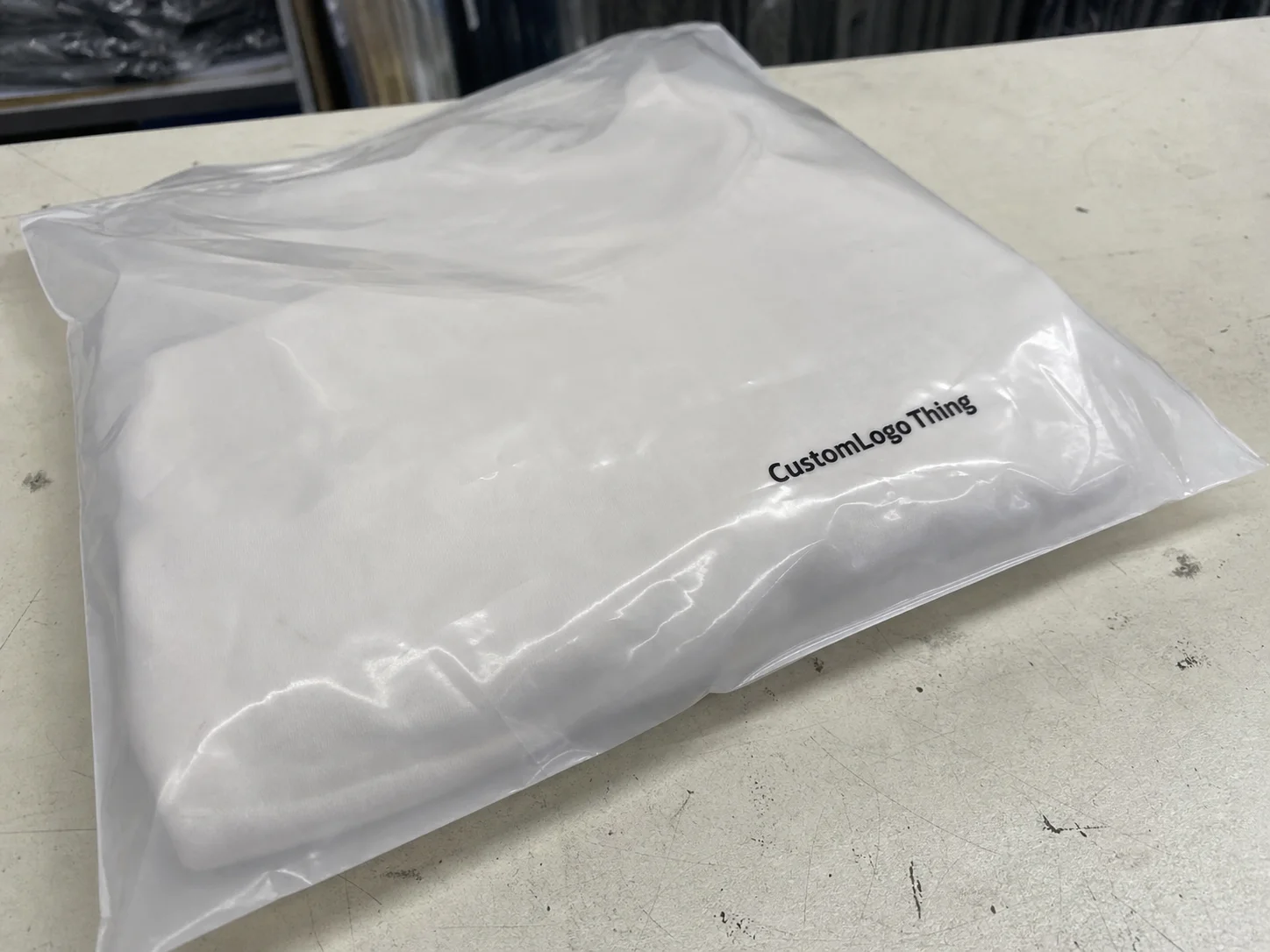
Trade show sourcing often pushes buyers to focus on the easiest line item and ignore the expensive parts around it. A plain poly bag looks simple, so the assumption is that the decision is simple too. It is not. The real cost usually hides in waste: oversized bags, film that is thicker than needed, carton counts that do not fit the packing flow, or an MOQ that forces inventory far beyond the event cycle.
For Garment Poly Bags for trade show buyers moq planning, the use case should come first. A folded tee handed out once does not need the same build as a hoodie sample that gets opened, checked, and repacked all day. A scarf in a display tray has different needs again. The garment, the handling frequency, and the booth workflow determine the spec.
Another common mistake is assuming more material automatically means better protection. Sometimes thicker film is justified. Often it is just extra cost. A 3 mil bag on a simple handout may feel sturdy, but if it slows packing and adds freight weight without preventing damage, it is not protection. It is expensive reassurance.
Good packaging for a show needs to do three things well:
- Keep the apparel clean and presentable.
- Move quickly through prep without fighting the material.
- Fit the freight plan so shipping and storage stay manageable.
If an order runs into dozens or hundreds of attendee handouts, the wrong bag spec can add minutes to every carton. No drama. Just waste, repeated until the booth opens.
“The bag is a work tool. If it slows the team down, it is already too expensive.”
That is the basic mindset shift: judge the bag by performance, not by how tidy the quote looks.
Which bag format fits folded apparel, inserts, and handouts
The right format depends on the folded size, how often the item will be handled, and whether the bag needs to be opened again during the event. The main options are flat poly bags, resealable bags, gusseted styles, and printed garment sleeves. Each solves a different problem.
Flat poly bags are the default for folded shirts, tees, and lightweight handouts. They pack fast, stack cleanly, and usually deliver the lowest cost per piece. If the item is folded consistently and does not need repeated access, flat bags are usually the cleanest solution.
Resealable bags make sense when staff will open and close the package more than once. That includes accessory kits, size cards, sample packs, or items that are checked and repacked during the show. They cost more than flat bags, but the time savings can be real when the booth is busy.
Gusseted bags are the right answer when the garment has bulk. Hoodies, fleece, and thicker folded bundles need extra room so the seams do not fight the contents. Buyers get into trouble when they size only by flat width, then wonder why packing is slow or the film looks stressed.
Printed garment sleeves fit brand-forward sample programs and organized display systems. If the logo, size mark, or product name helps staff sort and hand out pieces faster, the print can justify the setup. If the bag goes straight into a tote and nobody sees it, plain film is usually enough.
Useful features to check early:
- Header holes for hanging or display use.
- Suffocation warnings where retail handling or compliance requires them.
- Hanger holes if the item moves between display and packing.
- Resealable closures if the same bag will be opened repeatedly.
The practical rule is simple: the best format is the one that matches your folding standard and the pace of the booth. If the team can pack it quickly and the result still looks tidy, that is the right choice.
| Bag format | Best use | Typical pros | Typical tradeoffs |
|---|---|---|---|
| Flat poly bag | Tees, shirts, lightweight handouts | Lowest cost, fast packing, easy stacking | Limited room for thicker items |
| Resealable bag | Items opened and closed during the show | Reusable, cleaner handling, better for staff access | Higher unit cost and more setup complexity |
| Gusseted bag | Hoodies, fleece, bulkier folded apparel | More internal space, less seam stress | Can cost more and use more film |
| Printed garment sleeve | Brand-forward sample programs | Cleaner presentation, clearer sorting | Setup charges and longer lead time |
If you are comparing options across a broader packaging program, keep the print spec consistent with your other items. Buyers often review Custom Packaging Products and realize the apparel bag should fit the same brand system as mailers, inserts, and handout kits.
Garment poly bags for trade show buyers: specs that actually matter
This is where the quote turns from vague to useful. The spec details drive performance more than the sales language does. For Garment Poly Bags for Trade show buyers moq planning, pay attention to film gauge, size, closure, seal strength, and print method. Those are the levers that change both function and cost.
Film thickness affects stiffness, clarity, puncture resistance, and how the bags stack in cartons. Thin film costs less and weighs less, but it can wrinkle, feel flimsy, or tear under repeated handling. Thicker film holds up better and can look more premium, but once you go beyond the actual use case, you are paying extra for a feature nobody asked for. For apparel sleeves, a common range is roughly 1.5 to 3 mil, depending on garment weight and handling.
Width and length should be based on the folded garment plus anything that goes inside it: insert card, tissue, size tag, or small handout. Leave enough tolerance for quick packing. Too tight and the booth team slows down. Too loose and the presentation looks sloppy.
Closure style matters more than many buyers admit. Adhesive flap bags are simple and fast. Resealable closures help when the item may be opened and reclosed. Heat seals are useful when the goal is a tighter, cleaner closure for storage or shipping. Pick based on actual handling, not what sounds premium in a catalog.
Print method changes both price and lead time. One-color logos are easier on budget and scheduling than multi-color graphics or full coverage printing. If the bag is seen from a few feet away, a clean logo and size mark often does more than a crowded design. That also helps keep tooling and setup costs under control.
Compliance is not exciting, but it is part of the job. If the bags are going through retail-style handling or sample fulfillment, check whether suffocation warnings or other labeling expectations apply. For shipping and transport thinking, many buyers use general guidance from groups like the ISTA standards community. For sourcing programs that include paper components, the FSC system becomes relevant. Different standards, same idea: do not skip the boring parts and then act surprised later.
The test is simple. Does the bag protect the garment, support the brand, and move quickly through prep? If one of those fails, the spec needs work.
Pricing, MOQ, and unit cost: what changes your quote
The quote is not mysterious. It is driven by predictable variables: size, film gauge, print colors, closure style, packaging format, quantity, and whether the job needs special tooling or finishing. If you understand those inputs, pricing becomes much easier to compare.
MOQ usually comes from production efficiency, not a random rule. The manufacturer has setup time, material conversion, and run-length thresholds. If your order is too small, those fixed costs get spread over fewer pieces and the cost per piece jumps. That is why low-MOQ orders can feel expensive even when the bag itself is plain.
As volume increases, bulk pricing usually improves. The best break often happens when the order fits a standard film width, common print setup, or carton configuration the plant can run without extra steps. That is where unit cost drops without forcing a weaker spec.
For planning, a simple clear bag is dramatically cheaper than a custom printed sleeve with special closures and multiple colors. Add print coverage, custom sizing, or nonstandard packaging, and the price moves fast. Buyers who chase the lowest quote without checking setup terms often end up paying elsewhere.
Watch for hidden cost creep:
- Tooling fees for custom prints or special configurations.
- Setup charges that are not obvious in the headline unit price.
- Split shipments that add freight and handling.
- Rush fees when the show date gets closer than anyone wanted.
- Artwork changes after proof approval.
For buyers comparing vendors, ask for pricing at three volume levels. For example: 5,000, 10,000, and 25,000 pieces. That exposes the real curve instead of one number chosen to look attractive. If the next tier barely improves, the MOQ is probably too high for your event cycle.
If your broader shipment includes apparel and mailer programs, compare the bag line with Custom Poly Mailers. Different product, same buying logic: size, print coverage, setup time, and freight all shape the landed cost.
Process, timeline, and production steps from quote to delivery
A clean production run follows a basic path: quote, spec confirmation, artwork review, proof approval, production, quality check, packing, and shipment. The problems usually show up in the handoff between steps.
Lead time depends on order complexity. Clear stock bags move faster. Custom printed bags take longer. A simple one-color sleeve with final artwork approved early is usually easier to schedule than a bag with multiple sizes, special labeling, and a tight in-hand date.
A realistic timeline for custom work often lands in the low-teens of business days after proof approval, with more time needed if the order has special print complexity or nonstandard packaging. That timeline stretches when artwork is incomplete, dimensions are still changing, or the buyer keeps revising the spec after the quote. The schedule usually breaks at approval, not on the press.
To keep the calendar under control, do three things:
- Approve the right sample or proof, not a “close enough” version.
- Lock dimensions before production starts.
- Consolidate feedback so the supplier is not chasing three different revision paths.
That sounds basic because it is. Yet most missed deadlines come from avoidable changes, not machinery problems. If the bags need to arrive for the show, clarity upfront is the fastest shortcut.
For buyers who want a reference point on packaging quality and transportation handling, the Packaging Association is useful for checking standards thinking and industry practices.
What a dependable packaging partner does before a deadline
A dependable supplier does more than quote a price. It checks whether the requested spec fits the use case, flags cost traps before production starts, and tells you when the bag is overbuilt for the job.
Good communication matters because trade show deadlines are unforgiving. A strong partner gives clear proof timing, realistic shipment windows, and straight answers about what the MOQ includes. If the order has mixed sizes or multiple SKUs, the supplier should explain how that affects packing, labeling, and carton count. If they cannot explain it, they probably do not understand it.
The difference shows up when the schedule is tight. Experience helps prevent a dozen small problems that would otherwise stack up. Common examples: the bag is too narrow for the fold, the insert changes the total thickness, the carton count does not match the booth team’s packing workflow, or the logo placement looks fine on screen but awkward on the actual sleeve.
I would rather work with a packaging partner that says “this spec is too much” than one that happily sells overkill. What matters is whether the bags are correct, counted properly, packed safely, and on time.
If your team wants a broader working reference for packaging categories and order planning, the FAQ page is useful for sorting through common buying questions before you send artwork or approve a proof.
What to send for a fast quote and clean production start
If you want a fast answer, send a complete spec sheet. Not a vague note. Not “need bags for shirts.” A real request should include folded garment dimensions, bag style, target film thickness, print artwork, quantity, delivery city, and the in-hand date. The more complete the brief, the less time everyone wastes.
When comparing vendors, ask for:
- MOQ.
- Unit cost at three volume breaks.
- Proof turnaround.
- Setup charges and any tooling fees.
- Freight assumptions.
Also clarify whether the fit is based on the garment alone or the garment plus insert. That one mistake ruins more bag specs than buyers expect. A folded shirt plus tissue may fit neatly. Add a card, size sticker, or hanger insert, and the sleeve can suddenly be too tight.
For buyers handling Garment Poly Bags for trade show buyers moq planning, the smart move is to lock the spec early and keep the order simple enough to move efficiently. Standard sizes, fewer print colors, and familiar film widths usually give better pricing without hurting presentation.
Ask for a clean quote. Verify the fit. Approve the proof. Then stop adjusting the dimensions every time somebody has a new idea.
What MOQ should I expect for garment poly bags for trade show orders?
Most custom runs start in the low-thousands because setup and material conversion costs need to be spread across the order. If you need multiple sizes, ask whether they can share the same print setup or film width so the MOQ does not climb for no good reason.
How do I choose the right size for garment poly bags for a trade show?
Measure the folded garment, then add room for tissue, inserts, or a hanger card if those will be included. Do not size the bag so tightly that packing slows down or the seam stretches during handling.
What affects pricing the most on custom garment poly bags?
The biggest price drivers are film gauge, bag size, print complexity, closure style, and total quantity. Rush delivery, split shipments, and artwork changes after approval can add more cost than buyers expect.
How long is the lead time for trade show garment poly bags?
Lead time depends on whether the bag is clear stock, custom printed, or built to a special size and closure spec. Fast approvals shorten the schedule more than almost anything else.
Can I reduce unit cost without lowering quality?
Yes. Standardizing sizes, simplifying print colors, and aligning with common film widths usually improves pricing without hurting performance. The trick is avoiding over-specification.


