Garment Poly Bags for cosmetic brands moq planning is not a side topic. It affects margin, launch timing, warehouse space, and how the product feels before anyone actually uses it. A bag that fits well, prints cleanly, and arrives on schedule does quiet work. A bad one creates expensive noise.
Cosmetic brands tend to discover that fast. The packaging might be a sleeve for a sleep mask, a pouch for an accessory bundle, or an inner bag for a gift set. If the bag looks flimsy, the whole kit reads cheaper than it should. If it is oversized, the packing line slows down and the product shifts around in transit. If the MOQ is wrong, inventory gets stuck before the campaign even finishes.
The practical goal is not to make the poly bag the star. It is to make the bag disappear into the experience in the right way: protect the product, present it clearly, and keep the unit economics sane. That means choosing the right material, the right construction, and an order size that matches actual sell-through instead of hopeful forecasts.
For brands that pair cosmetic items with textile accessories, a garment poly bag is often the cheapest packaging layer that still looks intentional. It is also one of the easiest places to overbuy. That is why the MOQ decision matters as much as the spec.
Why cosmetic brands use garment poly bags before they scale
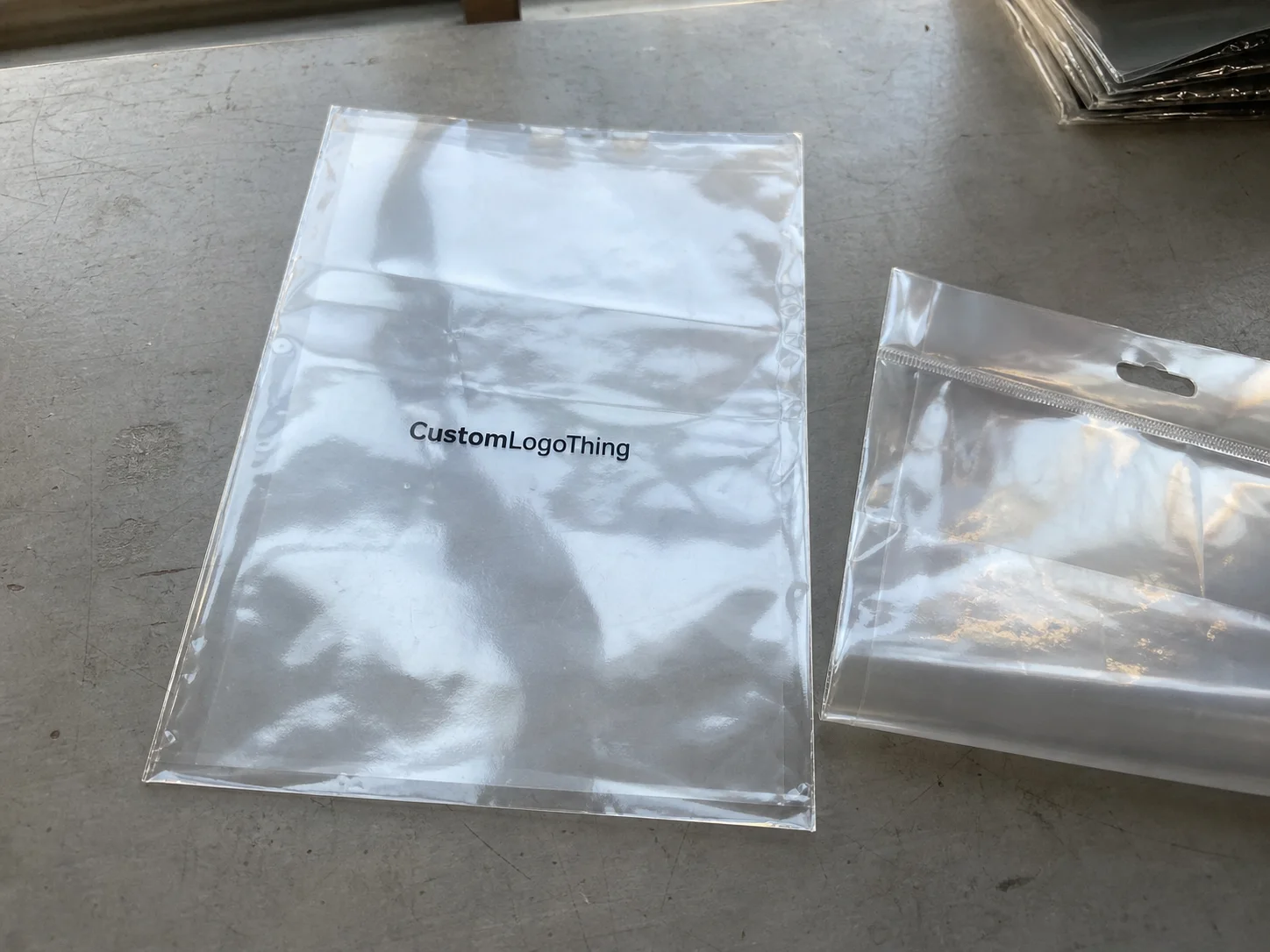
Most brands do not start with luxury cartons, molded inserts, and layered packaging systems. They start with a product that needs protection and a presentation that does not embarrass the brand. Garment Poly Bags fit that middle ground. They are light, easy to store, cheap to ship, and flexible enough for many cosmetic-adjacent applications.
They work especially well for bundled kits, apparel inserts, travel accessories, promotional drops, and subscription items. A clear sleeve around a silk mask or a frosted bag for a branded accessory can make the set feel finished without driving packaging spend into the wrong part of the budget. That is the real appeal. Not glamour. Control.
They also reduce small but annoying damage points. Dust, scuffing, loose threads, and contact marks show up fast on soft goods and accessory items. A poly bag gives basic protection during picking, packing, storage, and transit. Skip it, and the brand often pays later through complaints or returns that were avoidable from the start.
A bag that saves a cent but makes a premium item look cheap is not saving money. It is moving cost into the wrong part of the order.
The other reason brands lean on poly bags early is speed. Rigid packaging usually brings more setup, more material handling, and more risk if the SKU changes. A poly bag is easier to spec, easier to revise, and easier to test in small quantities. That matters when the product line is still changing.
The common mistake is ordering as if the SKU is permanent before it has earned that status. A launch color changes. A logo updates. The accessory grows by half an inch. Now the bags are obsolete and the warehouse is holding the mistake. That is exactly why Garment Poly Bags for cosmetic brands moq planning should be tied to product stability, not to unit-price optimism.
For examples of how packaging choices affect production outcomes, see our Case Studies page. For a wider look at packaging formats, review our Custom Packaging Products page.
Product details that affect fit, feel, and shelf appeal
The bag itself looks simple. The decisions around it are not. Material choice changes how the bag feels in hand, how it behaves on the packing line, and how it looks under retail lighting. For most cosmetic-brand uses, LDPE and CPP are the usual starting points.
LDPE is softer and more flexible. It is easier to pack into and tends to be forgiving when items are inserted quickly. CPP feels crisper and usually reads cleaner in presentation-heavy uses. If the brand wants a sharper, more polished look, CPP is often the better fit. If the priority is packing speed and pliability, LDPE can make more sense.
Clear versus frosted is another decision with real consequences. Clear bags give full visibility, which helps when the product itself is part of the merchandising story. Frosted film reduces clarity a bit, but it often looks more controlled and less utilitarian. That can be the right move for premium cosmetics, accessory kits, or brand drops that need a softer visual tone.
Seal style also matters more than buyers expect. Bottom seal bags are common and efficient. Side seal construction can help depending on the size and how the bag will be handled. A resealable flap or zipper is only worth the extra cost if the use case calls for repeated opening or re-packing. A closure added because it “looks premium” is usually wasted spend unless the product actually needs it.
Useful features for cosmetic kits and garment-style inserts include:
- Hang holes for retail display
- Adhesive flaps for faster packing
- Zipper or press-to-close options for reuse
- Suffocation warning print where required
- Logo placement that does not block the product view
Print style changes the tone of the bag. Minimal one-color print can look clean and controlled. Glossy graphics are more aggressive and campaign-driven. Matte ink on frosted film often feels more restrained, which can work well for beauty brands that want a clinical or elevated look. The print should support the brand, not fight the product for attention.
There is also the handling side, which gets ignored too often. If the bag will live inside a mailer or shipper box, it still needs to hold up under friction, pressure, and carton movement. Basic transit testing aligned with ISTA methods can expose weaknesses before a whole run ships.
Size, thickness, and print specs that keep orders consistent
Most quoting problems start with guesswork. A product photo is not a spec. A rough screenshot is not a dimension. Measure the item directly, then add room for folds, inserts, labels, hang tabs, and closure space. If the bag is supposed to pack quickly on a line, build in enough clearance to avoid forcing the item in at the last second.
Thickness should be chosen for handling, not vanity. Thin film can work for lightweight inner packaging or low-risk presentation sleeves. Heavier gauge film makes more sense for sharper accessories, repeated handling, or product sets that are likely to rub against each other during transit. A lot of buyers begin around 1.5 mil to 2 mil for standard cosmetic accessory bags, then move up only if the use case justifies it.
Before asking for pricing, lock these specs:
- Finished width and length
- Gusset depth, if the product needs volume
- Film gauge or thickness
- Seal style and closure type
- Print colors and print coverage
- Pack count per carton
Those details affect more than the quote. A small width change may require a different build. A new closure can shrink the print area. A redesigned logo can change the proof and force a new approval cycle. That is how a simple packaging item turns into a revision loop.
Compliance and labeling need space too. If the bag needs barcode placement, batch coding, warning text, or carton marks, that has to be included from the start. A clean-looking design that ignores warehouse or legal requirements is just a rework waiting to happen.
The smartest way to keep costs under control is spec discipline. One size across related SKUs. One print layout where possible. One closure type unless there is a genuine functional reason to split. That approach trims complexity without lowering the quality of the packaging.
For brands pairing the bag with outer shipping packaging, our Custom Poly Mailers can cover the mailing layer without forcing a move into rigid boxes too early.
Pricing and MOQ planning without overbuying
Poly bag pricing moves in predictable ways. Higher quantity lowers unit cost. More print colors raise it. Larger dimensions use more film. Special finishes and closures add cost. None of that is complicated, but buyers still compare quotes as if one variable decides everything. It does not.
For Garment Poly Bags for Cosmetic brands moq planning, a realistic starting point helps. A simple clear bag with minimal print may land around $0.06 to $0.12 per piece on a 5,000-unit run, depending on size and material. A frosted custom-printed bag with a zipper closure can move into roughly $0.16 to $0.35 per piece or higher if the dimensions are large or the artwork is more complex. Freight, duties, taxes, and local receiving costs sit outside those numbers.
Tooling and setup charges deserve attention early. Some suppliers include them in the unit price. Others separate them. Either approach is fine if the quote is clear. The problem is hidden cost. A low unit price with surprise setup fees is not a good deal. It is just a delayed bill.
That is why MOQ planning should be tied to use case. A test run is useful for fit checks, launch validation, and small campaign drops. A launch run works for first retail or DTC releases where demand is still uncertain. A replenishment run only makes sense when the SKU has already shown stable sell-through. The order size should match the risk level, not the most attractive number on the quote sheet.
| Order type | Typical quantity | Best use | Cost behavior |
|---|---|---|---|
| Test run | 500 to 1,500 pieces | Fit checks, sample launches, limited campaigns | Higher unit cost, lower inventory risk |
| Launch run | 2,000 to 5,000 pieces | New retail or DTC launch, bundle packaging | Balanced pricing and manageable stock commitment |
| Replenishment run | 5,000 pieces and up | Stable SKUs with predictable sell-through | Lower unit cost, higher storage commitment |
The table is not a rule. It is a way to keep decisions honest. A small test run costs more per piece, but it can save a brand from holding the wrong size, the wrong closure, or the wrong finish for six months. A larger run can improve pricing, but only if the product is stable enough to justify the commitment.
The lowest-risk cost controls are also the least exciting: reduce print colors, use one bag format across related SKUs, keep closure choices simple, and avoid special film effects unless the brand value clearly supports them. Suppliers can quote a lot of options. Not all of them belong in the order.
Production steps and lead time from approval to shipment
The production path is simple on paper and less simple in practice. Most custom orders move through inquiry, spec confirmation, artwork review, sampling if needed, mass production, quality check, packing, and shipment. Delays usually come from incomplete inputs, not from the process itself.
Artwork changes after proofing are a common slowdown. So are missing dimensions, fuzzy logo files, and last-minute color adjustments. If the supplier has to chase basic information, the schedule moves. That is not a surprise. It is usually the expected outcome.
Typical lead time depends on complexity. Standard stock-style bags with basic printing may move in about 10 to 15 business days after approval. Custom size, custom film, or more detailed branding can push that closer to 15 to 25 business days, sometimes longer if sampling or proof revisions are involved. Shipping time sits on top of production time, and air freight and ocean freight should never be treated as interchangeable.
The approval chain should be clear:
- Dieline or spec sign-off
- Digital proof approval
- Sample approval if requested
- Final production approval before mass run
Backward scheduling keeps launches cleaner. Start with the date the bags must be in hand for photography, kitting, or fulfillment. Work backward from that date. If the bags arrive after the campaign begins, the timeline was wrong from the start.
Suppliers worth working with will flag real issues early. They should tell you if the requested size is tight, if the print area is crowded, or if the MOQ does not fit the build. That kind of honesty protects the schedule. Fancy presentations do not.
How to compare suppliers on quality, compliance, and service
Sample quality matters more than render quality. A mockup can look clean and still hide weak seal strength, poor registration, hazy film, or uneven thickness. Ask for actual samples and inspect them in hand. Once the bag is physical, flaws show up fast.
Good supplier questions are direct:
- What materials are available for this spec?
- What size and thickness tolerances are standard?
- How are defects handled during production?
- Are cartons export-ready?
- Can you support barcode, warning text, or carton marking requirements?
Speed of communication matters more than people like to admit. A supplier that responds quickly usually catches spec issues early. A supplier that takes days to answer a basic question often has the same pace when a problem shows up in production. That is how buyers end up paying for rework instead of packaging.
Quality control should be routine. Check size accuracy, seal inspection, print alignment, and random-carton sampling before shipment. If the bags will travel through several handling points, ask about durability checks or transit testing. For general packaging guidance and industry references, the Packaging Machinery Manufacturers Institute has useful resources.
Service is part of the product. The cheapest supplier on paper is not always the best choice. The better one is the supplier that helps you hit MOQ, protect the launch date, and avoid unnecessary spec creep. If the quote is low but the replies are vague, the hidden cost is already visible.
That is the line buyers should watch. Not the logo on the quote. The quality of the answers.
Next steps to quote garment poly bags for your cosmetic line
A clean quote starts with a clean brief. Send the bag size, material, thickness, print colors, closure style, quantity, and target delivery date. That is enough for a supplier to stop guessing. A product photo helps. An actual sample or exact dimension sheet is better.
Ask for two pricing paths. One should match your target MOQ. The second should show a lower-risk test quantity. That makes the tradeoff visible: lower inventory risk versus lower unit cost. Sometimes the larger run is justified. Sometimes it is just a more expensive way to hold too much stock.
For Garment Poly Bags for Cosmetic brands moq planning, the best decision usually comes back to a simple filter: choose the spec that meets branding and protection needs with the fewest unnecessary variables. That tends to produce the best balance of unit cost, print quality, and lead time. Extra complexity should earn its place in the order.
Send the facts, not the wish list. A bag that is sized correctly, printed cleanly, and ordered in the right quantity does its job without creating inventory problems later. That is the real value here.
What is the typical MOQ for garment poly bags for cosmetic brands?
MOQ depends on size, film type, closure style, and print complexity. Simple clear bags with limited print usually carry lower MOQs than custom sizes or multi-color designs. A supplier can often quote both a test run and a replenishment run so you can compare cost against inventory risk.
How do I choose the right size for garment poly bags in a cosmetic kit?
Start with the real product dimensions, then add room for folds, inserts, labels, and the closure area. Do not size from photos alone. If the item has volume or a soft shape, leave enough clearance for packing speed and seal consistency.
What affects the unit cost the most when ordering custom poly bags?
Bag size, material, thickness, print colors, and total quantity usually drive the price most. Specialty closures and custom finishes can push cost higher. Simplifying the design is still the fastest way to control unit price.
How long does production usually take after artwork approval?
Standard orders can move in about 10 to 15 business days after approval, while more custom specs often take 15 to 25 business days or longer. Sampling, proof revisions, and shipping method all affect the final delivery date.
Can I order a small test quantity before committing to a larger MOQ?
Yes. A smaller test run is useful for fit checks, print quality, and launch validation. The unit cost is usually higher, but that is often better than overbuying and ending up with dead stock.


