A cheap garment bag can become expensive once it reaches production, warehousing, or event distribution. Buyers comparing PVC Zipper Garment Bags unit cost for fitness programs should look beyond the line-item price and evaluate protection, presentation, packing density, and handling labor together. Zipper failures, cloudy PVC, weak seams, misprinted logos, or cartons packed without enough care can create returns and repacking work that were never visible on the first quote.
The lowest quoted price is not always the lowest operating cost. Fitness apparel moves through many hands before the customer sees it. Leggings are folded and refolded, compression garments may be size-checked, team warmups are often sorted by athlete or location, and race merchandise might sit in cartons until the morning of pickup. Staff uniforms, yoga sets, cycling kits, branded gym retail bundles, and dance apparel all need packaging that keeps the pieces together without making the receiving team fight the bag.
PVC Zipper Garment Bags solve a practical problem. They keep apparel visible, contained, and cleaner during storage and distribution, while giving buyers a reusable-looking package that feels more finished than a thin poly sleeve. That does not mean every order needs the thickest PVC, a molded puller, or a reinforced carry handle. It means the bag should match the garment, the route to the customer, and the way the package will be handled after it leaves production.
This guide is written for purchasing managers, gym owners, apparel brand teams, race organizers, sports teams, and distributors who need a clear quoting path for custom fitness apparel packaging. The details below are the ones that usually affect fit, finish, bulk pricing, lead time, and cost per piece.
The Packaging Problem Fitness Apparel Buyers Notice Too Late
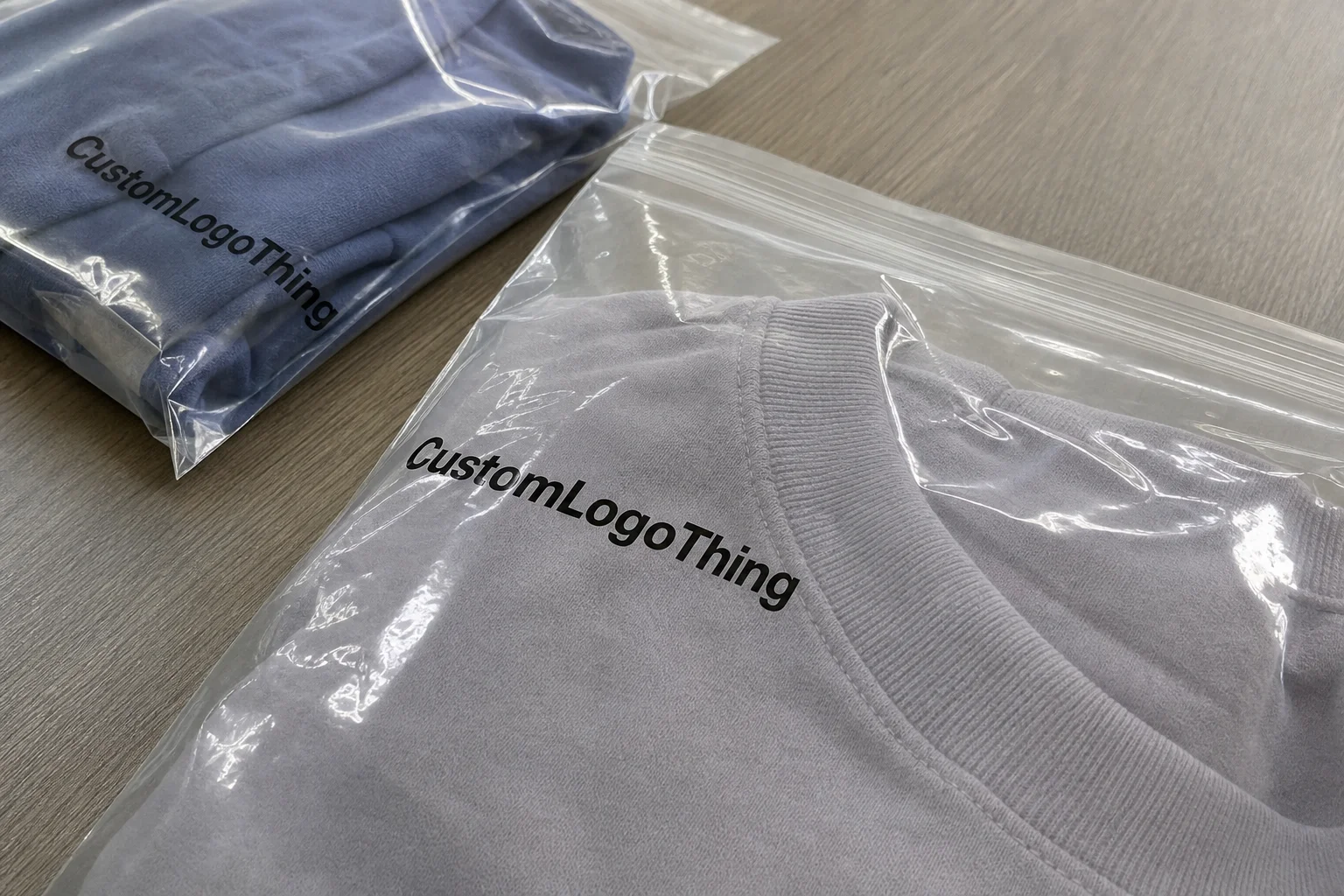
The failure usually starts small. A zipper slider catches near the corner. A seam begins to open after a few openings. A frosted bag looks fine in one carton but cloudy and scratched in another. Then the warehouse team has to stop, inspect, rebag, relabel, or explain why a launch shipment is short.
Fitness apparel is not always packaged like a single folded T-shirt that ships once and disappears. A team warmup may be packed by size, unpacked for decoration checks, repacked by athlete, then opened again at distribution. Retail fitness sets may sit upright on a shelf, where clarity and logo placement matter. Event merchandise may be handled outdoors near moisture, dust, grass, pavement, or temporary tables. In those situations, a stronger zipper and cleaner seam construction can make a measurable difference.
Protection matters, but presentation matters too. A clear PVC body lets staff identify color, size, and garment type without opening every package. Frosted or lightly tinted PVC can create a softer retail look while hiding minor handling marks. Zipper closures help keep items paired, which is useful for leggings and tops, staff uniform sets, cycling jerseys with bib shorts, or dance uniforms with several components.
Practical buying rule: if the garment will be opened more than once before the customer receives it, treat the zipper, seam, and material thickness as functional specifications rather than decorative upgrades.
From a buyer’s point of view, the goal is straightforward: keep the product clean, organized, easy to identify, and pleasant to receive. PVC zipper garment bags do that well when the specifications are set correctly before pricing begins.
Bag Features That Matter for Fitness Apparel Protection
A standard PVC zipper garment bag usually includes a clear or frosted PVC body, a zipper closure, and either stitched or heat-sealed edges depending on the structure and production method. Many fitness apparel orders add a handle, hanger opening, reinforced stress points, ventilation holes, or a bottom gusset. These details sound small on a quote sheet, but they affect usability, inspection time, and unit cost.
Zipper choice deserves careful attention. Standard nylon coil zippers are common for value-focused orders and work well for light folded apparel. For premium retail sets, team-issued kits, or bags intended for storage after purchase, heavier sliders and larger pull tabs give the customer a better opening and closing experience. If the user is opening the bag with sweaty hands after training, or if a volunteer is moving quickly at a crowded event table, a larger pull tab is not just cosmetic.
Material clarity changes the character of the package. Transparent PVC helps warehouse staff and retail associates identify colors and sizes quickly. Frosted PVC gives a more finished look and can reduce the visibility of light scuffs from carton handling. Tinted PVC, such as smoke gray or soft blue, may support a fitness brand’s visual system, although custom color material can raise the minimum order quantity and add production time.
Flat pouches are often enough for folded leggings, compression tops, yoga apparel, and lightweight gym staff shirts. Larger gusseted zipper garment bags are better for hoodies, jackets, warmups, dance uniforms, or multi-piece fitness kits that need room without pushing hard against the seams. A 1.5-inch to 3-inch gusset can help a bulky set pack cleaner, but it also uses more material and may reduce the number of bags that fit in each carton.
| Bag Style | Best Fitness Use | Typical Spec Direction | Cost Impact |
|---|---|---|---|
| Flat clear PVC zipper pouch | Folded leggings, compression shirts, yoga tops | Light to medium PVC, standard zipper, one-color logo | Lowest cost per piece for simple bulk orders |
| Frosted PVC zipper bag | Retail apparel sets, boutique gym merchandise | Medium PVC, clean logo placement, optional size label | Moderate increase for finish and presentation |
| Gusseted zipper garment bag | Warmups, hoodies, jackets, multi-piece kits | Medium to thicker PVC, deeper side or bottom gusset | Higher due to material use and carton volume |
| Reusable bag with handle | Team issue kits, premium gym member packs, event apparel | Thicker PVC, reinforced handle, stronger zipper pull | Highest, but better for repeated handling |
Many buyers spend heavily on decoration while underspecifying the zipper and edges. A crisp logo is useful, but a bag that tears at the handle after two uses hurts the brand more than a smaller one-color imprint ever would. For fitness packaging, structure should come first; decoration works best after the bag itself is fit for the job.
Specifications to Confirm Before Requesting a Quote
A quote is only as accurate as the specifications behind it. Before asking for bulk pricing, prepare the finished bag width, finished height, gusset depth if needed, zipper placement, handle length, hanger hole requirement, print location, and preferred carton packing method. A half-inch difference may sound minor, but across 5,000 or 20,000 bags it changes material use and packing density.
Measure the packed garment, not the garment lying flat before folding. Compression fabric can feel thin in the hand but become surprisingly dense once several items are stacked together. Hoodies and warmups need more clearance around the edges because forcing them into a tight bag puts pressure on the zipper ends and corners. If the package includes a card, size sticker, hang tag, towel, belt, or accessory, include those items in the sample pack when measuring.
PVC thickness is one of the biggest specification decisions. Thin PVC keeps unit cost lower and can work well for light folded garments that are packed once and handled gently. Medium thickness improves structure and gives the bag a better hand feel. Thicker PVC makes sense for reusable fitness kits, bulkier garments, and Bags with Handles, because the material must resist pulling at stress points.
Suppliers may describe PVC thickness by gauge, millimeter, or micron, so confirm the measurement system before comparing quotes. As a practical range, lightweight zipper bags may use material around 0.10 mm to 0.15 mm, while more durable reusable bags may move closer to 0.20 mm to 0.30 mm or more depending on size and structure. Not every project needs the high end. A small pouch for leggings should not be specified like a heavy-duty warmup carrier unless it truly needs that durability.
Common custom options include logo printing, suffocation warning text, size labels, care card pockets, colored zipper tape, custom zipper pulls, reinforced handles, ventilation holes, and retail hang tabs. Each one has a purpose. Each one also adds material, setup labor, production handling, inspection time, or some combination of those costs.
Artwork quality matters more than many buyers expect. Vector logo files, usually AI, EPS, or clean PDF formats, give the sharpest print result. Spot color printing is often the most cost-efficient path for PVC bags, especially for a one-color or two-color fitness logo. Large ink coverage, tight registration, metallic effects, or artwork that crosses seams may require extra prepress review and could create setup charges.
Compliance should be addressed early, not after cartons are ready to ship. Destination-market requirements, suffocation warnings, recycling marks, and retailer-specific packaging rules can vary. If the order is going into a retail program, confirm labeling and packaging standards before production. For transport testing and distribution planning, buyers can review resources from the International Safe Transit Association. For general recycling and packaging sustainability guidance, the U.S. Environmental Protection Agency offers useful background information.
- Finished size: measure the packed garment with realistic clearance around the folded edges.
- Gusset: add room for hoodies, jackets, towels, and multi-piece kits.
- Zipper: specify tape color, slider style, pull-tab preference, and placement.
- Printing: confirm logo size, colors, placement, and ink coverage.
- Carton packing: ask for pieces per carton and estimated carton dimensions.
What Drives PVC Zipper Garment Bags Unit Cost for Fitness Programs
What drives PVC Zipper Garment Bags Unit cost for fitness programs? The main factors are PVC thickness, finished dimensions, gusset depth, zipper grade, handle construction, print colors, print coverage, order quantity, packing method, and shipping terms. Freight can represent a larger share of landed cost than buyers expect, especially for larger bags that ship with more air space per carton.
Bag size has a double effect. Larger bags use more PVC, which raises material cost. They can also reduce the number of pieces per carton, increasing freight volume and warehouse handling. A 12 x 15 inch flat pouch may pack efficiently, while a 16 x 20 inch gusseted bag with a reinforced handle may require larger cartons and more careful packing to avoid creasing.
MOQ logic is not random. Custom printing, material setup, zipper sourcing, cutting dies, operator setup, inspection, and packing labor all take time before the first sellable bag is finished. Very small custom runs carry those fixed costs over fewer units, so the cost per piece rises quickly. Larger orders spread setup charges across more bags, which is why tiered pricing is useful when the program can support the volume.
For planning, a simple logo-printed clear PVC zipper pouch ordered in several thousand units may fall in a broad range such as $0.45 to $1.20 per unit before freight, depending on size, thickness, print, and packing. A larger gusseted reusable bag with a handle, heavier zipper, and custom pull can move higher, often $1.50 to $3.50+ per unit before freight. These are estimating ranges, not guaranteed prices, because resin costs, labor, freight, exchange rates, and customization details all change the math.
A complete quote should show more than one number. Look for unit price, tooling or setup charge if applicable, sample cost, carton quantity, estimated carton dimensions, production lead time, freight method, and payment terms. If these details are missing, the quote is not complete enough for a purchasing decision.
| Cost Factor | Why It Changes Price | Buyer Tip |
|---|---|---|
| PVC thickness | Thicker material costs more and may require stronger handling during production | Match thickness to garment weight and expected reuse |
| Bag dimensions | Larger panels increase material use and can reduce carton density | Quote from the actual folded garment size plus practical clearance |
| Gusset depth | Extra panels and sealing or stitching increase labor and material | Use gussets for bulky kits, not for thin single garments |
| Print coverage | More ink, screens, setup time, and drying controls may be required | Ask for a one-color version and an upgraded version |
| Order quantity | Higher volume spreads setup cost over more units | Request two or three quantity tiers before approving |
| Freight volume | Bulky cartons may cost more to ship even if the bags are light | Compare landed cost, not just unit cost |
Compare landed cost before signing off. A slightly cheaper bag with poor carton density, weak seams, or a slower freight plan may cost more once it reaches your warehouse. The better question is not “What is the cheapest bag?” It is “Which bag gives us the right presentation and the fewest downstream problems at the right total cost?”
Production Steps, Lead Time, and Approval Timeline
A normal custom PVC bag order follows a steady sequence: specification confirmation, artwork review, quotation, sample or digital proof, buyer approval, material preparation, cutting, printing, zipper assembly, inspection, packing, and shipment. Rushing past the first three steps is where avoidable rework usually begins.
A physical sample is the safer choice when you need to confirm material thickness, zipper feel, handle strength, gusset shape, or retail presentation. It adds time, but it can prevent a full production run from missing the mark. A digital proof can be enough for a repeat order or a simple one-color logo placed on a proven bag size, provided the material and construction have already been approved.
Lead time depends on order volume, print complexity, material availability, holiday schedules, sample revisions, compliance labeling, and freight choice. A straightforward repeat order may move quickly after proof approval. A new custom bag with colored PVC, multiple print locations, custom zipper pulls, and special carton labeling needs more calendar space. In practical terms, many custom packaging orders are planned in business weeks rather than days, especially if sampling and international freight are involved.
Inspection should be plain and measurable. Check PVC clarity. Check cut accuracy. Open and close the zipper several times. Confirm print position against the approved proof. Pull gently at handles and stress points. Review seam strength, quantity count, inner packing, master carton labels, and shipping marks. For a large order, these checks should happen before goods leave production, not after cartons arrive at your dock.
Most delays happen before production starts. Missing logo files, unclear size breakdowns, incomplete delivery addresses, and slow approval routing can hold an order longer than cutting or sealing. Assign one approval contact, prepare final artwork, and confirm the in-hand date before requesting the final quote. That keeps the production calendar realistic.
- Confirm specs: bag size, thickness, zipper, handle, gusset, and packing.
- Review artwork: vector files, print colors, logo placement, and warning text.
- Approve proof or sample: check both appearance and function.
- Start production: material prep, cutting, printing, assembly, and inspection.
- Ship with clear carton data: pieces per carton, carton dimensions, weight, and labels.
How Custom Logo Things Reduces Rework Risk
Custom Logo Things is most useful when the bag recommendation starts with the apparel itself: folded size, garment weight, number of pieces per kit, expected reuse, storage environment, and whether the package is meant for retail display, team distribution, event pickup, or back-room organization.
For a thin compression top, a simple flat zipper pouch may be enough. For a premium gym welcome kit with a hoodie, towel, and shirt, a thicker gusseted PVC bag with a reinforced handle may be the more sensible structure. For staff uniforms sorted by size, clear PVC and a visible label area may matter more than a large decorative imprint.
Quote clarity gives buyers control. Specification-based pricing shows how changes to thickness, print colors, quantity, handle style, zipper pull, or carton packing affect the final number. That makes it easier to compare an essential version against an upgraded version without guessing why one price is higher.
Communication before production saves money after production. Artwork checks, proofing, sample review, carton quantity, shipping details, and approval timing should be handled before the order is released. A clean pre-production file reduces surprises, and a realistic carton plan helps the receiving team prepare warehouse space.
The measurable value is not decoration alone. It is fewer spec changes, cleaner logo placement, a better fit for the garment, more predictable delivery planning, and lower risk of repacking or reordering. For buyers managing fitness apparel packaging, that discipline is often the difference between a smooth launch and a scramble.
Details Needed for an Accurate Bulk Bag Quote
To get an accurate quote, send the details that define the real bag. A rough request like “Clear Zipper Bags with logo” can only produce a rough estimate. A complete request lets the pricing team calculate material, print, labor, setup, carton packing, and freight with fewer assumptions.
- Target bag size: width, height, and gusset if needed.
- Garment type: leggings, compression wear, hoodie, warmup, uniform set, or kit.
- Estimated packed weight: especially useful for handles and zipper strength.
- PVC thickness preference: or describe whether the bag is disposable, storage-grade, or reusable.
- Zipper details: zipper color, slider type, and pull-tab preference.
- Handle requirement: no handle, die-cut style, stitched handle, or reinforced carry handle.
- Logo artwork: vector file preferred, with print colors identified.
- Order quantity: include target quantity and any future reorder expectations.
- Delivery address: needed for landed cost and freight planning.
- Required in-hand date: helps determine sample, production, and shipping route.
If you are replacing a current garment bag, send a photo or existing sample. Matching dimensions, zipper feel, PVC thickness, and fold behavior is much faster when there is a physical reference. A ruler in the photo also helps, especially for gusset depth and logo placement.
Ask for pricing tiers. For example, request 2,500, 5,000, and 10,000 units if those quantities are realistic for your program. The MOQ may be lower or higher depending on the custom details, but tiered pricing shows where cost breaks occur and whether ordering more improves the landed value.
It is also smart to request an essential and upgraded version. One option might be a simple clear PVC zipper bag with a one-color logo. The upgraded version might use thicker PVC, a reinforced handle, a colored zipper, and a branded zipper pull. Seeing both costs side by side makes the buyer’s choice much clearer.
For a precise PVC Zipper Garment Bags Unit cost for fitness apparel orders, submit final specs, artwork, quantity, delivery address, and required date so the quote reflects the actual product you plan to buy. The strongest quote is not the one with the shortest description; it is the one with enough detail to prevent surprises after production begins.
FAQs
What affects pvc zipper garment bags unit cost for fitness apparel orders the most?
The largest cost drivers are PVC thickness, finished bag size, gusset depth, zipper quality, print colors, print coverage, handle construction, order quantity, and freight volume. A small change in bag dimensions can affect both material use and carton packing, so confirm the actual folded garment size before quoting.
What MOQ should I expect for custom PVC zipper bags for gym apparel?
MOQ depends on the bag size, print method, material specification, and customization level. Basic logo-printed bags usually have a lower MOQ than Bags with Custom zipper pulls, special color PVC, reinforced handles, or multiple print locations. Request tiered pricing so you can compare the minimum order against a larger production run.
Which PVC thickness is best for fitness garment packaging?
Light folded apparel can often use thinner PVC to keep cost controlled. Heavier items such as hoodies, jackets, warmups, or multi-piece kits usually benefit from thicker PVC and stronger zipper construction. If the bag is meant to be reused by customers, choose a thickness and handle style that can withstand repeated opening, closing, and carrying.
Can PVC zipper garment bags be printed with a fitness brand logo?
Yes, logo printing is common on PVC zipper garment bags, usually with spot color printing for clean, cost-efficient branding. Vector artwork is preferred because it keeps edges sharp and helps the production team size the logo accurately. Large ink coverage, metallic effects, or multi-color artwork may require additional proofing and can affect unit price.
How long does production take after approving a PVC garment bag quote?
Production timing depends on order quantity, material availability, sample approval, printing complexity, and packing requirements. A physical sample can add time, but it is often worthwhile for confirming material feel, zipper function, and logo placement before bulk production. To avoid delays, provide final dimensions, logo files, quantity, delivery address, and in-hand date when requesting the quote.


