Hotel buyers usually notice hotel kraft paper shopping Bags Lead Time only after the order is already moving, and that is where the surprise begins. A bag may look like a straightforward commodity, but the clock does not start and stop at the printer. It starts with artwork, dimensions, handle choice, packing format, and approval, then continues through production, inspection, cartonization, and freight. The paper bag itself may be simple; the schedule around it rarely is.
That difference matters because a custom kraft bag is not a shelf item. Once a hotel wants its name, logo, seasonal message, or property-specific sizing, the order becomes a managed production job. The line between a fast reorder and a slow one is usually drawn by decisions made before the factory runs the first sheet.
In practical terms, simple runs can often ship in about 12-18 business days after final approval, while more involved jobs may take 20-30 business days or longer. Freight adds its own layer. If the destination has limited receiving hours, a dock appointment can become as important as the factory schedule. That is why the real question is not just how long the bags take to make, but what part of the process is actually consuming time.
Why Hotel Kraft Paper Shopping Bags Lead Time Surprises Buyers
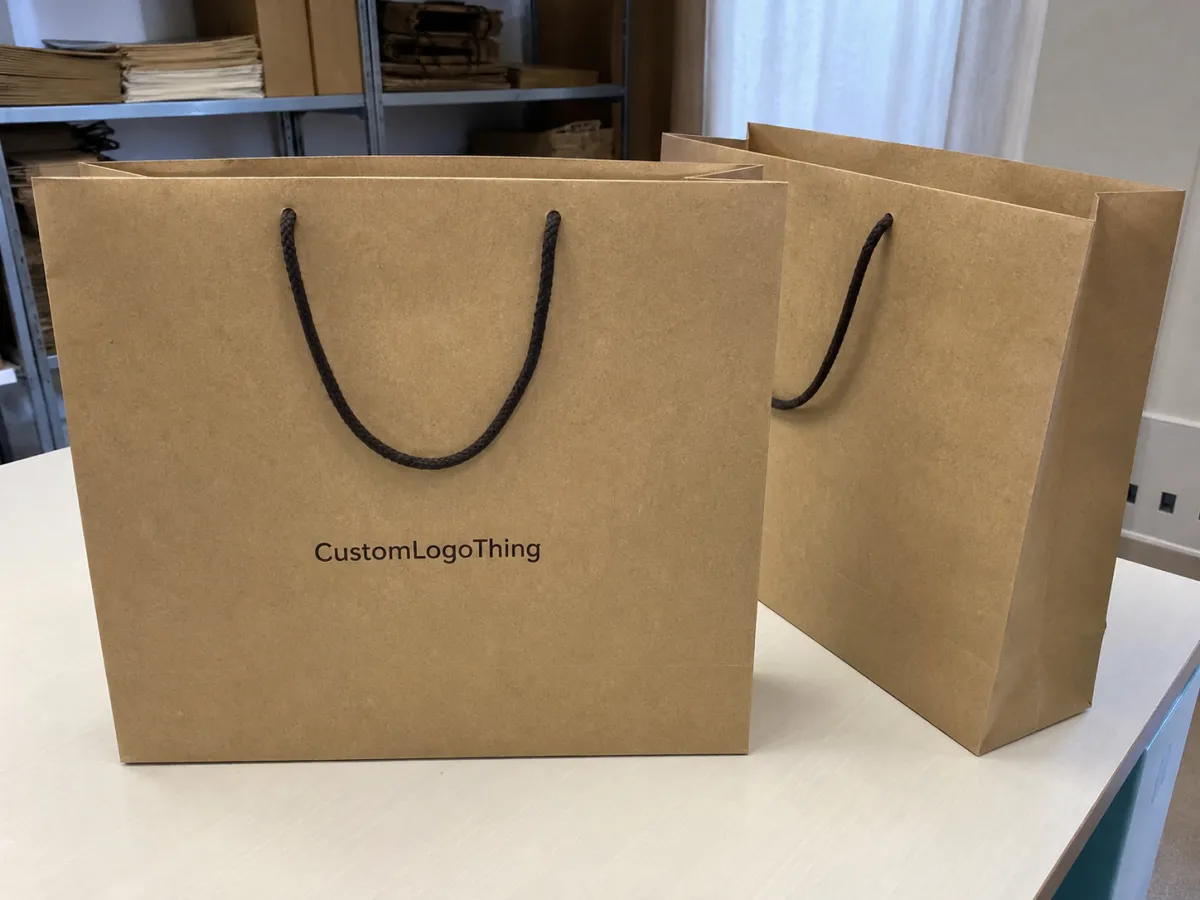
A hotel gift shop manager often expects a paper bag order to behave like a replenishment item. It usually does not. Custom work brings in spec review, proofing, production booking, and sometimes paper sourcing constraints. The more a bag moves away from a standard size and a standard handle, the more steps get added before the order can even be released.
That is the first reason hotel kraft Paper Shopping Bags lead time catches buyers off guard: the schedule is driven less by the press than by the approvals around the press. A one-color logo on a conventional size with twisted paper handles is typically faster than a heavy kraft bag with rope handles, foil, and a special coating. Every extra detail adds setup, inspection, or material handling. None of that is unusual. It is just easy to underestimate when the mockup looks clean.
Hotel bags also carry more use-specific requirements than a generic retail bag. A boutique property may need a narrow format for small gifts or boxed toiletries. A resort shop may need a wider gusset for apparel or larger souvenirs. Once the buyer changes the dimensions after the first quote, the production path can shift with it. The result is often not a catastrophic delay, just a series of small resets that add up.
There is also a planning trap in assuming all kraft paper is interchangeable. In reality, paper caliper, basis weight, fiber mix, and finishing all change the pace of the order. A clean 120-150 gsm kraft sheet is easier to source and convert than a thicker or specialty-finished structure. A bag that needs recycled content, FSC certification, or a particular surface look may still be perfectly viable; it simply needs more lead time because more variables have to line up.
Production Timeline From Brief to Shipment
The production timeline becomes easier to judge when it is split into stages. First comes the quote request. Then the supplier checks size, artwork, handle type, paper weight, and quantity. After that comes the proof or dieline confirmation. Only then does production begin. Printing, cutting, folding, handle attachment, inspection, and packing follow in sequence, and freight sits at the end. A delayed signoff at the front can cost more time than a slow machine at the back.
For hotel kraft paper shopping Bags Lead Time, artwork approval and dieline signoff usually sit on the critical path. If the logo shifts, the print area changes, or the bag width is revised after the proof is issued, the job often has to be reworked from the layout stage. That is why fast quoting and fast production are not the same thing. A quick reply can still lead to a slow order if the specification keeps moving.
Once the spec is locked, the manufacturing sequence is fairly predictable. The paper is sourced, often as kraft rolls or sheets. The artwork is printed by flexographic or offset methods depending on the build. The paper is then cut, folded, glued, and fitted with handles. Finished bags are checked, packed into corrugated master cartons, and prepared for shipment. For buyers who request recycled content or FSC certified paper, the documentation is usually administrative rather than production-heavy, but it still needs to be included in the timeline.
Quality control is not a side note. A sensible factory check should cover print registration, glue-line integrity, handle attachment, carton count, and a basic load or pull test on the handle. Brand-critical orders may also need a signed pre-production sample or color check against a PMS reference. Those checks can add a small amount of time, but they help avoid the larger cost of a failed delivery.
Timelines can move for reasons that do not appear in the sample photo. Paper procurement may be tight in a certain weight. The production queue may already be full. Holiday demand can crowd the line. Shipping may be slowed by a remote destination, a narrow receiving window, or a multi-property delivery plan. These are normal constraints. A good supplier separates proofing, production, and freight instead of collapsing everything into one vague promise.
Paper Grade, Handle Style, and Print Choices
Paper grade changes both the appearance and the pace of the order. Lighter kraft stock can work well for brochures, small boxed amenities, or low-weight retail items. Heavier paper helps the bag hold its shape and carry thicker merchandise without feeling flimsy. Many buyers look at gsm or basis weight first, and that is the right instinct. A typical practical range for shopping bags often lands somewhere around 120-250 gsm, depending on bag size and use. Below that, the bag may feel too soft; above that, cost and lead time usually rise.
Handle style is another real schedule driver. Twisted paper handles are common, cost-effective, and usually straightforward to produce. Flat paper handles are also efficient on the right construction. Rope handles feel more premium, but they add a component and more assembly time. Die-cut handles remove a separate handle part, though they work best with certain sizes and lighter loads. None of these is universally better. They simply serve different hotel uses, and that choice affects both the quote and the calendar.
Print complexity can widen the timeline quickly. A one-color logo is usually the easiest route. Two-color art still remains manageable. Full-bleed coverage, metallic ink, foil stamping, embossing, or a matte coating all increase setup and inspection time. A bag with a natural kraft finish, a foil logo, and rope handles will almost always take longer than a plain printed bag of the same size. The tradeoff is usually speed versus presentation, and hotel buyers should decide which side matters more for the specific outlet.
There is also a repeat-order advantage in standardization. If a hotel group settles on one or two proven constructions, the order becomes easier to repeat, easier to compare, and usually cheaper to replenish. That does not mean every property must use the same bag. It means too many one-off designs can make procurement slower without adding much value.
For material verification and transit testing references, buyers often check standards bodies like ISTA for shipping performance and FSC for responsible fiber sourcing. Those references are useful when the order needs documented sustainability claims or when the bags will move through a longer distribution path before reaching the hotel.
Pricing, MOQ, and Unit Cost Drivers
Price is shaped by a handful of variables, and once they are visible, quotes become much easier to read. Quantity is the biggest one because setup and waste are spread across the run. Bag size matters because larger formats use more paper and more labor. Paper weight adds cost as the sheet gets heavier. Handle style, print coverage, and freight all contribute. For bulk buyers, landed cost matters more than a clean-looking factory price.
That is especially true with hotel kraft Paper Shopping Bags lead time, because a short run can look economical until setup is divided across only a few thousand bags. A 3,000-piece order may carry a materially higher unit cost than a 10,000-piece order, even if the larger run requires a little more calendar time. In many quotes, moving from a small run to a mid-size run can reduce the unit price by 20-40 percent simply because the fixed costs are spread more efficiently. The exact spread depends on the spec, but the pattern is consistent.
| Spec Profile | Typical MOQ | Indicative Unit Cost | Typical Production Lead Time | Notes |
|---|---|---|---|---|
| Simple one-color kraft bag, twisted paper handle | 3,000-5,000 pcs | $0.24-$0.38 | 12-18 business days | Good for repeat retail use and quicker approvals |
| Two-color printed bag, heavier kraft, rope handle | 5,000-10,000 pcs | $0.38-$0.62 | 15-22 business days | Common for premium gift shops and higher-value items |
| Special finish, full coverage, or foil accent | 10,000 pcs and up | $0.65-$1.10 | 20-30 business days | More proofing, tighter color control, longer setup |
MOQ is tied to machine setup, waste, and efficient paper use, so there is no universal threshold. A narrow bag with a simple print may qualify at a lower minimum than a wide premium bag with specialty handles. Ask for tiered pricing at 3,000, 5,000, and 10,000 pieces. That comparison shows how the cost behaves as volume rises, and it usually reveals whether a small increase in inventory is worth the better unit price.
Freight can swing the final number as much as the bag itself. A hotel with limited dock access, a remote property, or multiple delivery points may spend more on logistics than a buyer first expects. For that reason, compare the full landed cost rather than the factory quote alone. The cheapest printed bag is not always the cheapest order.
How to Build a Quote-Ready Order Brief
A clean brief saves time on both sides. For an accurate quote and a realistic schedule, send final dimensions, quantity, paper weight, handle style, print colors, delivery location, and the target in-hand date in one package. If the supplier has to ask for the basics one by one, the quote slows down and the timeline becomes fuzzy. Clarity is speed.
The best briefs separate must-haves from preferences. A hotel may need a specific width because it fits a boxed amenity set. Brand color may be non-negotiable, while handle style can flex if necessary. FSC certified paper may be preferred, but not if it creates a sourcing delay that the opening schedule cannot absorb. That hierarchy helps a supplier propose the fastest workable path instead of guessing.
"If the brief is complete, the quote is useful. If the brief is vague, the quote is only a placeholder."
Receiving details matter more than many buyers expect. Include carton counts, pallet counts, packing configuration, and whether the property needs appointment delivery or dock coordination. If the bags have to be split across multiple locations, say so early. If the hotel receives freight only on certain weekdays, build that into the schedule before the purchase order is released. A quote is only half the job; the rest is making the shipment fit the hotel's operations.
It also helps to ask for a split timeline. Proofing, production, and shipping should be shown separately. A single lead-time number can hide where the real risk sits. If the supplier says proofing takes two days, production takes 15, and freight takes four, you can see the pressure point immediately. That is more useful than a broad "three weeks" estimate that leaves too much to chance.
Common Mistakes That Add Days or Weeks
The biggest delay trigger is sending artwork before the dimensions are locked. That usually creates a proof revision, and sometimes the revision touches the print area, the gusset, or the handle placement. Once that happens, the proof may need to be rebuilt. It sounds minor. It is not. A few days lost in proofing can become a genuine operational problem if the bags are tied to an opening, a seasonal shift, or a promotion.
Another common error is assuming every kraft bag is standard. A buyer may hear "paper shopping bag" and picture a simple order, but handle style, gusset depth, paper grade, and print method all change the schedule. A natural kraft bag with one logo color is one job. A white bag with rope handles, inside printing, and a matte finish is another. They can sit on the same mood board and still behave very differently in production.
Waiting until inventory is almost gone is the third trap. That leaves no buffer for queue time, freight delays, or receiving problems at the property. Hotel orders are especially exposed because the bag is part of guest-facing operations, and a stock gap is visible immediately. A disciplined buyer keeps at least one reorder cycle ahead so hotel kraft Paper Shopping Bags lead time never becomes a fire drill.
Too many finishing choices can also muddy the quote and slow the schedule. When the first order includes several possible handle types, paper grades, coating options, and pack formats, it becomes harder to compare suppliers and harder for the factory to commit to a stable plan. Fewer decisions up front usually means fewer surprises later. That does not mean the bag should feel generic; it means the spec should be disciplined.
Expert Tips and Next Steps for a Faster Reorder
If the hotel expects regular bag usage, standardizing one or two core sizes is the easiest way to improve repeat ordering. A small bag for boutique items and a larger one for apparel or boxed gifts covers most needs without multiplying SKUs. It also helps pricing because the supplier can repeat a proven construction instead of rebuilding the quote from scratch every time.
Ask for the critical path right on the quote. Which approval is gating the order? Can paper sourcing begin before artwork signoff, or not? Can carton artwork be reused? Can freight be booked while production is still underway? Those questions sound basic, but they reveal where the real schedule risk sits. For a buyer managing an opening date or a seasonal changeover, that information is more valuable than a broad promise.
Keep a ready-to-send spec sheet in one file. Include final art, PMS references if color consistency matters, delivery address, dock instructions, carton preferences, and a target date that reflects operations rather than hope. If a faster reorder is needed later, the groundwork is already there. If the hotel has sustainability goals, ask early about recycled fiber, post-consumer content, and FSC certified paper. Those choices can align with the property's broader packaging standards without promising more than the material can deliver on its own.
The practical formula is simple: lock the dimensions first, simplify the build where possible, confirm receiving details, and insist on a split timeline instead of a single vague number. That keeps the order realistic and makes hotel kraft paper shopping bags lead time something you can plan around rather than something you discover too late.
How long is hotel kraft paper shopping bags lead time for a first custom order?
First orders usually take longer because the supplier has to confirm the spec, prepare proofs, and reserve production time. Simple single-color bags move faster than multi-color or specialty-handle jobs. Ask for best-case, normal, and rush dates so you can plan against the actual schedule instead of a single optimistic number.
What affects the price of custom hotel kraft paper shopping bags the most?
Quantity, bag size, paper weight, print coverage, handle style, and freight are the main cost drivers. Setup costs matter more on short runs because they are spread across fewer bags. Compare landed cost, not just unit price, when you are budgeting for the order.
Can a simpler design shorten hotel kraft paper shopping bags lead time?
Yes. Fewer colors, standard sizes, and stock-friendly materials usually reduce setup and sourcing time. Avoiding late artwork changes is just as important as keeping the design simple. A clear approval path helps the job move without avoidable backtracking.
What MOQ should a hotel buyer expect for kraft shopping bags?
MOQ varies by bag size, print method, and handle style, so there is no single universal number. Custom bags need enough volume to cover setup and production waste efficiently. Ask for the MOQ at each price tier before you finalize the specification.
What should I send to get the fastest quote and timeline?
Send dimensions, quantity, paper weight, handle type, print colors, delivery address, and target date. Include print-ready art if you have it, or a rough logo with clear notes if you do not. Tell the supplier whether speed or budget is the priority so they can quote the right production path.

