Buyer Fit Snapshot
| Best fit | To Limited Edition Box Drops Fast Online projects where brand print, material claims, artwork control, MOQ, and repeat-order consistency need to be specified before quoting. |
|---|---|
| Quote inputs | Share finished size, material target, print colors, finish, packing count, annual reorder estimate, ship-to region, and any compliance wording. |
| Proofing check | Approve dieline scale, logo placement, barcode or warning zones, color tolerance, closure strength, and carton packing before bulk production. |
| Main risk | Vague material claims, crowded artwork, missing packing details, or unclear freight terms can make a low unit price expensive after revisions. |
Fast answer: To Limited Edition Box Drops Fast Online: Board, Finish, Dieline, and Unit Cost should be specified like a repeatable production item. The safest quote records material, print method, finish, artwork proof, packing count, and reorder notes in one written spec.
Production checks before approval
Compare the actual filled-product size with the drawing, then confirm tolerance on folds, seals, hang holes, label areas, and retail display edges. Reserve space for logos, QR codes, warning copy, and material claims before decorative graphics fill the panel.
Quote comparison points
Review material grade, print process, finish, sampling route, tooling charges, carton quantity, and freight assumptions side by side. A quote is only useful when the supplier can repeat the same color, closure quality, and packing count on the next order.
Guide to Limited Edition Box Drops That Sell Fast Online
A good guide to limited edition box drops starts with a simple truth I have seen play out over and over: people forget a product long before they forget the feeling of opening a box that was clearly made with care. A rigid carton, a magnetic lid, a printed mailer with a fitted insert, even a plain structure handled thoughtfully can hold more memory than the item tucked inside it. That is why a guide to limited edition box drops is never only about hype. It is about shaping a short-run launch that feels collectible, protects margin, and can be repeated without turning operations into a mess.
From the buyer side, the best drops do a few things at once. They create urgency, justify a higher price, and give the brand a level of polish that a standard restock usually cannot match. None of that happens by accident. The pieces have to line up: a fixed quantity, a clear story, a sales window with a real deadline, and a box that makes the customer want to keep it on a shelf instead of tossing it into recycling. If you are working with a packaging supplier, that logic belongs in the brief before artwork gets too far along.
A limited run only feels special when the package, the story, and the fulfillment all point in the same direction. If one of those pieces gets sloppy, people notice fast.
Guide to limited edition box drops: what they are and why they convert
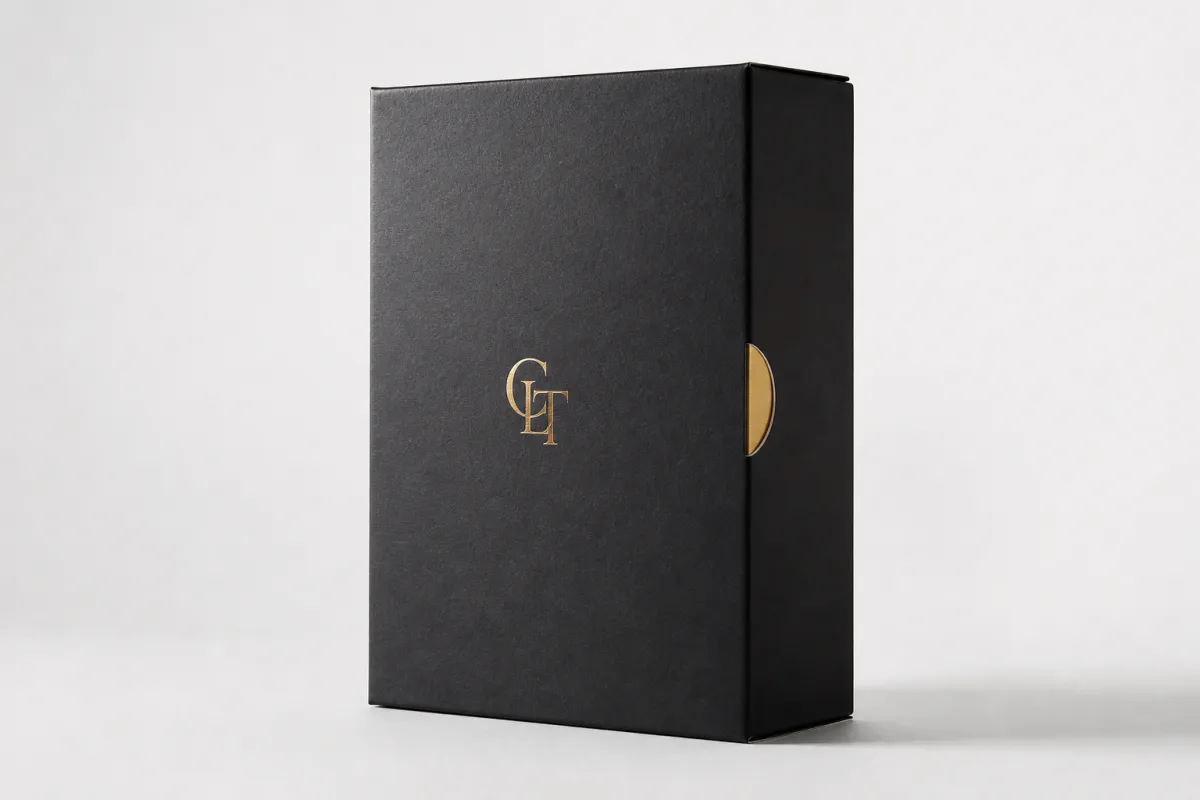
At the simplest level, a guide to limited edition box drops describes a short-run launch with a set quantity, a distinct visual identity, and a story that explains why this release exists now. That might be a product bundle, a seasonal kit, a creator merch drop, a premium sample set, or a B2B gift box. The difference from standard packaging is the role the box plays. It is not just a container. It is part of the offer itself.
Scarcity changes behavior because it shortens the decision window. Buyers who know there are only 250 or 1,000 units tend to move faster, compare less, and share the release more often. The result reaches beyond emotion. Perceived value rises, social chatter grows, and the brand has a better shot at selling through before discounting becomes the fallback. A guide to limited edition box drops should treat that as a commercial advantage, not just a marketing line.
There is also a positioning effect that many brands miss the first time around. Limited edition box drops give a company room to test premium cues without turning them into a permanent SKU. A creator can see whether a $79 kit with rigid packaging and inserts converts better than a basic mailer. A consumer brand can test whether foil stamping and a numbered card increase average order value. A B2B company can use a polished kit for partner onboarding or event follow-up and compare response rates with standard collateral. Seen that way, a guide to limited edition box drops becomes a practical way to learn where the market will pay more.
What makes the format work so well is the mix of familiar buying behavior and physical proof. People already understand drops, countdowns, and limited runs. The box gives the offer a solid edge in the real world. It signals, without shouting, that this is not a routine reorder. That is why a guide to limited edition box drops matters for brands that want premium pricing without building a permanent luxury line from scratch.
The format is also easier to measure than a broad evergreen campaign. Sell-through, average order value, return rate, and customer feedback all tell a more focused story when the inventory is finite. The packaging itself can affect conversion, which means the result is not just about whether the product sold, but how the package shaped the sale. A good guide to limited edition box drops should use that data to decide whether the next release needs to be larger, smaller, more restrained, or more luxurious.
In my experience, the brands that do this well are usually not the ones with the flashiest renderings. They are the ones that understand their buyer, keep the release narrow, and make one or two details feel unmistakably intentional. That is the part people remember, and honestly, that is the part that tends to move units.
How the guide to limited edition box drops process works
The guide to limited edition box drops process rewards sequence more than inspiration. A launch usually starts with the concept, then moves into the offer, packaging brief, prototype, production, campaign, fulfillment, and post-launch review. Skip those middle steps and jump straight to artwork, and the package often ends up clever on screen but awkward in shipping. That mistake is expensive, and it usually shows up at the worst possible time.
- Define the offer: product, bundle, or kit.
- Set the run size and the sales window.
- Write the packaging brief with dimensions, weight, and finish goals.
- Approve dielines, copy, and artwork.
- Request samples or a prototype.
- Lock production and assembly.
- Launch the campaign and open the drop window.
- Fulfill, track feedback, and review results.
The drop window should feel limited without being so tight that buyers miss it by accident. Many brands use a teaser period, then open orders for 48 hours, 72 hours, or one week. Once inventory is gone, the page closes. That structure gives shoppers a clear deadline and gives the brand a clean inventory boundary. A guide to limited edition box drops should treat the close of sales as part of the release story, not just as an e-commerce setting to toggle off later.
Pre-orders, waitlists, and VIP early access make the launch more predictable. A waitlist can show demand before you commit to production. Early access for repeat customers can lift conversion without discounting the drop. Those signals matter most on a first run, where the team is trying to forecast volume with limited history. A strong guide to limited edition box drops uses the audience to reduce uncertainty before boxes are already in motion.
Coordination is where many launches get messy. Product, packaging, marketing, and operations need the same facts at the same time: dimensions, quantities, print dates, assembly requirements, and the ship date that is actually achievable. If the campaign calendar moves ahead of production reality, the story turns into apologies. A careful guide to limited edition box drops protects the narrative by protecting the schedule first.
A useful habit is to build the campaign backward from delivery readiness, not from the mood board. Start with the date the finished boxes can leave the warehouse, then work back to proof approval, sampling, printing, finishing, assembly, and inbound freight. That shift keeps a guide to limited edition box drops grounded in the real world, which is where margin stays healthy.
Cost, pricing, and MOQ for a limited edition box drop
Cost is where a guide to limited edition box drops becomes genuinely useful. The packaging number on its own rarely tells the full story. The real cost includes materials, printing, inserts, assembly, freight, storage, and any special finish such as foil stamping, embossing, spot UV, soft-touch lamination, or a magnetic closure. If the box price is the only line item under review, the margin estimate is probably wrong before the first shipment goes out.
Minimum order quantity can shape the entire offer in short-run launches. A rigid box with custom inserts may look polished, but at 250 or 500 units the per-unit price can rise fast. A printed mailer or folding carton can keep the entry point lower while still feeling distinctive if the artwork and inner structure are done well. In practice, a premium rigid setup might land around $2.20-$5.80 per unit at 1,000 pieces, while a custom mailer with insert could sit closer to $1.10-$2.80 per unit, depending on coverage and finishing. A guide to limited edition box drops should make room for those ranges instead of pretending every run behaves the same way.
| Packaging option | Typical MOQ | Indicative unit cost | Best use case | Notes |
|---|---|---|---|---|
| Printed mailer with custom insert | 250-1,000 | $1.10-$2.80 | Creator kits, promo drops, light products | Good for speed and a lower cash commitment |
| Folding carton with premium print | 500-5,000 | $0.45-$1.20 | Cosmetics, accessories, retail bundles | Lower cost, strong shelf appeal, lighter unboxing experience |
| Rigid two-piece box | 500-2,000 | $2.20-$5.80 | Gift sets, premium launches, collector kits | High perceived value, higher freight and assembly cost |
| Magnetic closure rigid box | 500-2,000 | $3.50-$8.50 | VIP drops, luxury samples, influencer kits | Strong tactile effect, but the magnet and assembly add cost |
The smartest guide to limited edition box drops pricing model starts with total margin, not just packaging. Begin with product cost, then add packaging, kitting labor, freight, payment fees, platform fees, and any shipping subsidy. A bundle with a 62 percent gross margin before packaging can still slip into weak territory if the box adds $4.00 and the average selling price is only $18.00. That is the kind of math that matters before the launch page goes live.
A practical formula helps keep the release honest. Set the target margin first. Compare that against the sell-through you expect within the sales window, then price the drop around the volume you can actually ship without discounting. If the release is capped at 750 boxes and you expect 90 percent sell-through in a week, price for that outcome rather than the most optimistic version of the plan. A guide to limited edition box drops that ignores fees and shipping subsidies usually produces a launch that looks healthy on paper and thin in cash flow.
There is also a hidden cost in overdesigning. A foil-heavy box with multiple inserts can look impressive in a mockup, but if the audience is buying a mid-priced product the price can feel disconnected from the offer. The box should support the product, not overpower it. That balance matters in a guide to limited edition box drops because the goal is to make the release feel special while still leaving enough margin to make the release worth repeating.
For brands that care about sourcing, materials matter as well. FSC-certified paperboard, reduced plastic use, and right-sized packaging can strengthen the story while staying close to procurement targets. If the drop will move through multiple shipping channels, testing against distribution standards matters too; ISTA publishes transport test methods that help brands see whether a package is likely to hold up under real handling. A guide to limited edition box drops gets stronger when it treats standards as practical tools rather than decoration.
Timeline, lead time, and production steps to plan backwards
Lead time is where a guide to limited edition box drops becomes a planning discipline. A launch date should never be chosen before the package is ready to make. Work backward from the drop date and map the real sequence: concept approval, dieline setup, copy and artwork, proofing, sampling, print production, finishing, assembly, final freight, and warehouse receiving. The order matters because each stage depends on the one before it.
A clean timeline usually needs more buffer than teams expect. Custom inserts can extend production. Specialty coatings can add business days. Seasonal freight congestion can slow inbound cartons. Even a tiny copy change can trigger another proof if the artwork is already moving. In a guide to limited edition box drops, those are not edge cases. They are ordinary risks that deserve room in the calendar.
Some practical lead-time benchmarks help keep planning honest. A standard printed mailer can move from proof approval to completion in roughly 10-15 business days if the spec is straightforward and material is already on hand. A rigid box with custom inserts may need 15-25 business days or more, especially if the finish includes foil, debossing, or specialty wrapping. Add transit time on top of that, often 3-10 business days depending on route and freight mode. A guide to limited edition box drops that ignores those windows is really a hope, not a plan.
Production steps should be locked early because every revision has a ripple effect. A change in artwork can affect the dieline. A dieline change can affect the insert. A change in insert thickness can alter outer dimensions. That can shift carton fit, freight cube, and packing labor. A careful guide to limited edition box drops keeps the structure steady so the creative team can focus on the message instead of rebuilding the package halfway through the project.
Two standards are worth keeping in view here. If the box has to survive parcel handling, the logic behind ASTM or ISTA test methods can help guide expectations. If paper sourcing matters to buyers or retailers, FSC chain-of-custody can answer procurement questions cleanly. The best launches use standards to remove guesswork, not to decorate the brief with jargon. A guide to limited edition box drops built on testing and traceability tends to ship better and argue less with reality.
Common mistakes in a limited edition box drop
The first mistake in a guide to limited edition box drops is easier to spot once you have seen it a few times: claiming scarcity too often. If every release is called limited, customers stop believing the label. Scarcity works best as a real constraint, not a costume. Repeating the word without restraint can weaken trust faster than it creates urgency, and trust is the part of the brand that is hardest to win back.
The next mistake is designing for looks alone. A box can be beautiful in a render and still fail in use because it crushes easily, stacks badly, or lets the product move around inside. Packaging has to protect the item, fit the shipping method, and support the unboxing flow. If those pieces are ignored, a guide to limited edition box drops turns into a lesson in how pretty packaging can still create returns and complaints.
Poor inventory math causes problems too. Underbuying means the drop sells out too fast and leaves demand behind. Overbuying means dead stock, storage costs, and pressure to discount the next launch. Neither outcome helps. A better path is to use a waitlist, a pre-order test, or a smaller first run and then build the next guide to limited edition box drops around actual demand instead of guesswork.
Weak messaging creates trouble even when the product is strong. If the box does not explain why this version exists now, the buyer can read it as decoration rather than an event. The story can be seasonal, collaborative, numbered, or tied to a milestone, but it has to be clear. A guide to limited edition box drops that skips the narrative leaves money on the table because the customer never fully understands why the package deserves attention.
Late shipping, bent corners, mixed variants, and missing inserts can erase the premium feeling quickly. No amount of polished exterior work can fix a sloppy fulfillment floor. Pick lists, kitting checks, and packing discipline deserve the same attention as the artwork. A serious guide to limited edition box drops treats the warehouse as part of the brand experience, not a place where details can be handled later.
Expert tips to make a limited edition box drop feel collectible
Collectability is the part of a guide to limited edition box drops that turns a one-time order into something people keep. Numbered runs are the easiest place to start. A certificate card, a signed insert, or a batch label on the inside flap tells the buyer that the box belongs to a finite set. That tiny cue changes how people talk about the package and whether they hold onto it after opening.
Material choice carries more weight than many teams expect. Rigid board gives the box heft. Soft-touch lamination creates a muted, velvety feel. Foil accents catch light without needing a lot of ink coverage. Debossing adds texture in a way flat print cannot. Magnetic closures create a deliberate opening moment, though they raise both cost and assembly time. In a guide to limited edition box drops, these tactile choices are the difference between "nice packaging" and "I am keeping this."
The unboxing sequence should unfold in layers. A sleeve, a reveal card, a fitted insert, and a final product tray can make the experience feel far more considered than a single open-top box. That layering matters because anticipation is part of the value. The customer should feel a series of small reveals, not one quick reveal followed by empty space. A guide to limited edition box drops that uses sequencing well makes the package feel longer than the shipping distance.
Visual systems matter too. The strongest boxes do not simply repeat the logo. They extend the story of the drop through color, typography, iconography, or a motif tied to the concept. That way the package feels like a chapter rather than just a container. A guide to limited edition box drops works best when the brand builds a recognizable language around the release so the audience can spot the series at a glance.
It helps to compare the premium cues against both the brand's standard packaging and competitor launches. If the limited edition version does not feel materially different in hand, the higher price can feel hard to justify. If it feels too far away from the brand's normal look, the customer may be confused instead of excited. A strong guide to limited edition box drops sits in the middle zone where the box feels elevated but still clearly on brand.
There is a sustainability angle here that does not have to weaken the experience. Right-sized inserts, recyclable paperboard, and minimal plastic can still feel premium if the structure and print are handled well. Many buyers notice waste more than they used to. The goal is not to remove the special feeling. It is to remove excess material that does nothing useful. A guide to limited edition box drops that respects material efficiency can feel collectible and commercially sensible at the same time.
One small trick that works better than people expect: leave one element slightly restrained. Maybe it is a quiet interior print, maybe it is a hidden stamp under the lid. That little bit of control keeps the box from shouting at the buyer the second it opens, and it gives the experience a bit of breathing room. That kind of restraint is often what makes a drop feel expensive rather than merely busy.
Next steps to launch your limited edition box drops
The fastest way to move from idea to launch is to choose one objective first. Is the drop meant to test margin, build audience growth, support a seasonal push, promote a new product, or retain VIP customers? A guide to limited edition box drops works best with a single clear objective. Mixed goals create mixed specs, and mixed specs tend to create awkward economics.
Then write the packaging brief. Include quantity, dimensions, product weight, story angle, target unit cost, finishing preferences, assembly needs, and the shipping method. The brief should be specific enough for a supplier to quote without guessing. If the launch is moving through a packaging partner, the brief is where the commercial reality starts to take shape. A guide to limited edition box drops becomes much easier to execute when the supplier sees the full picture early.
After that, request at least one quote and one sample. Compare cost against lead time, assembly complexity, and shipping impact. A cheaper quote is not always cheaper once kitting and freight are included. A slightly higher unit cost can be the better path if it saves days and reduces handling errors. A guide to limited edition box drops should leave room for those tradeoffs, because they often separate a smooth release from a messy one.
Create a simple launch checklist with deadlines for design approval, inventory lock, shipping confirmation, and launch-day communications. Then choose one concept, one supplier, and one launch date. Not five concepts. Not three backup plans. One clean lane. That discipline is what makes a guide to limited edition box drops useful for real brands instead of only feeling inspiring on a mood board.
If you want the release to feel properly limited, use the calendar as a guardrail: confirm the ship date first, lock the run size second, and only then polish the creative. That order keeps the drop honest and saves you from the kind of last-minute scramble that makes a team say, "we'll just figure it out later," which is usually the moment the budget starts to drift.
What is a limited edition box drop in packaging?
It is a short-run packaging launch with a fixed quantity and a defined sales window. The box is part of the offer, not just a container, so the story, materials, and reveal all matter. In a guide to limited edition box drops, that combination is what creates urgency and a premium feel.
How many units should a limited edition box drop have?
Start with expected demand, not a random number. Use MOQ, margin targets, and fulfillment capacity to set the run size, then check it against pre-orders or a waitlist if you have one. A guide to limited edition box drops works better when the quantity is tied to sales data instead of guesswork.
How far in advance should I plan the production timeline for a box drop?
Work backward from the launch date and include concept, proofing, sampling, production, and freight. Add buffer time for approvals, specialty finishes, and shipping delays. A guide to limited edition box drops becomes much more reliable when the date reflects actual readiness instead of optimistic scheduling.
How do I price a limited edition box drop?
Add packaging, product, assembly, freight, fees, and any promotional spend. Set price based on the margin you need, not just the cheapest unit cost, and compare the final offer against similar premium launches to see whether the value feels believable. That is the commercial core of a guide to limited edition box drops.
What makes a limited edition box drop feel premium instead of promotional?
A premium drop has a clear story, tactile materials, and a controlled quantity. Small details like numbered inserts, layered unboxing, and accurate fulfillment raise the perceived value, while delays and damage erase it fast. If you keep that standard in mind, a guide to limited edition box drops becomes a practical blueprint rather than a hype exercise.
Take the next release as a three-part check: confirm the story, confirm the run size, and confirm the ship date before you approve artwork. If those three pieces hold together, the box can do its job. If they do not, no amount of foil or clever copy is gonna rescue the launch.
Related packaging resources
Use these related guides to compare specs, costs, quality checks, and buyer decisions before making the final call.


