Event Merch Twisted Handle Paper Bags: Bulk Order Planning
Event merch Twisted Handle Paper Bags bulk order planning is one of those procurement tasks that looks minor until it starts touching every part of the event budget. The bag is the container, the carrier, and often the last thing a visitor remembers taking home. If it fails, the failure is public. If it works, nobody talks about it, which is usually the best possible outcome.
The practical goal is simple: choose a bag that fits the merch, survives the route from booth to car or hotel, and lands before the event opens. That sounds straightforward. It is not, because the wrong size, the wrong paper weight, or the wrong lead time can turn a tidy purchase order into a scramble for reprints, rush freight, or awkward overpacking.
The least expensive bag is often the one that does not need a second order.
Twisted handle paper bags are popular for events because they sit in a useful middle ground. They are sturdier than basic carrier bags, generally easier to produce at scale than premium rope-handle formats, and flexible enough for merch kits, media drops, retail-style giveaways, and sponsor bundles. That flexibility only pays off if the spec is grounded in the actual load, not a vague estimate.
Why planning saves money
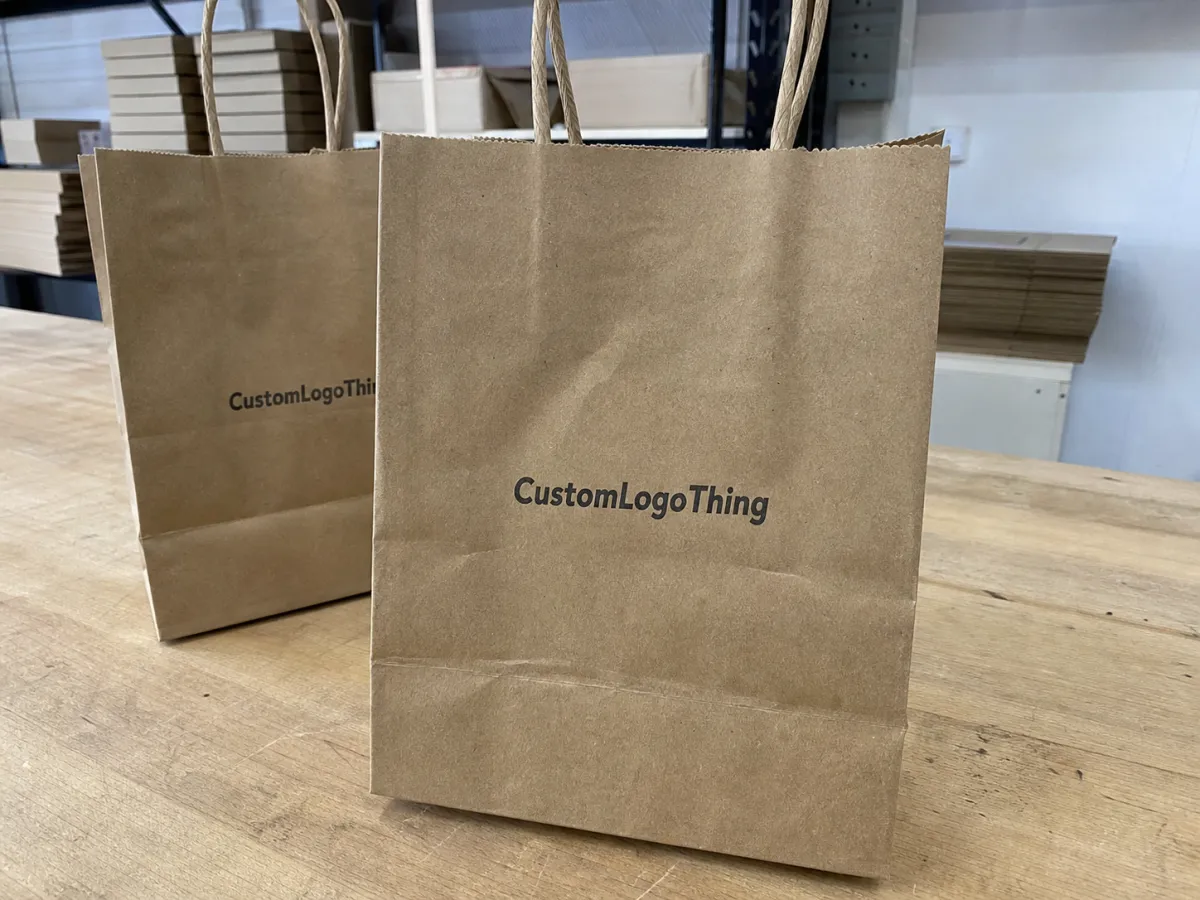
Most cost overruns start with a wrong assumption. Teams order by attendee count, booth count, or the number of branded items in the kit, then discover that the real packaging need is driven by weight, bulk, and shape. A flat tee and a booklet are easy. Add a bottle, a hard-shell sample case, or a stack of catalogs with sharp edges and the bag has to work harder.
That matters because each change in size or strength ripples through the rest of the order. Heavier paper stock raises material cost. Larger gussets change carton counts. A stronger handle may require a different attachment method. Even the print area shifts once the dieline changes, and a changed dieline means a changed proof, which means more review time. Packaging buyers see this chain reaction all the time; the invoice just makes it visible.
Planning also reduces waste in subtler ways. Oversized bags look generous on paper, but they often require inserts, tissue, or void fill to stop the merch from sliding around. That filler adds cost and can make the bag look underfilled or careless. Undersized bags create the opposite problem: bulging sides, stressed handles, and a higher chance of torn seams during distribution.
There is also the approval side of the equation. If the bag size, paper weight, handle build, and print limits are set early, the team can spend less time debating cosmetic changes and more time checking whether the order will actually ship on schedule. In practice, that is where savings show up. A clean spec avoids the kind of late-stage adjustments that quietly consume budget.
One more point gets missed often: the route matters as much as the product. A bag handed out at a registration counter has an easier life than a bag carried through a trade show, across a hotel lobby, and onto a train. For event merch twisted handle paper bags Bulk Order Planning, the physical journey should be part of the brief. A bag that is fine for a five-minute carry may be wrong for a full day of movement.
Specify the merch load before you choose the bag
Start with the contents, not the artwork. That sounds obvious, yet it is still where many requests go sideways. A buyer who says “standard event bag” usually gets a standard answer, which is rarely specific enough to be useful. A buyer who lists the actual items gets a better size recommendation and a more accurate price.
Think like the person who will pack the bag. List everything that has to fit inside, including the heaviest item and anything with corners that could stress the paper. A simple checklist helps:
- Folded T-shirts, hoodies, or other apparel
- Catalogs, lookbooks, brochures, and product sheets
- Sample kits, boxed sets, and media drops
- Bottles, tins, jars, or hard-edged items
- Loose items such as pens, stickers, or notebooks
It is not just volume. It is shape, weight distribution, and how the contents sit inside the bag. A bag can be technically large enough and still be a poor fit if the merch shifts around or pushes against the side panels. That is especially true with tall items or square corners that load the bottom seam unevenly.
Ask whether the bag is only being carried a short distance or whether it will be transported across a venue, into transit, or through a hotel. A handle that feels fine for a quick handoff may become uncomfortable after twenty minutes of carrying. For heavier kits, a stronger handle attachment and a better bottom structure matter more than decoration.
Before the proof cycle starts, the quote should also lock these details:
- Bag width, gusset depth, and height
- Handle drop and handle width
- Number of print sides and ink colors
- Exact Pantone targets if brand color is strict
- Any requirement for an unprinted interior or special finish
- Shipping split by venue, warehouse, or activation date
That last line deserves attention. Split shipments affect carton counts, freight planning, pallet labeling, and delivery timing. If the bags have to reach two show sites or be held in a warehouse before redistribution, say so early. It is much easier to plan for divided freight than to discover it after production is already underway.
Paper stock, handle build, and print area specs
Twisted handles are common for a reason: they are practical. They are usually more economical than rope handles, more durable than the thinnest flat-handle options, and easier to scale for event runs that need consistent pack-out. For most merch programs, that balance is the point. These bags are not display pieces sitting on a retail shelf. They are working packaging.
Paper weight should follow the load, not the other way around. For lighter event handouts, kraft or coated stock in the lower-to-mid range can be enough. Once the kit includes a bottle, boxed merchandise, or dense printed matter, the bag needs more body. In many custom runs, that means moving into heavier paper stock and paying more attention to the handle attachment and the bottom seam.
Here is the part that often gets simplified too much: paper strength is only one part of bag strength. A strong sheet can still fail if the handle is poorly attached or the glue line is inconsistent. For larger orders, that is where quality control matters. A decent supplier should be willing to confirm how the handle is mounted, how the seam is reinforced, and whether the chosen structure matches the merch weight.
Print area is another place where the real bag can differ from the mockup. Logos need to stay clear of folds, gussets, glue lines, and the bottom seam. Full-bleed artwork may look clean in a proof, but once the bag is assembled, elements placed too close to a fold can warp or disappear into the crease. That is not a design issue alone; it is a dieline issue.
Color management deserves a realistic approach. If the brand relies on a specific shade, request Pantone matching and approve it against a physical sample when possible. Recycled and FSC-certified papers can vary slightly in tone, and that is normal. The paper may carry a warmer cast, a softer surface, or a slightly different ink uptake. None of that is a defect, but it should be expected before the order is signed off. The FSC framework for certified materials is outlined at FSC.
For heavier or more fragile contents, ask whether the bag should be tested with the real load rather than a theoretical one. A simple pull check on the handle and a practical check on the bottom seam can reveal problems early. If the merch has sharp edges or unusual weight distribution, the packaging logic used in ISTA testing is a useful reference, even if a full lab program is unnecessary.
The point is not to over-engineer every event bag. The point is to avoid pretending that all merch behaves the same way. A soft apparel kit and a rigid sample bundle have very different needs, and the bag spec should reflect that difference.
Pricing, MOQ, and unit-cost tradeoffs for bulk runs
Pricing follows a relatively small set of variables, and buyers get the clearest quotes when those variables are defined early. Size, paper weight, print coverage, number of colors, handle style, and finish account for most of the cost. Packing format, freight, and split delivery add another layer. Everything else is secondary.
MOQ is the first hard constraint many teams meet. A custom run often starts around 500 to 1,000 pieces, but that range depends on size and print complexity. The unit price usually improves at 2,000 pieces and again near 5,000 because the setup cost spreads out. That is why a larger run can sometimes be less expensive per bag than a smaller run with a supposedly cheaper quote.
| Run size | Typical unit cost | What usually moves the price | Best fit |
|---|---|---|---|
| 500-999 | $0.58-$1.05 | Setup spread, small print runs, carton pack-out | Pilot events, limited activations, test programs |
| 1,000-2,499 | $0.42-$0.78 | Paper weight, one- or two-color print, handle style | Mid-size shows, media kits, retail handouts |
| 2,500-4,999 | $0.30-$0.56 | Finish, print coverage, carton count, freight split | National events, touring programs, seasonal pushes |
| 5,000+ | $0.22-$0.44 | Custom specs, QC packing, warehousing, shipping plan | Repeat event kits, franchise rollouts, multi-market use |
Those numbers are ranges, not promises. A small one-color bag on standard kraft stock will usually sit lower than a larger bag with a richer finish, heavier paper, or a complicated pack-out. Metallic ink, foil, soft-touch coating, matte lamination, and custom handle colors all move the price upward. So do extras that do not show up in the artwork file, such as bundled packing, special labeling, or split freight.
Rush orders are expensive for a reason. They compress the schedule, reduce flexibility in production slots, and make freight more fragile. If the event date is fixed, the best savings often come from an earlier lock on the spec rather than a smaller bag. A late correction can eat more budget than a better-sized order would have cost from the start.
When comparing options, ask for pricing at the requested quantity and at the next real price break. The jump is often informative. If the larger tier only increases the total slightly, the per-unit savings may justify the extra quantity. If the difference is substantial, it is better to keep the order tight and avoid inventory sitting in a warehouse long after the event is over.
Practical rule: the lowest unit price is not automatically the best value. The best value is the spec that matches the merch, survives the delivery path, and does not force a second purchase.
Production, proofing, and lead time checkpoints
The production path is not complicated, but it has enough handoffs to create delays if the brief is loose. A typical sequence is quote, proof, prepress check, production, quality control, packing, and shipment. Every step depends on the one before it. If the artwork arrives late or the size changes after the proof is approved, the schedule starts slipping almost immediately.
The cleanest way to keep the job moving is to lock a few items before production begins:
- Final artwork with fonts outlined or embedded
- Approved dieline and bag dimensions
- Confirmed Pantone values, if color matching matters
- Complete ship-to address, including dock or receiving notes
- In-hands date, not just the event date
Lead time is more than factory time. Buyers often focus on the production estimate and ignore freight, receiving, and inspection. That is risky. A bag that leaves the facility on time is not the same thing as a bag that is ready on the event floor. Transit can be delayed, delivery windows can miss, and receiving teams may need another day to check cartons and counts.
For that reason, event merch twisted handle paper Bags Bulk Order Planning should include a buffer. If the bags are going to a venue, I would rather see them arrive early and wait in storage than arrive the morning the doors open. A safety cushion is cheaper than emergency freight.
Standard runs with a simple print usually move faster than orders with multiple finishes or complex split deliveries. A cleaner spec can often be produced in roughly 10 to 15 business days after proof approval, though larger runs, special coatings, or holiday bottlenecks can stretch that. Once freight is added, the total timeline should be treated as a single schedule, not separate steps someone hopes will line up later.
Most delays come from predictable problems: missing fonts, late logo revisions, unclear address details, unconfirmed color targets, or a new stakeholder arriving after the proof has already been approved. None of that is mysterious. It is just avoidable, which is why the brief matters so much.
How large orders stay consistent
Consistency begins with restraint. The more the spec changes between versions, the more chance there is for drift in paper tone, handle feel, print registration, or carton counts. If the first run worked, the second run should usually be treated as a repeat, not a redesign.
The quality checks that matter most are practical and easy to understand:
- Handle attachment strength and alignment
- Print registration and logo placement
- Color drift across the run
- Bottom seam and gusset integrity
- Carton counts, labeling, and destination accuracy
Those checks sound routine because they are. That routine is what keeps a large order from becoming a problem on the receiving dock. If one site gets shorted and another receives extra cartons, the issue is usually not the carrier. It is the packing instruction. For multi-location activations, clear carton labels and count verification are worth more than a flashy finish.
Substitutions deserve a clear policy. A paper swap, a slight handle color shift, or a finish change may seem minor to someone reviewing a spreadsheet. Brand teams notice immediately. The surface changes, the color reads differently, and the bag can look off even if the logo itself is correct. That is why acceptable substitutions should be defined before production starts.
Reorders are where disciplined specification pays off. If the die line, artwork, and color targets are saved from the first run, the next order should move faster and with less effort. In many cases it is also cheaper, because setup work has already been absorbed. That is the real value of careful event merch Twisted Handle Paper Bags Bulk order planning: fewer surprises, fewer corrections, and a bag that behaves the same way every time.
It also means fewer arguments about what “the same” means. Same dimensions, same stock, same handle build, same print target. That is the kind of consistency buyers feel immediately, even if they never spell it out in those words.
What to send for an accurate quote
If the goal is a useful quote, send the key details together instead of piecing them out over several messages. The more complete the brief, the fewer clarifications you need later, and the better the first proof tends to be.
Send this list:
- Quantity
- Bag size, if already known
- Full merch list, especially the heaviest item
- Print colors and finish
- Ship-to ZIP code or port
- In-hands date
If the size is still undecided, send the largest or heaviest item in the bundle and describe the rest. That gives a better starting point than guessing from memory. It also helps avoid an underbuilt bag that fails once the full kit is assembled.
Ask for pricing at the requested quantity and one step above it. That comparison usually shows whether the larger run is worth the extra inventory. If the higher tier barely changes the total, the per-unit savings may justify the move. If the total jumps too much, stay disciplined and keep the order tighter.
There is one final detail that saves more projects than it should: confirm the artwork, approve the proof, and leave the spec alone. Last-minute changes are expensive because they touch production, packing, and shipping at the same time. A stable brief is the fastest path to a clean run.
FAQ
How far ahead should I plan bulk event merch twisted handle paper bags?
For a standard order, allow at least 2 to 3 weeks before the event for proofing, production, and freight. Larger quantities, split shipments, or special finishes need more time. If the bags have to pass through a warehouse or venue receiving dock, build in another buffer for inspection and staging.
What size twisted handle paper bag works best for event merch?
Match the bag to the largest or heaviest item in the kit, not the smallest. That usually gives a more realistic fit and prevents overstuffing. Leave enough room for inserts or padding so the bag closes cleanly and the sides do not bow under pressure.
What MOQ should I expect for custom event paper bags?
A common starting point is 500 to 1,000 pieces, depending on the bag size and print setup. Unit pricing usually improves once the run moves past 2,000 pieces. The exact threshold depends on stock, print coverage, and whether the order includes extra packing or split delivery.
What changes the cost of twisted handle paper bags the most?
Paper weight, print coverage, number of colors, and finish choice are the main drivers. Rush production, custom handle colors, special labeling, and split shipments can raise the total quickly. Freight is another cost that is easy to overlook until the shipping quote arrives.
Can I reorder the same event merch bag spec later?
Yes, if the dieline, artwork, and color targets are saved from the first run. Reorders are usually faster because the setup work is already done. They are also easier to control because the production team is not starting from a fresh interpretation of the brief.


