Ceramic Recycled Poly Mailers Bulk Order Planning Tips
Ceramic recycled poly mailers bulk order planning works best when the mailer is matched to the packed item, not just to the sustainability claim. A recycled-content film can be serviceable and still fail in production if it is too loose, too thin, or difficult to seal at speed. Buyers usually find the same lesson: the outer package has to fit the item, the line, and the transit path at once.
Fragile products leave little room for error. Extra headspace creates movement, movement creates abrasion, and abrasion turns into returns or replacements. On a single order the waste may look small, but in a repeat program the hidden cost can add up quickly.
Ceramics raise the bar further because they are brittle, edge-sensitive, and often irregular in shape. A mailer can work well as the outer layer for ceramic pieces that are already boxed, sleeved, or buffered with inserts. It is not a substitute for internal structure, and treating it like one usually causes avoidable damage.
Ceramic Recycled Poly Mailers Bulk Order Planning for Fragile Goods
The first decision is whether the packed item behaves like a flat, stable shipment or a shifting, corner-loaded one. Ceramic mugs, tiles, coaster sets, and small decor items may ship cleanly in a mailer if the inner pack already absorbs impact. A loose ceramic object usually needs a more rigid outer system.
That distinction matters because Recycled Poly Mailers are flexible by design. They save storage space and move quickly through fulfillment, but they do not add much structural support. If the item has protrusions, hard corners, or enough weight to stress the seam, the spec needs a second look before anyone places a bulk order.
Measure the product as it will ship, not as it looks on a desk. Packed dimensions, insert thickness, label placement, and closure overlap all change the fit. A bag that looks generous on paper can become tight once the product is boxed and wrapped. A bag that looks snug may actually be safer because it reduces movement inside the pouch.
Carrier handling is another practical variable. Mailers are exposed to compression on conveyors, rubbing in bins, and repeated orientation changes. Testing against that reality is more useful than relying on a catalog description.
Good buyers treat bulk planning as a sequence: define the contents, define the handling risk, then define the mailer. If the product rattles, twists, or leaves too much empty space, the spec is not ready.
Industry references such as ISTA help because they push the discussion toward measurable performance. Drop, vibration, and compression testing reveal more than appearance alone. A bag can look substantial and still fail once it meets a conveyor or a hot truck.
What Recycled Poly Mailers Actually Offer in Bulk
Recycled Poly Mailers are usually made from polyethylene film with recycled content from post-industrial, post-consumer, or mixed feedstock. Buyers should ask which one is being used. The answer affects consistency, opacity, odor, color variation, and sometimes print behavior. “Recycled” is useful, but not specific enough for a bulk program.
The best versions are practical. They are light, flexible, and stable enough to run through fulfillment at scale. They also store flat, which matters more than many teams expect. A pallet of mailers takes up far less room than a pallet of cartons, and that difference can free up warehouse space over a year.
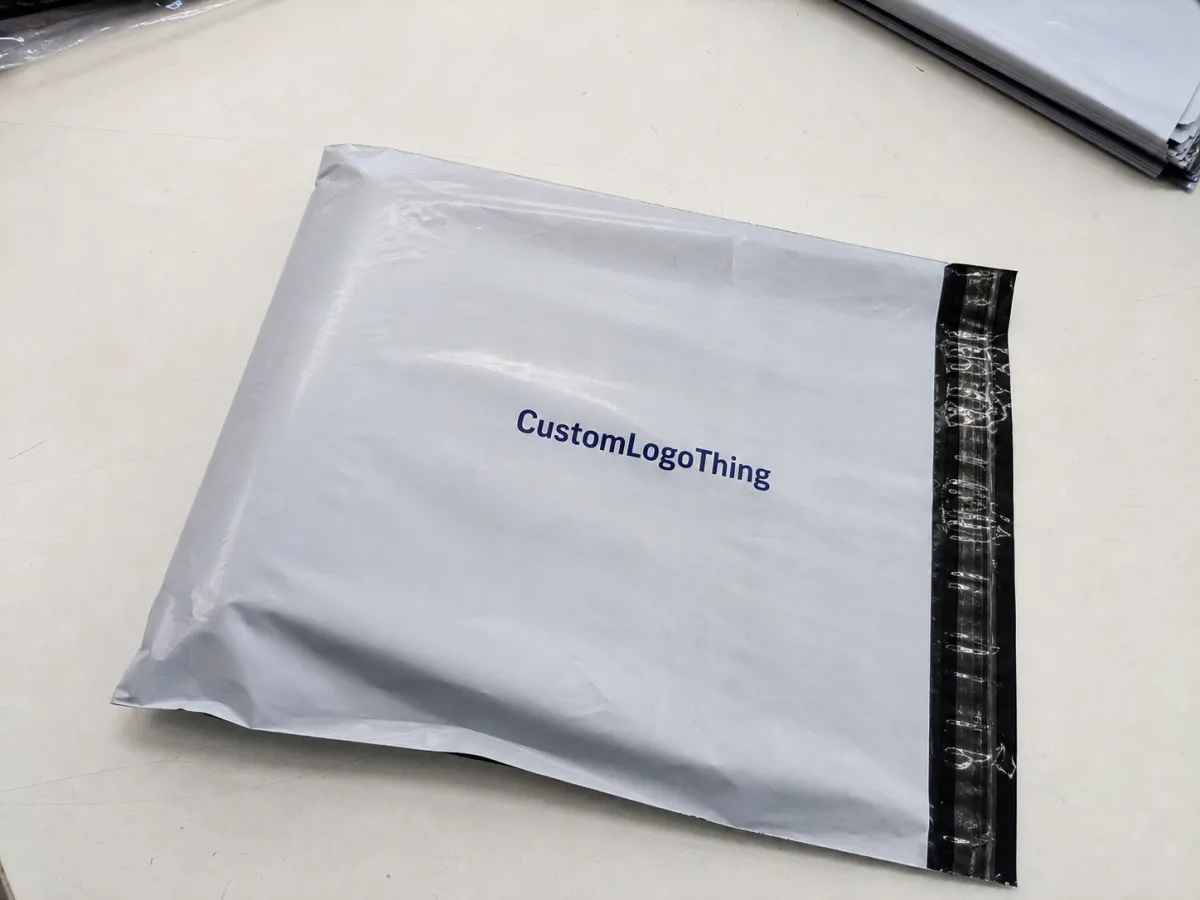
Film finish affects both performance and presentation. Opaque bags hide contents and usually look cleaner on arrival. Translucent bags may cost less and can work for lower-risk inner packaging. Matte film tends to disguise scuffs better, while gloss film can show handling marks sooner.
Closure quality deserves close attention. A self-seal strip should bond across the full width of the flap with consistent pressure. If the strip is narrow, misplaced, or sensitive to dust, operators end up pressing it twice, which slows packing and creates uneven results.
For ceramic programs, recycled poly mailers work best as a protective outer shell around a protected inner unit. They pair well with rigid inserts, molded pulp trays, paperboard sleeves, or a pre-boxed item. They are less forgiving for heavy or sharp-edged ceramic pieces that move inside the bag.
The upside is still meaningful. A mailer-based program can reduce dimensional weight, simplify pick-and-pack, and make recurring orders easier to stage. If the pack-out is stable, the bag can improve throughput without making the item feel overpacked.
For teams comparing the mailer against the rest of the pack system, it helps to look at the broader sourcing picture. A supplier that also supports Custom Packaging Products, Custom Poly Mailers, and Wholesale Programs can simplify purchasing, but the mailer still needs to win on performance.
Size, Seal, and Thickness Specs That Matter
Use usable interior dimensions as the starting point. Outer size alone can be misleading because seam build, flap depth, side gussets, and print margins all affect the opening. Two mailers with the same listed size can behave very differently once the product is inside.
Thickness should match the risk profile. For lightweight flat goods, 2.5 mil may be enough. For ceramic pieces with more weight, sharper corners, or a longer carrier route, 3.0 to 3.5 mil is a more common planning range. In rougher conditions, 4.0 mil or a reinforced construction may be justified.
Seal performance is just as important as film gauge. Ask about adhesive width, seal pattern, and peel strength. A wide adhesive strip only helps if it bonds evenly across the closure. Humidity, dust, cold storage, and inconsistent flap pressure can all create weak spots.
Dimensional tolerance matters at bulk volume. If the nominal size is 12 x 15 inches but the usable opening varies too much from bag to bag, packers feel it immediately. Small variation creates drag in the process: more adjustments, more rejected units, and more time spent forcing a fit that should have been natural.
Here is the sort of spec comparison buyers usually need before approval.
Typical spec trade-offs buyers compare
| Spec path | Typical MOQ | Unit price range | Best fit |
|---|---|---|---|
| Blank recycled poly mailer, 2.5-3.0 mil | 5,000-10,000 pcs | $0.14-$0.24 | Lower-risk shipments, repeat replenishment, minimal print needs |
| 1-color custom printed mailer, 3.0 mil | 10,000 pcs or more | $0.18-$0.32 | Stable reorder programs, moderate presentation demands |
| Heavy-duty printed mailer, 3.5 mil | 10,000-20,000 pcs | $0.24-$0.40 | More carrier handling, higher claim sensitivity, sharper edges |
| Reinforced or specialty construction, 4.0 mil+ | 20,000 pcs or more | $0.30-$0.48 | Rough transit, heavier packed weight, stricter damage tolerance |
Quality-control details should be checked before the order is locked. Ask for film thickness tolerance, seam strength expectations, print registration limits, and carton count per case. A sample is only useful if it matches the production material closely.
If the contents include paperwork, inserts, or a return card, test the full pack-out with all of those pieces in place. A few millimeters can decide whether the mailer closes flat or bulges at the seal. Bulging affects handling, appearance, and sometimes the seal itself.
For sustainability messaging, accuracy matters more than volume of claims. The EPA recycling guidance is a useful reference because material language should reflect what can actually be recovered in the relevant market.
How Pricing, MOQ, and Unit Cost Change at Bulk Volume
Price is shaped by more than resin cost. Film gauge, recycled-content target, size, print colors, adhesive type, and packaging format all influence the final number. A larger mailer uses more material, but it also changes conversion time, case pack efficiency, and freight density.
MOQ rises as the spec becomes more customized. That is less about seller preference and more about setup, waste allowance, machine changeover, and quality stabilization. A blank stock bag can move through production with fewer variables. A custom printed mailer with special dimensions and a heavier film needs more volume to run efficiently.
For repeat programs, fewer SKUs usually beat more SKUs. One size that covers a sensible range of packed products is often better than three nearly identical sizes that all need their own minimums and inventory tracking. Extra choice can feel safer, then cost more than it saves.
Unit price should never be the only number in the conversation. Freight, palletization, storage space, spoilage allowance, and rush fees can shift the real cost quickly. A quote that looks cheaper by a few cents can lose the advantage if it ships on more pallets or requires special handling.
There is also the hidden cost of inconsistency. If artwork changes from one reorder to the next, or if the size keeps drifting by small increments, production has to requalify the spec. That rework rarely shows up on the first quote, but it shows up somewhere in the budget later.
A cleaner quote request usually includes annual volume, monthly release pattern, print coverage, acceptable alternates, and target launch date. The more complete the brief, the fewer surprises on the back end.
If the order is part of a new product launch, ask for pricing on the preferred spec plus one fallback. That shows the real cost of extra millimeters, extra color, or heavier film before the order is committed.
Production Process and Lead Time From Proof to Shipment
A clean order starts with accurate input. Confirm the finished product size, packed weight, film thickness, recycled-content preference, print area, and expected monthly demand. If the bag is meant to hold a boxed ceramic item, include the box dimensions rather than the bare product dimensions.
Proofing often creates the first delay. Artwork review, mockup approval, print placement, and closure-zone checks need to be resolved before production starts. Most schedule slips come from late design changes, missing files, or a revision that turns into a new round of approvals.
The production sequence is standard: material prep, printing, drying or curing, bag making, inspection, carton packing, and freight booking. What changes is how much quality control sits inside the run. Better programs check film consistency and seal integrity during production, not just after the cartons are full.
Lead time should be broken into three parts: approval time, production time, and transit time. For a typical custom order, production might take 12 to 18 business days after final proof approval. Add freight after that, and the calendar can stretch further depending on route, season, and order size.
That range is not universal. Order volume, material availability, and shipment mode all affect the schedule. The safest way to plan is to approve the final spec early and keep reorder artwork ready so repeat orders do not start from scratch.
One practical habit helps more than buyers expect: set the sample approval date before the ship date. If the sample lands late or the proof is still open, the launch window gets squeezed.
What to Verify With Any Supplier
A supplier should be able to discuss the bag as a working package, not as a decorative print surface. That means the conversation should cover material spec, recycled-content source, closure behavior, tolerance, print method, and what happens if the order needs a second run.
For bulk programs, documentation matters. Ask for a data sheet with dimensions, gauge, adhesive details, case count, and carton dimensions. If the pack-out is fragile, ask how the supplier would test the closure and what they consider acceptable variation.
Reorder stability is another useful signal. If the first order is approved but the next one requires new assumptions, the program becomes harder to manage over time. A better process keeps the approved spec, the artwork file, and any alternates documented.
For buyers comparing vendors, the useful question is not “Who offers the most options?” It is “Who can keep the spec repeatable?” A recurring mailer program lives or dies on repeatability. Once the size, thickness, and seal are stable, procurement can forecast and operations can plan labor.
Next Steps for a Clean Bulk Order Plan
Start with a simple intake sheet: finished dimensions, packed weight, ship method, print area, recycled-content preference, and target monthly volume. Add the insert type if there is one. Inserts change thickness, closure pressure, and the way the finished pack sits inside the mailer.
Run one real pack-out test before approval. Not a mockup on paper, a real packed sample with the actual product, paperwork, and seal method. Check whether the item shifts, whether the closure holds cleanly, and whether the finished pack survives normal handling without needing extra protection.
Ask for pricing on one backup size and one backup print path. That gives you room if MOQ, material availability, or lead time changes. It also makes internal budget review easier because the team can see the cost gap between the preferred spec and the fallback option.
For ceramic programs, the best mailer plan is usually the one that reduces variables. Keep the fit tight enough to stop movement, the film thick enough to survive handling, and the closure strong enough to stay closed without babysitting. That is the core of ceramic recycled poly mailers Bulk Order Planning: match the package to the product and the process, not just to a purchasing goal.
Once those pieces are locked, the mailer stops being a recurring guess and starts behaving like a repeatable part of the fulfillment system.
How do I plan a ceramic recycled poly mailers bulk order around the right size?
Measure the finished packed item, not the loose product, and include every insert, sleeve, and sheet that will ship with it. A bag that looks roomy in a spreadsheet can become tight once the actual pack-out is inside. Ask for usable interior dimensions and seam build details so the quoted size reflects the real opening.
What MOQ is typical for ceramic recycled poly mailers bulk order planning?
MOQ depends on size, print method, color count, and whether the mailer is blank or custom printed. Printed orders usually carry a higher minimum because setup time and waste have to be absorbed into the run. A supplier should explain whether the minimum is driven by production efficiency, case pack, or print setup.
How does recycled content affect unit cost for ceramic recycled poly mailers?
Higher recycled-content targets can affect resin sourcing and sometimes raise cost, especially if the spec is narrow or highly customized. The bigger cost drivers are usually size, thickness, print complexity, and freight. Comparing landed cost gives a better answer than comparing base price alone.
What lead time should I expect for ceramic recycled poly mailer bulk orders?
Lead time is usually split into approval time, production time, and transit time. A common custom production window is about 12 to 18 business days after proof approval, but that can stretch if artwork changes or freight is tight. The safest plan is to approve the final spec early and keep reorder files ready.
Can ceramic recycled poly mailers handle fragile products without extra packaging?
Sometimes, but only if the item is already protected and does not shift inside the mailer. Lightweight boxed goods or pre-sleeved pieces are better candidates than loose ceramic items with sharp edges. A real pack-out test should always come before a bulk approval.