For winter programs that have to land cleanly and on schedule, vitamin Woven Label Beanies bulk order planning is less about picking a blank cap and more about controlling the details that sit around it. The beanie body is usually the easy part. The woven label, fold style, attachment point, proof cycle, and ship method are the pieces that decide whether the order moves in a straight line or gets stuck in revision purgatory.
That matters because these are not throwaway giveaways. Retail buyers want a piece that reads intentionally from three feet away. Campus shops want something that survives repeat wear without curling or fading at the edge. Promo teams want a product that arrives before the event, not after the table has been packed away. In practice, a 3 mm shift in label placement can cause more grief than the knit body ever will.
If you are asking for pricing, have a short list ready before the first email goes out: quantity, target in-hands date, label size, label placement, and packaging needs. Those five inputs shape the quote far more than most buyers expect. They also tell the supplier whether the schedule is realistic or optimistic.
Vitamin woven label beanies bulk order planning: why timing matters
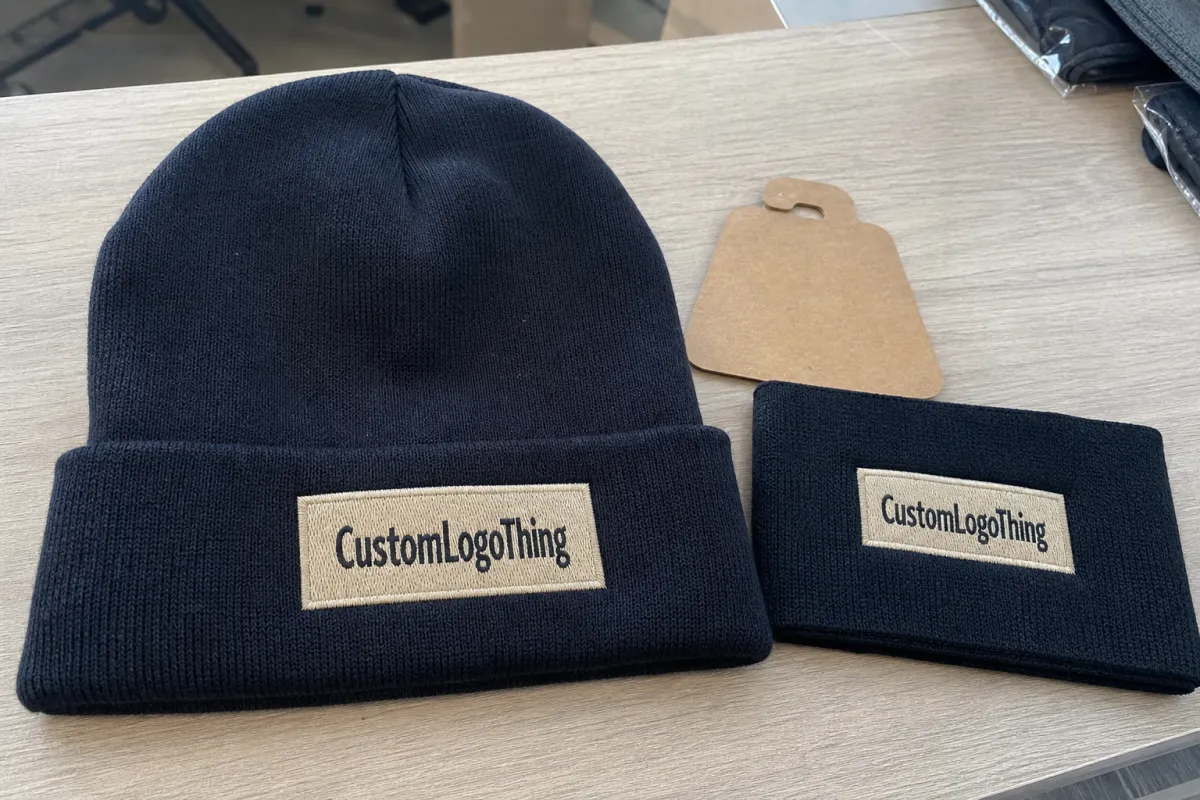
The fastest way to lose a winter sales window is to assume all beanies move on the same timeline. They do not. A stocked knit body can be available quickly, but the label approval chain often becomes the true critical path. If the hat is ready and the trim file is not, the order does not ship.
That pressure shows up hardest in the fourth quarter. Holiday drops, back-to-school inventory, athlete welcome kits, stadium shops, and event merch all compete for the same freight space and the same production calendars. A one-week delay can erase the only week that mattered. A product that arrives on time but looks slightly off can still underperform, because shoppers notice trim quality faster than most buyers think they do.
The planning question is simple: what has to be locked before production begins?
- Quantity and whether it is split across colors.
- Target in-hands date, not just the ship date.
- Label size and placement so the brand mark reads clearly.
- Packaging expectations such as polybags, stickers, or hang tags.
- Approval owner who can sign off fast when the proof arrives.
From a buyer's point of view, speed only helps if it is predictable. A same-day quote means very little if three rounds of art changes follow. A better signal is whether the vendor can say, up front, how the label choice affects the schedule. Good programs are built backward from the delivery date, not forward from the purchase order.
The blank beanie is rarely the problem. The trim decisions are where schedules slip, costs move, and approvals stall.
For multi-item merch programs, the same logic applies across categories. If your beanie order needs matching labels or tags for other knit accessories, start with the label spec first and let the product follow. Buyers who source both the body and the trim through Custom Labels & Tags usually cut down on revisions because the artwork, fold, and attachment method are aligned before the first proof.
Beanie construction choices that change the label result
Not every beanie gives the same branding surface. A cuffed style offers a firmer front panel and a clear place for a woven label. A slouch style has more drape and a softer feel, but it also gives the label less structure to sit against. On some slouch hats, the label looks fine in the flat mockup and awkward once the garment is worn. The difference is usually not the art. It is the fabric behavior.
Knit gauge matters more than many buyers expect. Tighter knit structures hold shape better, which helps the label stay legible after wear and washing. Looser knits can allow the label edge to ripple or the attachment stitches to tug the surrounding fabric. Yarn weight plays a role too. Heavier yarn gives the beanie more body, but it can make a small label feel lost. A thin woven label on a bulky knit often looks underpowered. Oversize it too much and the result looks pasted on.
There are four placement choices that show up most often:
- Center front cuff for the strongest retail read.
- Side front or side seam when the brand wants a quieter mark.
- Woven side tab for minimal, fashion-led programs.
- Interior branding when the exterior has to stay clean.
Placement should match the visual weight of the knit. A 30 x 40 mm woven label can sit neatly on a medium cuff, but that same size can crowd a narrow baby beanie or a thin slouch panel. One useful habit is to test the mockup against the actual body color, not against white artboard. What looks balanced on screen can look too dark, too loud, or too small once it is paired with the real yarn.
Color contrast is another variable that gets ignored until the sample shows up. Dark thread on a dark hat can flatten the logo. Bright thread on a muted body can make the accessory feel louder than the collection around it. A buyer comparing thread against knit yarn under daylight will usually make a better call than a buyer comparing it on a monitor. That matters because woven labels do not behave like printed stickers; thread count, contrast, and texture all affect how much the mark reads from a distance.
There is also a practical question around finish. Some labels sit better with a clean folded edge, while others need a little more body so they do not collapse into the knit. If the beanie is very soft, extra backing can help the label hold its shape. If the knit is already thick, too much backing can create stiffness the buyer did not ask for. These tradeoffs are small, but they add up in the final look.
For buyers handling more than one accessory type, the same thinking applies across trims and finish types. A label that reads cleanly on a beanie may need a different fold, stitch count, or thread palette on a scarf, cuff, or patch. That is where Wholesale Programs can help, because consistent specs across several SKUs often reduce setup time and keep the collection visually coherent.
If the order includes paper inserts, folded care cards, or hang tags, this is also the point to ask about material sourcing. FSC-certified paper is a clean reference for retail-facing packaging, and transit testing standards such as those from ISTA are worth checking when the cartons have to survive long routes. For fiber-based packaging questions, FSC remains the most straightforward starting point.
Specs to lock before artwork approval
The easiest way to slow down vitamin woven label beanies Bulk Order Planning is to send artwork before the production details are fixed. Suppliers can help fill gaps, but they should not have to guess at size, placement, or pack-out. Guessing creates reproofs. Reproofs create delay.
A clean quote request should include a vector logo file, color references, and a short usage note. If your brand uses PMS values, send those. If the artwork was developed for digital use and only exists in HEX, include that too, but do not rely on screen color alone. A woven label proof should match the actual knit body, not a monitor approximation.
These items should be settled early:
- Label size, often in the 25 x 35 mm to 30 x 50 mm range, depending on cuff width and visual density.
- Fold type, such as center fold, end fold, or side tab.
- Backing if the label needs more body or stiffness.
- Attachment method, including stitch count and stitch position.
- Pack-out, including polybags, size stickers, carton counts, and retail prep.
For resold product, ask for fiber content and care text before the order is released. A buyer selling through campus stores or retail channels does not want to discover late that a label or hang tag needs compliance copy. If the shipment will move through a distribution center, carton labeling and case counts should also be fixed before production starts. The best time to settle those details is before thread touches the loom.
Mockups should be compared against the actual beanie color. That sounds basic, but it prevents a surprising number of mistakes. On a charcoal hat, navy thread can disappear. On a cream body, the same navy may look elevated and premium. One proof on a white background is not enough to approve a color-critical accessory. A good buyer checks the label in the context it will actually be worn in.
There is also a difference between what the artwork says and what the fabric can carry. Fine lines in a logo may reproduce well in print, yet blur in weave if the label is too small. Thin typefaces can close up. Tiny registration details can vanish. If the mark depends on precision, the label needs enough room for the thread to do its job. Shrinking the art to save space often saves nothing in the end.
Buyers who want a quicker quoting cycle should send one tidy packet: artwork, quantity, target date, placement note, and packaging note. If a sample photo exists, include it. If there is a previous order, include the old spec sheet too. A supplier can compare the new request to the prior run and catch differences before they turn into production errors.
Pricing, MOQ, and unit cost breaks for larger orders
Pricing for a woven-label beanie order is a stack of decisions, not one number. The blank beanie, the number of thread colors, the label construction, the finishing, and the packaging all sit inside the quote. A plain stocked acrylic beanie with one clean label is a different job from a custom knit style with folded trim, retail bagging, and stickered cartons.
MOQ usually follows three variables: whether the base beanie is stocked, how complex the label is, and whether the trim is being produced specifically for your order. Smaller runs carry more setup cost per piece because loom prep, proofing, and packaging labor are spread over fewer units. That is why 100 pieces often feel expensive relative to 500 or 1,000, even if the markup per unit seems modest on paper.
These are planning ranges, not fixed offers, but they help buyers see where price breaks usually sit:
| Quantity | Typical unit cost | What usually changes | Best fit |
|---|---|---|---|
| 100 units | $4.80-$7.25 | Higher setup share, limited label options, tighter approval window | Sample-driven launches, small team stores, test runs |
| 250 units | $3.90-$5.90 | Better spreading of setup cost, more room for packaging choices | Seasonal promos, campus programs, mid-sized merch drops |
| 500 units | $3.10-$4.80 | Cleaner pricing on repeat labels, easier freight consolidation | Retail replenishment, event merch, broader distribution |
| 1,000 units | $2.60-$4.20 | Lowest setup drag, strongest leverage on packaging and freight | Core winter programs, wholesale distribution, multi-store rollout |
Buyers should separate product cost from sampling, freight, and rush fees. A quote can look cheap until shipping is added. It can also look high until you realize it includes individual bagging and retail stickers. For a fair comparison, ask for the same line items at 100, 250, 500, and 1,000 units.
Simplifying the artwork can move the price in a meaningful way. Fewer thread colors, a standard fold, and one label across all beanie colors usually save more than negotiating the base garment by itself. Consolidation matters in wholesale programs. One large, consistent trim setup tends to be cheaper than several tiny orders with similar artwork.
There is a point where buyers start paying for complexity rather than quality. That is not always wrong. A richer label, a better fold, or a cleaner retail pack-out can justify the spend if the beanie is being sold, not given away. The useful question is not whether a change costs more. It is whether the change does anything the customer can actually see.
The cleanest rule is simple: if the label is the same, the base body is stocked, and the packaging is straightforward, the order usually gets more efficient at scale. If any of those three shifts, the price shifts with it.
Process and timeline for moving from proof to delivery
The production flow is familiar enough: inquiry, quote, artwork check, digital proof, approval, production, quality control, packing, and shipment. On paper, it looks linear. In real life, the order only moves as fast as the slowest approval. That is why the strongest vitamin woven label Beanies Bulk Order Planning starts with a timeline instead of a budget target.
A realistic schedule for a standard run often looks like this:
- Artwork and proofing: 1-4 business days, depending on file quality and revision count.
- Production: 10-18 business days for common stocked blanks.
- Freight: 3-7 business days for domestic delivery, longer for international movement.
- Buffer: add extra time during peak season, when factory calendars tighten and freight fills quickly.
That puts many projects in the 3-6 week range from clean approval to delivery, and longer if the label is new, the packaging is custom, or the shipping method is booked late. If the order is time-sensitive, one internal owner should be assigned to sign off quickly. Too many reviewers can turn a one-day proof into a four-day delay.
Sample approval can save money even when the beanie body itself seems obvious. A digital proof shows scale and placement, but it does not show how the woven label sits against the cuff in real light. If label position or thread color is uncertain, a physical sample can prevent rework on the full run. That is especially useful when the order includes multiple body colors or when the buyer needs the piece to photograph well.
Late freight booking is another common choke point. Production may finish on time, then cartons sit because the truck or parcel plan was never reserved. If the delivery address is a store, distribution center, or campus warehouse, share that information early. If the shipment may split across locations, say so before production starts. The more precise the routing details are, the fewer surprises appear at the end.
One practical habit helps more than most people expect: build in a small margin for approval slippage, especially before November and December. Seasonal demand compresses both manufacturing and shipping. A schedule that looks comfortable in August can become fragile by late fall. Buyers who treat lead time as a range, not a promise, usually make better decisions about launch dates and reorder points.
How to judge supplier reliability before you place the PO
Quote speed is not the same thing as supplier quality. A dependable partner answers with specifications, clarifies risk, and points out where the order could stall. A weak one says yes to everything and hopes the details will resolve themselves later. For a seasonal accessory, that difference gets expensive fast.
Ask how the process is documented. Do they show sample photos? Do they note production checkpoints? Do they provide clear carton labels and shipping paperwork? A supplier that can explain the workflow in plain language usually has a more controlled operation than one that only talks about price.
Consistency across reorders matters just as much. If label size, thread colors, and placement notes are tracked correctly, a repeat run should mirror the first one. If prior approvals are missing or the file history is unclear, the second order may drift. Buyers should expect the vendor to keep color references, previous artwork versions, and packing instructions on file so the next run starts from the right point.
There is also a simple service test. Ask a specific question about artwork correction, carton labeling, or split shipments and watch the answer closely. A strong answer names the issue, the fix, and the timing. A vague answer stays in generalities. That is usually a warning sign.
Quality control on woven-label beanies does not need to be complicated to be useful. The key checks are straightforward: label alignment on the cuff, thread contrast against the body color, stitch security at the attachment point, and pack-out accuracy. If the order includes multiple colors, one sample from each colorway should be checked. A single approved sample does not guarantee that every color sits the same way once production scales up.
For larger programs, reliability becomes part of the total landed cost. Missed dates, reproofs, and reships usually cost more than a slightly higher unit price from a steadier source. From a buyer's point of view, the cheapest quote is often not the cheapest order.
That is why the better suppliers behave like risk reducers. They keep specs on file, ask for a clean approval path, and document the run so a reorder does not have to be rebuilt from scratch. If you are still comparing options, the FAQ page is a sensible place to sanity-check the basics before a PO goes out.
Next steps to secure artwork, payment, and delivery
Before sending the order, build one final checklist and treat it as locked. Include quantity, target in-hands date, logo file, color references, label placement, and pack-out. If one of those items is missing, the order can still move, but it will move more slowly and with less certainty.
If the schedule is tight, confirm the first proof within one business day. That habit keeps the production clock moving. If the design is still being debated, send the best available file and note what remains open. Silence is worse than an imperfect first draft, because the order cannot progress until someone responds.
Freight should be reserved early, especially around holidays or campus launch dates. Share the shipping address before production starts, not after. If the route may change, say so now. If the base color is at risk of running out, provide a backup body color or alternate label placement so the order can continue instead of stop.
For larger rollouts, a repeatable spec sheet is worth more than it looks on paper. Keep the base style, label dimensions, fold type, thread colors, and packaging notes in one file so the next order does not begin at zero. That is the difference between a one-off purchase and a program that can be repeated without rework.
Handled this way, vitamin woven label beanies Bulk Order Planning becomes a controlled buying process instead of a seasonal scramble. Lock the artwork, match the label to the knit, price the freight honestly, and move approvals quickly. That is how winter stock lands on time and still has room to make margin.
How far ahead should I plan a woven label beanie bulk order?
Plan at least 6-8 weeks ahead for a standard run so artwork review, approval, production, and freight all have room. Add more time if you need a new label design, special packaging, or delivery during peak season. Reorders with the same specs can move faster because the files are already on record.
What MOQ should I expect for custom beanies with woven labels?
MOQ depends on the blank beanie, label complexity, and whether the base style is stocked. Many buyers see lower price breaks at 250, 500, and 1,000 units, while smaller runs usually carry a higher unit cost. If you are ordering multiple colors, ask whether the MOQ applies per colorway or across the total quantity.
Can I order multiple beanie colors under one artwork setup?
Often yes, if the base colors are in stock and the woven label stays unchanged. Ask whether each color needs its own minimum or whether the total order can be pooled. Send color references early so the supplier can confirm the best match before proofing begins.
What files help me get a faster quote for branded beanies?
Send a vector logo file and include PMS or HEX references if your brand uses them. Also provide the target quantity, delivery date, label placement, and packaging needs in the first message. If you have a reference sample, add photos so the quote matches the look you want.
How do I keep unit cost down without lowering quality?
Use a standard blank beanie and keep the decoration to one woven label when possible. Limit color changes, complex folds, and special retail packaging unless they are required. Approve proofs quickly and combine styles into one shipment to avoid rush charges.


