Trade Show Foam Trucker Hats sample checklist for buyers
Use this trade show foam trucker Hats Sample Checklist to compare fit, foam quality, logo clarity, pricing, and turnaround before you approve bulk orders.
A foam trucker hat can look sharp in a render and still miss the mark in person. A buyer-focused sample checklist keeps the review on fit, foam recovery, logo placement, cost, and lead time before a bulk order has to survive shipping, booth setup, and long wear days.
Most issues show up before production, not after. The sample may look fine flat on a desk, then ride too high, show glare on the front panel, or flatten at the forehead once someone wears it. That is why the sample needs to be judged as booth inventory, not as a casual giveaway.
If it only works in a studio photo, it is not ready.
Trade Show Foam Trucker Hats Sample Checklist: What Fails First
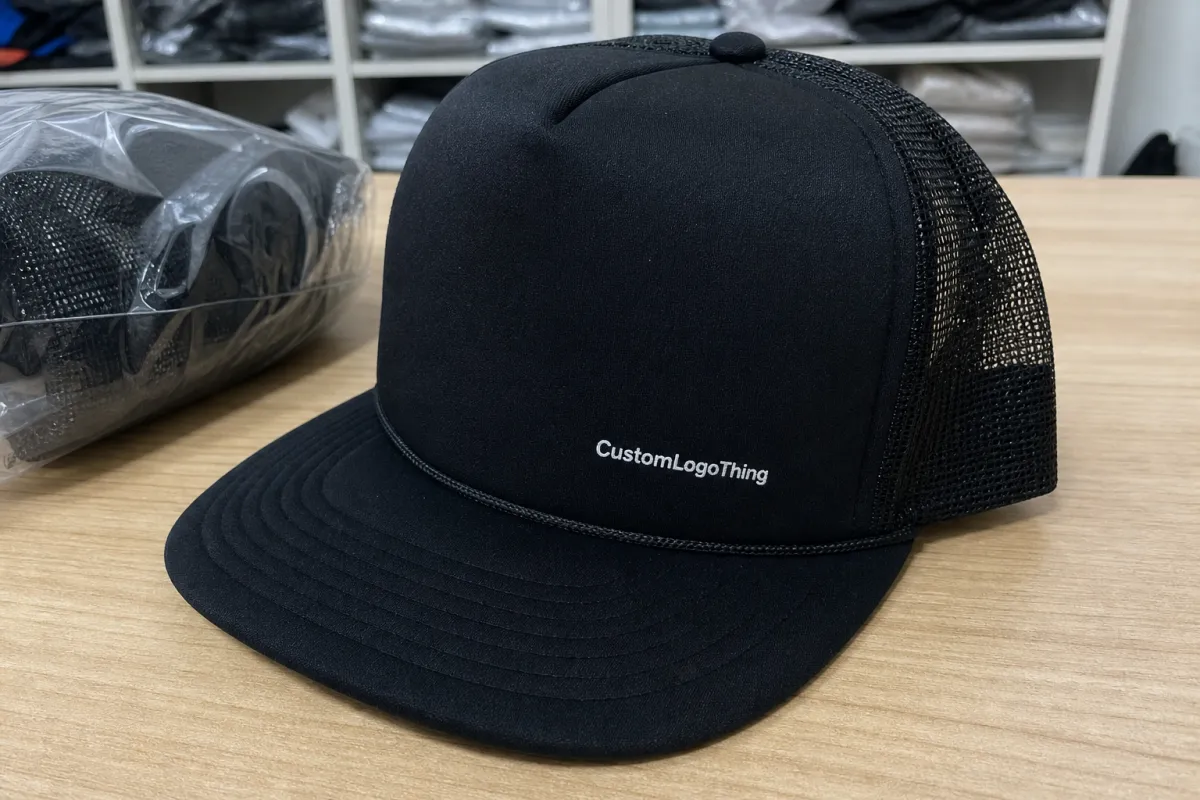
The first failure is usually fit or surface quality, not the logo. A hat can look acceptable flat and still sit awkwardly on a head, pinch at the temples, or feel too stiff across the front. Staff members wear these hats for hours, so comfort is part of the presentation.
Start with the parts that vary most by supplier:
- Crown shape - Does it sit upright, tilt back, or squeeze at the sides?
- Foam front - Is the panel smooth, dense enough to hold shape, and able to recover after packing?
- Mesh back - Does it feel structured or flimsy?
- Closure - Does it adjust cleanly without snagging or slipping?
- Decoration - Does the logo stay readable on a curved foam surface?
- Packaging - Will the hat arrive with its shape intact?
If the sample only looks good in a studio photo, it is not approved yet.
Convention halls are unforgiving. Bright lighting, polished floors, crowded aisles, and constant handling expose weak decoration or flimsy construction quickly. Foam fronts are especially sensitive because the panel acts like a sign, so any issue in placement, stitching, or print opacity becomes more visible, not less.
Think about the full wear cycle. A good sample should look clean in a photo, fit comfortably through a long event day, and keep its shape after being tossed into a tote or display box. If it fails one of those tests, the bulk order will likely inherit the same weakness.
How the Sample Approval Process Works
The cleanest approval process is simple: review the spec sheet, confirm the artwork, choose the sample type, inspect photos or the physical sample, and then approve or revise. If a supplier tries to skip steps, slow it down. Rushing usually means rework later.
Four sample types come up most often:
- Blank sample - Checks the base hat, fit, foam feel, and color before decoration.
- Decorated sample - Shows how the logo sits on the foam front or crown.
- Pre-production sample - Matches the planned bulk run as closely as possible.
- Sales sample - Useful for reference, but not always a final-production match.
For trade show buying, decorated and pre-production samples matter most. A blank sample can confirm that the cap fits real heads, but it will not show whether the logo overwhelms the front panel or disappears into the texture. That is when size, stitch density, and placement usually need adjustment.
Internal alignment matters too. Marketing may care most about logo clarity, events may focus on comfort, and procurement may be watching total landed cost. If those priorities are not settled before approval, the sample can stall while people trade comments instead of decisions.
Document the approval in writing. Save photos, note the final logo dimensions in millimeters, record Pantone targets, and confirm the pack method and carton count. Without that paper trail, the production sample and the production run can drift apart.
For shipments that need to hold shape, it helps to think in terms of compression, vibration, and drop exposure rather than optimism. The testing guidance at ista.org is a useful reference if the sample is traveling with inserts, polybags, or display packaging. If the order includes paper components such as hang tags or carton inserts, the sourcing basics at fsc.org are worth checking as well.
Cost, Pricing, MOQ, and Quote Traps
Sample pricing is where small line items become a larger surprise. A sample fee is only part of the total. Setup charges, patch tooling, shipping, special foam sourcing, and decoration revisions can all appear separately. Ask for the full structure before you approve the sample.
Typical sample fees often fall around $20-$75 before freight. Blank stock samples are usually on the lower end. Decorated proofs cost more, especially if they involve embroidery, woven patches, or a print method that needs extra setup. If materials are not already in stock, the sample price can rise again.
Compare these line by line, because quote wording can get fuzzy:
| Sample Type | Typical Cost | What It Helps You Check | What It Can Miss |
|---|---|---|---|
| Blank stock sample | $20-$40 + freight | Fit, foam feel, crown shape, closure comfort | Logo placement and decoration accuracy |
| Decorated sample | $35-$75 + freight | Artwork scale, stitch density, print opacity, alignment | Final bulk consistency if materials change |
| Pre-production sample | $50-$100+ + freight | Near-final materials, decoration method, packaging, carton fit | Minor shade shifts if production lots vary |
MOQ changes the math. Color choice, patch style, closure type, and stitch count can all affect the minimum. A simple screen print on a standard foam front may keep the minimum manageable. A woven patch, dense embroidery, or unusual foam color can push the order higher or turn it into a more custom run.
Compare identical specs across vendors. Ask every supplier to quote the same decoration method, carton count, shipping terms, and exclusions. A lower unit price can hide freight, setup, or a patch charge. A higher quote may already include sample credit or revisions. The only fair comparison is a clean one.
For bulk orders, a common working range for a simple foam trucker hat can sit around $2.20-$4.50 per unit at moderate volume, depending on decoration method, color count, and whether the order clears MOQ cleanly. Add more for complicated patches, dense embroidery, or compressed timelines.
One final trap: sample credits. Some suppliers will apply the sample fee back to the production order, but only if the credit is requested before payment or confirmed on the quote. If the credit matters to the budget, write it down before the invoice lands.
Timeline: From Artwork to Approved Sample
A useful timeline runs through six steps: artwork check, material sourcing, decoration, finishing, photo review or shipment, and final approval. Any supplier that skips one of those steps is gambling with the delivery date. That may be acceptable for low-stakes merch. It is not acceptable for event inventory that must be packed before booth setup begins.
Blank or stock samples can often be ready within a few days if the factory already has the materials in hand. Fully decorated custom samples usually need one to three weeks, then freight on top. If the design includes a special patch, unusual foam color, or layered decoration, plan toward the longer end unless the supplier has stock and in-house decoration already lined up.
Rush work fails in predictable places. Color matching takes longer when the factory has to chase a near-match instead of using a stocked foam or thread color. Patch sourcing slows things down if embroidery or woven labels are coming from another shop. Courier delays add another layer of risk, and a vague approval email can cost days if nobody wrote down the exact logo size.
Plan backward from the trade show date, not from the order date. The hats need time to arrive, get checked, be sorted, and land in the booth crates. Leave room for at least one revision cycle if fit or logo scale misses the mark. Panic freight costs more than the sample itself.
Packaging also affects the timeline. Ask whether the sample will be folded, flat-packed, or shipped with protective support. A foam front can deform if it gets crushed into a small bag with no structure. A simple insert or stronger carton often prevents that problem and saves an unnecessary second sample.
What to Check on Foam, Fit, and Decoration
This is the part that decides whether the hat belongs in the booth or in the backup pile. Start with the foam front. Check thickness, stiffness, smoothness, and rebound. Many Foam Trucker Hats use a thin foam layer or foam-backed front panel, often around 2-4 mm depending on the construction. Whatever the exact build, it should recover after pressure instead of staying dented or wrinkled.
Then move to fit. Pay attention to crown depth, brim curve, mesh stiffness, sweatband comfort, and how far the closure adjusts. A mixed-size event team needs flexibility. If the cap only fits one or two head shapes comfortably, somebody will wear it crooked. Crooked hats read sloppy in photos and in person.
Decoration is where the checklist earns its keep. Verify logo placement against the center seam and the upper edge of the foam panel. Check stitch density if the logo is embroidered. Low stitch density can look thin and broken on foam. If the decoration is printed, look for even coverage, clean edges, and no haloing or bleed-through. If a patch is used, inspect the edges for lift, curl, or oversized proportions relative to the front panel.
Color deserves a separate check. The same foam front can look lighter, shinier, or flatter under booth lights than it does on a screen. Confirm the Pantone target, then test the sample in lighting close to the real show environment. Studio lighting flatters almost anything. Convention lighting does not.
Packaging deserves equal attention. If the hats are being handed out at the booth, confirm that the polybag or carton protects the front panel from scuffs. If the order is shipping directly to an event team, add carton labels, piece counts, and a few extras for replacements.
Here is a practical trade show foam trucker Hats Sample Checklist for review:
- Does the hat fit at least three different head sizes without feeling awkward?
- Does the foam front rebound after packing or light pressure?
- Is the logo centered, level, and readable from six to ten feet away?
- Do the colors match the approved target under bright indoor light?
- Does the closure hold without slipping or snagging?
- Does the sample arrive in packaging that protects the shape?
Common Mistakes That Waste Booth Budget
Approving from a render is the most common mistake. A render cannot show foam texture, panel stiffness, or how a logo behaves on a curved surface. It is useful for early direction, not for final sign-off.
Checking only one head size is another easy miss. A hat can fit the buyer perfectly and still fit the rest of the team badly. Try it on more than one person. Better yet, wear it for a full day. Heat, sweat, and movement change the feel.
Buyers also forget to test the hat in actual use. Take photos under strong indoor light, move around, lean over, and see what the logo does at different angles. Some foam fronts look flat from the front but warp from the side. Some embroidered designs lose clarity when the crown bends.
Logistics can drain the budget too. Staff hats, giveaway hats, backup hats, and replacement hats all need to be counted before production starts. Then add a few extra units because somebody will forget one, a carton will be delayed, or the event team will decide to hand out more than planned.
Revision terms are another place where money disappears. If the sample misses the mark, who pays for the second round? How long will the rerun take? What changes are included and what counts as a new setup? Put that in writing.
Expert Tips and Next Steps Before You Order
Build a one-page approval sheet before the sample phase starts. Put the artwork files, exact logo size, Pantone targets, delivery deadline, pack method, and the top items from the checklist in one place. That sheet becomes the control document and keeps internal reviewers from making random changes that were never part of the brief.
Ask for at least one decorated sample and one blank sample if the decoration method or foam color is still undecided. The blank version shows whether the base hat is worth buying. The decorated version shows whether the logo method behaves on that surface. Together, they remove a lot of guesswork.
If vendors are being compared, measure the same details every time: crown height, front panel width, stitch count, freight, carton count, and quote exclusions. Without that discipline, the cheaper quote wins on paper while the expensive quote wins in reality. The lowest number is not always the lowest landed cost.
A practical rule helps here: set a hard yes-or-no gate. If fit, logo, price, and timeline all pass, move ahead. If one fails, fix it before bulk production starts. A weak sample is a warning, not a suggestion.
For future events, keep the approved specs as a reorder template. Save the final sample photos, the pricing structure, and the carton instructions. Next time the same style is needed, the team is not rebuilding the decision from scratch.
That is the real value of a buyer checklist: it protects the budget, keeps the hat wearable, and helps the booth look intentional instead of improvised.
Frequently Asked Questions
What should be on a trade show foam trucker hat sample checklist?
Include fit, foam thickness, logo placement, color match, closure comfort, packaging, freight, sample fee, and the approval deadline. Use the same checklist for every vendor so comparison is fair and quick.
How many foam trucker hat samples should I order before a trade show?
Order at least one decorated sample and one blank sample if the decoration or color is still under review. Ask for an extra sample if multiple team members need to approve fit or if the show date is tight. Keep one approved sample as the production reference for reorders.
How much do foam trucker hat samples usually cost?
Sample fees often land around $20-$75 before freight, and decorated proofs can cost more. Setup, patching, and special decoration methods can push the quote higher, so ask for a line-by-line breakdown. Some suppliers will credit the sample fee back on a larger order, but only if it is confirmed before payment.
What is a normal turnaround for custom foam trucker hat samples?
Blank or stock samples can arrive in a few days if the factory already has materials available. Fully decorated custom samples usually need one to three weeks, plus shipping time. Rush orders often fail on sourcing or approval delays, so keep a buffer before the event.
Can I approve foam trucker hat samples from photos only?
Photos are useful for early screening, but they do not show fit, foam feel, or how the hat sits on a real head. Physical samples are safer before a trade show because lighting, sweat, and movement change the look. If remote approval is unavoidable, ask for close-up photos, measurements, and a video from multiple angles.