A strong hotel Premium Cuffed Beanies supplier is not just a source for winter hats. The right partner solves a hospitality problem: the beanie has to look composed at a glance, sit neatly with uniforms, keep its shape after repeated wear, and still feel comfortable enough that staff will actually use it. That balance is harder than it sounds. Knitwear reveals quality fast, and guests notice the difference between a hat that looks considered and one that looks like a last-minute add-on.
For hotel buyers, the useful question is not simply what does it cost. It is whether the product can be repeated, whether the color will stay stable across replenishment, whether the logo holds up in daily use, and whether the supplier can keep the process under control from sampling to shipment. A supplier that understands hospitality will talk about those issues before talking about volume discounts.
There is also a brand effect that many teams underestimate. A cuffed beanie can feel more premium than a printed accessory because the material, stretch, and surface texture are immediately visible and tactile. That matters in winter service programs, where small details shape the guest’s impression of the property and the staff’s confidence in the uniform.
What a hotel premium cuffed beanies supplier should solve
Hotel beanies serve multiple roles. They appear at entrances, on valet teams, around outdoor events, in spa or wellness areas, and in cold-weather service positions. That means the item has to do more than look good in a product photo. It has to read clearly from a distance, work with the rest of the uniform, and remain comfortable during a full shift.
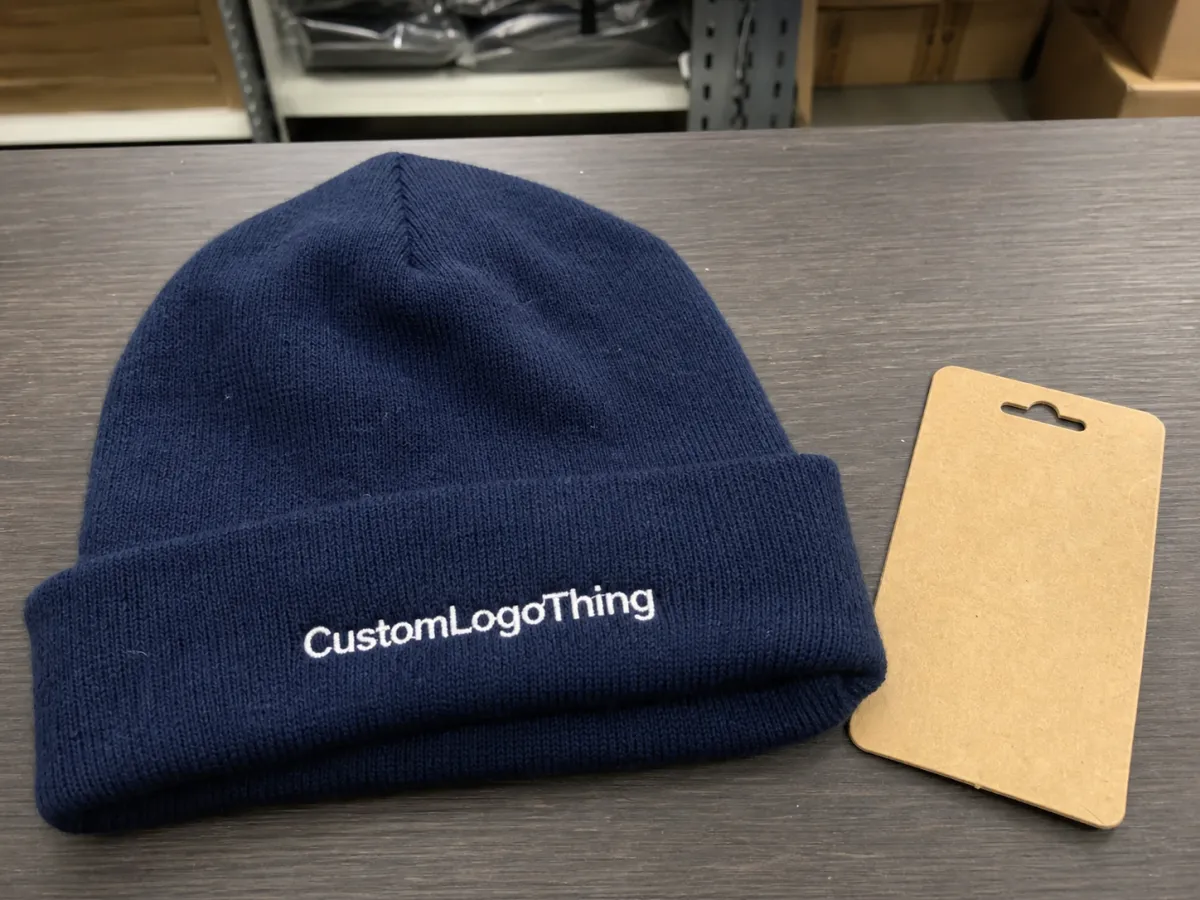
The cuff is the part that makes this category useful. It creates a flatter area for decoration, gives the logo a defined frame, and helps repeat placement from one hat to the next. For hospitality, that consistency matters. If the cuff height shifts too much, a set of otherwise good hats can still feel uneven when distributed across departments or properties.
A premium beanie program should also answer a simple operational question: will people wear it? Scratchy yarn, too much slouch, or a tight forehead band can turn a useful item into something that gets left in a locker. Knit hats carry perceived value because the material is noticeable in hand; that same tactile quality can work against the program if the construction is off.
A knit hat earns its keep when the fit is steady, the logo is calm, and the material feels substantial without being stiff.
The best suppliers help buyers manage fit, color, decoration durability, and replenishment. They should be able to tell you where the spec is likely to slip and where it is safe to simplify. That kind of guidance is worth more than a low opening price.
How construction, cuff height, and decoration work together
Material choice sets the baseline. Acrylic is common because it is warm, economical, and easy to color match at scale. It also tends to perform well for bulk orders where consistency matters more than novelty. Wool blends bring a more traditional hand feel and often better warmth, though they usually cost more and may need a little more care during production. Recycled yarns are increasingly common for hospitality merchandise and staff gear, especially when teams want a cleaner sustainability story without turning the item into a talking point. Softer performance knits can help if the beanie needs to be worn for long periods and comfort is a priority.
Knit density affects the finish as much as yarn type does. A tighter knit usually gives cleaner embroidery, better shape retention, and a flatter surface around the cuff. Looser knits can feel softer and more relaxed, but they may stretch more and reduce logo clarity. That is why a serious hotel Premium Cuffed Beanies supplier should discuss stitch structure and recovery, not only yarn color and unit price.
Cuff height is another detail that changes the whole impression. A wider cuff gives more room for a logo, woven label, or patch and usually makes the hat feel more substantial. A narrow cuff can look lighter and more casual, but the branding field gets tight quickly. If the logo sits too close to the edge, the item stops looking tailored and starts looking improvised.
Decoration method should follow the fabric, not fight it:
- Embroidery is durable and usually the cleanest choice for staff wear.
- Woven labels are understated and fit well when the brand wants a restrained finish.
- Patches add dimension and can work well for guest retail or concierge programs.
- Jacquard knitting builds the artwork into the fabric and looks sharp when the logo is simple.
Color matters more than buyers expect. Deep navy, charcoal, and black are common because they sit easily beside most hotel uniforms. Heather gray can look softer, but the logo contrast changes more depending on lighting and thread choice. A sample that looks right under showroom light may look flatter or brighter at an entrance under daylight. The practical test is shape retention and color stability after wear, not how the hat photographs on a neutral background.
Thread count, stitch placement, and logo scale also deserve attention. Fine text and thin lines can disappear once the knit stretches. For hospitality programs, bold usually beats intricate. The logo should be legible, stable, and calm rather than crowded into the available space.
Cost, pricing, MOQ, and what changes the quote
Pricing for hotel beanies is driven by five main factors: yarn type, knit complexity, decoration size, color count, and packaging. A stock acrylic beanie with simple embroidery usually sits at the lower end of the range. More custom yarn colors, special patches, and fully knitted artwork push the price up. Packaging can also matter more than expected if the item is intended for display, retail, or multi-property distribution.
For bulk hospitality programs, a realistic working range is often $2.10-$3.40 per unit for simpler stock-based orders around 5,000 pieces, and $3.20-$6.50 per unit for more custom or more finished-looking builds. That range is broad because the spec changes the outcome quickly. A wool blend with a patch and custom packaging is a different job from a basic acrylic beanie with one-color embroidery.
MOQ depends on the production method. Stock-based beanies can often start lower, sometimes around 100-300 pieces depending on decoration and supplier setup. Fully custom knit programs usually work better at 300-1,000 pieces or more because the machine setup, yarn planning, and decoration prep need enough volume to make sense. Lower minimums are useful, but they usually come with a higher unit cost. Larger orders tend to lower the unit price and improve repeatability.
A clean quote should separate the elements you can compare. Look for unit price, setup or digitizing fees, sample costs, packaging, freight, and rush charges. If those are bundled into one number, the quote may look better than it really is. Reorder cost matters too. The first order often includes sampling or tooling that should not be treated the same way as a repeat run.
Packaging deserves its own discussion because it changes how the item is received. A simple belly band or insert can make the beanie feel more complete without changing the knit. If the hats will be displayed, distributed by department, or stored for winter replenishment, ask what the packaging is actually doing. For teams that want a structure reference, packaging.org is useful for thinking clearly about presentation and transit behavior.
| Option | Typical MOQ | Typical unit price | Best use | Notes |
|---|---|---|---|---|
| Stock acrylic beanie with embroidery | 100-300 | $2.10-$3.40 | Staff issue, quick replacement | Fastest path, solid logo durability |
| Recycled yarn cuffed beanie with woven label | 300-500 | $3.20-$4.90 | Eco-led hospitality programs | Balanced hand feel and presentation |
| Wool blend beanie with patch | 300-1,000 | $4.00-$6.50 | Guest retail or premium service teams | Higher perceived value, warmer feel |
| Custom jacquard knit beanie | 500+ | $4.20-$7.00 | Strong brand programs | Best for simple logos and repeat orders |
For buyers comparing options across suppliers, the useful lens is cost per wear, not just unit price. A beanie that lasts through a winter season and keeps its shape has a different value profile from a cheaper item that needs replacing mid-season. That is especially true for staff wear, where uniform consistency carries more weight than novelty.
Timeline and production steps from brief to shipment
A professional order usually follows the same path: brief collection, material and decoration recommendations, artwork review, sample or mockup approval, production, finishing, and shipment. The pace depends on how custom the build is, but a well-run bulk order often takes 12-20 business days after final approval for simpler styles. Add more time for custom yarn colors, specialty patches, or multiple revision rounds.
The main timeline variables are yarn availability, decoration method, and proof cycles. A Pantone-matched knit color can add time. A patch may need its own production step before the hats are assembled. A sample revision after the first proof can push the schedule back. None of that is unusual; it just needs to be counted early instead of discovered late.
Good planning removes a lot of risk. The logo file should be in vector format. The color references should be confirmed, even if the goal is to match an existing uniform. The size, cuff height, and decoration placement should be approved in writing. The hotel launch date, seasonal rollout, or staff issue window should also be clear enough that the supplier can plan production around it.
Many delays come from slow approvals rather than slow manufacturing. A sample can sit for days because someone wants one more color adjustment or one more round of internal sign-off. The shorter and more precise the brief, the less likely that is to happen. A good hotel Premium Cuffed Beanies supplier will usually flag the places where a small change has a large time cost.
For shipments going to properties or distribution hubs, carton labeling matters. If the order is split by department or location, the cartons should be marked so receiving does not become a sorting exercise. If the pack-out needs extra protection, asking about transit testing aligned with ISTA methods is reasonable, especially for retail-style packaging or longer freight routes.
How to review samples, fit, and color before approving
A sample should prove more than logo placement. It should tell you whether the beanie feels soft enough for long wear, whether the cuff lies flat, whether the stretch recovers after being pulled on, and whether the crown sits in the right place on the head. A hat can look excellent on a flat surface and still fail in actual use if it rides up or slouches too much.
Color review deserves more scrutiny than it usually gets. Beanies are seen under mixed lighting: bright lobby light, shaded valet stands, daylight at an entrance, and softer indoor light in guest service areas. A navy can look deeper inside and brighter outside. A charcoal can feel refined in a photo and almost black in person. Check the sample in more than one setting before signing off.
It also helps to compare the sample against uniforms or existing branded items. A beanie should feel like part of the property identity, not like a separate merchandise piece that wandered in from another program. If the logo is too large, it can start to feel promotional. If it is too small, it disappears on the cuff. Sample approval is the moment to correct that balance.
Ask for a photo of the sample on-head as well as flat. That view gives a much better sense of proportion, especially when staff roles vary or the beanie is intended for both guest-facing and back-of-house use. If packaging is part of the presentation, it should be finalized here too. Small items like paper wraps, tags, or inserts can change how the product feels without changing the knit itself.
For paper components, FSC-certified stock is worth considering because it supports responsible sourcing without adding much complexity. The FSC site is a practical reference if your team needs to align on the claim internally. A useful QC checklist for this product is simple: fit, color, cuff stability, decoration placement, and packaging. Those five checks catch most avoidable errors.
Common mistakes when sourcing hotel beanies
One common mistake is choosing a decoration method that looks sharp on screen but loses clarity on a stretched knit surface. Very fine text, thin line art, and delicate marks often vanish once the beanie flexes. On knitwear, bold and restrained usually performs better than intricate and fragile. If the logo is complex, ask how much simplification is needed before production starts.
Another mistake is skipping fit testing. A beanie that rides up, sags, or feels tight across the forehead will not help the uniform program, no matter how clean the logo looks. Staff notice discomfort quickly, and guests do too. Premium is not just about appearance; it is also about whether people are willing to wear the item for a full shift.
Pricing comparisons can be misleading when quotes are not built the same way. If one supplier includes sampling, packaging, and freight while another leaves those out, the cheaper number is not actually cheaper. Ask for landed cost whenever possible. That gives buyers a more honest picture of spend, especially when the order has to arrive by a fixed date.
A fourth mistake is approving artwork before confirming cuff width and logo scale. The artwork may look correct in a mockup, but the actual knit field can be narrower than expected. Then the logo has to be resized or shifted at the last minute. A careful hotel Premium Cuffed Beanies supplier should flag that risk early, not after the proof is already approved.
For multi-property programs, inconsistency often starts with a weak spec sheet. If one reorder uses a slightly different yarn shade, a different cuff depth, or a different label position, the whole set loses cohesion. A tight written spec is boring, but it is one of the easiest ways to keep the program clean over time.
Practical tips for margins, reorders, and guest appeal
Keep the program simple where it matters. One main color, one approved decoration layout, and one fit standard usually work better than a rotating set of variations. Seasonal colorways can still make sense, but they should be deliberate, usually for retail, holiday activations, or special events. If every department gets a different version, reorders become harder and costs creep up.
For reorders, build a spec sheet that mirrors the approved sample. Include yarn type, cuff height, logo placement, stitch count or patch size, thread colors, and packing method. When that sheet is accurate, the next order is easier to repeat even if the buyer or property manager changes. In practice, that consistency often protects more margin than shaving a few cents from the first run.
Think like both a merchandiser and an operator. A beanie has to look right in guest-facing spaces, but it also has to survive storage, quick distribution, and daily wear by staff. The best version is usually not the most complicated one. It is the one with the best balance of hand feel, durability, and presentation.
Small upgrades can improve perceived value without pushing costs out of range. Cleaner packaging, a better cuff label, or a slightly softer yarn hand can make a bigger difference than a more complicated decoration change. If the goal is better margin, start with the parts the guest and staff actually notice.
Responsible sourcing can fit naturally into the program too. Recycled yarns and FSC paper details support the story without making the product feel performative. Hospitality buyers usually respond well to practical choices that can be explained clearly. Guests do too.
Briefing checklist for a clean order
Before requesting quotes, have the essentials ready: quantity split, target delivery date, logo file, preferred colors, intended use, and whether the beanies are for staff, guests, or retail. If you have reference photos from existing uniforms or branded goods, include those as well. That gives the supplier enough context to recommend a realistic construction instead of guessing.
Ask for two quote paths if possible. One should prioritize speed and straightforward production. The other should prioritize premium feel and presentation. That side-by-side comparison makes the tradeoff visible in actual numbers, which helps internal decision-makers judge whether the extra cost is justified for the property.
Once the spec is approved, document it carefully. Yarn type, cuff height, decoration method, color references, and packing expectations should all be written down so the reorder can move quickly later. A good hotel premium cuffed beanies supplier will appreciate that clarity because it reduces revision cycles and protects the final result.
That is usually the difference between a program that keeps working and one that needs constant rescue. When the brief is clean, the sample review is disciplined, and the production notes are specific, the result is predictable in the best possible way.
Frequently asked questions
What should a hotel premium cuffed beanies supplier include in a quote?
A useful quote should separate unit price, setup or digitizing fees, sample costs, packaging, and freight so you can compare offers on the same basis. Ask whether the quote covers one logo position, multiple yarn colors, or special finishes, because those details can change the total quickly.
What is the usual MOQ for hotel cuffed beanies?
MOQ depends on construction and decoration, but stock-based programs usually allow lower quantities than fully custom knit or specialty patch orders. If you need a smaller run, expect a higher unit price and ask whether mixed color counts can help you reach the minimum efficiently.
Which decoration method is best for hotel premium cuffed beanies?
Embroidery is often the most durable choice for staff wear because it holds up well and reads cleanly on textured knit. Woven labels and patches can feel more premium for guest retail programs, especially when you want a softer, more fashion-forward appearance.
How long does a custom hotel beanie order usually take?
Timeline depends on sample approval, yarn availability, decoration method, and order size, so rush jobs need a clear brief and fast sign-off. Build in extra time if you want custom colors, multiple revisions, or packaging that needs separate approval before production.
What should I send to get an accurate hotel beanie sample and quote?
Send the logo file, desired colors, quantity, target delivery date, intended wearer, and any size or packaging preferences so the quote matches the real job. If possible, include reference photos or an existing branded item so the supplier can match the tone, scale, and finish more closely.