A beanie can look ideal on a table and still behave differently on a head. Roll the cuff once, stretch the opening, wear it for an hour, and the product may reveal whether it is truly premium or just photographed well. That is why a Premium Cuffed Beanies sample checklist has to do more than confirm the logo. It should verify fit, handfeel, structure, and presentation before a bulk order turns a small mistake into a large one.
The best sample review is closer to production control than style judgment. You are checking if the crown rebounds cleanly, whether the rib tension is even, whether the label sits where it should, and whether the piece still feels substantial after handling. A beanie that passes those checks has a better chance of surviving retail shelves, warehouse packing, and real-world wear.
A good sample is not approved because it looks nice. It is approved because it matches the spec, holds its shape, and still feels right after practical use.
Premium Cuffed Beanies Sample Checklist: What to Verify First
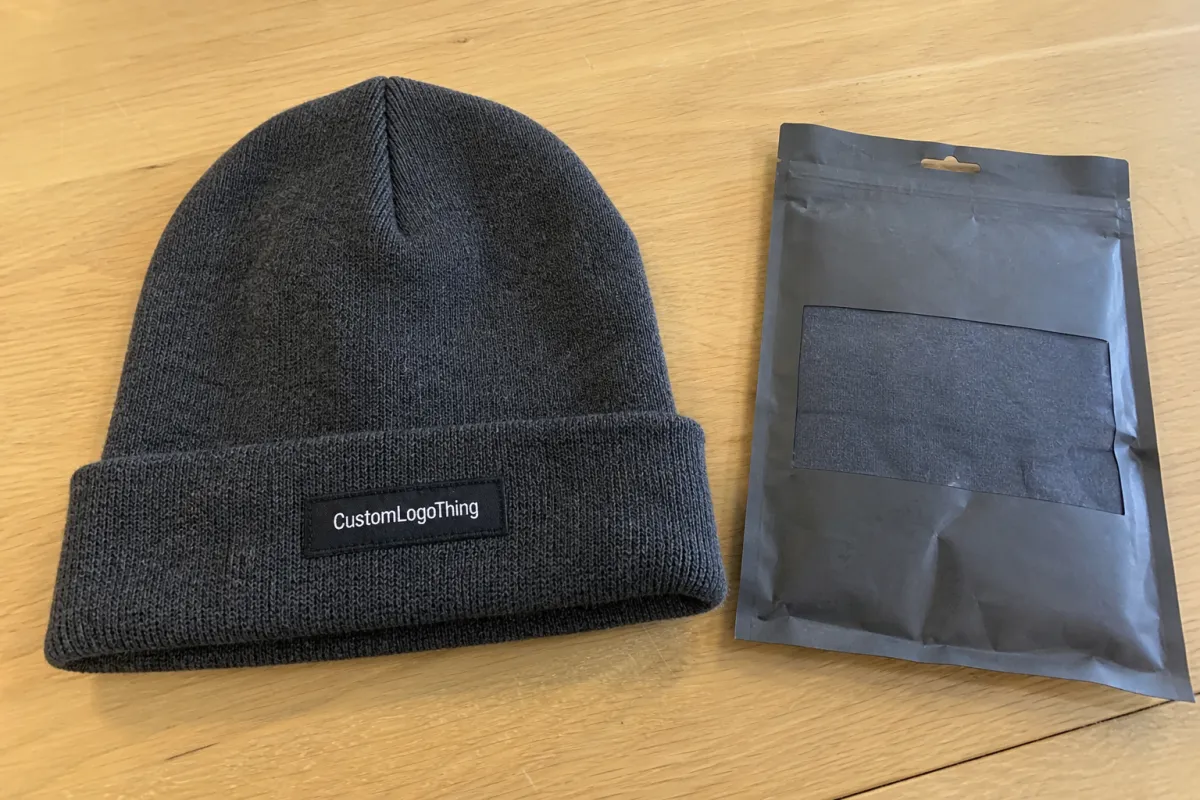
Start with a simple question: what is this sample proving? If the goal is fit, do not let decoration distract you. If the goal is color approval, do not ignore crown shape or cuff recovery. The Premium Cuffed Beanies sample checklist works best when cosmetic approval and production approval are treated as separate decisions, because a polished sample can still conceal a flaw that repeats in every carton.
Compare the sample against the spec sheet, the artwork proof, and the packaging plan. Confirm the yarn type, knit gauge, cuff style, label method, and decoration method before judging the final look. A flat-lay photo forgives a lot. A wearer does not.
The sample should answer practical questions quickly. Does the opening feel too tight for an average adult head? Does the cuff sit flat after folding once or twice? Does the knit body feel dense enough to read premium, or open enough to feel economical? Those details shape the product more than the front-view photo usually suggests.
- Fit proof - Does the beanie sit correctly after the cuff is folded once or twice?
- Material proof - Does the yarn feel soft, dense, and appropriate for the intended season?
- Decoration proof - Is embroidery, a woven label, or a patch centered and clean?
- Retail proof - Does it still present well in packaging, on a hangtag, or on a shelf?
Interior finish matters more than many buyers expect. Loose threads, bulky seam joins, and messy backing can change how a beanie feels in hand even when the outside looks clean. On a premium product, the inside should not feel like an afterthought. That point is easy to miss until the sample is handled by someone outside the design team.
One useful habit: treat the sample as a measurement tool, not a keepsake. Record the relaxed opening, stretched opening, cuff depth, crown height, stitch density, and label position. A written record helps when production later claims the sample was only a concept version, or when a second reviewer remembers the piece differently.
Fit, Cuff Stretch, and Head-Sizing Checks That Prevent Returns
Fit causes more complaints than almost any other part of a cuffed beanie. It is also one of the easiest things to under-measure. Write down the relaxed opening, the stretched opening, and the finished cuff depth instead of trusting memory. For many adult cuffed beanies, the relaxed opening often sits around 8 to 9.5 inches, with a stretch range that can reach 11 to 13 inches, but the exact figure depends on yarn, gauge, and knit structure.
Test the cuff both folded once and folded twice. That small change can shift the silhouette a lot, especially on a product meant to look substantial. A deeper cuff tends to feel more fashion-led. A shallower cuff can look cleaner for teamwear or promotional programs. The sample has to show how it behaves in the way the customer will actually wear it.
Recovery is as important as stretch. Put the beanie on a head form or wear test it for 20 to 30 minutes, then remove it and watch the shape. Does the rib knit snap back, or does it bag out at the opening? Does the cuff keep a crisp fold, or does it slip and soften? These are not cosmetic issues. They determine whether the beanie still feels premium after a full day of use.
Pay attention to seam placement and crown shaping. A back seam that drifts off-center, a crown that puckers, or an edge that curls more than expected can make a decent product feel unfinished. If possible, compare the sample on more than one head shape. One person’s perfect fit can be another person’s pressure point, especially if the beanie is meant for broad retail distribution rather than a narrow uniform program.
Size behavior also changes with material. Acrylic tends to hold shape well and keeps sample costs manageable. Wool blends bring more warmth and a richer handfeel, but they can also introduce more variability in stretch and finishing. Recycled polyester can be useful when sustainability is part of the brief, although the yarn selection and knit density need to be handled carefully so the beanie does not end up too slick or too thin.
For retail programs, think beyond the wear test. If the folded cuff needs to stay crisp in a polybag or carton, ask whether the package plan protects that shape during handling and shipping. Transit testing references such as ISTA methods are useful when you want packaging to reflect actual distribution stress rather than ideal bench conditions.
Sampling Process and Timeline: From Mockup to Approval
The Premium Cuffed Beanies sample checklist should sit beside the spec sheet from the start, not after the first prototype lands. Begin with artwork or a tech pack review, then confirm yarn type, knit gauge, cuff style, label method, and decoration method before sampling starts. If those points are vague, the sample will be vague too.
Most projects need at least one correction round. That is normal. A clean knit sample may move quickly, but once embroidery, woven labels, or custom packaging enter the picture, the timeline usually stretches because each piece has to align with the others. A beanie can be technically correct and still fail the approval if the decoration feels heavy or the package makes it look cheaper than it is.
- Spec confirmation - Lock measurements, materials, logo size, and decoration placement.
- Sample knitting - Produce the first physical version with the approved yarn and gauge.
- Decoration and finishing - Add embroidery, patch, woven label, or branded packaging.
- Inspection and notes - Review fit, stitch quality, color accuracy, and presentation.
- Revision and resubmission - Adjust the sample if any critical point misses the mark.
Ask who owns each step. Timeline slips usually come from unclear handoffs rather than the knitting machine itself. If the artwork owner, merchandiser, and production team are not aligned, the sample can bounce between vague comments like “make it cleaner” or “make the logo pop more.” Those notes sound useful, but they rarely lead to a precise change unless they are backed by measurements or marked-up photos.
Build in time for wear testing and photo review. Buyers often make better calls when they can compare the sample under daylight, warehouse lighting, and a phone-camera closeup. That matters because yarn, especially melange or heathered yarn, can shift in appearance under different light sources. A color that looks rich in one room can flatten under another.
If the beanie needs FSC-certified paper tags, inserts, or belly bands, confirm the paper source early and check chain-of-custody paperwork through FSC. Packaging details can hold up an otherwise ready sample if they are left until the end.
Simple knit samples can move in days. More complex projects often take one to three weeks for the first round and another week or two if revisions are needed. Add shipping time on top of that. If a buyer is planning a seasonal launch, the calendar is often tighter than the product team expects.
Cost, Pricing, MOQ, and Unit-Price Triggers
Sample cost is easy to misread because the sample fee does not always reflect the bulk economics. Some suppliers credit the sample charge back against the production order, while others treat it as a separate service. The premium cuffed Beanies Sample Checklist should include that question early, because a low sample fee can still be expensive if it never converts into usable production credit.
Ask what actually drives the price. In knitwear, the biggest triggers are yarn choice, stitch density, decoration complexity, label construction, and quantity. A blank knit sample is one thing; a fully decorated beanie with embroidery, a woven label, and custom packaging is another. More setup and more handwork usually means a higher sample price.
| Sample Type | Typical Sample Fee | What It Proves | Best Use |
|---|---|---|---|
| Basic knit prototype | $25-$60 | Fit, cuff shape, yarn feel, and general construction | Early concept review |
| Decorated sample | $50-$120 | Logo placement, stitch balance, label position, and finish quality | Buyer approval before bulk pricing |
| Revised approval sample | $40-$100 | Corrected sizing, updated decoration, and final presentation | Last check before production signoff |
| Pack-out prototype | $60-$150 | Polybag, hangtag, carton fit, and retail look | Retail or gift program approval |
MOQ matters just as much. A sample stage can hide a production minimum that is too high for a seasonal launch or a test run. If a brand only needs a few hundred pieces for a promotion, it should not be pushed into a factory minimum that is several times larger than actual demand. That mismatch is common, and it is expensive.
Unit price is tied to more than the beanie body. Decoration placement, multiple thread colors, custom labels, and special packaging can all lift the price. A small embroidered logo may seem simple, but if it requires a denser stitch count to stay sharp on knitwear, the cost can rise faster than expected. The same is true for a patch that needs reinforced attachment so it will not pull the fabric.
It helps to Request a Quote that separates the sample fee, production price, setup charges, and shipping. If those numbers are blended together, comparison shopping gets messy. Clear pricing is part of the buying decision, not a courtesy.
Also watch for hidden unit-cost triggers in the approval process itself. Color matching to a Pantone target on dyed yarn, special size runs, or individual polybag inserts can all push the final cost higher. A buyer who sees only the sample fee may miss the real expense until the order is already approved.
Stitch Quality, Yarn Feel, and Decoration Details Buyers Should Inspect
Stitch quality is where a premium cuffed beanie either earns its label or loses it. Put the sample under bright, neutral light and look for loose loops, uneven ribs, skipped stitches, and tension changes that break the surface. Even minor irregularities can change how the beanie reads from a few feet away, especially if the knit pattern is supposed to feel dense and retail-ready.
Then feel the yarn. Does it feel soft against the skin, slightly dry, stretchy, bulky, or scratchy? That matters because comfort affects reviews, repeat orders, and whether the product gets worn enough to create brand visibility. Acrylic, acrylic-nylon blends, recycled polyester, and wool blends all behave differently. The sample is the fastest way to see whether the handfeel matches the audience and the season.
Decoration deserves close inspection. Embroidery should have clean edges and stable backing, not puckered knit around the logo. A woven label should sit flat without curling at the corners. A sewn patch should not distort the cuff. If the beanie uses a silicone patch or a high-density woven badge, confirm that the attachment method matches the knit weight. A heavy decoration can pull on a lighter body over time.
Inside finishing tells you a lot about process control. Trimmed threads, neat seam work, and tidy backing all signal better attention in production. The difference is usually obvious in seconds. If the inside is rough, the outside often only looks good because the sample was presented at the right angle. A proper premium cuffed beanies sample checklist forces both sides of the product into the review.
Color accuracy still needs a human eye, not only a digital swatch. Knit yarn reflects light differently than a printed proof, so inspect the sample under daylight and indoor light. Navy can read nearly black in one room and unmistakably blue in another. Heathered yarns can show more tonal movement than the buyer first expected. That is not a defect by itself, but it has to be understood before approval.
Stitch count also affects the feel. A tighter gauge can make the beanie look more refined, but it may reduce stretch and increase production time. A looser gauge can soften the handfeel and lower cost, yet it may not hold a premium silhouette as well. Those are tradeoffs, not failures, and the sample is the best place to decide which compromise fits the project.
Decoration and knit quality are related, but they are not the same problem. A logo can be centered and clean while the body knit is too loose. The knit can be excellent while the embroidery thread feels too heavy. Good buying means separating those variables and scoring each on its own.
Common Sample Mistakes That Create Rework Later
One of the most common mistakes is approving the sample because the color looks right while the fit is wrong. That sounds obvious, yet it happens constantly. Once bulk production starts, correcting shape or cuff depth is far more painful than asking for one more revision on a prototype.
Vague feedback causes a different kind of damage. “Make it nicer” does not help a knitter, a decorator, or a merchandiser. Exact notes do. If the cuff is too tall, say how many millimeters to remove. If the logo sits too low, mark the desired position. If the stitch density feels loose, compare it to the approved spec or a reference sample. Clear instructions save time; polite ambiguity rarely does.
- Do not approve on first glance - Wear the sample, stretch it, fold it, and photograph it.
- Do not mix materials - A sample made with different yarn or gauge can mislead the whole approval process.
- Do not skip records - Save notes, measurements, and dated photos immediately after review.
- Do not assume intent - Spell out whether the beanie is for gifting, retail, teamwear, or promo use.
Another trap is treating the sample as if it automatically represents the final run. Sometimes a prototype is made with different finishing, a different backing, or a substitute yarn if the original is unavailable. If that happens, the sample is still useful, but it should be labeled clearly so nobody confuses it with the final approval standard.
Packaging mistakes create their own problems. A beanie that looks structured in hand can arrive flattened if the polybag is too tight or the carton is packed without shape protection. A premium cuffed beanies sample checklist should include the pack-out condition, not only the garment itself. Otherwise the approved look may disappear during transit.
Finally, remember that retail intent changes how the product is judged. A premium gifting beanie needs a different level of finish than a straightforward promotional item. A stadium giveaway can tolerate a simpler presentation; a boutique item usually cannot. The same body knit can be evaluated in very different ways depending on the channel, so the sample needs to be approved against the actual end use.
Final Approval Steps Before Production Begins
Before signoff, turn the review into a pass/fail decision. That sounds blunt, but it reduces confusion. Make a short list for fit, color, logo, handfeel, packaging, label placement, and inside finish. If any one of those items misses a critical threshold, send the sample back for revision. If everything passes, the buyer can approve with confidence instead of hoping the factory “understands” later.
Get written approval from the right person. A verbal yes is too easy to misread when people are juggling other orders. Keep one clear signoff email or marked-up document, then lock the final spec sheet right after approval. If measurements changed, update them immediately. If the logo shifted by a few millimeters, note it clearly. Small differences become large disputes when several thousand units are already in motion.
Hold one physical sample and a set of dated photos. That record becomes useful when bulk production arrives and someone asks whether the crown should sit lower, whether the cuff was supposed to be deeper, or whether the label should have moved. A clean paper trail solves more friction than long email threads usually do.
This is also the point where buyers should think about shipment and storage. If the beanies will be packed tightly, stacked in cartons, or shipped long distances, make sure the packed sample still holds shape after handling. That matters more than many teams admit, because the product has to look right not only on a table, but after transit, unpacking, and shelf display.
Use the premium cuffed beanies sample checklist one last time before release, then move into production only after every critical detail is marked approved. That final pass is usually short, but it is the one that prevents expensive mistakes from becoming part of the bulk order.
What should a premium cuffed beanies sample checklist cover?
It should cover fit, cuff depth, yarn feel, stitch quality, logo placement, label construction, and color accuracy. Packaging, inside finishing, and any retail presentation details should be included as well. A strong checklist turns the sample into a production control tool instead of a simple visual approval.
How many samples do I need before approving cuffed beanies?
One initial sample is often enough to confirm the concept, but a revision sample is common when fit or decoration needs adjustment. If you are testing multiple sizes, materials, or logo methods, request separate samples for each major variable. Extra samples make more sense when the order is high-value or the margin for error is small.
What affects cuffed beanie sample pricing the most?
The biggest drivers are yarn choice, stitch density, logo method, labeling complexity, and whether the sample requires a revision pass. Shipping speed and setup work can also affect the total sample cost. Ask whether the sample fee will be credited toward production so you can compare suppliers accurately.
How long does the cuffed beanie sampling process usually take?
The timeline depends on yarn availability, decoration method, and how many revision rounds are needed. Simple knit samples move faster than samples that require embroidery, custom labels, or color matching. Build in enough time for review, notes, and correction so approval is not rushed.
What is the biggest mistake buyers make with beanie samples?
They approve the sample because it looks good at first glance, without checking fit, recovery, and inside finishing. They also sometimes give vague feedback that does not translate into exact production changes. The strongest protection is a clear premium cuffed beanies sample checklist and written approval notes tied to the final spec.