For a buyer typing hotel retail Frosted Zipper Plastic Bags Factory quote checklist into a search bar, the real objective is usually not research for its own sake. It is to get a quote that will hold up through sampling, approval, production, and reorders without unexpected changes in price or appearance.
That sounds simple until the first sample arrives. One supplier may quote a 60 micron LDPE frosted bag with a basic press-to-close zipper and no underprint. Another may assume a heavier co-extruded film, a better zipper track, and a more involved print setup. The line item totals might look close, but the finished bags will not perform the same way.
Hotel retail packaging has a narrow margin for error. It has to look clean on shelf, feel premium in the hand, and survive repeated guest handling without the zipper splitting, the film scuffing, or the print fading into the frost. That is why the quote checklist needs more detail than a standard pouch request.
Why hotel retail buyers need a tighter quote checklist than standard pouch sourcing
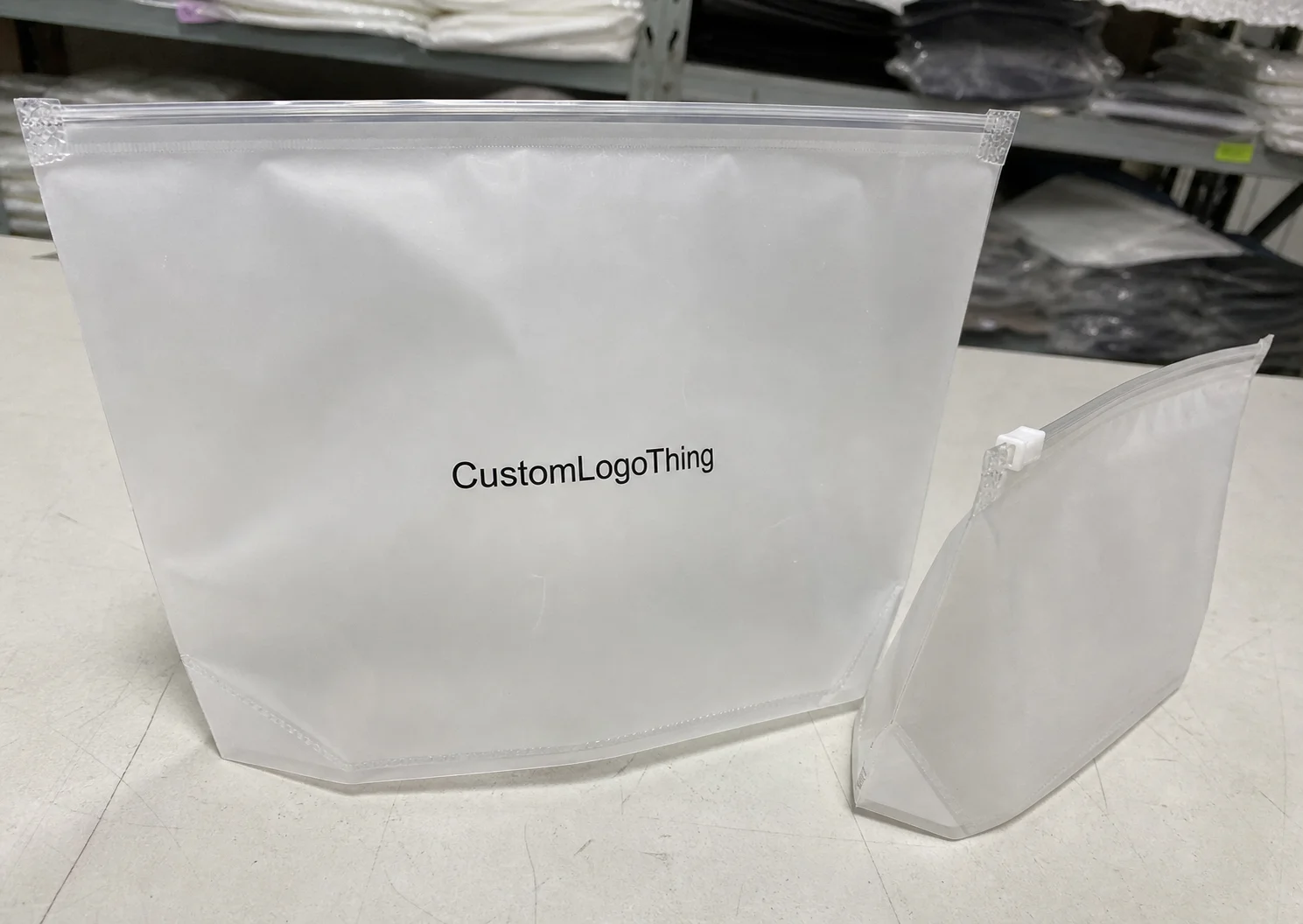
Hotel retail bags sit at the intersection of packaging and presentation. They are used for amenity kits, slippers, small gifts, boutique merchandise, and in some cases travel accessories sold through the property. The bag is part of the product experience, not just a container.
Standard pouch sourcing often stops at size, artwork, and rough material. That is not enough here. A frosted zipper bag that looks elegant in a design file can still fail on the floor if the zipper feels gritty, the seal margin is too narrow, or the bag collapses awkwardly once filled. Guest-facing packaging gets judged quickly and with very little patience.
There is also a hidden cost to vague RFQs. A factory can quote low by assuming a lighter film or a simpler zipper, then revise once the spec becomes clearer. That first number may be attractive, but it is not a stable basis for procurement. For hotel programs, stability matters as much as unit cost because the same bag may be reordered across properties and seasons.
The checklist should capture the items that directly affect price and performance:
- Film structure and thickness
- Frost level and surface appearance
- Zipper type and closure consistency
- Bag dimensions and gusset design
- Print method and artwork coverage
- Packing format for warehouse and retail handling
“A sample can look right from a distance and still be wrong in use. If the zipper drags, the film marks easily, or the logo disappears into the haze, the bag is not ready for hotel retail.”
Frosted zipper bag construction, materials, and retail-ready details
Most Frosted Zipper Bags are made from LDPE, LLDPE blends, or a co-extruded film. LDPE gives a softer hand feel and good flexibility. LLDPE usually improves tear resistance and puncture strength. Co-extrusion lets a factory tune the outer look and inner performance more precisely, which can matter when the bag needs to feel polished rather than purely utilitarian.
The frosted effect usually comes from the film formulation and extrusion process. It is not just a decorative finish. Some films are evenly matte with a fine haze; others look more semi-transparent. That difference affects how the product inside shows through and how branding reads on the surface.
For hotel retail, the surface balance matters. Too clear, and the bag can look ordinary. Too opaque, and the contents disappear completely, which may not suit merchandise that needs some visibility. Buyers often want a middle ground: enough frost to suggest quality and cleanliness, enough translucency to keep the contents identifiable.
Zipper choice deserves more attention than it usually gets. A single-track press-to-close zipper is common for light retail use and amenity packaging. A double-track zipper generally gives a firmer feel and a more secure reseal, especially if the bag will be opened multiple times. The real test is not whether the zipper closes once; it is whether it closes evenly from end to end and continues to engage after repeated use.
Hotel retail bags may also need a euro slot, a hang hole, a tear notch, or a bottom gusset. These are not decorative extras. A hang slot supports peg display. A tear notch helps the customer open the bag cleanly. A gusset increases usable volume and makes it easier to pack folded items, slippers, or boxed accessories without distorting the front panel.
Printing on frosted film takes more planning than printing on a clear pouch. Small logos and fine type can soften once the background haze is introduced. For that reason, white ink underprint is often used when the brand needs strong contrast. If the design is minimalist, one or two spot colors may be enough. If the artwork depends on small detail, the line weights need to be realistic. A delicate logo that looks elegant on screen may blur on the actual film.
Buyers should also think about odor, dust, and surface cleanliness. Retail-facing packaging should arrive free from excess smell, visible debris, and uneven seal marks. That sounds basic, but in production it requires consistent control over material handling and packing. The cheapest quote rarely includes the most careful finishing.
What separates a dependable quote from a speculative one is repeatability. A factory should be able to reproduce the same film feel, zipper engagement, and print clarity on reorder, not just on the first sample run. For hotel retail programs, repeatability is often more valuable than a small price reduction.
Relevant packaging performance guidance can also be borrowed from broader transport and handling standards used in the packaging industry. Organizations such as the ISTA community are useful references when cartons will move through multiple touchpoints before reaching a property. For material recovery and waste reduction context, the EPA offers general guidance that can help buyers frame sustainability discussions without guessing at terminology.
Specification checklist to compare samples before you approve a quote
If suppliers are not quoting the same details, the pricing comparison is not meaningful. The sample request should define the bag in exact terms, using the same units across vendors. That is the fastest way to avoid mismatched assumptions.
Start with the structure. Ask for the width, length, and gusset depth if the bag has one. Confirm film thickness in microns or mils. State zipper type and zipper width. Specify seal style and seal margin. If the bag needs a euro slot, hang hole, or tear notch, those should be listed too.
Then define the visual build. Mention the number of print colors, front and back decoration, logo size, and whether white underprint is required. Frosted film affects color perception, so buyers should expect some shift versus a clear or glossy substrate. Bright colors can look slightly softened, and thin lines can lose definition if the print method is not matched to the surface.
A practical sample review should include both appearance and function. Check the following:
- Dimensional accuracy against the approved spec
- Zipper alignment across the full width
- Seal uniformity and seal margin consistency
- Film thickness and hand feel
- Print registration and color visibility
- Surface cleanliness, odor, and visible defects
- Puncture resistance relative to intended contents
For fine artwork, ask for a physical sample or pre-production proof rather than relying only on a PDF. Screen proofs can hide problems that show up immediately on frosted film. The first place issues usually appear is in thin fonts, small icons, and low-contrast colors.
A simple comparison table can help keep the conversation grounded.
| Option | Typical use | Pros | Trade-off |
|---|---|---|---|
| 60 micron LDPE frosted bag | Light amenity items | Soft feel, lower cost | Lower puncture resistance |
| 80 micron LLDPE blend bag | Retail gifts, repeated handling | Better toughness, stronger zipper support | Higher unit price |
| Co-extruded frosted bag with white ink | Premium branding | Better print visibility, cleaner finish | More setup detail, longer approval cycle |
That table is not a rulebook. It is a reminder that retail presentation, durability, and cost move together. If the use case is light and short-term, a simpler build may be enough. If the bag will be repeatedly handled at point of sale, a slightly heavier construction can pay for itself by reducing complaints and rejects.
Cost, pricing, MOQ, and quote variables that change unit cost
Custom Frosted Zipper bag pricing depends on a limited number of variables, and those variables should be isolated before the quote is compared. Film thickness, bag size, zipper style, print colors, coverage, gussets, hanging features, and packaging format all affect the final number.
MOQ usually follows setup economics. A stock-size bag with minimal printing can run at a lower minimum because the factory has less changeover work. A fully custom size with multi-color artwork, white underprint, and special features requires more setup and more material control. Smaller runs tend to carry a higher cost per unit because the setup burden is spread across fewer pieces.
That does not mean a low MOQ quote is automatically weak. It may simply reflect a standard size or a print configuration the factory runs often. The more useful question is whether the MOQ aligns with your forecast and whether the supplier can hold the same spec on a reorder.
For hotel retail, the lowest price is often not the best value. A bag that saves a fraction of a cent but feels flimsy or looks uneven can create more expense downstream. Reprints, shelf inconsistencies, and guest complaints are hard to quantify in a quote sheet, but they are real. A slightly higher unit price that produces fewer defects is frequently the safer buy.
Ask for tiered pricing at multiple quantities. Three breakpoints are usually enough to see how the cost behaves: a pilot run, a replenishment level, and a larger annual order. A clear quote should separate product cost, setup charges, samples, and freight if those are not already included. If a supplier gives a single number with no explanation of what is inside it, the comparison is too thin.
These are the line items that can change the quote more than buyers expect:
- Material grade and thickness
- Zipper style and width
- Print method and number of colors
- White underprint or special ink layers
- Custom size versus stock size
- Gusset, hang hole, euro slot, or tear notch
- Packaging format, carton count, and labeling requirements
Typical pricing varies by region, quantity, and spec, but a plain unprinted frosted zipper bag is usually far below a custom printed premium version. Once a bag includes heavier film, more complex printing, or a stronger zipper, the price should rise accordingly. The key is not whether the number is low or high in isolation. The key is whether the quote matches the same specification set across suppliers.
Production process and timeline from artwork approval to shipment
A good production schedule starts with a precise RFQ. Once the factory has the details, the sequence is usually straightforward: specification confirmation, artwork preparation, proof approval, material sourcing or extrusion, printing, bag conversion, inspection, and packing. If any of those steps is underdefined, the risk shifts to the end of the schedule, where delays are more expensive.
Lead time depends on complexity. A simple stock-size bag with light printing will usually move faster than a fully custom retail bag with white underprint, special dimensions, and a premium zipper. If the order needs new tooling, new die-cutting, or a fresh plate set, more time is required. Revisions to artwork also add time, especially when the design has fine type or strict color matching.
Sampling deserves its own calendar slot. A clean sample round can move quickly, but frosted film often needs one more correction than buyers expect. The color can shift slightly, the logo may need a thicker outline, or the zipper may need adjustment to improve closure feel. That is normal. The problem is not revision; the problem is failing to build it into the plan.
A realistic timeline often looks something like this:
| Job type | Typical timeline after approval | Main risk factor |
|---|---|---|
| Simple unprinted or single-color stock size | About 7-12 business days | Material availability |
| Custom printed frosted zipper bag | About 12-18 business days | Artwork revisions and print matching |
| Premium retail build with special features | About 18-25 business days | Tooling, sampling, and QC sign-off |
For imported shipments, freight timing can become the real bottleneck. Ocean booking windows, peak season congestion, and holiday closures can stretch delivery longer than production itself. If the bags are tied to a hotel opening, store launch, or seasonal promotion, those external delays need to be accounted for early.
Requesting batch photos and inspection checkpoints is a practical way to reduce risk. Even basic image confirmation of zipper alignment, print registration, and carton labeling helps procurement teams see whether the order is tracking properly. It is not a substitute for inspection, but it catches avoidable errors before shipping.
How to evaluate a factory partner for hotel retail packaging programs
A strong factory partner is not defined by polished sales language. It is defined by control over film quality, zipper consistency, print registration, and seal performance. Hotel retail packaging is sensitive to variation because the same bag may be handled by guests, retail staff, housekeeping, and warehouse teams.
Direct communication with the factory matters because it reduces the chance that the quote and the production run drift apart. When buyers can discuss thickness, seal width, and print method with the people closest to the line, the sample process becomes clearer and the chance of rework falls. That becomes even more valuable when the bag must feel premium while staying within a cost target.
A capable supplier should be able to explain trade-offs honestly. If 70 micron film is enough for the use case, that should be said. If a double-track zipper adds cost without adding value for a single-use amenity bag, that should also be said. Good quoting is not about pushing every option upward. It is about matching the build to the actual handling conditions.
Ask for quality documentation, dimensional tolerances, and packing standards. A reliable vendor should be able to show sample photos, explain inspection steps, and describe how they control variation from run to run. Reorder support matters too. If the supplier can match the original spec reference on a repeat order, the buyer saves time, and the risk of subtle changes falls sharply.
These questions usually reveal whether the supplier is truly set up for retail packaging work:
- Can you confirm film thickness tolerance and zipper style in writing?
- Can you show a proof or sample on the same frosted surface?
- What inspection steps are used before packing?
- How are inner packs and cartons labeled for retail programs?
- Can you quote an alternate spec for cost comparison?
If those answers are vague, the quote is likely vague too. That is a problem on a product where small defects are immediately visible.
Next steps: send a quote-ready request with the right details
Before sending a request, gather the details a factory actually needs to price accurately: target size, quantity range, zipper style, thickness, print colors, finish preference, artwork files, packaging format, and delivery window. If you already know the bag’s use case, include that as well. A bag for slippers is not the same as a bag for a boutique gift item, and the spec should reflect the difference.
It helps to ask for two versions of the quote. One should match the preferred spec exactly. The second can be an alternate build, such as a slightly lighter thickness or a different print method, so the cost difference is visible rather than assumed. That makes internal comparison easier and can expose where the real price pressure is coming from.
Before final approval, request samples. A bag may look strong in a drawing and still disappoint once the frost, zipper, and logo are combined in real material. After approval, confirm carton count, packing method, and the production calendar in writing so reorder planning stays orderly.
For the cleanest response, send a complete hotel retail Frosted Zipper Plastic Bags factory quote checklist with the first inquiry instead of splitting the details across multiple messages. A complete request usually produces a better quote, fewer follow-up questions, and fewer revision rounds later.
If you need help organizing the spec details before sending them out, Contact Us.
FAQs
What should I include in a hotel retail frosted zipper plastic bags factory quote request?
Include bag size, thickness, zipper style, print colors, artwork files, quantity, packaging requirements, delivery destination, and target timeline. If the bag will be used in guest-facing retail presentation, add sample and approval requirements so the factory knows the quote must cover that process too.
How do I compare pricing for frosted zipper bags without missing hidden costs?
Compare the same specification across each supplier: dimensions, material, zipper type, printing, and carton packing. Then check whether the quote includes sampling, setup charges, and freight. A unit price only means something if the comparison is spec-for-spec and quantity-for-quantity.
What MOQ is typical for custom hotel retail frosted zipper bags?
MOQ depends on whether the size is stock or fully custom and how many print colors are involved. Higher setup complexity usually raises MOQ because of material usage and press setup efficiency. If you are testing a new program, ask for tiered MOQ options and compare them against your forecast.
How long does production usually take after artwork approval?
Simple jobs can move quickly, while custom print, special sizes, and proof revisions add time. Lead time depends on sampling, material availability, and the factory schedule. The safest approach is to confirm milestones in writing for proof approval, production, inspection, and shipment.
Can frosted zipper plastic bags be customized for hotel branding?
Yes. They can be customized with logos, brand colors, and retail-ready layout on the frosted surface. The factory should confirm print method, color matching limits, and whether white ink is needed. A sample or proof is the best way to verify how the branding appears on the finished bag.


